PuniCodex

Extended Lore

月読 Tsukuyomi

Etymology · Phonology · Orthography · Cultural Legacy · Primary Sources

Tier 2 Tsukuyomi
Tsukuyomi — Moon God, Shintō
01

Quick Facts

Essential information about Tsukuyomi, Moon God, Shintō

Original Script月読
Unicode RestorationTsukuyomi
Reconstructed Pronunciation/tsɯ.kɯ.jo.mi/
PantheonJapanese
DomainMoon God, Shintō
MeaningMoon reader
ClassificationTier 2
Primary DomainTsukuyomi
Sacred SymbolsMoon, Night, Sword or weapon, Crescent
02

Etymology & Word Family

From original script to Unicode restoration

Original Script 月読 Tsukuyomi — "Moon reader"
Unicode Restoration Tsukuyomi Restored stress, length, and script
Modern ASCII tsukuyomi Plain-ASCII fallback

Tsukuyomi is Tier 2: plain Hepburn. He is the moon god and sibling of the sun goddess Amaterasu.

03

Unicode Character Breakdown

Character-by-character philological analysis

CharacterUnicodeNameBlockPhonetic Role
TU+0054Latin Capital Letter TBasic LatinSame
sU+0073Latin Small Letter SBasic LatinSame
uU+0075Latin Small Letter UBasic LatinSame
kU+006BLatin Small Letter KBasic LatinSame
uU+0075Latin Small Letter UBasic LatinSame
yU+0079Latin Small Letter YBasic LatinSame
oU+006FLatin Small Letter OBasic LatinSame
mU+006DLatin Small Letter MBasic LatinSame
iU+0069Latin Small Letter IBasic LatinSame

The Tier 2 classification reflects how much of the original phonology this restoration preserves — stress and vowel length for Greek names, distinctive letters and diacritics for every other tradition.

04

Cultural Significance

From ancient cult to modern Unicode

Ancient Domain

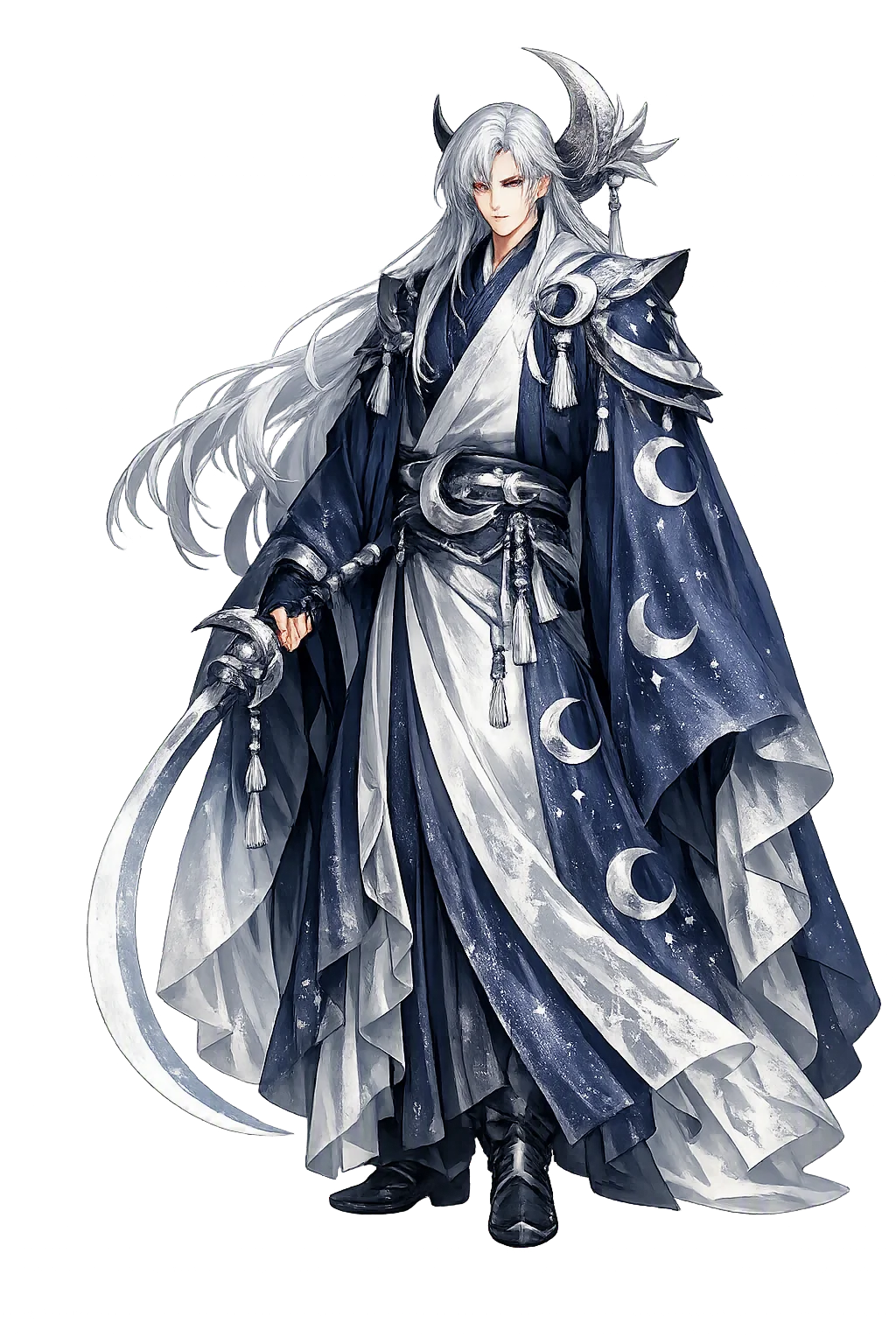
Tsukuyomi is the moon kami of Japanese myth, born from Izanagi's right eye during the purification that also produced Amaterasu from the left eye and Susanoo from the nose. He governs the night and the lunar calendar, and his mythology turns on a violent act that separated him forever from the sun.

Tsukuyomi in Later Traditions

Tsukuyomi is less prominent in Japanese religion than Amaterasu or Susanoo, but he appears in calendars, poetry, and astral symbolism. His separation from the sun reflects a common Eurasian motif of the divided celestial siblings, while his specific myth is shaped by Japanese ideas of purity and pollution.

Modern Legacy

Tsukuyomi appears in Japanese literature, anime, and games as a cool, nocturnal counterpart to the solar Amaterasu. The moon remains a major theme in Japanese poetry and art, and Tsukuyomi's name is invoked in works that explore the night and its mysteries.

Unicode Restoration as Cultural Act

Restoring Tsukuyomi in a domain name is more than orthographic accuracy. It is a statement that the internet should recognize the full range of human writing — not only the ASCII keyboard.

05

Frequently Asked Questions

Common questions about Tsukuyomi, Moon God, Shintō, and Unicode restoration

01How do you pronounce Tsukuyomi?

In reconstructed pronunciation, Tsukuyomi is /tsɯ.kɯ.jo.mi/ — approximately 'TSOO-koo-yoh-mee' — the initial 'ts' is crisp, and the final vowel is clear..

02What does Tsukuyomi mean?

Tsukuyomi means Moon reader in the japanese tradition.

03What are the symbols of Tsukuyomi?

Tsukuyomi is associated with Moon (The luminous body he rules), Night (The domain opposite Amaterasu's day), Sword or weapon (The means by which he killed the food goddess Uke-mochi), Crescent (The waxing and waning of the moon).

04Why restore Tsukuyomi in Unicode?

Plain ASCII tsukuyomi strips the stress, length, and script that make the name specific. Unicode restoration returns the name to its original written dignity.

05What is the most important myth about Tsukuyomi?

After escaping Yomi, Izanagi purified himself in a river. As he washed his right eye, Tsukuyomi was born. Amaterasu was given rule over the day, Tsukuyomi over the night, and Susanoo over the sea. The three siblings divided the cosmos among themselves.

06

Scholarly Sources

The philological foundations of this restoration

Every claim on this page is grounded in established scholarship. The orthographic restorations follow disciplinary convention. The etymological chain follows the best available reference works. This is not invention — it is resurrection through scholarship.

Lexicography & Philology

  • Hepburn
  • Kojiki

Primary Texts

  • Kojiki (birth and Uke-mochi episode)
  • Nihon Shoki (parallel account)
  • Philippi, Kojiki

Archaeology & Art History

  • Material evidence — iconography, inscriptions, and temple archaeology — for Tsukuyomi and related cults.
  • Tsukuyomi has few independent shrines. His significance is preserved in textual mythology and in the astronomical and calendrical traditions that divide the sun's domain from the moon's.

Religious Studies

  • Comparative studies of japanese religion and the place of Tsukuyomi within it.
Return

The Surface Awaits

You have traced the name from its earliest attestation to its Unicode restoration. Now return to the myth. The story is where the name lives.

Back to Lore
Tsukuyomi mascot