Stories of Troíā
The Trojan cycle is the largest story the Greeks told: from the wedding of Pēleús and the Apple of Discord to the Returns of the heroes, it fills eight epics, of which the Iliad and Odyssey are only the surviving heart.
At the wedding of Pēleús and Thetis, where every god was feasted, Eris arrived uninvited and rolled among the guests a golden apple inscribed 'for the fairest' — and Hēra, Athēnā, and Aphrodítē each claimed it. Zeus, foreseeing the wrath of two losers in any verdict of his own, refused to judge and sent the goddesses to the Trojan prince Páris, exposed as an infant and herding his father's flocks on Mount Ídē. Hēra offered him empire, Athēnā military glory, Aphrodítē the most beautiful woman in the world; he chose the last, and the war became arithmetic. The Cypria, as Proclus summarizes it, makes the mechanism exact: Páris's choice triggers the oath of Tyndareus, the compact under which every former suitor of Helénē is bound to defend her marriage — so one shepherd's preference converts three insulted goddesses into a thousand-ship alliance. Troy's doom was negotiated before its walls were named.
A thousand ships mustered at Aulis, where Agamémnōn sacrificed his daughter Iphigéneia for a wind; nine years of raids followed before the Iliad's subject even begins. The tenth year opens with a quarrel inside the Greek camp: Agamémnōn seizes Brisēís from Achilléús, Achilléús withdraws his Myrmidons, and the Greeks begin to die of the absence of one man. The poem covers fifty-one days and never shows the fall: its subject is the chain of deaths the quarrel unlocks — Pátroklos in Achilléús's armor, Héktōr by the Scamander, and behind every duel the city's doom, prophesied and accepted by all the combatants. The war's deepest irony is Homer's structure: he sings one wound in the Greek body — honor — while behind it the real wound, the city, waits untouched. The Iliad ends with Héktōr's ransom, the truce, and the funeral games; everyone knows what comes next, and the knowing is the poem's ache.
The end the Iliad withholds, the Odyssey and the Aeneid supply. After ten failed years, Odysseus proposes the stratagem: a great wooden horse, hollow, its belly an ambush, left on the shore as an offering to Athēnā while the fleet sails behind Ténedos. The priest Laokóōn hurls his spear into the flank and warns — I fear the Greeks, even bearing gifts — and sea-serpents rise from the water and destroy him and his sons, read by the Trojans as the goddess's answer. The prophetess Kassándrā is disbelieved, as always. At night the horse opens: warriors drop to the ground, open the Scaían Gate, and the fleet returns while the city sleeps. Priam is cut down at the altar of Zeus of the Courtyard; the infant Astyanax is thrown from the towers; Menelaos reclaims Helénē; Aineías shoulders his father Anchises and carries his household gods out of the fire. The horse is the myth's perfect machine: a gift that is a breach, an offering that is an army, the wall's conqueror cut from the forest by the wall's besiegers.
Greek myth scattered the victors as thoroughly as the defeated. Agamémnōn sailed home to be murdered by Klytaimnḗstrē and Aígisthos in his own hall; Menélaos wandered seven years, touching Egypt; the lesser Aias drowned for his impiety at Athēnā's altar; and Odysseus, the war's author, took ten years for a voyage that should have taken weeks — his nostos the Odyssey itself. The Trojans fared strangely better in memory: Anténōr led a colony to the Adriatic coast; the minority tradition spared Astyanax and rebuilt a new Troy; and above all Aineías, whose westward voyage Virgil's Aeneid turned into the founding journey of Rome — Lavinium, Alba Longa, Rhea Silvia, and the twins. Rome then did what no conqueror had: it adopted the conquered as its mother, and 'Trojan' became, across Europe, a title of glory claimed by the Franks and the Britons alike. The city that fell became the ancestor of everything that claimed to have made it fall.
Siege, Horse, and the Mother of Empires
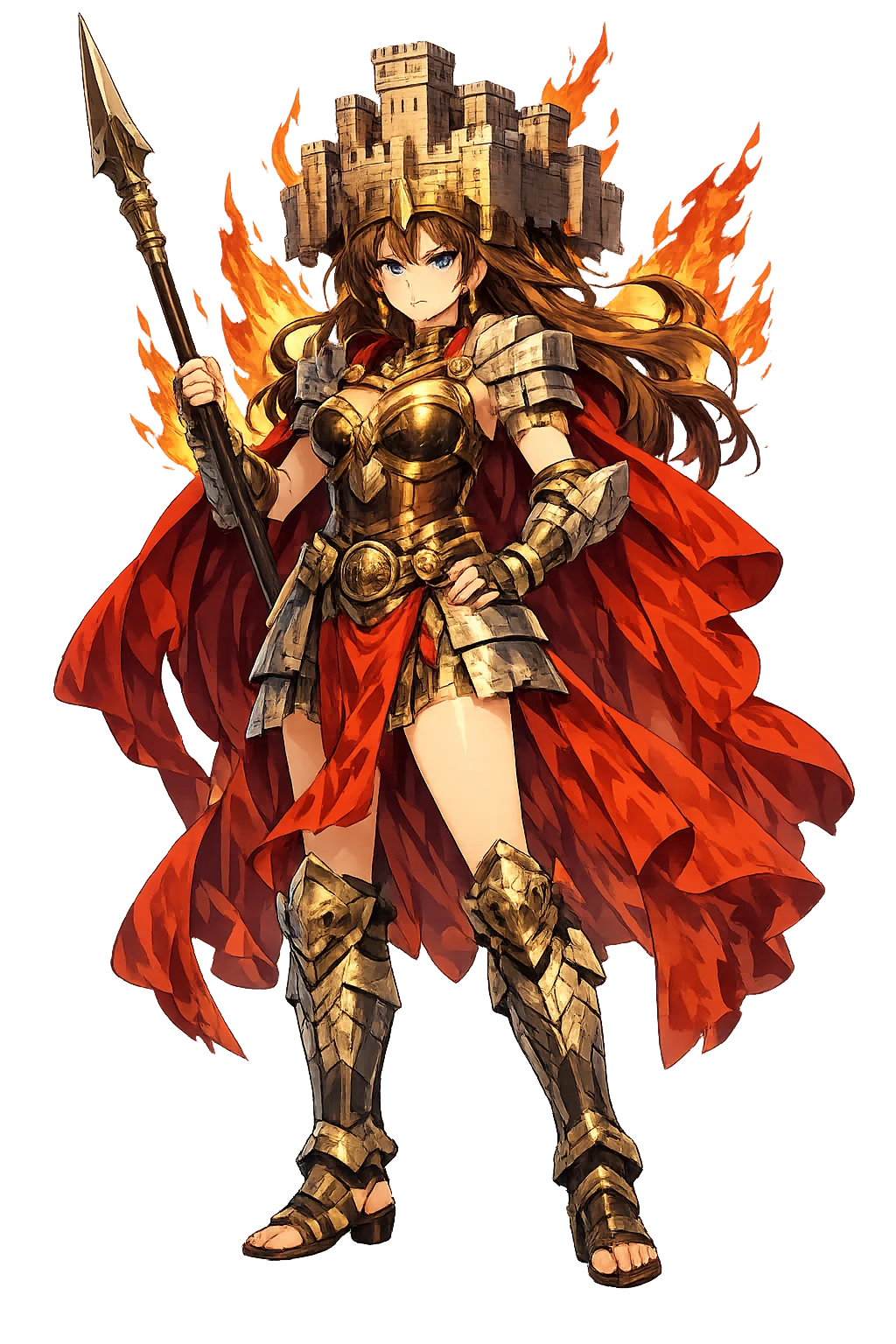
Troíā is the city that fell once and rose forever: ten years of siege made it the template of Western war narrative, and its survivors — in Roman myth — sailed west to found the lineage of Rome itself. Every empire since has wanted to be Troy's heir rather than its conqueror.
Built by Poseidṓn and Apóllōn — walls only a trick could breach.
Odysseus' stratagem: the gift that is a breach, the original Trojan horse.
The Iliad covers fifty days; the full siege cycle filled the entire Epic Cycle.
Aeneas carries his father and his gods out of the fire — Troy's fall as Rome's first chapter.
From the original script to the living URL
Τροία
The name in its original Greek form. Troíā (Τροία) is attested in the source tradition — “Unknown; possibly from Τρωός”. Its diphthongs and acute accents carry the full phonetic and orthographic weight of the source tradition.
troia
Reduced to plain troia, the name loses everything that made it specific: diphthongs and acute accents. What remains is an ASCII string that machines can parse but that no longer speaks with its original voice.
Troíā
The Unicode restoration recovers what ASCII flattened. Troíā restores diphthongs and acute accents, returning the name to its original written dignity. The domain encodes to Punycode, but the browser displays the truth.
Troíā.com → xn--tro-tma4h.com
The non-ASCII characters in Troíā are encoded while the ASCII remains visible. To the DNS, it is Punycode. To humanity, it is Troíā.
Owned, ideal, and ASCII forms of Troíā
Troíā
Restores Τροία. The live temple domain — troíā.com.
troia
Flattens Τροία. The plain ASCII fallback — what DNS and legacy systems see.
How Troíā was spoken
How Troíā is preserved in writing
A bespoke provenance study for Troíā is being prepared by the PUNICODEX scholarly team.
Contribute scholarly provenance →The lore you have read is the living myth. Extended Lore opens the scholarly vault beneath it: the cult and its material remains, a history of the image, the name after antiquity, a meditation on what the name still means, and the full scholarly apparatus — etymology, orthography, sources.
Enter Extended Lore