PuniCodex

Extended Lore

Trengtreng

Etymology · Orthography · Cult · Iconography · Reception · Sources

Tier 2 Trengtreng.com
Trengtreng — Flood, Land-Shaping
01

Quick Facts

Essential information about Trengtreng, Flood, Land-Shaping

Scholarly TransliterationTrengtreng
Unicode RestorationTrengtreng
Reconstructed Pronunciation/tɾeŋˈtɾeŋ/
PantheonMapuche
DomainFlood, Land-Shaping
MeaningMapuche thunder and war god
ClassificationTier 2
Primary DomainTrengtreng.com
Sacred SymbolsVolcanic peak, Reduplicated thunder name, War club / macana
02

Etymology & Word Family

From original script to Unicode restoration

Scholarly Transliteration Trengtreng Trengtreng — "Mapuche thunder and war god"
Unicode Restoration Trengtreng Canonical scholarly spelling — ASCII-identical
Modern ASCII trengtreng Plain-ASCII fallback

A Mapuche theonym for the thunder-and-war god; its formation is best explained as onomatopoeic or descriptive within Mapuche oral tradition, with no known external cognates.

03

Unicode Character Breakdown

Character-by-character philological analysis

CharacterUnicodeNameBlockPhonetic Role
TU+0054Latin Capital Letter TBasic LatinSame
rU+0072Latin Small Letter RBasic LatinSame
eU+0065Latin Small Letter EBasic LatinSame
nU+006ELatin Small Letter NBasic LatinSame
gU+0067Latin Small Letter GBasic LatinSame
tU+0074Latin Small Letter TBasic LatinSame
rU+0072Latin Small Letter RBasic LatinSame
eU+0065Latin Small Letter EBasic LatinSame
nU+006ELatin Small Letter NBasic LatinSame
gU+0067Latin Small Letter GBasic LatinSame

The Tier 2 classification here reflects fidelity to the attested tradition, not recovered diacritics: every character of Trengtreng already survives in ASCII. What the restoration preserves is the canonical spelling itself — the form scholarship standardised.

04

Cult & Worship

How the sacred was kept — rites, sanctuaries, remains

The Cult

Trengtreng's cult is anchored in the sacred geography of the Araucanía rather than in built temples. Mapuche communities maintained relationships with thunder, volcanoes, and ancestral mountains through ngillatun ceremonies, communal prayers, and offerings directed toward the powers of ngen and pillán. Colonial chronicles record the flood myth in which Trengtreng and Kai-kai reshape the land, and the active volcanic chain of Villarrica, Llaima, and Lonquimay supplied a continual reminder of his presence. Spanish evangelization and Chilean state policy suppressed these rites, but Mapuche religious practice persists in private and communal observances tied to the land.

In the Earth

Mapuche material culture is attested at fortified pukará sites in the Araucanía and at the sacred hill of Cerro Ñielol near Temuco. Colonial chronicles by Alonso de Ovalle, Pedro Mariño de Lobera, and Alonso de Góngora Marmolejo record the flood myth and the thunder mountain. The active volcanic chain—Villarrica, Llaima, and Lonquimay—supplies the geological anchor for the Trengtreng tradition.

05

Iconography

How Trengtreng was imaged across the ages

The Image

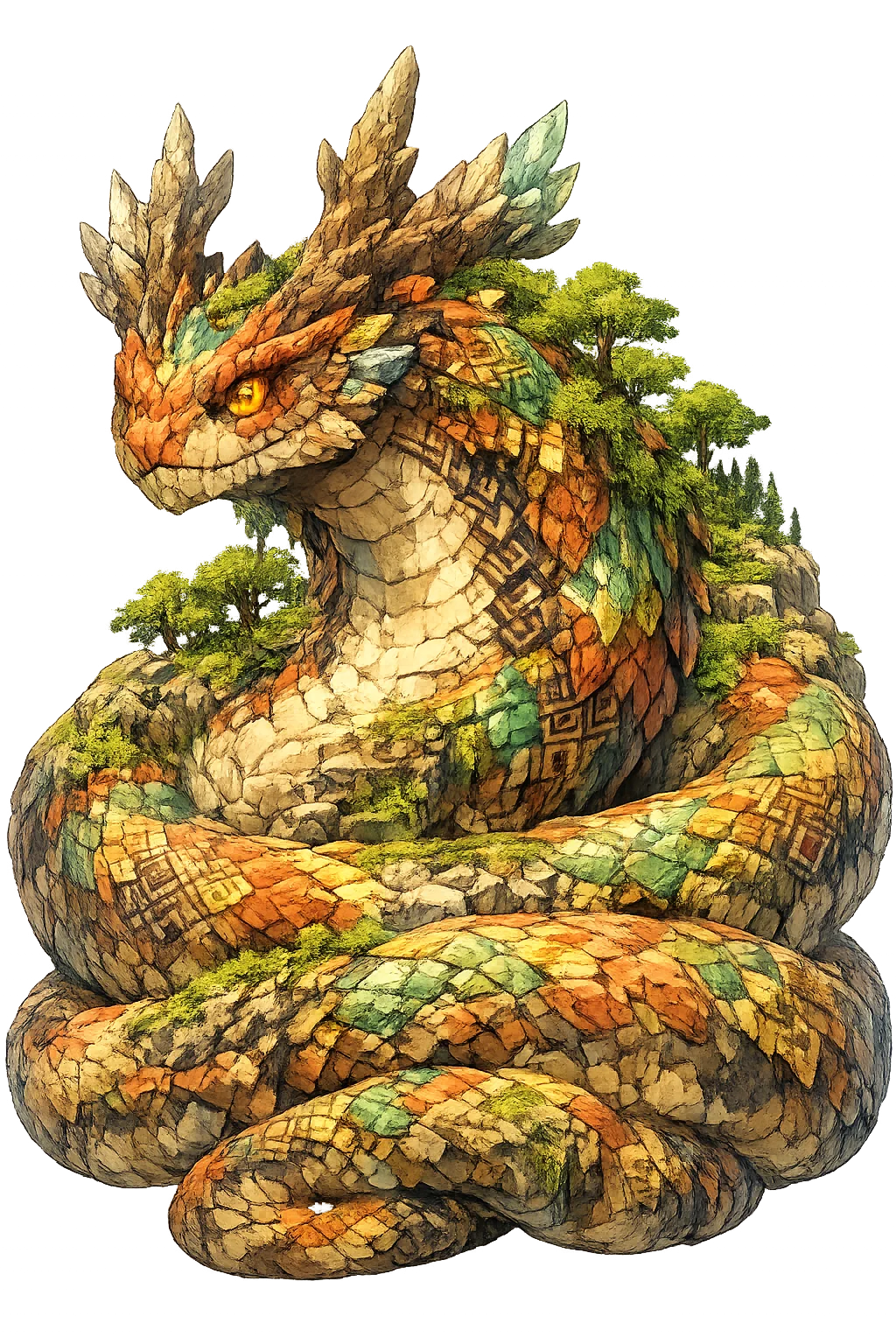
No pre-Columbian iconographic tradition of Trengtreng is known. Mapuche visual culture before European contact favored textiles, ceramics, and rock art rather than anthropomorphic images of gods, and the thunder deity appears in colonial chronicles as a narrative figure rather than a sculpted one. Modern Mapuche artists, muralists, and craftspeople have begun to visualize Trengtreng through lightning, volcanic peaks, and flood imagery, but these are contemporary recuperations of a tradition whose ancient visual record is essentially absent.

06

Reception & Transformation

The name after its own age — transmission, translation, survival

Afterlives

Trengtreng entered the written record through Spanish colonial chronicles by Alonso de Ovalle, Pedro Mariño de Lobera, and Alonso de Góngora Marmolejo, who framed the thunder god within Christian categories of pagan belief. During the nineteenth and twentieth centuries the figure was folded into Chilean nationalist folklore, often detached from living Mapuche communities. More recently, Mapuche cultural and political movements have reclaimed Trengtreng as part of Indigenous memory and territorial identity. His reception is therefore split between colonial documentation, national romanticism, and contemporary Indigenous self-representation.

Identifications Across Traditions

Colonial Spanish missionaries interpreted Mapuche thunder spirits through Christian ideas of divine punishment, while Mapuche communities resisted by preserving Pillan and Trengtreng in oral tradition and ritual.

The reduplicated thunder name parallels onomatopoeic storm words across the Andes, and the figure of a deity who raises mountains during a world flood has affinities with widespread South American cosmologies of catastrophe and renewal.

Modern Legacy

Trengtreng remains a touchstone of Mapuche identity in the southern Andes, from the Bio-Bío river to the volcanic cordillera of Araucanía.

Modern Mapuche writers, musicians, and territorial movements invoke Pillan and the flood mountains as symbols of resilience and sacred land. The peak's name also survives in local toponymy, keeping the thunder spirit present in everyday geography.

07

The Meditation

What Trengtreng means — beyond the dictionary

Trengtreng is the myth that looks most like its own landscape. A flood-mountain raised by a serpent against the sea explains, in one image, why the southern Andes erupt, why the coast is deadly, and why the people’s ancestors lived — and it does so in a grammar of height: survive by climbing. The doubled name is the sound of the thunder the volcano makes; the tradition heard the mountain before it theorized it.

There is a quiet modern lesson here that the chroniclers never intended. The colonial writers recorded the flood myth as a curiosity of the people they were conquering; four centuries later the chronicles are footnotes and the mountains are still there — still erupting, still named in Mapudungun. Trengtreng teaches that sacred geography is the hardest thing a colonizer can fail to erase: you can burn the temples, but the horizon keeps preaching.

08

Frequently Asked Questions

Common questions about Trengtreng, Flood, Land-Shaping, and Unicode restoration

01How do you pronounce Trengtreng?

In reconstructed pronunciation, Trengtreng is /tɾeŋˈtɾeŋ/ — approximately TRENG-TRENG — a rattling, drum-like reduplication that mimics successive thunderclaps.

02What does Trengtreng mean?

Trengtreng means Mapuche thunder and war god in the mapuche tradition.

03What are the symbols of Trengtreng?

Trengtreng is associated with Volcanic peak (The living mountain raised by Pillan; its eruption and thunder are the visible body of the god.), Reduplicated thunder name (The doubled treng-treng mimics the rolling of successive thunderclaps and signals intensified power.), War club / macana (A hardwood club associated with Mapuche warriors and the thunderer's striking force.).

04Why restore Trengtreng in Unicode?

Trengtreng is written entirely in ASCII letters, so its restoration is about canonical fidelity rather than recovered diacritics: the temple fixes the name in its scholarly standard spelling, attested in the source tradition, instead of leaving it to drift.

05What is the most important myth about Trengtreng?

“The Flood and the Volcanic Pillars” — the Flood story that anchors the mythology of Trengtreng, told in full on the lore page.

09

Scholarly Sources

The philological foundations of this restoration

Every claim on this page is grounded in established scholarship. The orthographic restorations follow disciplinary convention. The etymological chain follows the best available reference works. This is not invention — it is resurrection through scholarship.

◈

Lexicography & Philology

  • Mapuche oral tradition
◎

Primary Texts

  • Alonso de Ovalle, Histórica Relación del Reino de Chile (1646)
  • Pedro Mariño de Lobera, Crónica del reino de Chile
  • Alonso de Góngora Marmolejo, Historia de Chile (1575)
◉

Archaeology & Art History

  • Material evidence — iconography, inscriptions, and temple archaeology — for Trengtreng and related cults.
✦

Religious Studies

  • Mapuche oral tradition
  • Bengoa, Historia de los antiguos mapuches del sur
Return

The Surface Awaits

You have traced the name from its earliest attestation to its Unicode restoration. Now return to the myth. The story is where the name lives.

Back to Lore
Trengtreng mascot