
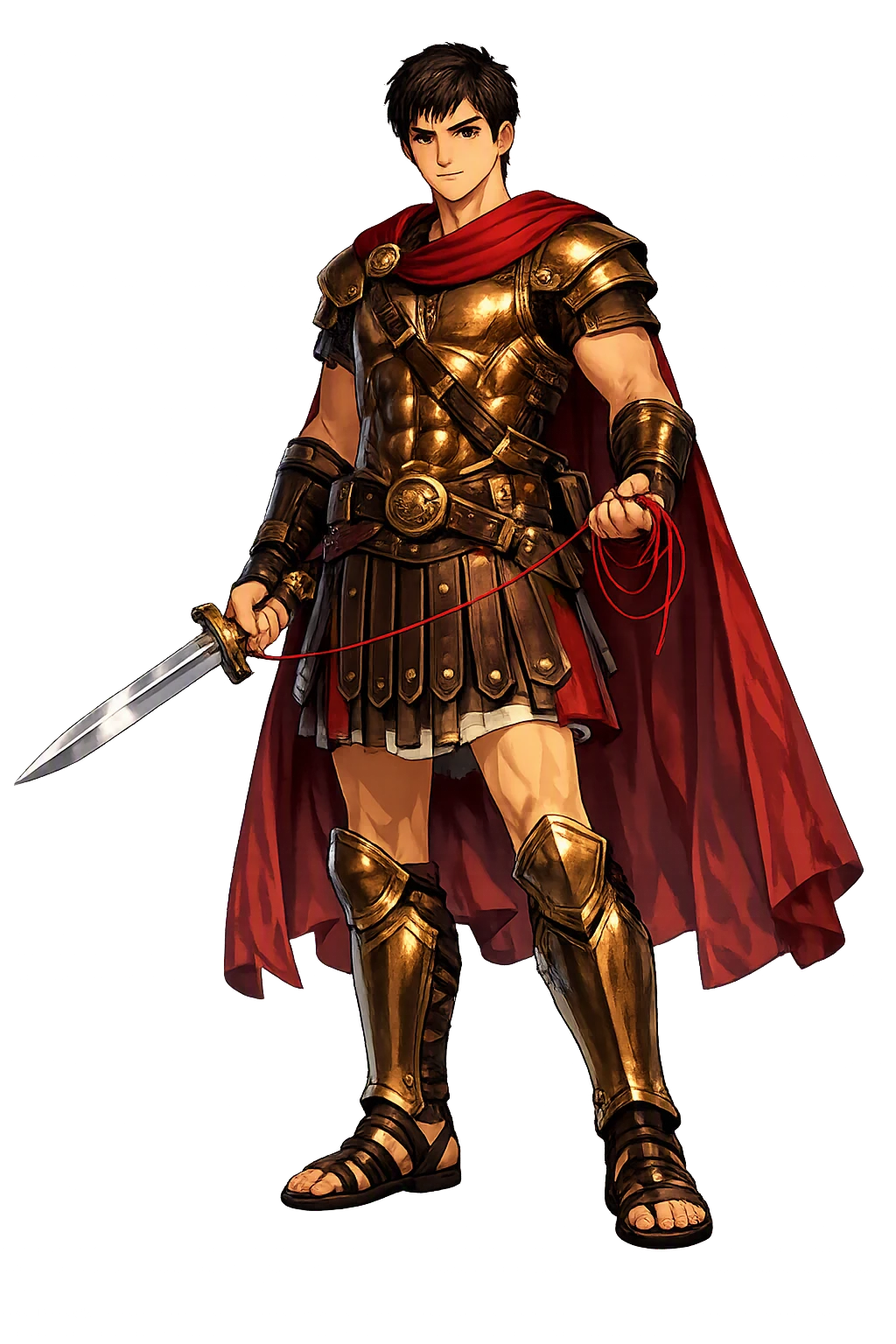
How Thēseus got its accent back
The ASCII form theseus is missing something. Thēseus restores the marks the source language used to distinguish this name from a thousand others — and those marks change how the name is read, pronounced, and understood. This post explains, with the full scholarly record behind it, what each restored mark preserves: the Greek evidence, the reconstructed sound, the myths the name carries, and the classification logic that separates Tier 1 restorations from Tier 2. By the end, the marks in Thēseus will look less like ornaments and more like what they are — recovered evidence, pinned back in its proper place.
At a Glance
- Restored name: Thēseus
- ASCII form: theseus
- Meaning: "The Gatherer (from τίθημι)"
- Domain of influence: Heroism, Athens, Labours
- Pantheon: Greek
- Classification: Tier 1
- Original script: Θησεύς (Greek)
- Live domain: theseus.com
Overview
Thēseus (theseus) — Heroism, Athens, Labours · The Gatherer (from τίθημι) — belongs to the Greek tradition, where it is catalogued under the domain "Heroism, Athens, Labours". The name means "The Gatherer (from τίθημι)".
Thēseus belongs to the Greek tradition, where it is associated with heroism, athens, labours.
PuniCodex restores the name as Thēseus and serves its temple at theseus.com. The original carries both stress and vowel length, and exactly one historically valid Unicode restoration exists, which places the name in Tier 1. The plain ASCII form theseus survives as a modern convenience imposed by the early domain-name system; the restoration, not the fallback, is the form the project defends as philologically complete.
The Name
The name is attested in Greek as Θησεύς. Etymologically it means "The Gatherer (from τίθημι)".
The reconstructed proto-form is dʰeh₁- (proto-indo-european, "to put, to place"). Greek Θησεύς, popularly derived from τίθημι 'to set, to place'; the Athenian hero who slew the Minotaur and unified Attica.
The ASCII form theseus survives only because the early domain-name system could not carry diacritics; it is a technological compromise, not an ancient spelling. The Unicode restoration Thēseus recovers the vowel length of the original directly in the address bar. The original carries both stress and vowel length, and exactly one historically valid Unicode restoration exists, which places the name in Tier 1.
The letter-by-letter transformation runs:
- t → T — Tau
- h → h — Theta
- e → ē — Eta: long epsilon
- s → s — Sigma
- e → e — Short epsilon
- u → u — Upsilon
- s → s — Sigma
The canonical temple for this name is served at theseus.com.
Etymology & Roots
The recorded derivation reads: Greek Θησεύς, popularly derived from τίθημι 'to set, to place'; the Athenian hero who slew the Minotaur and unified Attica.
The reconstructed proto-form is *dʰeh₁- (proto-indo-european), glossed as "to put, to place".
The reconstruction is classed as attested.
The Original Script
The name is written in Greek as Θησεύς. This original script is the form against which the ASCII fallback theseus and the PuniCodex restoration Thēseus are measured: the restoration preserves its vowel quantity of the written form, so that a reader typing the modern address still speaks the ancient name.
Pronunciation
The reconstructed pronunciation of the name is /theseus/ — Greek Reconstruction.
Phoneme by phoneme:
- T — Initial character of the restored form Thēseus.
- hēseus — Remainder of the name, preserving the distinctive marks of the Greek tradition.
For the modern speaker, the closest approximation is: 'THESEUS' — pronounce the restored form with attention to the preserved diacritics and length.
Kindred and historical forms of the name:
- Greek — Thēseus, the restored Unicode form of the name
Thēseus is Tier 1 because the Greek form preserves distinctive features that ASCII loses: stress, length, or special characters.
Mythology
The stories of Thēseus circulate within the Greek corpus, where the figure embodies heroism, athens, labours.
Primary Attestation (Sources)
Thēseus is attested in the canonical Greek sources as a figure associated with heroism, athens, labours.
Name and Meaning (Etymology)
The name means "The Gatherer (from τίθημι)" and reflects the figure's role in the tradition. Thēseus is the Athenian hero who slew the Minotaur in the Cretan Labyrinth and unified Attica under Athens. With Ariadne's thread he navigated the maze, then abandoned her on Naxos—an act that later tradition both criticized and mythologized. His career bridges the age of monsters and the age of civic law. His later deeds—including the battle with the Centaurs, the Calydonian boar hunt, and the Amazonomachy—made him the paradigmatic civic hero of classical Athens.
Symbols & Iconography
The iconography associated with Thēseus concentrates in a small set of recurring attributes, each a compressed statement about the name:
- Restored Name — The Unicode form Thēseus carries the original marks of the Greek tradition.
- Source Script — Attested in the original script as Θησεύς.
- Domain — Heroism, Athens, Labours
- Etymology — The Gatherer (from τίθημι)
Thēseus is depicted as a beardless young hero, often with a club, a sword, or Ariadne's thread, and in scenes of the Minotaur's defeat. The Athenian ship with black sails, mistaken by Aegeus for a sign of death, is another recurring image.
His iconography deliberately rivals Herakles, asserting Attic pride.
Epithets & Cult Titles
Thēseus is Συνοικιστής (Synoikistēs, founder of the synoikismos), Ἡρακλείδης (Hērakleidēs, rival of Herakles), and Ποσειδῶνος παῖς (Poseidōnos pais, son of Poseidon). Athenian oratory calls him ὁ τῆς πόλεως κτίστης (ho tēs poleōs ktistēs, founder of the city).
Each title reflects a different civic identity: unifier, hero, and divine son.
The Homeric Hymns
The Odyssey places Thēseus in the underworld alongside Pirithous, punished for the attempt to abduct Persephone. The Homeric Hymn to Apollo presupposes Attic hero-cult and may reflect the Theseid tradition, though Theseus himself is not hymned.
His labours and synoikismos made him the Attic equivalent of Herakles, a figure too human for an Olympian hymn yet too heroic for ordinary mortality.
Oracle Sites & Sanctuaries
Thēseus consulted Apollo at Delphi before his journey to Crete; the oracle told him to take Aphrodite as his guide, which led him to choose Ariadne. His bones were later brought from Skyros to Athens on Delphic advice, cementing the link between hero and sanctuary.
Delphi thus guided both his departure and his posthumous return.
Archaeology & Evidence
The material record for Thēseus survives in a small number of securely identified remains, catalogued below; the corpus is thin but unambiguous, and each site is tied to the name by ancient testimony.
Thēseus is attested in the textual and iconographic record of the Greek tradition.
Realm & Domain
Thēseus belongs to the Greek tradition, where it is associated with heroism, athens, labours.
Heroism
The central domain of Thēseus in the greek tradition.
The Gatherer (from τίθημι)
The name signifies "The Gatherer (from τίθημι)".
Unicode Restoration
The restoration Thēseus recovers what plain ASCII theseus flattens.
Original Attestation
Attested in the sources as Θησεύς.
Across Cultures
Thēseus appears within the Greek tradition and has influenced later retellings, artistic depictions, and scholarly study. The Unicode restoration preserves the name's distinctive orthography for contemporary use.
Within the Greek tradition, closely related names in the corpus include Achérōn, Achilleús, Adámas, Aḗr, Aithḗr, and Anánkē.
Cultural Legacy
Thēseus continues to appear in scholarship, art, and popular reception as a significant figure of the Greek tradition. Restoring the name in Unicode returns the original marks that ASCII removes. Theseus became the symbolic founder of Athenian democracy and a recurring figure in classical tragedy, Renaissance painting, and modern retellings of the Minotaur myth.
The Scholarly Record
The account of Thēseus given in this edition rests on the witnesses and reference works listed below. Lexica and etymological dictionaries secure the form and meaning of the name; the literary and religious texts supply the narrative evidence.
- Liddell-Scott-Jones Greek-English Lexicon, 9th ed. with 1996 supplement, 1940. Full text
- Wörterbuch der griechischen Eigennamen, 3rd ed., 1863. Full text
- Etymological Dictionary of Greek, 2 vols., Brill, 2010. Full text
A Meditation
Thēseus embodies heroism, athens, labours in the Greek imagination. The name's restoration is not merely cosmetic: it recovers the stress, length, and script that make the figure recognizable in the source tradition.
The Unicode Restoration
Thēseus is classified as Tier 1: the original carries both stress and length, and only one valid Unicode restoration exists. The ASCII fallback theseus still resolves everywhere, but it is the restored form that carries the name's full information. Across the 7 characters of the name, the restoration adjusts 1: 1 mark of length (ē). That is the whole thesis of this temple: the marks are the message.
Character by Character
The journey from theseus to Thēseus, one character at a time:
- t → T — Tau
- h → h — Theta
- e → ē — Eta: long epsilon
- s → s — Sigma
- e → e — Short epsilon
- u → u — Upsilon
- s → s — Sigma
The Domain Name
The restored name is live as a working domain: theseus.com. Behind the scenes the DNS carries it in punycode form — an ASCII-compatible encoding that lets a non-ASCII name travel the global network without breaking older infrastructure. The visitor sees Thēseus; the machines see the encoding. That duality is the engineering compromise on which the entire restoration rests, and it is why a name written the way its own tradition wrote it in Greek can now be typed into any browser on earth.
The Greek Pantheon
Thēseus is one of 274 entries the PuniCodex lexicon catalogues under the Greek pantheon. The Pantheon page gathers the tradition's major figures in one place, and the Lexicon lets you filter all 974 restorations by tradition, tier, or script — the fastest way to see where this name sits among its kin.
Frequently Asked Questions
What does Thēseus mean? The traditional gloss is "The Gatherer (from τίθημι)."
Which tradition does Thēseus belong to? Thēseus is catalogued in the Greek pantheon of the PuniCodex lexicon.
Why is Thēseus classified as Tier 1? Because the original carries both stress and length, and only one valid Unicode restoration exists — and the marks in the restored spelling preserve exactly that evidence.
Is Thēseus a working domain? Yes — theseus.com resolves today and routes to this temple.
Can I use Thēseus in a normal browser? Yes. The DNS resolves the punycode form automatically, and the type tool on this site converts theseus to Thēseus for copying and pasting.
Where does the scholarly information come from? The entry is built from lexica, inscriptional evidence, and reviewed scholarly sources listed in the Scholarly Edition. Every claim is traceable to a canonical source.
Typing Thēseus
You do not need a special keyboard to use this restoration. The PuniCodex Type Tool converts the ASCII form theseus into Thēseus as you type, and the browser extension offers the same conversion inside any text field. Copy the restored form, paste it into the address bar, and the DNS does the rest.
Sister Temples
Other temples in the Greek pantheon include Smáragdos, and Teiresías — each with its own restoration story, its own scholarly record, and its own place in the lexicon.
Why This Restoration Matters
The marks in Thēseus were never lost; they were only waiting for a carrier that could hold them. Now that the carrier exists, the burden flips: every use of theseus is a choice to leave evidence on the table. The PuniCodex temple keeps the restored form in circulation — as a domain, a dataset entry, and a scholarly argument — so that the choice to use it stays easy. Accent by accent, macron by macron, that is how the original names come back: not with a single grand gesture, but with a spelling that finally works everywhere.
Explore Further
This post is one doorway into the temple. The home page carries the full character breakdown and the ambient canvas; the lore page tells the myths in long form; the Scholarly Edition preserves the sources, pronunciation data, and revision history; and the patron wall supports the restoration directly. For the wider map, browse the Lexicon, explore the Pantheon, or return to the PuniCodex blog.
A Closer Look at the Marks
A restored name is a small map. In Thēseus, the journey from the ASCII fallback theseus to the Unicode form can be read letter by letter, and each letter tells a story. Of the 7 characters, 6 remain unchanged; they anchor the name to its modern shape. The remaining adjustments recover marks the source tradition used to distinguish this name from every other word built from the same letters.
The t stays as it is — Tau.
The h stays as it is — Theta.
The e becomes ē — Eta: long epsilon.
The s stays as it is — Sigma.
The e stays as it is — Short epsilon.
The u stays as it is — Upsilon.
The s stays as it is — Sigma.
Together these changes are not decoration. They are the minimum set of marks needed to keep the name legible in its own tradition. Remove them and you still have a string of letters; you no longer have the name as it was written.
Thēseus in Its Tradition
Thēseus does not stand alone. It belongs to the Greek tradition, where it is counted among 274 names in the PuniCodex lexicon. Its sphere — Heroism, Athens, Labours — places it beside other figures who govern similar aspects of experience. The restored spelling is therefore not only a philological decision; it is a way of keeping the name in the company of its kin. When the address bar shows Thēseus, it marks the boundary between a generic search term and a named entry in a living catalog of myth. That catalog is the point of the project. Every restored name is a vote for specificity: the web should know the difference between a figure and a keyword, between a tradition and a trend. Thēseus is one such vote.
What You Will Find in the Temple
The temple page for Thēseus is more than a landing page. The home tab presents the character breakdown, the pronunciation guide, and the live domain status in a single view. The lore tab gathers the myths and narratives that give the name its depth. The Scholarly Edition tab publishes the sources, variant forms, and review history that justify the restoration. Industry patterns show where the name appears in modern commerce and culture, while the gallery and creatives tabs collect visual and sponsor material. The patron wall lets visitors support the restoration directly. Each tab is generated from the same canonical sources, so the domain, the blog, the scholars page, and the search index all agree. The result is a single source of truth about a name, delivered through several doors.
The Restoration on the Live Web
A domain name is a kind of publication. When Thēseus resolves, it proves that the restored spelling is not a theoretical exercise; it is a working address on the public internet. Search engines can index it, language models can encounter it, and anyone who copies it from a manuscript can paste it into a browser. That practical reality changes the status of the restoration. Before Unicode domains, a scholar could write the name correctly in an article while the public web flattened it to theseus. Now the public web can carry the correct form end to end. The punycode translation happens silently, so the infrastructure remains compatible while the visible name keeps its marks. That compromise — human-readable restoration, machine-readable encoding — is the foundation of every PuniCodex temple.
Related Names
Sources
The full scholarly apparatus — every citation, revision, and review — lives in the Scholarly Edition. Key references for this post:
- Liddell-Scott-Jones Greek-English Lexicon, 9th ed. with 1996 supplement, 1940.
- Wörterbuch der griechischen Eigennamen, 3rd ed., 1863.
- Etymological Dictionary of Greek, 2 vols., Brill, 2010.
- Homer, Odyssey 11.631.
- Plutarch, Theseus 1–8.
- Thucydides, History of the Peloponnesian War 2.15.
- Lexicon authorities for this entry: LSJ, Pape-Benseler, Beekes.