
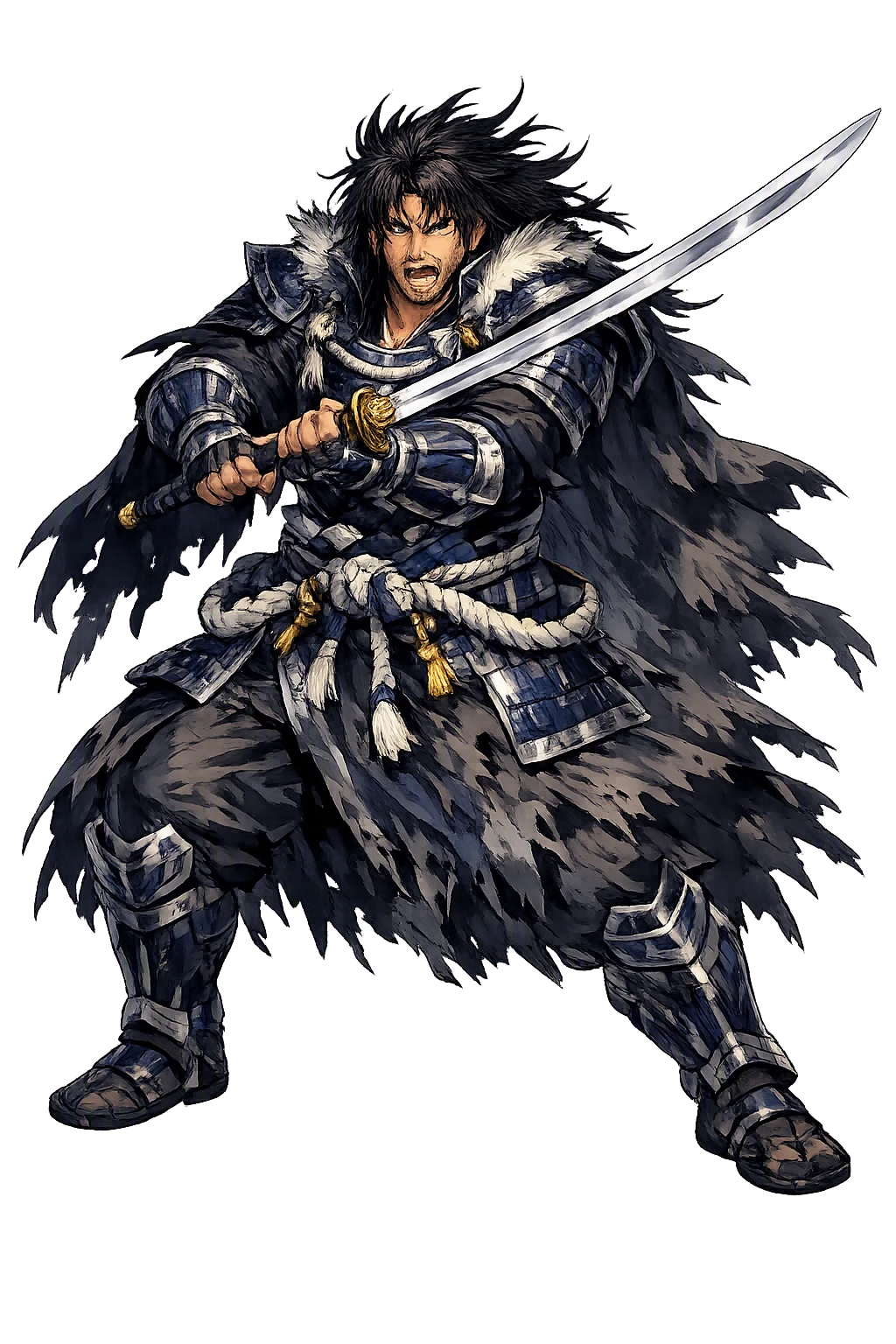
Stress-testing Susanō: do the industry seats hold?
The stress test for Susanō. Every seat in the atlas was attacked with the same question — is the match real, or is it poetry? — and the survivors are recorded with their evidence.
At a Glance
- Temple: Susanō
- Pantheon: Japanese
- Domain of influence: Storms, Sea, Chaos
- Pattern seats: 6
- Sectors touched: Energy & Natural World · Culture & Entertainment · Technology & Innovation · Society & Spirit
- Strongest seat: Maritime, Shipping & Ocean Industries
- Series: The Resonance Files, No. 465 of 548
The Test
Seat 1: Maritime, Shipping & Ocean Industries
Claim: Impulsive ruler of sea and storm; the kami who churned the waters until the eight-forked serpent was slain. Exhibit: From the Nose of Izanagi — When Izanagi purified himself after his flight from Yomi, Amaterasu was born from his left eye and Tsukuyomi from his right; from his nose came Susanoo, whose name the Kojiki writes 須佐之男 and glosses as the swift, impetuous male deity.
Verdict: holds under load. The correspondence is functional, not decorative.
Seat 2: Mythic Name Restoration
Claim: Storm and sea kami whose long vowel distinguishes the name from plain ASCII. Exhibit: The Test and the Trampling — Climbing to heaven to bid his sister farewell, Susanoo alarmed Amaterasu, who went out armed; he protested his innocence and proposed an ukei, a covenant of sincerity, exchanging ornaments so that she bore three goddesses from his sword and he five gods from her necklace (Kojiki 1).
Verdict: holds under load. The correspondence is functional, not decorative.
Seat 3: Meteorology & Weather Intelligence
Claim: The Shinto storm kami whose long vowel marks the canonical form; tempest and sea-churn are his signature. Exhibit: The Eight-Forked Monster of Izumo — Banned from heaven, Susanoo descended to Izumo, where he found the old couple Ashinazuchi and Tenazuchi weeping beside their eighth daughter: each year the serpent Yamata no Orochi — eight heads, eight tails, cedars growing on its back, its body spanning eight valleys — had devoured one of their daughters, and Kushinadahime alone remained.
Verdict: holds under load. The correspondence is functional, not decorative.
Seat 4: Diacritic-First Domains
Claim: The final macron marks the long vowel in the Japanese storm kami. Exhibit: From the Nose of Izanagi — When Izanagi purified himself after his flight from Yomi, Amaterasu was born from his left eye and Tsukuyomi from his right; from his nose came Susanoo, whose name the Kojiki writes 須佐之男 and glosses as the swift, impetuous male deity.
Verdict: stands. Strip both to their function and the functions match.
Seat 5: Gaming, Fantasy & Entertainment IP
Claim: The storm kami appears in fighting games, RPGs, and MOBAs as a lightning-and-sea archetype. Exhibit: The Test and the Trampling — Climbing to heaven to bid his sister farewell, Susanoo alarmed Amaterasu, who went out armed; he protested his innocence and proposed an ukei, a covenant of sincerity, exchanging ornaments so that she bore three goddesses from his sword and he five gods from her necklace (Kojiki 1).
Verdict: stands. Strip both to their function and the functions match.
The Control Group
Against the seats that survived, one control: the temple's own summary of its figure — Susanoo's cycle in the Kojiki and Nihon Shoki runs from cosmic vandal to culture hero: expelled from heaven, he conquers the dragon of chaos and founds a kingdom in song — the most humanly told arc of any Japanese deity. The seats do not drift far from it. That is the audit's cleanest result.
The Method, Stated Plainly
The atlas is not a horoscope. Seats are earned from the sources — argued, weighted, published — and every one of them can be challenged at the methodology page. A match that cannot survive an argument does not survive review. That is the whole trick: the patterns are claims, and claims can be tested.
For the Ones Who Work There
For a sponsor in maritime, shipping & ocean industries, the fit here is not adjacency — it is inheritance. Your trade already tells this story every working day; the temple simply holds the original. The patron tier and the advertising terms carry the mechanics; the myths above carry the reason.
The File Continues
This is one of 548 Resonance Files — the third dispatch from every flagship temple, where the myths meet the markets. The temple's founding dispatch tells the name's story; its Restoration File tells the spelling's; the blog index holds the whole archive.
Continue the series — previous: Sūrya (read it) · next: Suttungr (read it).
The Resonance Files are argued from the same canonical record as the pattern atlas itself: the lexicon, the lore catalog, and the cited sources. Every seat can be challenged at the methodology page — and the challenge is the point.