PuniCodex

Extended Lore

須佐之男命 Susanō

Etymology · Orthography · Cult · Iconography · Reception · Sources

Tier 1 Susanō.com
Susanō — Storms, Sea, Chaos
01

Quick Facts

Essential information about Susanō, Storms, Sea, Chaos

Original Script須佐之男命
Unicode RestorationSusanō
Reconstructed Pronunciation/sɯ.sa.noː/
PantheonJapanese
DomainStorms, Sea, Chaos
MeaningSwift impetuous male deity; the Shinto storm god
ClassificationTier 1
Primary DomainSusanō.com
Sacred SymbolsKusanagi sword, Yamata no Orochi, Eight sake vats, Suga, the clearing palace, The piebald horse
02

Etymology & Word Family

From original script to Unicode restoration

Original Script 須佐之男命 Susanō — "Swift impetuous male deity; the Shinto storm god"
Unicode Restoration Susanō Restored stress, length, and script
Modern ASCII susanoo Plain-ASCII fallback

From Old Japanese susanowo, 'swift impetuous male'; brother of Amaterasu, expelled from the high plain of heaven for his violence.

03

Unicode Character Breakdown

Character-by-character philological analysis

CharacterUnicodeNameBlockPhonetic Role
SU+0053Latin Capital Letter SBasic LatinSame, capitalized
uU+0075Latin Small Letter UBasic LatinSame
sU+0073Latin Small Letter SBasic LatinSame
aU+0061Latin Small Letter ABasic LatinSame
nU+006ELatin Small Letter NBasic LatinSame
ōU+014DLatin Small Letter O with MacronLatin Extended-AMacron: long vowel
—N/ADropped characterJapanese orthographyAbsorbed into the preceding long vowel ō

The Tier 1 classification reflects how much of the original phonology this restoration preserves — stress and vowel length for Greek names, distinctive letters and diacritics for every other tradition.

04

Cult & Worship

How the sacred was kept — rites, sanctuaries, remains

The Cult

Susanoo's cult is the geography of his myth, and it is documented, not conjectured. At Izumo, Suga Jinja preserves the site of the palace he founded after slaying the serpent, nested within the orbit of Izumo Ōyashiro, Japan's oldest shrine tradition, where the tenth lunar month is still Kamiarizuki, the month when the gods are present. His other great seat is a medieval layering: fused with Gozu Tennō, the ox-headed lord of epidemics, he became guardian of Kyōto's Gion quarter, and Yasaka Shrine's plague rites are recorded from 869 CE, when the court set up sixty-six pikes — one per province — to stay an epidemic; that emergency rite grew into the Gion Matsuri, whose month-long July observance remains among Japan's greatest festivals. Shrines bearing his name entered the official Engishiki register (927). The priesthood follows the standard shrine order — the kannushi of Suga and Yasaka serve a god of place, not a storm-god specialty. The pattern is the chronicles' own: the god who brings destruction is the god most worth appeasing.

In the Earth

Susanoo's cult centers mark the geography of his myth. Suga Jinja in Izumo City preserves the site of his post-serpent palace within the orbit of Izumo Ōyashiro, Japan's oldest shrine tradition. In Kyōto, Yasaka Shrine — the medieval home of his Gozu Tennō identity — is documented from the ninth century, and the Gion Matsuri's plague-warding origins are recorded in the late ninth-century court chronicles. Atsuta Jingū in Nagoya has revered the Kusanagi sword, said to rest there, since the Kofun period. Serpent-quelling imagery recurs in shrine carvings and festival regalia across Japan, where dragon-slaying scenes guard thresholds to this day.

05

Iconography

How Susanō was imaged across the ages

The Image

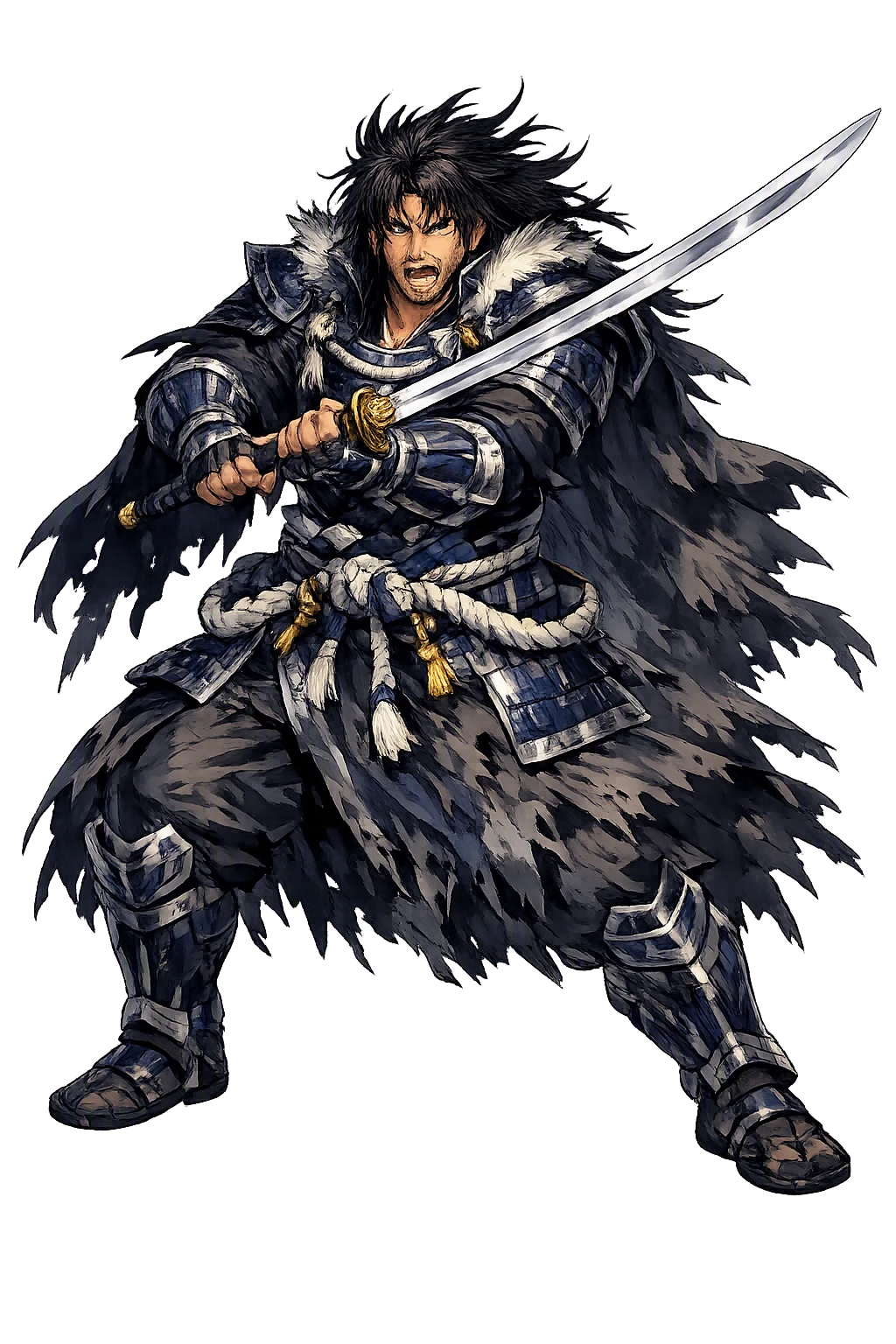
The storm god is a latecomer to the image-world of the chronicles — no depiction of him survives from the age of the Kojiki, and what we recognize as 'Susanoo' is mostly a creation of the medieval and early modern periods. The texts hand the artist fixed attributes: wild hair and beard, weeping fury, the eight-forked serpent, eight vats of sake, and the Kusanagi sword drawn from a tail. Medieval narrative painting and then the Momoyama and Edo appetite for dragon-combat spectacle made the Orochi fight the archetypal heroic single combat — the god waist-deep in sake while eight necks strike. His other fixed image is regalia rather than portrait: Kusanagi, the blade he won, revered at Atsuta Jingū as one of the Three Imperial Treasures. In the Gion cult his medieval mask is ox-headed Gozu Tennō, and serpent-quelling carvings and festival floats keep that old vocabulary current.

06

Reception & Transformation

The name after its own age — transmission, translation, survival

Afterlives

Susanoo's afterlife is inseparable from the chronicles that made him. The Kojiki (712) and Nihon Shoki (720) fixed his cycle at the head of Japanese letters, and the Heian court's epidemic rites of 869 bound him to the state's most anxious ritual calendar. The medieval combinatory cult then re-read him through Gozu Tennō, carrying his name from Izumo's mythology into Kyōto's plague-worship — a layering the early modern synthesis never fully untangled. Edo scholarship re-opened the Kojiki as philology: Motoori Norinaga's great commentary, the Kojiki-den (completed 1798), lingered over the weeping and the rampage and made Susanoo's expulsion a problem of what a rough, sincere nature owes an ordered heaven — the first modern reading of his psychology. The Meiji state pruned the Buddhist Gozu Tennō layer and re-presented him as a pure 'Japanese' god of heroic conquest, a reading the modern shrine world retains. The transmission is unusual: not a text rescued from oblivion but an unbroken cult, with commentary and court record doing the work that elsewhere papyri and palimpsests do.

Identifications Across Traditions

In the medieval combinatory cult Susanoo was fused with Gozu Tennō, the ox-headed 'heavenly king' of epidemics, and enshrined as guardian of Kyōto's Gion quarter — the origin of Yasaka Shrine and its great Gion Matsuri, founded in 869 CE to ward off plague. The logic is the Kojiki's own: the god who brings destruction is the god who can forbid it. In Shugendō and in the Yoshida synthesis he absorbed further identities, while popular religion remembered him chiefly as the dragon-slayer of Izumo. Modern media have made him the most exported of the storm gods: the spectral warrior Susanoo of manga and games, and his namesake jutsu, carry the old name to audiences who never open the Kojiki.

Modern Legacy

Izumo keeps his memory at Suga Jinja, and the sword he won from the serpent is counted among the imperial regalia — its physical keeper is Atsuta Jingū in Nagoya, which has revered Kusanagi since the Kofun period. The Gion Matsuri, among Japan's most famous festivals, descends from rites to his epidemic-fusing form, and serpent-quelling imagery guards thresholds in shrines across the country. His name rides typhoon warnings, sports teams, and the arsenal of fantasy fiction. Few gods better illustrate the double legacy of the storm: what a culture fears, it also celebrates.

07

The Meditation

What Susanō means — beyond the dictionary

Susanoo is the necessary outlaw. Heaven could not keep him, yet heaven needed what only he could do — pull a sword from the tail of chaos and found a palace where his spirit cleared. His biography reads like an argument about untamed energy: grief that floods rivers, rage that tramples rice-fields, courage that faces an eight-headed monster with eight vats of sake.

The moral is not that chaos is evil. It is that chaos unhoused becomes vandalism, while chaos properly settled becomes a song about a cloud-rising palace. Every culture knows this figure — the brilliant, impossible sibling expelled from the family table who nonetheless saves the family name.

08

Screen & Culture

Where Susanō echoes through film, television, and games — and how

09

Frequently Asked Questions

Common questions about Susanō, Storms, Sea, Chaos, and Unicode restoration

01How do you pronounce Susanō?

In reconstructed pronunciation, Susanō is /sɯ.sa.noː/ — approximately 'SOO-sah-noh' — pure Japanese vowels, the final 'oh' held long; the macron over the ō is the mark plain ASCII removes.

02What does Susanō mean?

Susanō means Swift impetuous male deity; the Shinto storm god in the japanese tradition.

03What are the symbols of Susanō?

Susanō is associated with Kusanagi sword (The blade drawn from the tail of Yamata no Orochi and given to Amaterasu; as one of the Three Imperial Regalia it binds the storm to sovereignty), Yamata no Orochi (The eight-headed, eight-tailed serpent whose yearly tribute of daughters ended at Kushinadahime — chaos given dragon-form), Eight sake vats (The eightfold-refined sake with which he plied the serpent — drunkenness itself turned into a weapon), Suga, the clearing palace (The palace he built where his spirit cleared after the serpent-slaying, giving Izumo its sacred center), The piebald horse (Ame-no-Fuchikoma, the heavenly piebald he flayed and hurled into the weaving hall — the outrage that cost heaven its light).

04Why restore Susanō in Unicode?

Plain ASCII susanoo strips the stress, length, and script that make the name specific. Unicode restoration returns the name to its original written dignity.

05What is the most important myth about Susanō?

“From the Nose of Izanagi” — the The Birth story that anchors the mythology of Susanō, told in full on the lore page.

10

Scholarly Sources

The philological foundations of this restoration

Every claim on this page is grounded in established scholarship. The orthographic restorations follow disciplinary convention. The etymological chain follows the best available reference works. This is not invention — it is resurrection through scholarship.

◈

Lexicography & Philology

  • Hepburn
◎

Primary Texts

  • Kojiki
  • Nihon Shoki
  • Kojiki 1 (birth, rampage, Orochi, Suga)
  • Nihon Shoki 1 (Somin Shōrai, variant accounts)
  • Philippi, Kojiki
◉

Archaeology & Art History

  • Material evidence — iconography, inscriptions, and temple archaeology — for Susanō and related cults.
✦

Religious Studies

  • Aston, Nihongi
Return

The Surface Awaits

You have traced the name from its earliest attestation to its Unicode restoration. Now return to the myth. The story is where the name lives.

Back to Lore
Susanō mascot