
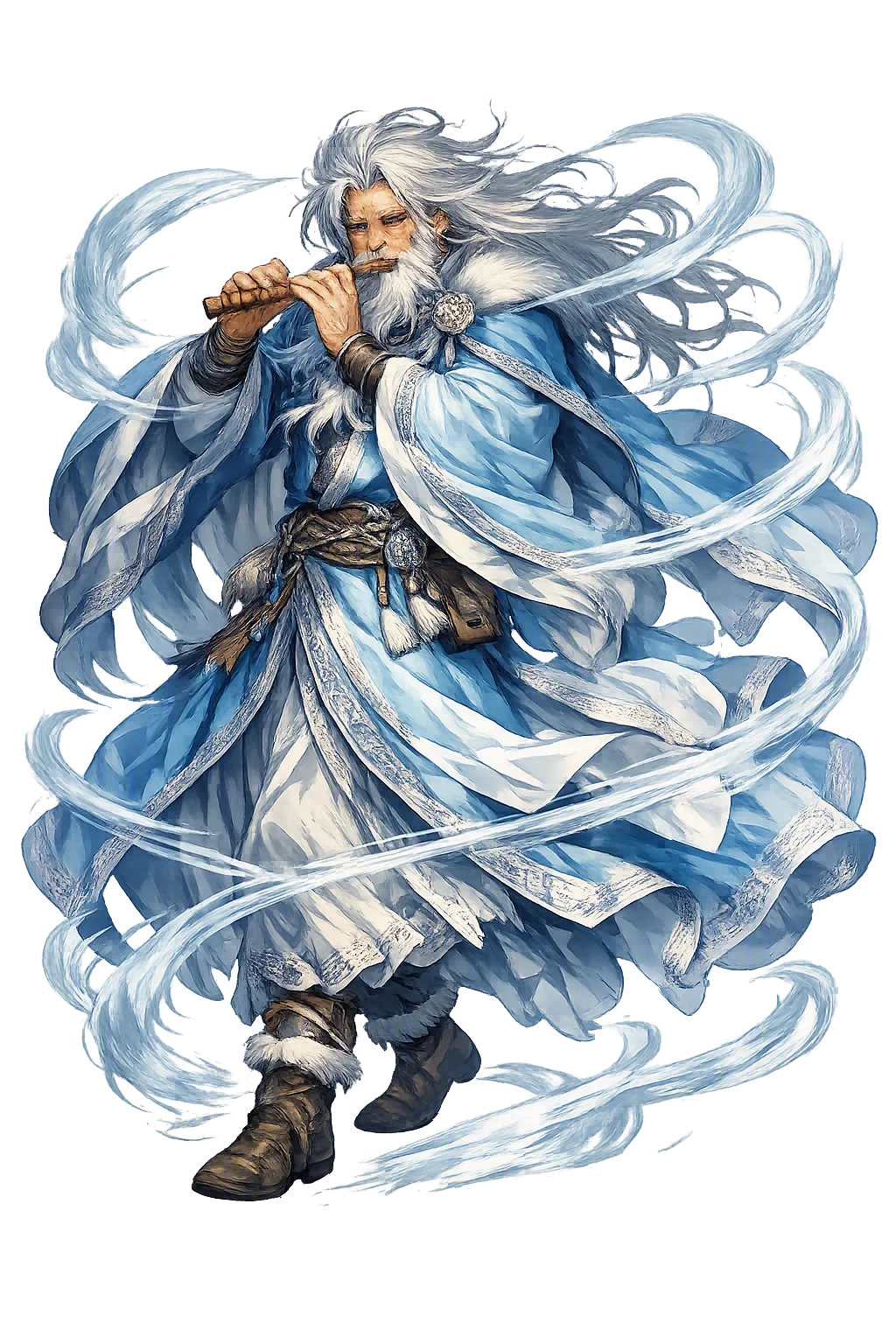
The hidden history behind Stribog
Behind the modern ASCII form stribog hides a much longer story. Stribog reaches back through manuscripts, inscriptions, and oral tradition long before it ever touched a keyboard, and every syllable of his name is a receipt from that journey. He is the father of winds, the grandfather of storms, the deity who stirs the air and drives the weather across the Slavic lands. In the Primary Chronicle, he stands among the chief gods of Kievan Rus', a member of the official pantheon alongside Perun, Khors, Dazhbog, Simargl, and Mokosh. Yet compared to Perun or Veles, Stribog has received less attention from modern scholarship and popular culture. This post aims to correct that imbalance by tracing his name, his domains, his mythology, his cultural afterlife, and the Unicode restoration that returns him to the address bar.
The neglect of Stribog is unfortunate, because his domain — wind and weather — touches human life every day. While thunder gods and sun gods get the dramatic myths and the grand temples, wind gods work invisibly, shaping the climate, the harvest, and the fate of travelers. To understand Stribog is to understand a quieter but no less essential aspect of the sacred.
For modern audiences, Stribog offers an opportunity to appreciate the less flamboyant members of the pantheon. Not every god wields a thunderbolt or rules the underworld. Some gods move the air, fill the sails, and scatter the seeds. These invisible labors are no less divine, and Stribog reminds us of their importance.
At a Glance
- Restored name: Stribog
- ASCII form: stribog
- Meaning: "Father of winds"
- Domain of influence: Winds, Storms
- Pantheon: Slavic
- Classification: Tier 2
Overview
Stribog belongs to the Slavic tradition, where he is catalogued under the domains of winds and storms. His name appears in the Primary Chronicle as one of the gods whose idol was erected by Prince Vladimir of Kiev in 980 CE, an event that marks the high point of official pagan religion in Rus'. After Vladimir's conversion to Christianity in 988, the idol was thrown into the Dnieper River, but the name survived in folklore and scholarly reconstruction.
The figure of Stribog raises fascinating questions about the structure of the Slavic pantheon. If Perun is the thundering sky-god and Dazhbog is the solar deity, where does the wind god fit? Some scholars see Stribog as a personification of the cold north wind, the bringer of winter storms. Others emphasize his role as a master of all winds, including the warm winds of spring and the storms of summer. His domain is thus both meteorological and cosmological: he is the power that moves the air and shapes the weather.
The PuniCodex restoration presents Stribog in its standard scholarly form. The ASCII form stribog is a DNS fallback; the restored form returns the name to its status as a proper noun and divine name. Because the name does not require diacritics or special characters, it is classified as Tier 2. As a flagship entry, Stribog receives the full treatment accorded to major figures of the Slavic pantheon.
Stribog's place in the Kievan pantheon also tells us something about the religious politics of early Rus'. By including Stribog among the official gods, Prince Vladimir acknowledged the importance of weather and agriculture to the prosperity of his realm. The pantheon was not just a theological statement but a political one, a way of aligning the ruling dynasty with the forces that sustained life.
Etymology and Meaning
The etymology of Stribog is debated, and several proposals have been advanced. One influential analysis connects the first element stri- to a root meaning "to extend, spread, or blow," related to the movement of wind across space. In this reading, Stribog is the "Spreading God" or the "God Who Extends Himself," a fitting name for a deity of wind and weather. Another proposal sees stri- as related to words for cold, frost, or stinging wind, making Stribog a specifically wintery or stormy deity.
A third possibility connects the name to an Iranian or other non-Slavic source, given the cosmopolitan nature of the Rus' pantheon. Some scholars have compared Stribog to wind deities in Iranian and Baltic traditions, suggesting that the name may preserve a borrowing or shared inheritance. These comparisons are speculative but not implausible, given the presence of Iranian elements elsewhere in Slavic religion.
The second element, -bog, is the familiar Slavic word for "god," cognate with Sanskrit bhaga- and related to Iranian baga. So whatever the precise meaning of stri-, the name as a whole identifies its bearer as a deity. The meaning "Father of winds" is the one most often cited in popular and scholarly summaries, capturing the sense that Stribog is the source or ruler of the winds.
The pronunciation is approximately "STREE-bog," with stress on the first syllable and a hard final -g. The name does not require diacritics in its standard English form, which places it in Tier 2. The restoration preserves the spelling that appears in medieval sources and modern scholarship.
The debate over Stribog's etymology reflects the larger challenge of interpreting Slavic divine names. Many names are transparent compounds, while others are opaque or borrowed. Stribog falls somewhere in the middle: the second element is clear, but the first remains puzzling. This uncertainty has not prevented scholars from recognizing his importance, but it has made him a focus of philological discussion.
Mythology and Domain
Stribog's mythology centers on his control of the winds and storms. In a world without modern meteorology, the wind was one of the most powerful and unpredictable forces of nature. It could bring rain that saved crops or storms that destroyed them. It could drive ships to their destinations or wreck them on hidden shores. A god who controlled the wind controlled the fate of sailors, farmers, travelers, and warriors.
The domain of winds is thus both practical and symbolic. On the practical level, Stribog was invoked for favorable winds, safe voyages, and timely rains. Sailors, farmers, and travelers would pray to him or make offerings to ensure that the wind served rather than harmed them. On the symbolic level, the wind represents change, movement, and the invisible forces that shape human life. Stribog is the deity who personifies these forces.
The domain of storms is closely related but more dramatic. Storms combine wind, rain, thunder, and lightning in a terrifying display of power. While Perun is often associated with the thunderbolt itself, Stribog may be understood as the one who stirs the air and drives the storm across the sky. In this reading, the two gods cooperate in the production of storms: Stribog raises the wind, and Perun strikes with lightning.
One of the most interesting aspects of Stribog is his title "grandfather of winds," which appears in some medieval sources. This title suggests an ancestral figure, an old god who begets or rules the lesser winds. It may also reflect the Indo-European tendency to personify natural forces as members of a divine family. The winds are Stribog's grandchildren, subject to his authority and carrying his commands across the world.
The seasonal dimension of Stribog's domain is also important. In a four-season climate, the winds change character throughout the year. The cold north wind brings winter; the warm south wind brings spring; the storm winds of summer bring both rain and destruction. Stribog's mastery of all winds makes him a deity of the entire annual cycle, not just of one season. He is the breath of the year.
Cultural Legacy
Stribog's cultural legacy is more subdued than that of Perun or Veles, but it is no less real. In Christianized Slavic culture, his functions were partly absorbed by Saint Blaise, a saint associated with throat ailments and protection from storms, and by various folk beliefs about the wind. Peasants would say that the wind was "Stribog blowing" or that a sudden gust was sent by the old wind god. These survivals kept the name alive in rural communities long after official paganism had ended.
In the Romantic and nationalist movements of the nineteenth and twentieth centuries, Stribog was rediscovered as a symbol of the elemental forces of the Slavic landscape. Poets and artists depicted him as an old man with flowing white hair, riding the clouds or stirring the air with a staff. This image emphasized his connection to the natural world and his role as a personification of Slavic skies.
Contemporary Slavic Native Faith and related movements honor Stribog as a god of winds, storms, and weather. Rituals in his honor may be held at windy places, on hilltops, or during storms. Practitioners may offer feathers, kites, or prayers carried by the wind. He is also invoked for change, movement, and the clearing of stagnant situations, reflecting the symbolic association of wind with transformation.
Stribog has also appeared in modern fantasy and games, usually as a wind deity or storm god drawing on Slavic themes. These representations vary in accuracy, but they introduce the name to new audiences and keep it in circulation. The challenge, as with all ancient deities, is to separate the fantasy version from the scholarly reconstruction.
The figure of the wind god also resonates with contemporary environmental concerns. As climate change alters weather patterns around the world, the ancient image of a deity who controls the winds takes on new relevance. Stribog becomes a symbol of humanity's enduring dependence on and vulnerability to the forces of nature.
Unicode Restoration and Conclusion
The PuniCodex restoration of Stribog returns the name to its proper scholarly form. The ASCII form stribog reduces the name to a lowercase string, stripping it of the capital that marks it as a proper noun. The restored form restores that dignity and places Stribog where he belongs: among the major gods of the Slavic pantheon.
The restoration is fitting for a god whose domain is movement and breath. The wind cannot be seen, but its effects are everywhere. A name, similarly, is invisible but powerful. The Unicode domain makes Stribog's name visible in its correct form, allowing the hidden history behind it to be explored and shared. It is a small but meaningful act of restoration.
The restoration also honors the quieter gods of the pantheon. Not every deity needs thunderbolts and epic battles to be significant. Some gods work through steady, invisible forces like the wind. By restoring Stribog's name, PuniCodex acknowledges that these quieter domains are essential to the full picture of Slavic religion.
The restoration of Stribog also draws attention to the sensory dimensions of divine names. Wind is heard and felt before it is seen, and Stribog's name has an airy, aspirated quality that seems to move through the mouth like breath. The lowercase ASCII form silences some of this phonetic resonance; the capitalized restoration lets the name breathe again. In a medium dominated by visual text, this sonic dimension is easy to overlook, but it remains part of what the name carries.
In the end, Stribog reminds us that the air we breathe and the weather we endure were once understood as the work of divine persons. His name carries the memory of a world in which every wind had a source and every storm had a master. The restoration does not bring back that world, but it does ensure that the name continues to blow through the modern digital landscape.
Stribog and the Sailing Life
Although the early Slavs were primarily an agricultural people, their lives were also shaped by rivers, lakes, and seas. The Dnieper, the Volga, the Vistula, and the Danube were highways of trade and migration, while the Baltic and Black Seas connected the Slavs to wider networks of exchange. For those who traveled and traded on these waters, the wind was a matter of life and death. Stribog, as the master of winds, was therefore a deity of profound practical importance.
A favorable wind could mean the difference between a profitable voyage and a disastrous one. Sailors and merchants would pray to Stribog for winds that filled their sails and carried them safely to harbor. They would also seek to avoid the sudden storms that could arise without warning on the great rivers and inland seas. Stribog's domain was thus not abstract meteorology but the concrete conditions of travel and commerce.
The wind also played a role in agriculture beyond the obvious connection to weather. Wind pollinates plants, disperses seeds, and dries grain after harvest. A gentle breeze at the right moment could save a crop; a harsh wind at the wrong moment could destroy it. Farmers would watch the sky and the trees, reading the wind for signs of Stribog's mood. In this way, the wind god was present in the daily labor of the fields as well as on the water.
The sound of the wind has its own symbolic language. A howling wind might be Stribog angry; a soft breeze might be Stribog blessing the land. Folk beliefs across Slavic regions associate different winds with different qualities: the north wind brings cold, the south wind brings warmth, the east wind can bring drought or storm, the west wind can bring rain. Stribog presides over this plurality, the father and grandfather of all the winds.
River traders and Vikings who moved through Slavic lands would have encountered Stribog in various forms. The Slavic word for wind and the names associated with wind deities appear in place names, boat names, and seasonal customs along the waterways. These traces suggest that Stribog was not only a god of the Kievan elite but a deity known and invoked by ordinary travelers.
In modern times, Stribog has become a patron of sailors, pilots, and travelers of all kinds. Practitioners may invoke him before a journey, asking for favorable conditions and safe passage. The god who once filled the sails of river boats now watches over airplanes and automobiles, adapting his ancient domain to modern forms of movement.
The Unicode restoration of Stribog honors this practical dimension of the god. A domain under the restored name can serve as a resource for those who travel, whether literally or metaphorically. It reminds visitors that the wind is not merely weather but a divine force that has shaped Slavic life for millennia. The restoration gives Stribog's name the visibility that his invisible domain deserves.
In the end, Stribog teaches us that even the most intangible forces can be personified and honored. The wind cannot be seen, but its effects are everywhere. The restoration of Stribog's name ensures that this unseen god continues to be recognized in a world that still depends on his breath.
Sources and Further Exploration
Stribog is attested primarily in the Primary Chronicle, where he appears among the official gods of Kievan Rus'. Beyond this central source, scholars have reconstructed his nature through comparative study of wind and storm deities in Baltic, Iranian, and Germanic traditions. Linguistic analysis of the name continues to generate debate, with proposals connecting stri- to spreading, cold, or non-Slavic roots. Folk beliefs about wind and weather survive in rural communities and ethnographic collections.
Modern pagans honor Stribog at windy places, during storms, and at seasonal turning points. The PuniCodex temple for Stribog provides a gathering place for these diverse engagements, offering scholarly articles, ritual suggestions, and cultural context under the restored name. It is a reminder that even the quieter gods deserve their own addresses.
The restoration of Stribog ultimately honors the elemental forces that shape human life. Wind, weather, and breath are easy to take for granted, but they are foundational. By giving Stribog his proper name in the digital realm, we affirm that even the most invisible powers deserve recognition. The name may be quiet, but the forces it names are not.
Related Names
- Baba Jagá — Forest Witch, Death
- Černobog — Darkness, Chaos, Evil
- Dažbog — Sun, Wealth, Giving
- Domovój — Household Spirit
- Kikimóra — House Spirit, Swamp Hag
Sources
- N. I. Tolstoi et al., Slavic Antiquities: Ethnolinguistic Dictionary (1995–2012).
- Vyacheslav Ivanov & Vladimir Toporov, comparative Slavic mythology studies.
- L. Niderle, The Slavic Antiquities (1902–1924).