
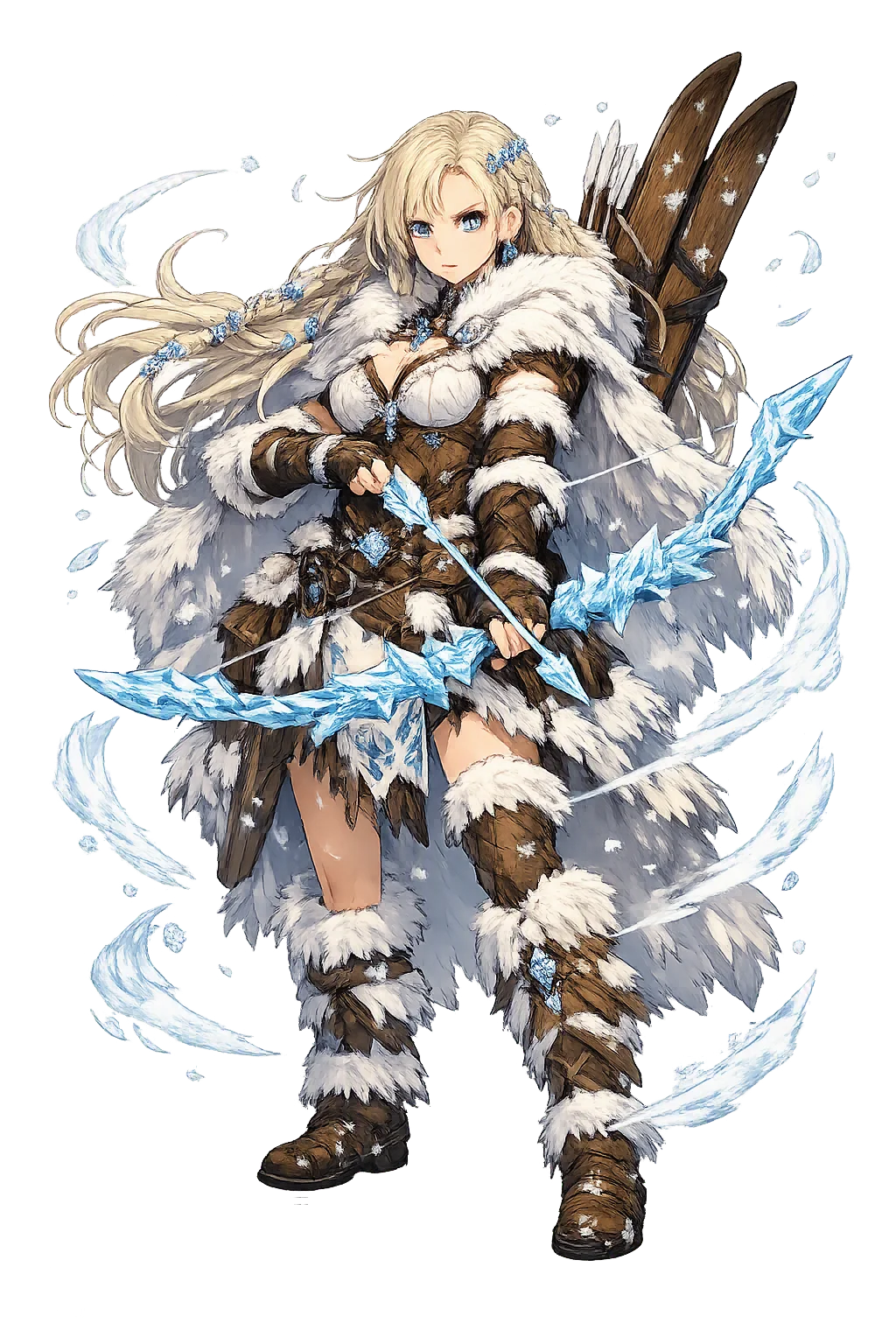
The name Skaði and the world it opens
A name is a door. Skaði opens onto an entire world: the domain of winter, mountains, hunting, a Norse tradition, and centuries of storytelling, worship, and scholarship. This post walks through that world room by room — the name and its roots, the original script, the sound of it, the myths, the symbols, the sites, the afterlife across cultures — and ends at the newest room of all: a Unicode domain that makes the whole structure addressable. skadi gets you to the same building, but only the restored form tells you why it was built.
At a Glance
- Restored name: Skaði
- ASCII form: skadi
- Meaning: "Shadow, harm (from *skadwō)"
- Domain of influence: Winter, Mountains, Hunting
- Pantheon: Norse
- Classification: Tier 1
- Original script: ᛋᚴᛅᚦᛁ (Younger Futhark)
- Live domain: skaði.com
Overview
Skaði (skadi) — Winter, Mountains, Hunting · Shadow, harm (from skadwō) — belongs to the Norse tradition, where it is catalogued under the domain "Winter, Mountains, Hunting". The name means "Shadow, harm (from skadwō)".
Skaði is the giantess who walked into Ásgarðr armed and walked out with a settlement. Daughter of the giant Þjazi of Þrymheimr, she came in helmet and byrnie to claim compensation for her father's death, and the gods met her terms: a husband chosen by his feet alone, a laugh no one thought she had in her, and her father's eyes set in the sky as stars.
Her dominion is the high country. Grímnismál remembers her dwelling in her father's ancient home, and Snorri calls her ǫndurgoð and ǫndurdís — the ski-deity who travels the drifts on her ǫndurr and shoots game with the bow. The sea she married into never held her; the mountains took her back.
PuniCodex restores the name as Skaði and serves its temple at skaði.com. The restoration preserves at least one distinctive feature — a diacritic or a distinctive letter — that the ASCII form loses, and exactly one historically valid Unicode restoration exists, which places the name in Tier 1. The plain ASCII form skadi survives as a modern convenience imposed by the early domain-name system; the restoration, not the fallback, is the form the project defends as philologically complete.
The Name
The name is attested in Younger Futhark as ᛋᚴᛅᚦᛁ. Etymologically it means "Shadow, harm (from *skadwō)".
The reconstructed proto-form is skadwō (proto-indo-european, "Shadow, harm"). Shadow, harm (from *skadwō)
The ASCII form skadi survives only because the early domain-name system could not carry diacritics; it is a technological compromise, not an ancient spelling. The Unicode restoration Skaði recovers the full diacritic detail of the scholarly transliteration directly in the address bar. The restoration preserves at least one distinctive feature — a diacritic or a distinctive letter — that the ASCII form loses, and exactly one historically valid Unicode restoration exists, which places the name in Tier 1.
The letter-by-letter transformation runs:
- s → S — Same
- k → k — Same
- a → a — Same
- d → ð — Eth: voiced dental fricative
- i → i — Same
The project holds the domain skaði.com (xn--skai-dqa.com) as the canonical home of this name.
Etymology & Roots
The recorded derivation reads: Shadow, harm (from *skadwō)
The reconstructed proto-form is *skadwō (proto-indo-european), glossed as "Shadow, harm".
The reconstruction is classed as attested.
The Original Script
The name is preserved in Younger Futhark as ᛋᚴᛅᚦᛁ.
The scholarly transliteration is skaþi.
The rendering proceeds step by step:
- ᛋ (sól) writes /s/
- ᚴ (kaun) writes both /k/ and /g/ (and the ng cluster)
- ᛅ (ár) writes /a/, /á/ and /æ/
- The spelling skaþi is a normalized phonetic reconstruction; Younger Futhark does not distinguish voiced/voiceless stops or separate short and long vowels
Old Norse literature reached us in medieval Icelandic manuscripts written in the Latin alphabet; the earlier epigraphic medium was the Younger Futhark. The theonym Skaði is known from the manuscript tradition alone; a hypothetical runic rendering would approximate ᛋᚴᛅᚦᛁ — the futhark marks no vowel length (ᛅ serves both a and á) and writes the voiced dental fricative with the thorn-rune ᚦ, which covers both [θ] and [ð]. The normalized Old Norse form Skaði therefore carries two features the ASCII form loses: á, the long low back vowel [ɑː] marked by the acute, and ð (eth), the soft dental fricative [ð]. The PUNICODEX registrable form preserves both characters as a Tier-1 restoration of the name's Norse phonology, recovering what neither runes nor ASCII could write.
Pronunciation
The reconstructed pronunciation of the name is /ˈskɑː.ði/ — Old Norse Reconstruction.
Phoneme by phoneme:
- Sk- — Unpalatalized cluster [sk]; Old Norse keeps the hard [k] before the back vowel, untouched by the later Scandinavian palatalizations
- -á- — Long low back [ɑː]; the acute marks vowel length on the stressed first syllable
- -ð- — Voiced dental fricative [ð], the eth; the soft 'th' of 'father', never the hard 'th' of 'thin'
- -i — Short close front [i], the light nominative ending of the name
For the modern speaker, the closest approximation is: 'SKAH-thee' — stress the long open first syllable like 'spa' held long, then a soft 'th' as in 'father' and a short 'ee'.
Kindred and historical forms of the name:
- Modern Icelandic — Skaði, the living reflex, unchanged in spelling from the Old Norse
- Anglicized — Skadi, the standard ASCII rendering in modern handbooks
- Older translations — Skathi (Bellows's Poetic Edda), Skade (nineteenth-century renderings of Snorri)
- Conjectural cognates — Gothic skadus, Old English sceadu, 'shadow' — a debated etymology, not a settled one
Skaði is Tier 1: the acute on á marks the long vowel [ɑː], and ð is a distinctive letter — features the ASCII form Skadi loses. The name is grammatically masculine in Old Norse though it belongs to a goddess, a fossil noted by the lexicographers, and is attested throughout the Eddic corpus (Grímnismál 11, Lokasenna, Gylfaginning, Skáldskaparmál). Normalization follows Cleasby & Vigfusson, An Icelandic-English Dictionary (1874), s.v. Skaði; and Zoëga, A Concise Dictionary of Old Icelandic (1910), s.v. Skaði.
Mythology
Skaði is the giantess of the high fells: daughter of Þjazi, inheritor of Þrymheimr, the 'bright bride of the gods' named in Grímnismál. She enters the mythic record already armed — coming to Ásgarðr not as a supplicant but as a claimant — and she leaves it as vengeance incarnate, fastening the venom-snake above the bound Loki. Between those entrances and exits lies the Edda's strangest marriage: chosen by feet, wrecked by geography. Snorri remembers her above all on skis, bow in hand, and names her ǫndurgoð and ǫndurdís, the ski-deity. Her myths ask what compensation can repair, and what terrain a self will not surrender.
The Weregild of Þjazi (Skáldskaparmál)
The giant Þjazi had abducted Iðunn and her apples of youth; when Loki stole her back, Þjazi pursued in eagle shape, and the Æsir kindled a fire that scorched his wings and brought him down inside their garth, where they slew him. Skaði took her father's death as a cause of war: she put on helmet and byrnie and came to Ásgarðr in full war-gear, and the gods chose settlement over battle.
Her terms were three. She would choose a husband from among the Æsir — but only by the feet, the gods hidden behind a screen. They must make her laugh, which she thought no one could do; Loki tied one end of a rope to a goat's beard and the other to his own testicles, and as each hauled and shrieked he tumbled at last onto her knee, and she laughed. And Óðinn took Þjazi's eyes and hurled them into the heavens, where they shine as two stars — a father's face written into the night his daughter would hunt beneath.
The Feet She Chose, the Sea She Left (Gylfaginning)
Behind the screen the gods stood bare to the calves, and Skaði picked the fairest pair of feet, certain they could only belong to Baldr. They belonged to Njǫrðr of Nóatún — the sea-god, rich and even-tempered, and entirely of the wrong element. They agreed to divide their marriage by terrain: nine nights in Þrymheimr, then nine at Nóatún.
The verses Snorri preserves are the marriage's epitaph. Njǫrðr: 'Hateful to me are the mountains; I was there not long, nine nights only — the howling of wolves seemed evil to me beside the song of swans.' Skaði answered: 'I could not sleep on the sea's bed for the screaming of the bird; he wakes me who comes from the wide wave every morning — the gull.' Then she went up into the mountains and dwelt in Þrymheimr, where she travels on skis with her bow and shoots game, and is called ǫndurgoð or ǫndurdís.
The Snake above Loki (Lokasenna)
At Ægir's feast, as Loki's flyting turns vicious, Skaði is among those he cannot charm. She warns him that his tongue runs free only a little longer: on a sharp rock, with the guts of his own frost-cold son, the gods will bind him. Loki answers with cruelty of his own — boasting that he was first and foremost among those who dealt Þjazi his death-blow, and claiming that Skaði once invited him to her bed.
The poem's prose epilogue gives her the last word without words. When Loki lies bound, it is Skaði who takes a venomous snake and fastens it above his face so that the poison drips downward. His wife Sigyn kneels beside him holding a basin against the drops; only when she turns to empty it does the venom strike, and Loki writhes — in Snorri's telling, the cause men call earthquakes. The giantess who once demanded a laugh becomes the keeper of the dripping drop.
Symbols & Iconography
The iconography associated with Skaði concentrates in a small set of recurring attributes, each a compressed statement about the name:
- Skis (ǫndurr) — The snow-shoes that carry her over the winter peaks, source of her titles ǫndurgoð and ǫndurdís
- Bow — The huntress's weapon; she fares with bow and ski and shoots game in the mountains
- Þrymheimr — The storm-home, her father Þjazi's hall and her own final refuge
- Wolf — The mountain cry she preferred, which Njǫrðr found hateful beside the song of swans
- Venom-dripping serpent — The instrument of her vengeance, fastened above the bound Loki's face
Archaeology & Evidence
No material image can be securely identified as Skaði: no runestone names her, and no picture-stone figure is demonstrably the giantess of Þrymheimr. Her attestation is textual — the Codex Regius of the Poetic Edda (GKS 2365 4to, c. 1270) preserves Grímnismál and Lokasenna, and the Prose Edda manuscripts (Codex Regius GKS 2367 4to; Codex Wormianus AM 242 fol.; Codex Upsaliensis DG 11) carry Snorri's account. The material world her titles presuppose is real enough: prehistoric skis such as the Kalvträsk and Hoting finds from Sweden (c. 3200 BC) and the rock carving of a striding skier at Rødøy in Nordland, Norway (roughly four thousand years old), document the snow-travel culture behind the name ǫndurgoð. Place-names preserve the related ski-god Ullr abundantly; place-name evidence for Skaði herself is sparse and disputed.
Realm & Domain
Skaði is the giantess who walked into Ásgarðr armed and walked out with a settlement. Daughter of the giant Þjazi of Þrymheimr, she came in helmet and byrnie to claim compensation for her father's death, and the gods met her terms: a husband chosen by his feet alone, a laugh no one thought she had in her, and her father's eyes set in the sky as stars.
Her dominion is the high country. Grímnismál remembers her dwelling in her father's ancient home, and Snorri calls her ǫndurgoð and ǫndurdís — the ski-deity who travels the drifts on her ǫndurr and shoots game with the bow. The sea she married into never held her; the mountains took her back.
Þrymheimr
Her father's storm-hall in the high peaks; when the sea failed her she went home to its wolves and wind.
The Bow and the Ski
Snorri names her ǫndurgoð and ǫndurdís — the ski-deity who fares over winter drifts and shoots her game.
The Eyes of Þjazi
Óðinn cast the slain giant's eyes into the sky as two stars — part of the weregild his daughter exacted.
The Venom-Snake
Over the bound Loki she fastened a poison-snake; only Sigyn's basin stands between the drops and his face.
Across Cultures
Skaði's clearest structural parallels stand inside the Norse corpus itself: Gerðr, the giant's daughter who marries Freyr — Skaði's own stepson by Njǫrðr — so that two giant-brides enter the Vanir household a generation apart; and Ullr, named in the same chapter of Gylfaginning as an archer and snow-shoe runner, who functions almost as her male doublet, his cult the better attested of the two in Scandinavian place-names. Etymologists have connected her name with Gothic skadus and Old English sceadu, 'shadow', and the first element of Scandinavia (Pliny's Scadinavia) has been derived from a related root — both proposals remain conjectural and debated. Beyond the Germanic world she invites comparison rather than borrowing: Artemis, the mountain huntress with the bow, is the obvious Greek functional echo. In later Scandinavian folklore she fades from cult but not from landscape — the wild huntress and the mountain-woman of the high fells keep her outline, and the nineteenth-century Norwegian ski revival made her silhouette a national one.
Kindred figures in the PuniCodex cross-tradition index include Ártemis (hunt / wilderness), ꜥAnat (hunt / wild), Ọṣọọsì (hunt / wild), and Pān (hunt / wild).
Cultural Legacy
Skaði never reached Wagner's stage — the Ring is built from Vǫlsunga and Nibelung material, and the giantess of Þrymheimr has no part in it — but modernity found her anyway. The sport she was said to practice made her an emblem of Norwegian winter: she is the 'ski-goddess' of modern handbooks, invoked wherever Scandinavian skiing celebrates its mythic roots. In comics, Marvel's Fear Itself (2011) borrowed her name for the hammer-wielding herald of the Serpent; in games, Smite (2016) fields her as a playable huntress with the winter-wolf Kaldr at her side. Astronomers gave her name to Skathi, a moon of Saturn. In contemporary heathenry she is honored as a goddess of winter, self-reliance, and the hunt — the deity who sets her terms, keeps them, and goes home when the ground is wrong.
The Scholarly Record
The account of Skaði given in this edition rests on the witnesses and reference works listed below. Lexica and etymological dictionaries secure the form and meaning of the name; the literary and religious texts supply the narrative evidence.
- Poetic Edda: Grímnismál (Bellows translation) — Skaði dwelling in Þrymheimr, 'bright bride of the gods'. Full text
- Poetic Edda: Lokasenna (Bellows translation) — her exchange with Loki and the prose account of the venom-snake. Full text
- Snorri Sturluson, Prose Edda: Gylfaginning (Brodeur translation) — the marriage to Njǫrðr, the nine-night verses, the ski-deity titles. Full text
- Snorri Sturluson, Prose Edda: Skáldskaparmál (Brodeur translation) — the death of Þjazi and Skaði's weregild. Full text
- The Younger Edda (Prose Edda), tr. Rasmus B. Anderson (Project Gutenberg). Full text
- Gylfaginning (Old Norse text, Heimskringla.no). Full text
- Skáldskaparmál (Old Norse text, Heimskringla.no). Full text
- Skaði (encyclopedia entry, Wikipedia). Full text
A Meditation
Every other figure in her story negotiates; Skaði stipulates. Wronged, she does not raid and she does not weep — she arms herself, walks to the enemy's gates, and dictates compensation. The settlement is exact: a husband, a laugh, two stars. Even her mistake has integrity. Choosing a god by his feet is absurd, and she abides by the result without complaint.
The marriage to Njǫrðr is the Edda's most honest parable of incompatibility. Neither party is wrong: the gull genuinely wakes her, the wolf genuinely unnerves him, and nine nights each way is the full extent of what compromise can do when identity is terrain. Skaði does not diminish herself to keep the peace; she goes home to Þrymheimr and straps on her skis. And it is she — not Þórr, not Óðinn — who hangs the snake over Loki. The Edda gives its last act of private justice to the daughter who never forgot what she was owed.
The Unicode Restoration
Skaði is classified as Tier 1: the restoration preserves at least one distinctive feature — a diacritic or a distinctive letter — that the ASCII form loses. The ASCII fallback skadi still resolves everywhere, but it is the restored form that carries the name's full information. Across the 5 characters of the name, the restoration adjusts 1: 1 further adjustment (ð). That is the whole thesis of this temple: the marks are the message.
The Domain Name
The restored name is live as a working domain: skaði.com, which the DNS carries in punycode form as xn--skai-dqa.com — an ASCII-compatible encoding that lets a non-ASCII name travel the global network without breaking older infrastructure. The visitor sees Skaði; the machines see the encoding. That duality is the engineering compromise on which the entire restoration rests, and it is why a name written the way its own tradition wrote it in Younger Futhark can now be typed into any browser on earth.
Why This Restoration Matters
A door only matters if people walk through it. skaði.com is open, and everything behind it — the myths, the scholarship, the canvas, the patrons — hangs on the restored spelling. The PuniCodex project bets that the web will make room for names as they were actually written, and Skaði is one of its standing proofs. Visit, share, cite, type it yourself: each use is a small rehearsal for a web where no name has to hide its marks to be found.
Explore Further
This post is one doorway into the temple. The home page carries the full character breakdown and the ambient canvas; the lore page tells the myths in long form; the Scholarly Edition preserves the sources, pronunciation data, and revision history; and the patron wall supports the restoration directly. For the wider map, browse the Lexicon, explore the Pantheon, or return to the PuniCodex blog.
Related Names
Sources
The full scholarly apparatus — every citation, revision, and review — lives in the Scholarly Edition. Key references for this post:
- Poetic Edda: Grímnismál (Bellows translation) — Skaði dwelling in Þrymheimr, 'bright bride of the gods'.
- Poetic Edda: Lokasenna (Bellows translation) — her exchange with Loki and the prose account of the venom-snake.
- Snorri Sturluson, Prose Edda: Gylfaginning (Brodeur translation) — the marriage to Njǫrðr, the nine-night verses, the ski-deity titles.
- An Icelandic-English Dictionary, 2nd ed. with supplement, 1874.
- Poetic Edda (Eddukvæði), ed. Neckel-Kuhn; trans. Carolyn Larrington, Oxford World's Classics (2014), 1270.
- Snorri Sturluson, Prose Edda, trans. Anthony Faulkes, Everyman / Viking Society for Northern Research, 1220.
- Poetic Edda, Grímnismál (Þrymheimr; 'the bright bride of the gods').
- Poetic Edda, Lokasenna (the exchange with Loki).
- Poetic Edda, Lokasenna prose epilogue (the venom-snake).
- Prose Edda, Skáldskaparmál (Þjazi's death; the weregild and the choosing by feet).
- Lexicon authorities for this entry: Cleasby-Vigfusson, Zoëga.