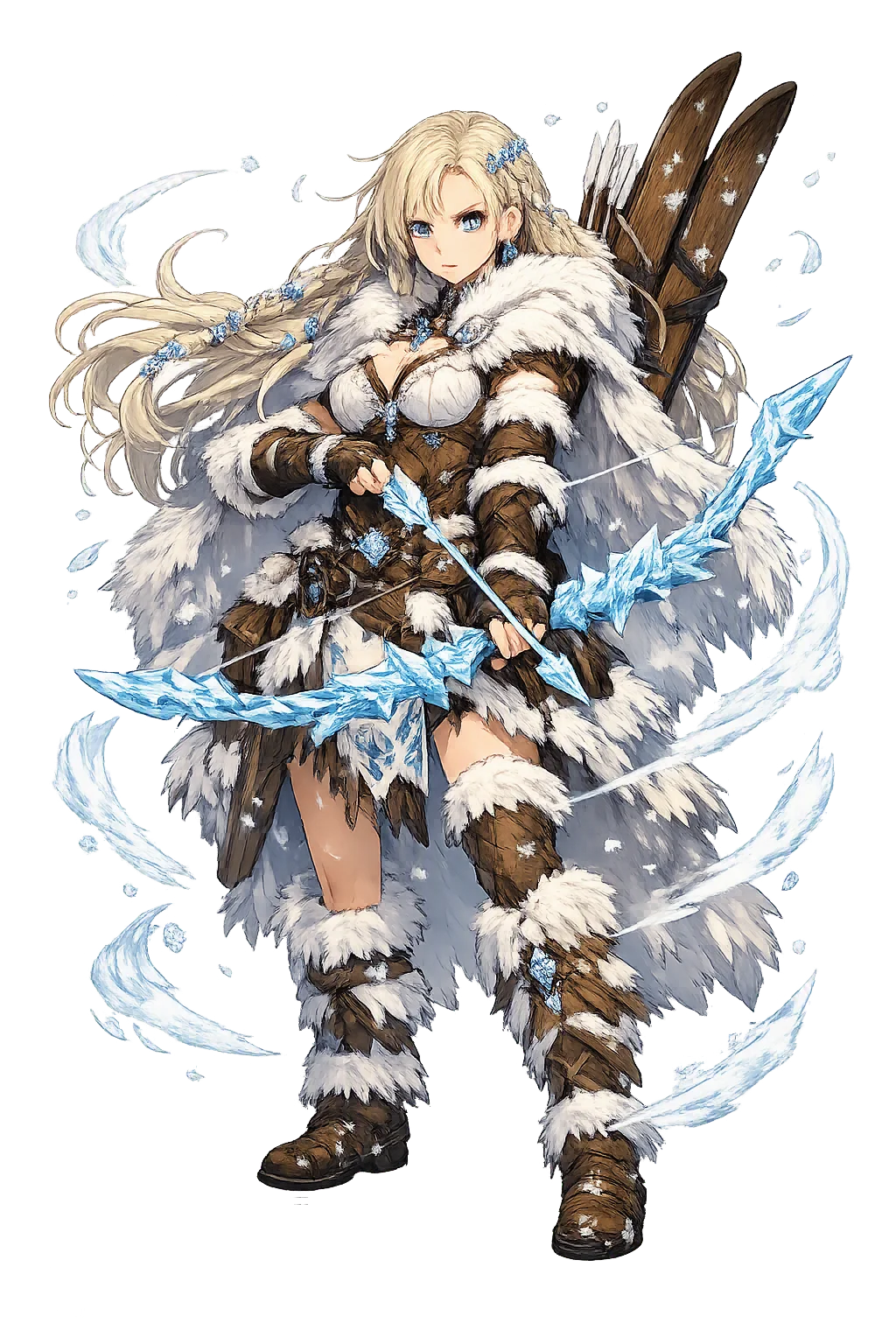
PuniCodex

Extended Lore

ᛋᚴᛅᚦᛁ Skaði

Etymology · Phonology · Orthography · Cultural Legacy · Primary Sources

Tier 1 Skaði.com
Skaði — Winter, Mountains, Hunting
01

Quick Facts

Essential information about Skaði, Winter, Mountains, Hunting

Original Scriptᛋᚴᛅᚦᛁ
Unicode RestorationSkaði
Reconstructed Pronunciation/ˈskɑː.ði/
PantheonNorse
DomainWinter, Mountains, Hunting
MeaningShadow, harm (from *skadwō)
ClassificationTier 1
Primary DomainSkaði.com
Sacred SymbolsSkis (ǫndurr), Bow, Þrymheimr, Wolf, Venom-dripping serpent
02

Etymology & Word Family

From original script to Unicode restoration

Proto-indo-european *skadwō Shadow, harm
Original Script ᛋᚴᛅᚦᛁ Skaði — "Shadow, harm (from *skadwō)"
Unicode Restoration Skaði Restored stress, length, and script
Modern ASCII skadi Plain-ASCII fallback

Skaði is Tier 1: the acute on á marks the long vowel [ɑː], and ð is a distinctive letter — features the ASCII form Skadi loses. The name is grammatically masculine in Old Norse though it belongs to a goddess, a fossil noted by the lexicographers, and is attested throughout the Eddic corpus (Grímnismál 11, Lokasenna, Gylfaginning, Skáldskaparmál). Normalization follows Cleasby & Vigfusson, An Icelandic-English Dictionary (1874), s.v. Skaði; and Zoëga, A Concise Dictionary of Old Icelandic (1910), s.v. Skaði.

03

Unicode Character Breakdown

Character-by-character philological analysis

CharacterUnicodeNameBlockPhonetic Role
SU+0053Latin Capital Letter SBasic LatinSame
kU+006BLatin Small Letter KBasic LatinSame
aU+0061Latin Small Letter ABasic LatinSame
ðU+00F0Latin Small Letter EthLatin-1 SupplementEth: voiced dental fricative
iU+0069Latin Small Letter IBasic LatinSame

The Tier 1 classification reflects how much of the original phonology this restoration preserves — stress and vowel length for Greek names, distinctive letters and diacritics for every other tradition.

04

Cultural Significance

From ancient cult to modern Unicode

Ancient Domain

Skaði is the giantess who walked into Ásgarðr armed and walked out with a settlement. Daughter of the giant Þjazi of Þrymheimr, she came in helmet and byrnie to claim compensation for her father's death, and the gods met her terms: a husband chosen by his feet alone, a laugh no one thought she had in her, and her father's eyes set in the sky as stars.

Her dominion is the high country. Grímnismál remembers her dwelling in her father's ancient home, and Snorri calls her ǫndurgoð and ǫndurdís — the ski-deity who travels the drifts on her ǫndurr and shoots game with the bow. The sea she married into never held her; the mountains took her back.

Skaði in Later Traditions

Skaði's clearest structural parallels stand inside the Norse corpus itself: Gerðr, the giant's daughter who marries Freyr — Skaði's own stepson by Njǫrðr — so that two giant-brides enter the Vanir household a generation apart; and Ullr, named in the same chapter of Gylfaginning as an archer and snow-shoe runner, who functions almost as her male doublet, his cult the better attested of the two in Scandinavian place-names. Etymologists have connected her name with Gothic skadus and Old English sceadu, 'shadow', and the first element of Scandinavia (Pliny's Scadinavia) has been derived from a related root — both proposals remain conjectural and debated. Beyond the Germanic world she invites comparison rather than borrowing: Artemis, the mountain huntress with the bow, is the obvious Greek functional echo. In later Scandinavian folklore she fades from cult but not from landscape — the wild huntress and the mountain-woman of the high fells keep her outline, and the nineteenth-century Norwegian ski revival made her silhouette a national one.

Modern Legacy

Skaði never reached Wagner's stage — the Ring is built from Vǫlsunga and Nibelung material, and the giantess of Þrymheimr has no part in it — but modernity found her anyway. The sport she was said to practice made her an emblem of Norwegian winter: she is the 'ski-goddess' of modern handbooks, invoked wherever Scandinavian skiing celebrates its mythic roots. In comics, Marvel's Fear Itself (2011) borrowed her name for the hammer-wielding herald of the Serpent; in games, Smite (2016) fields her as a playable huntress with the winter-wolf Kaldr at her side. Astronomers gave her name to Skathi, a moon of Saturn. In contemporary heathenry she is honored as a goddess of winter, self-reliance, and the hunt — the deity who sets her terms, keeps them, and goes home when the ground is wrong.

Unicode Restoration as Cultural Act

Restoring Skaði in a domain name is more than orthographic accuracy. It is a statement that the internet should recognize the full range of human writing — not only the ASCII keyboard.

05

Frequently Asked Questions

Common questions about Skaði, Winter, Mountains, Hunting, and Unicode restoration

01How do you pronounce Skaði?

In reconstructed pronunciation, Skaði is /ˈskɑː.ði/ — approximately 'SKAH-thee' — stress the long open first syllable like 'spa' held long, then a soft 'th' as in 'father' and a short 'ee'..

02What does Skaði mean?

Skaði means Shadow, harm (from *skadwō) in the norse tradition.

03What are the symbols of Skaði?

Skaði is associated with Skis (ǫndurr) (The snow-shoes that carry her over the winter peaks, source of her titles ǫndurgoð and ǫndurdís), Bow (The huntress's weapon; she fares with bow and ski and shoots game in the mountains), Þrymheimr (The storm-home, her father Þjazi's hall and her own final refuge), Wolf (The mountain cry she preferred, which Njǫrðr found hateful beside the song of swans), Venom-dripping serpent (The instrument of her vengeance, fastened above the bound Loki's face).

04Why restore Skaði in Unicode?

Plain ASCII skadi strips the stress, length, and script that make the name specific. Unicode restoration returns the name to its original written dignity.

05What is the most important myth about Skaði?

The giant Þjazi had abducted Iðunn and her apples of youth; when Loki stole her back, Þjazi pursued in eagle shape, and the Æsir kindled a fire that scorched his wings and brought him down inside their garth, where they slew him. Skaði took her father's death as a cause of war: she put on helmet and byrnie and came to Ásgarðr in full war-gear, and the gods chose settlement over battle.Her terms were three. She would choose a husband from among the Æsir — but only by the feet, the gods hidden behind a screen. They must make her laugh, which she thought no one could do; Loki tied one end of a rope to a goat's beard and the other to his own testicles, and as each hauled and shrieked he tumbled at last onto her knee, and she laughed. And Óðinn took Þjazi's eyes and hurled them into the heavens, where they shine as two stars — a father's face written into the night his daughter would hunt beneath.

06

Scholarly Sources

The philological foundations of this restoration

Every claim on this page is grounded in established scholarship. The orthographic restorations follow disciplinary convention. The etymological chain follows the best available reference works. This is not invention — it is resurrection through scholarship.

Lexicography & Philology

  • Cleasby-Vigfusson
  • Zoëga

Primary Texts

  • Poetic Edda: Grímnismál (Bellows translation) — Skaði dwelling in Þrymheimr, 'bright bride of the gods'
  • Poetic Edda: Lokasenna (Bellows translation) — her exchange with Loki and the prose account of the venom-snake
  • Snorri Sturluson, Prose Edda: Gylfaginning (Brodeur translation) — the marriage to Njǫrðr, the nine-night verses, the ski-deity titles
  • Snorri Sturluson, Prose Edda: Skáldskaparmál (Brodeur translation) — the death of Þjazi and Skaði's weregild
  • The Younger Edda (Prose Edda), tr. Rasmus B. Anderson (Project Gutenberg)
  • Gylfaginning (Old Norse text, Heimskringla.no)
  • Skáldskaparmál (Old Norse text, Heimskringla.no)

Archaeology & Art History

  • Material evidence — iconography, inscriptions, and temple archaeology — for Skaði and related cults.
  • No material image can be securely identified as Skaði: no runestone names her, and no picture-stone figure is demonstrably the giantess of Þrymheimr. Her attestation is textual — the Codex Regius of the Poetic Edda (GKS 2365 4to, c. 1270) preserves Grímnismál and Lokasenna, and the Prose Edda manuscripts (Codex Regius GKS 2367 4to; Codex Wormianus AM 242 fol.; Codex Upsaliensis DG 11) carry Snorri's account. The material world her titles presuppose is real enough: prehistoric skis such as the Kalvträsk and Hoting finds from Sweden (c. 3200 BC) and the rock carving of a striding skier at Rødøy in Nordland, Norway (roughly four thousand years old), document the snow-travel culture behind the name ǫndurgoð. Place-names preserve the related ski-god Ullr abundantly; place-name evidence for Skaði herself is sparse and disputed.

Religious Studies

  • Skaði (encyclopedia entry, Wikipedia)
Return

The Surface Awaits

You have traced the name from its earliest attestation to its Unicode restoration. Now return to the myth. The story is where the name lives.

Back to Lore
Skaði mascot