
Pronouncing Ullr: a guide for the curious
Saying Ullr aloud is harder than reading it on a screen, and more rewarding. The restored spelling is a compressed pronunciation guide: every accent and macron is an instruction. This post unpacks those instructions — the reconstructed sound, the phoneme-by-phoneme record, the kindred forms in neighboring languages — and then zooms out to the full record around the name: its Younger Futhark writing, its mythology, its cult, and its modern life as a Unicode domain. Whether you arrive as a linguist, a reader of myth, or a domainer, you will leave able to say the name the way the evidence suggests it was said — and able to type it the way it was written.
At a Glance
- Restored name: Ullr
- ASCII form: ullr
- Meaning: "Glory, splendor"
- Domain of influence: Archery, Hunting, Skiing
- Pantheon: Norse
- Classification: Tier 2
- Original script: ᚢᛚᛚᚱ (Younger Futhark)
Overview
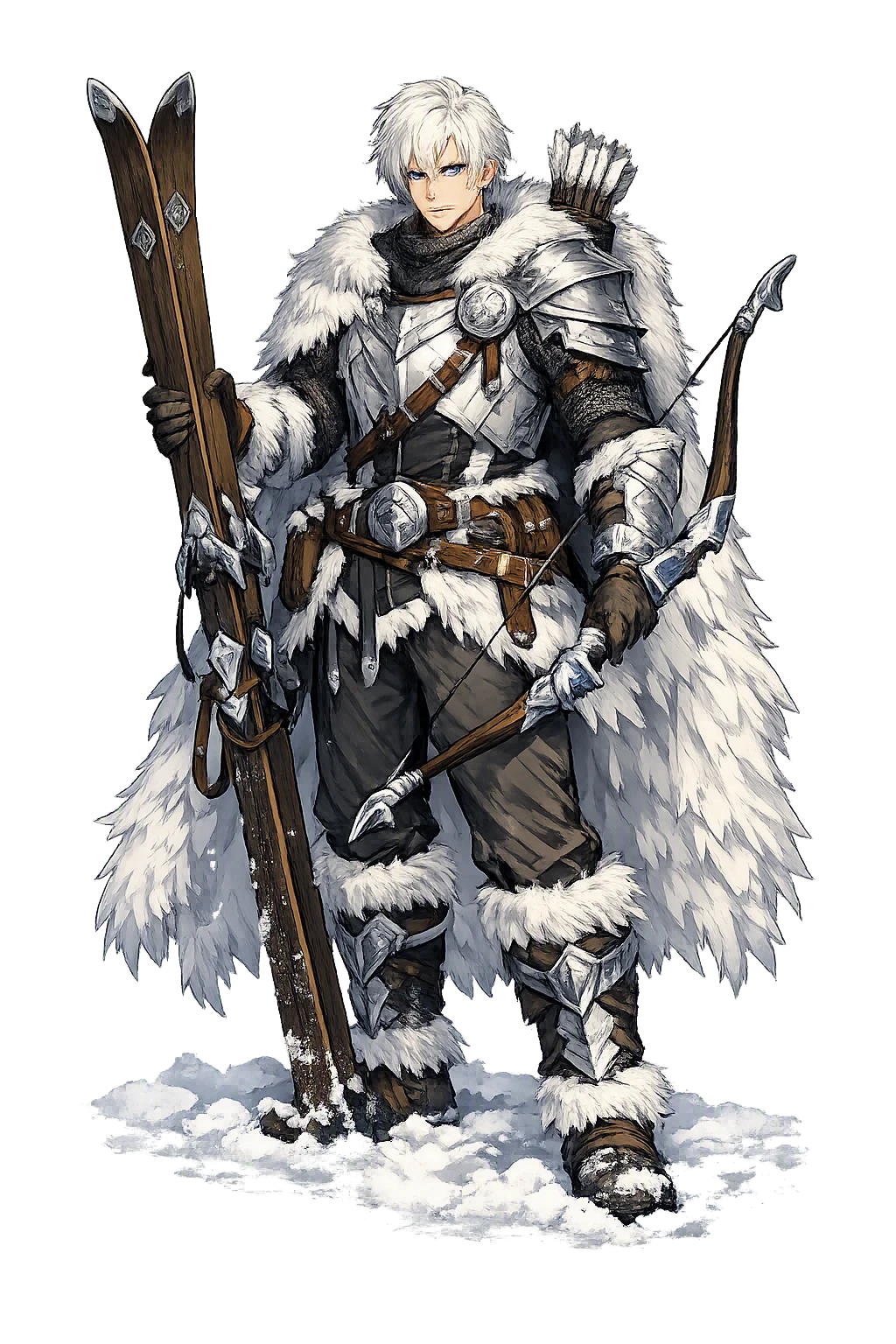
Ullr (ullr) — Glory, splendor · Archery, Hunting, Skiing — is the Norse god of the bow, the ski, and the duel: son of Sif, stepson of Thor, lord of Ýdalir, the Yew-Dales, 'such a good bowman and so fast on skis that no one can compete with him', and the god it is good to call on in single combat.
His dossier is a paradox the handbooks never tire of: among the least narrated gods in the literature — a stanza and a half of eddic verse, one sentence of Snorri, a list of kennings — and among the best attested in the ground, with scores of theophoric place-names across Norway and Sweden where Denmark and Iceland have none. Atlakviða keeps his name on the oath-ring of the temple; Saxo Grammaticus keeps the rumor that for ten years, as Ollerus, he bore Odin's name and ruled in his place.
PuniCodex restores the name as Ullr — identical to the ASCII input, because normalized Old Norse writes no diacritic in this name. The mechanical rule therefore places the name in Tier 2: nothing distinctive is lost in transit, a statement about orthography and never about the god. The temple is domain-less: the plain-ASCII ullr.com is registered to a third party outside the collection and is watched for release.
The Name
The name is attested in Old Norse as Ullr, and unlike many names in the northern onomasticon its etymology is secure: it descends from Proto-Germanic *wulþuz, 'glory, splendor' — Gothic wulþus 'glory', Old English wuldor, the word behind 'Wuldorfæder', the Glory-Father of the biblical poems. The sound changes are regular: initial w was lost before the rounded vowel, the cluster lþ assimilated to geminate ll, and the old nominative ending became -r. The god's name is thus the abstract noun made personal: 'Glory' itself.
The ASCII form is not a fallback here but the form itself: normalized Old Norse writes four plain Latin letters and a capital. The Unicode restoration Ullr therefore preserves nothing the ASCII alphabet loses, and the mechanical rule classifies the name Tier 2 — an orthographic fact, not a judgment on the god.
The letter-by-letter transformation runs:
- u → U — Same, capitalized
- l → l — Same
- l → l — Same
- r → r — Same
The project holds no domain for this name. The plain-ASCII ullr.com is registered to a third party outside the collection and is watched for release; this temple claims nothing it does not hold.
The Original Script
The name is preserved in medieval Icelandic manuscripts in the Latin alphabet as Ullr — Old Norse (North Germanic), attested 13th c. CE in the Codex Regius of the Poetic Edda and the codices of Snorri's Edda, recording material centuries older. Before the Latin bookhand, Old Norse names were carved in the Younger Futhark; no runic attestation of this theonym survives from Viking-Age Scandinavia, so the manuscript form is the primary witness. The runic rendering is ᚢᛚᛚᚱ (u-l-l-r).
The scholarly rendering proceeds step by step:
- The name is a simplex, not a compound: four letters, one syllable, a geminate ll the manuscripts write double.
- Old Norse orthography needs no diacritic here: the vowel is short u, and no distinctive letter (þ, ð, æ, ǫ) occurs in the name.
- The Unicode restoration Ullr is therefore identical to the ASCII form — the restoration is a matter of canonical reference, not rescued orthography.
- The name's etymology is secure: Proto-Germanic *wulþuz 'glory, splendor' (Gothic wulþus, Old English wuldor), with regular loss of initial w before the rounded vowel and assimilation of lþ to ll.
- The same name-element appears on the third-century Thorsberg chape (owlþuþewaz), the earliest runic evidence for its antiquity.
Pronunciation
The reconstructed pronunciation of the name is /ˈulːr/ — Old Norse Reconstruction.
Phoneme by phoneme:
- U- — Short close back rounded [u], held brief, closer to the vowel of English 'put' than of 'pool'; every Old Norse word stresses the first syllable, here the only syllable
- -ll- — The geminate lateral [lː], held audibly as in modern Icelandic Ullur; the double letter is the one articulatory event the spelling records
- -r — The nominative masculine ending from older *-z, a tapped or trilled [r] closing the syllable; in later Icelandic it fused with the l, but the reconstructed form keeps it sounded
For the modern speaker, the closest approximation is: 'ULL-r' — one firm beat, the vowel short and rounded as in 'pull', the double l held a fraction long, the final r sounded.
Kindred and historical forms of the name:
- Old Norse — Ullr, son of Sif, stepson of Thor
- Younger Futhark — ᚢᛚᛚᚱ (u-l-l-r), the Viking-Age runic rendering
- Proto-Germanic — *wulþuz 'glory, splendor'; Gothic wulþus, Old English wuldor
- Latin — Ollerus, Saxo Grammaticus's Latinization in the Gesta Danorum
- Modern Scandinavian — Ull (Norwegian and Swedish), living above all in the place-names: Ullensaker, Ullern, Ullevi, Ullensvang
Ullr is Tier 2 because the restoration preserves nothing the ASCII form loses: no diacritic, no distinctive letter, no vowel length. English and Old Norse write the name identically.
Mythology
Ullr's mythology is a stanza and a half of eddic verse, one sentence of Snorri, a list of kennings, and a Danish fable — among the thinnest narrative dossiers of any god with so deep a footprint.
The Yew-Dales (Grímnismál 5)
In Grímnismál's numbered survey of the gods' dwellings, the fifth hall belongs to Ullr: 'Yew-Dales is the name of the place where Ullr has made himself a hall.' The poem gives him no lineage and no adventure — only an address, but an address that declares his office: the yew is the bow-wood of the North. The poem touches him once more at its close, when the boy at the fire is blessed: 'the favor of Ullr and of all the gods shall he have' — Ullr's name first among the gods whose goodwill is invoked.
The Snowshoe God (Gylfaginning 31)
Snorri's whole account is one packed sentence: Ullr, son of Sif and stepson of Thor, is such a good bowman and so fast on skis that no one can compete with him; he is fair of face, has a warrior's accomplishments, and it is good to call on him in single combat. Skáldskaparmál keeps the poets' shorthand — son of Sif, kinsman of Thor, the Snowshoe God, the Bow God, the Hunting God, the Shield God — and the skalds' name for the shield, 'Ullr's ship', whose story Snorri no longer knows: somewhere behind the verse, a lost myth had the god travelling on his shield as on a vessel.
The Ring of Ullr (Atlakviða 30)
When Atli has betrayed the Burgundian kings, Guðrún reminds him of the oaths he swore long before — by the sun and the sun-hall, by Sigtyr's mount, and 'by the ring of Ullr'. The oath-ring, the holy arm-ring of the temple on which the deepest vows were sworn, is here named as Ullr's own, and nothing else in the corpus explains the attribution: a bow-god with a cult-ring suggests a god of the assembly and the sworn word, a legal weight the myths no longer spell out.
Ollerus on the Throne (Saxo, Gesta Danorum III)
Saxo Grammaticus, euhemerizing the gods as ancient kings and wizards, keeps the one adventure the Icelanders forgot. When Othinus was exiled for dishonoring the cult, the gods put Ollerus — the Latin form of Ullr — in his place: for ten years he bore Odin's name and rites and ruled at Uppsala, until the true Odin returned and drove him out; he fled to Sweden and was slain by the Danes as he tried to rebuild his glory. Saxo adds the rumor that Ollerus was such a cunning wizard he could cross the seas on a bone marked with terrible spells — the winter-god's ski or skate refracted through a Danish chronicler's Latin. A god who can wear Odin's name for a decade is no minor figure.
Symbols & Iconography
The iconography of Ullr is functional rather than regal — the corpus fixes around him the equipment of the winter hunter and the tokens of the sworn word:
- The yew bow — the weapon of Ýdalir timber: archery as divine craft, the hall's name as the god's own advertisement
- The snowshoes — öndurr, the ski or snowshoe: winter travel raised to godhead; the kenning öndur-Áss, Snowshoe God
- The shield, 'Ullr's ship' — the skaldic kenning that makes his shield a vessel: a fragment of a lost voyage myth
- The oath-ring — the holy ring of Atlakviða by which the deepest oaths were sworn: Ullr as guarantor of sworn speech
- Ýdalir — the Yew-Dales, his hall in Grímnismál's survey of heaven: one of the few divine addresses the poems give
- The yew tree — Taxus baccata, the bow-wood of the North: the living emblem of his cult landscape
Archaeology & Evidence
Ullr's archaeology is written across two countries rather than buried in any one of them: no image and no votive hoard can be securely assigned to him, but the Scandinavian place-name record is the densest of any god outside the great three. Norway keeps Ullensaker ('Ullr's field'), Ullern, Ullensvang and the lost Ullarhof; Sweden keeps Ullevi and Lilla Ullevi ('Ullr's sanctuary'), Ulleråker ('Ullr's field'), Ullvi and their kin — a cult landscape spread across south-eastern Norway and eastern middle Sweden, with not one secure Ullr-name in Denmark or Iceland.
At Lilla Ullevi in Bro parish, Uppland, excavations in the 2000s uncovered an Iron Age cult building rich in amulet rings — a rare look at the kind of site the name advertises, though the identification with the god rests on the place-name alone. The oldest possible attestation is runic and continental: the third-century Thorsberg shield-chape from Schleswig reads owlþuþewaz, whose first element is the *wulþu- 'glory' that became the name Ullr — whether theonym or personal name is disputed, but it proves the name's antiquity. Later antiquarian tradition supplied the familiar image: seventeenth- and eighteenth-century Icelandic paper manuscripts picture Ullr on skis with his bow — an early modern reconstruction, not a medieval witness.
Realm & Domain
Ullr is catalogued under Archery, Hunting, Skiing — the rare case where the lexicon's gloss is a direct quotation of the sources' own list: the bow, the hunt, the snowshoe are precisely what Snorri and the skalds assign him, and the hall the poems give him is named for the bow-wood itself.
Archery
'He is such a good bowman... that no one can compete with him': Snorri's first office, confirmed by the skaldic heiti boga-Áss, the Bow God, and by the address Grímnismál gives him — Ýdalir, the Yew-Dales, named for the tree that made the North's bows.
Hunting
Veiði-Áss, the Hunting God, stands in Skáldskaparmál's list of his names — the bow's working purpose, the winter pursuit on snowshoes through the northern forest.
Skiing
He is 'so fast on skis that no one can compete with him', and the skalds knew him as öndur-Áss, the Snowshoe God — the oldest divine patron of travel over snow, and the source of his modern Scandinavian afterlife as the god of skiers.
Single Combat
'It is good to call on him in single combat', Snorri adds — the duel, einvígi, where one man's skill and one god's favor decide. With the oath-ring of Atlakviða, the attribute hints at a god of formal, sworn contest: combat under law.
Across Cultures
Ullr's true comparison class is not another mythology's gods but his own name's reach. Inside the corpus his nearest kin is Skaði, the other ski-going hunter of the northern corpus; the skalds' pairing of bow, snowshoe, and shield makes him the Æsir's winter counterpart to the giant-bred huntress. His mythic position — son of Sif, stepson of Thor — seats him in the one household of the gods Snorri trusted with a family tree, and Saxo's Ollerus, ruling in Óðinn's place at Uppsala, keeps a memory that this 'minor' god once carried major authority.
Beyond the corpus, the old etymological tie to Proto-Germanic *wulþuz, 'glory' — Gothic wulþus, Old English wuldor — led generations of scholars to see in Ullr a faded sky- or splendor-god, and nineteenth-century comparatists reached for bow-bearing Apollo and other Indo-European hunters. Current handbooks are cooler: Simek and Lindow emphasize what can actually be shown — a cult dense in Norway and Sweden, absent from Denmark and Iceland, a ring-oath and a hall, and a name meaning 'Glory': the profile of a god whose importance peaked before the sources were written.
Cultural Legacy
Ullr's afterlife is the snow itself. When Scandinavia reinvented skiing in the nineteenth century as sport and national emblem, the old snowshoe god was waiting: Norwegian ski culture embraced Ull as its patron, and his name has crowned winter festivals, ski clubs, and slopes ever since — the only Norse god whose modern cult is conducted on mountains with equipment.
The name lives on as a Scandinavian given name and, far more densely, in the map: Ullensaker, Ullern, Ullensvang, Ullevi and their kin keep his sanctuaries' names long after the sanctuaries fell. Modern Heathen and Ásatrú communities call on him for winter sport and for the sworn word, reading the oath-ring of Atlakviða as seriously as the bow. And in the scholarly reception he stands as the textbook case of a great god the literature lost — the figure every handbook uses to prove that the Edda's silence is not a cult's measure.
The Scholarly Record
The account of Ullr given in this edition rests on the witnesses and reference works listed below. Gylfaginning 31 and the Skáldskaparmál kennings supply the prose record; Grímnismál and Atlakviða the eddic; Saxo the Danish counter-tradition; Cleasby–Vigfusson, Zoëga and de Vries the name's form and etymology, with Simek, Orchard, Lindow, and Turville-Petre arbitrating attestation, the place-name cult, and the question of his early importance.
- Snorri Sturluson, Edda, Gylfaginning 31 (Ullr son of Sif, stepson of Thor; the bowman, the skier, the god of single combat), ed. and trans. Anthony Faulkes (London: Everyman, 1987).
- Snorri Sturluson, Edda, Skáldskaparmál (kennings for Ullr: the Snowshoe God, the Bow God, the Hunting God, the Shield God; the shield as 'Ullr's ship'), trans. Anthony Faulkes (London: Viking Society for Northern Research, 1998).
- The Poetic Edda, trans. Carolyne Larrington, 2nd ed. (Oxford: Oxford University Press, 2014): Grímnismál 5 (Ýdalir) and 42 (Ullar hylli); Atlakviða 30 (the ring of Ullr).
- Saxo Grammaticus, Gesta Danorum, Book 3 (Ollerus rules in Othinus's place for ten years; the spell-marked bone; slain in Sweden), trans. Peter Fisher, ed. Hilda Ellis Davidson (Cambridge: D. S. Brewer, 1979).
- Cleasby, Richard, and Guðbrandur Vigfússon, An Icelandic-English Dictionary, 2nd ed. (Oxford: Clarendon Press, 1957), s.v. Ullr.
- Zoëga, Geir T., A Concise Dictionary of Old Icelandic (Oxford: Clarendon Press, 1910), s.v. Ullr.
- de Vries, Jan, Altnordisches etymologisches Wörterbuch, 2nd ed. (Leiden: Brill, 1962), s.v. Ullr (from Proto-Germanic *wulþuz; Gothic wulþus, Old English wuldor).
- Simek, Rudolf, Dictionary of Northern Mythology, trans. Angela Hall (Cambridge: D. S. Brewer, 1993), s.v. Ullr (attestation, place-names, Thorsberg chape).
- Orchard, Andy, Dictionary of Norse Myth and Legend (London: Cassell, 1997), s.v. Ullr.
- Lindow, John, Norse Mythology: A Guide to the Gods, Heroes, Rituals, and Beliefs (Oxford: Oxford University Press, 2001), s.v. Ullr.
- Turville-Petre, E. O. G., Myth and Religion of the North: The Religion of Ancient Scandinavia (London: Weidenfeld & Nicolson, 1964).
- Gordon, E. V., An Introduction to Old Norse, 2nd ed. rev. A. R. Taylor (Oxford: Clarendon Press, 1957).
A Meditation
Every tradition in the lexicon has its quiet god, the one the myths barely use and cannot forget. Ullr is the North's. Grímnismál names his hall among the first of heaven's addresses and puts his favor first among the gods' blessings; the poets swear by his ring; the map of two countries is salted with his holy places — and Snorri, who can spend pages on a fishing trip, gives him one sentence.
The discrepancy is itself the record. Whatever Ullr was at the height of his worship — bow-god, sky-god, lord of the sworn oath, the Glory his name still means — it belonged to an older layer of the religion than the Eddas preserve, and by the thirteenth century only the specialists kept the tokens: a stanza, a kenning, a rumor from Denmark that he once sat in Odin's seat. Ullr teaches the reader of myth a hard and useful lesson: the silence of a source is evidence about the source, never about the god. The yew-dales are still on the map.
The Unicode Restoration
Ullr is classified as Tier 2: the restoration needs no distinctive letters or diacritics its ASCII form would lose. The ASCII fallback ullr still resolves everywhere, but it is the restored form that carries the name's full information. That is the whole thesis of this temple: the marks are the message.
Why This Restoration Matters
Pronunciation turns out to be the heart of the matter. The marks in Ullr are instructions for the voice, and a web that strips them is a web that mispronounces the past at scale. The restoration hands the instructions back: say it as the evidence suggests, type it as the tradition wrote it, and let the punycode machinery do the quiet translation in between. That is all the PuniCodex project asks of the infrastructure — and everything it asks of you, the reader, is to use the whole name.
Explore Further
This post is one doorway into the temple. The home page carries the full character breakdown and the ambient canvas; the lore page tells the myths in long form; the Scholarly Edition preserves the sources, pronunciation data, and revision history; and the patron wall supports the restoration directly. For the wider map, browse the Lexicon, explore the Pantheon, or return to the PuniCodex blog.
Related Names
Sources
The full scholarly apparatus — every citation, revision, and review — lives in the Scholarly Edition. Key references for this post:
- Snorri Sturluson, Edda, Gylfaginning 31, ed. and trans. Anthony Faulkes (London: Everyman, 1987).
- Simek, Rudolf, Dictionary of Northern Mythology, trans. Angela Hall (Cambridge: D. S. Brewer, 1993), s.v. Ullr.
- Atlakviða 30 (Poetic Edda), trans. Carolyne Larrington, The Poetic Edda, 2nd ed. (Oxford: Oxford University Press, 2014); Saxo Grammaticus, Gesta Danorum, Book 3, trans. Peter Fisher, ed. Hilda Ellis Davidson (Cambridge: D. S. Brewer, 1979).
- PuniCodex lexicon record for ullr (tier, domain status), per the project's domain registry.
- Lexicon authorities for this entry: Poetic Edda, Cleasby-Vigfusson.