
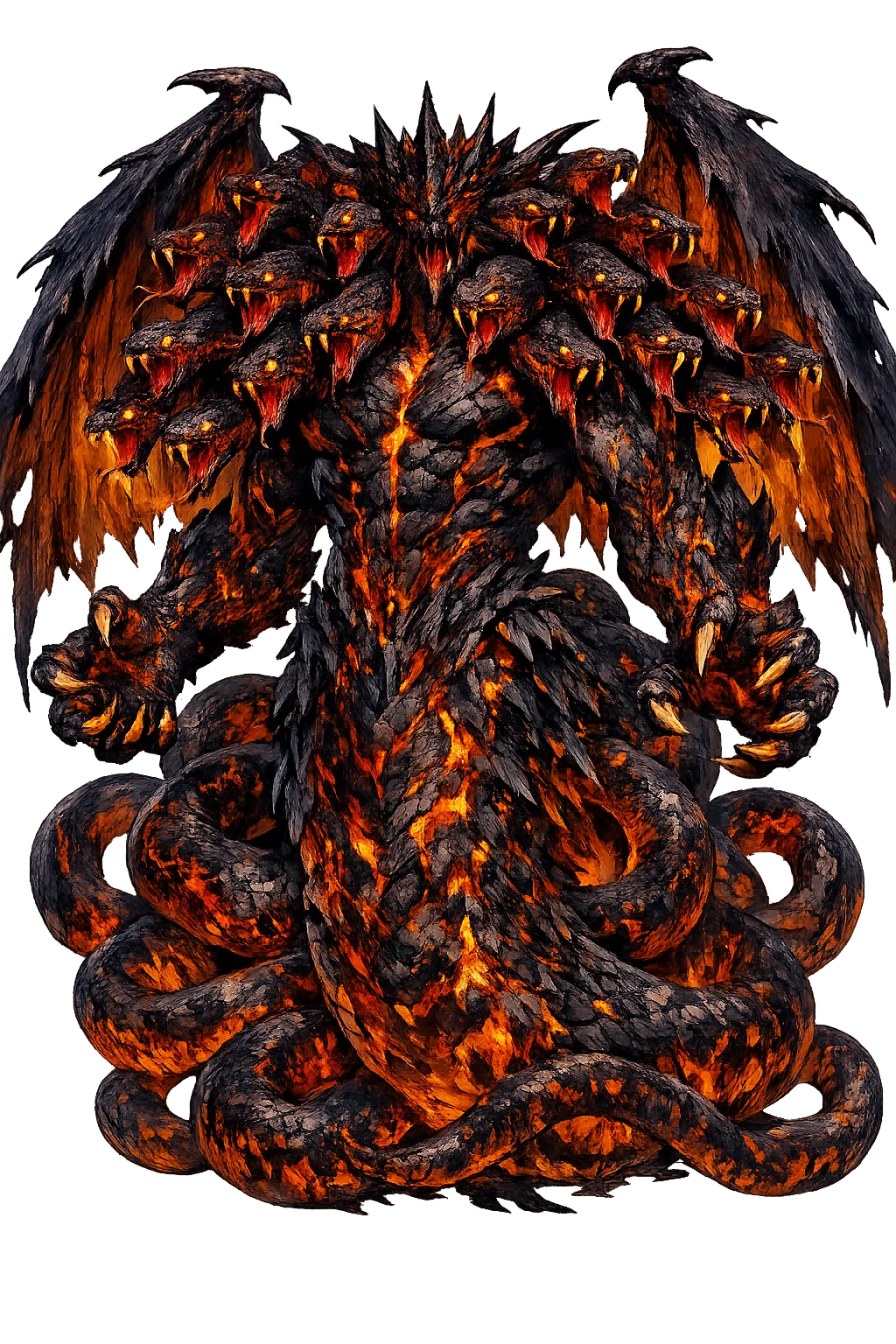
Stress-testing Typhōn: do the industry seats hold?
The stress test for Typhōn. Every seat in the atlas was attacked with the same question — is the match real, or is it poetry? — and the survivors are recorded with their evidence.
At a Glance
- Temple: Typhōn
- Pantheon: Greek
- Domain of influence: Monster, Father of Monsters, Storms
- Pattern seats: 4
- Sectors touched: Energy & Natural World · Commerce & Governance · Culture & Entertainment
- Strongest seat: Meteorology & Weather Intelligence
- Series: The Resonance Files, No. 251 of 271
The Test
Seat 1: Meteorology & Weather Intelligence
Claim: Whirlwind personified; his name echoes in the word typhoon. Exhibit: Son of Earth and Abyss — Hesiod writes that after Zeus drove the Titans from heaven, Gaia lay with Tártaros "by the aid of golden Aphrodité" and bore Typhōn, a monstrous son "who would have ruled over mortals and immortals" had Zeus not acted (Theogony 820–835).
Verdict: holds under load. The correspondence is functional, not decorative.
Seat 2: Disaster Resilience & Recovery
Claim: Whirlwind and volcano in one body; the composite catastrophe the resilience sector plans against. Exhibit: The Typhonomachy — The battle shook the cosmos.
Verdict: survives scrutiny. The myth and the trade do the same work.
Seat 3: Gaming, Fantasy & Entertainment IP
Claim: Father of monsters; the bestiary’s patriarch. Exhibit: Zeus Disarmed — Apollodorus preserves a more perilous version: Typhōn initially defeated Zeus, cut the sinews from his hands and feet, and imprisoned him in a Cilician cave.
Verdict: stands. Strip both to their function and the functions match.
Seat 4: Thermal, Geothermal & Fire Energy
Claim: Chained beneath Etna, his breath is the eruption; geothermal pressure personified. Exhibit: Son of Earth and Abyss — Hesiod writes that after Zeus drove the Titans from heaven, Gaia lay with Tártaros "by the aid of golden Aphrodité" and bore Typhōn, a monstrous son "who would have ruled over mortals and immortals" had Zeus not acted (Theogony 820–835).
Verdict: holds under load. The correspondence is functional, not decorative.
The Control Group
Against the seats that survived, one control: the temple's own summary of its figure — Typhōn is the final adversary in the Greek succession myth. The seats do not drift far from it. That is the audit's cleanest result.
The Method, Stated Plainly
The atlas is not a horoscope. Seats are earned from the sources — argued, weighted, published — and every one of them can be challenged at the methodology page. A match that cannot survive an argument does not survive review. That is the whole trick: the patterns are claims, and claims can be tested.
For the Ones Who Work There
For a sponsor in meteorology & weather intelligence, the fit here is not adjacency — it is inheritance. Your trade already tells this story every working day; the temple simply holds the original. The patron tier and the advertising terms carry the mechanics; the myths above carry the reason.
The File Continues
This is one of 271 Resonance Files — the third dispatch from every flagship temple, where the myths meet the markets. The temple's founding dispatch tells the name's story; its Restoration File tells the spelling's; the blog index holds the whole archive.
Continue the series — previous: Týchē (read it) · next: Týr (read it).
The Resonance Files are argued from the same canonical record as the pattern atlas itself: the lexicon, the lore catalog, and the cited sources. Every seat can be challenged at the methodology page — and the challenge is the point.