The Authentic Orthography
Monster, Father of Monsters, Storms · Whirlwind, smoke
Unicode restoration and ASCII comparison
Τυφῶν
The name in its original Greek form. Typhōn (Τυφῶν) is attested in the source tradition — “Whirlwind, smoke”. Its aspirated consonants, long vowels, and acute accents carry the full phonetic and orthographic weight of the source tradition.
typhon
Reduced to plain typhon, the name loses everything that made it specific: aspirated consonants, long vowels, and acute accents. What remains is an ASCII string that machines can parse but that no longer speaks with its original voice.
Typhōn
The Unicode restoration recovers what ASCII flattened. Typhōn restores aspirated consonants, long vowels, and acute accents, returning the name to its original written dignity. The domain encodes to Punycode, but the browser displays the truth.
Typhōn.com → xn--typhn-j9a.com
The non-ASCII characters in Typhōn are encoded while the ASCII remains visible. To the DNS, it is Punycode. To humanity, it is Typhōn.
How Typhōn travels from ancient script to the modern URL
Greek Τυφῶν; from τύφω "to smoke". Typhon is the monstrous storm-giant who challenged Zeus for supremacy and was buried beneath Mount Etna; his name evokes smoke, wind, and volcanic fury.
Monster, Father of Monsters, Storms
The Unicode restoration Typhōn preserves Greek stress and length; the ASCII form typhon loses these features.
How Typhōn was spoken
Storms, Fire, Rebellion
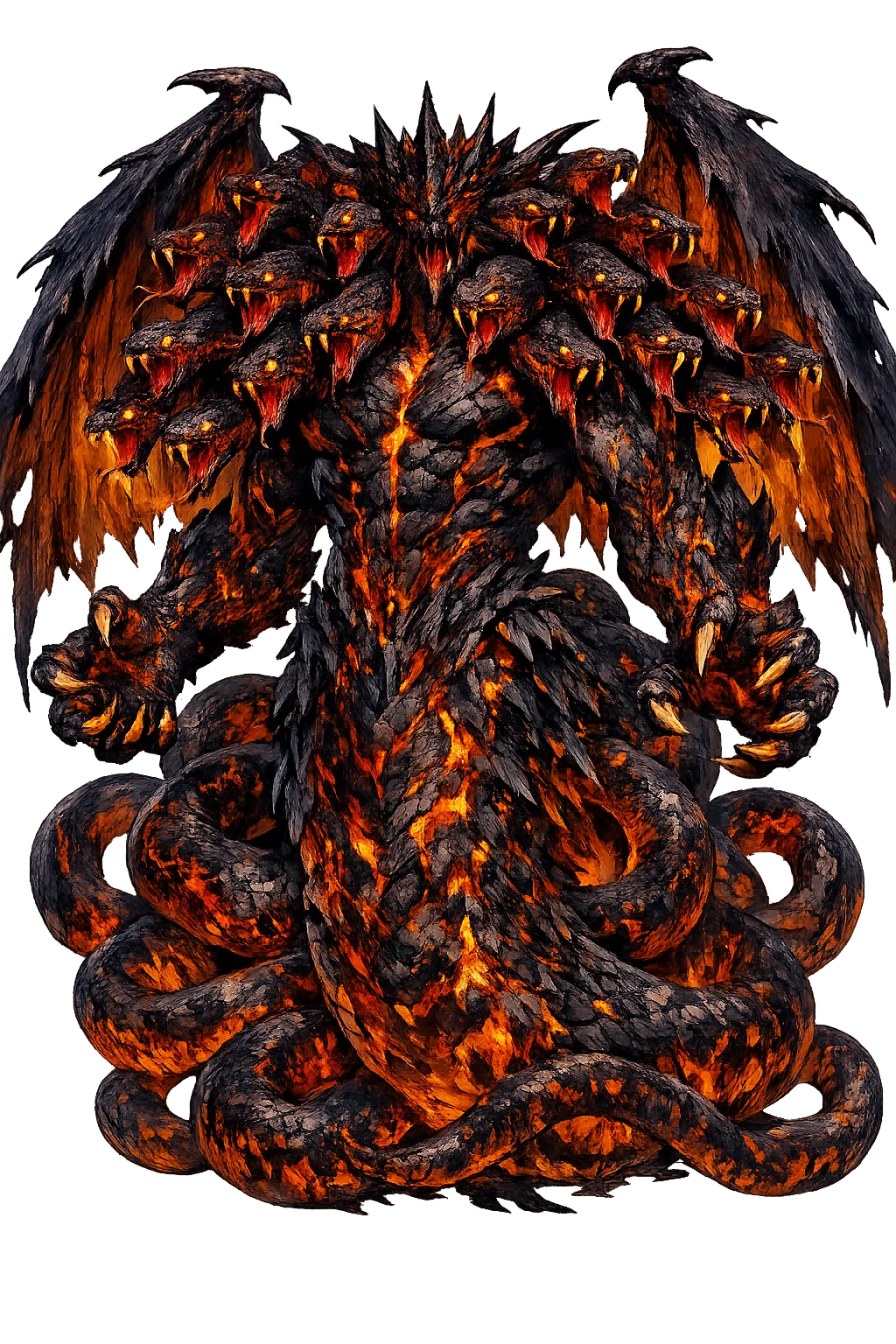
Typhōn is the last thing the Olympians feared. Born from Gaia and the abyss, he is a serpentine giant with a hundred heads, voices of gods and beasts, and fire blazing from his eyes. He is the cosmic rebel who nearly unmade Zeus's order.
Each head speaks a different tongue — bull, lion, god, snake — a cacophony of chaos.
Buried beneath Mount Etna, his breath becomes volcanic eruption; Sicily trembles at his struggles.
From him spring the destructive storm winds — the whirlwinds that wreck ships and harvests.
With Echidna he fathers Cerberus, Hydra, Chimera, Sphinx, Nemean Lion — the adversaries of heroes.
Stories of Typhōn
Typhōn is the final adversary in the Greek succession myth. After the Titans fall, the earth produces one last monster to challenge the new king of the gods.
Hesiod writes that after Zeus drove the Titans from heaven, Gaia lay with Tártaros "by the aid of golden Aphrodité" and bore Typhōn, a monstrous son "who would have ruled over mortals and immortals" had Zeus not acted (Theogony 820–835). Apollodorus adds that Gaia conceived him in anger at the destruction of the Giants (Apollodorus 1.6.3).
The battle shook the cosmos. Hesiod describes thunder, lightning, and Typhōn's fire boiling the sea and scorching the earth. Zeus finally struck him with his thunderbolt and cast him down, crippled, into Tártaros (Theogony 839–868). Later poets, including Pindar, placed the monster beneath Mount Etna.
Apollodorus preserves a more perilous version: Typhōn initially defeated Zeus, cut the sinews from his hands and feet, and imprisoned him in a Cilician cave. Hermes and Pan recovered the sinews, restoring Zeus, who then pursued Typhōn across the world and crushed him under Etna (Apollodorus 1.6.3).
With Echidna, Typhōn produced the great monsters of Greek myth. Hesiod names Orthrus, Cerberus, the Lernaean Hydra, and the Chimera (Theogony 306–319). Apollodorus expands the list to include the Sphinx, the Nemean Lion, the Eagle of Prometheus, and the dragon of the Golden Fleece — a catalogue of every creature the heroes must overcome.
Typhōn is what the ordered world keeps under the mountain. He is the hundred-headed argument against hierarchy, the storm that rises when the earth decides the gods have gone too far. Every pantheon needs such a figure: not a villain with a motive, but a force so large it can threaten heaven itself.
Enter Extended Lore