Unicode restoration and ASCII comparison
Tlāltēcuhtli
The name survives only in scholarly transliteration. Tlāltēcuhtli is the standard Nahuatl romanisation, documented in academic sources — “Lord of the earth”. Its macron-length vowels preserve distinctions lost in plain ASCII.
No indigenous writing system is securely attested for individual nahuatl names. The form shown is a modern scholarly transliteration.
tlaltecuhtli
Reduced to plain tlaltecuhtli, the name loses everything that made it specific: macron-length vowels. What remains is an ASCII string that machines can parse but that no longer speaks with its original voice.
Tlāltēcuhtli
The Unicode restoration recovers what ASCII flattened. Tlāltēcuhtli restores macron-length vowels, returning the name to its original written dignity. The domain encodes to Punycode, but the browser displays the truth.
Tlāltēcuhtli.com → xn--tlltcuhtli-vfb2t.com
The non-ASCII characters in Tlāltēcuhtli are encoded while the ASCII remains visible. To the DNS, it is Punycode. To humanity, it is Tlāltēcuhtli.
How Tlāltēcuhtli is preserved in writing
No indigenous writing system is securely attested for individual nahuatl names. The form shown is a modern scholarly transliteration.
Contribute scholarly provenance →How Tlāltēcuhtli was spoken
Chthonic Power and Cosmic Sustenance
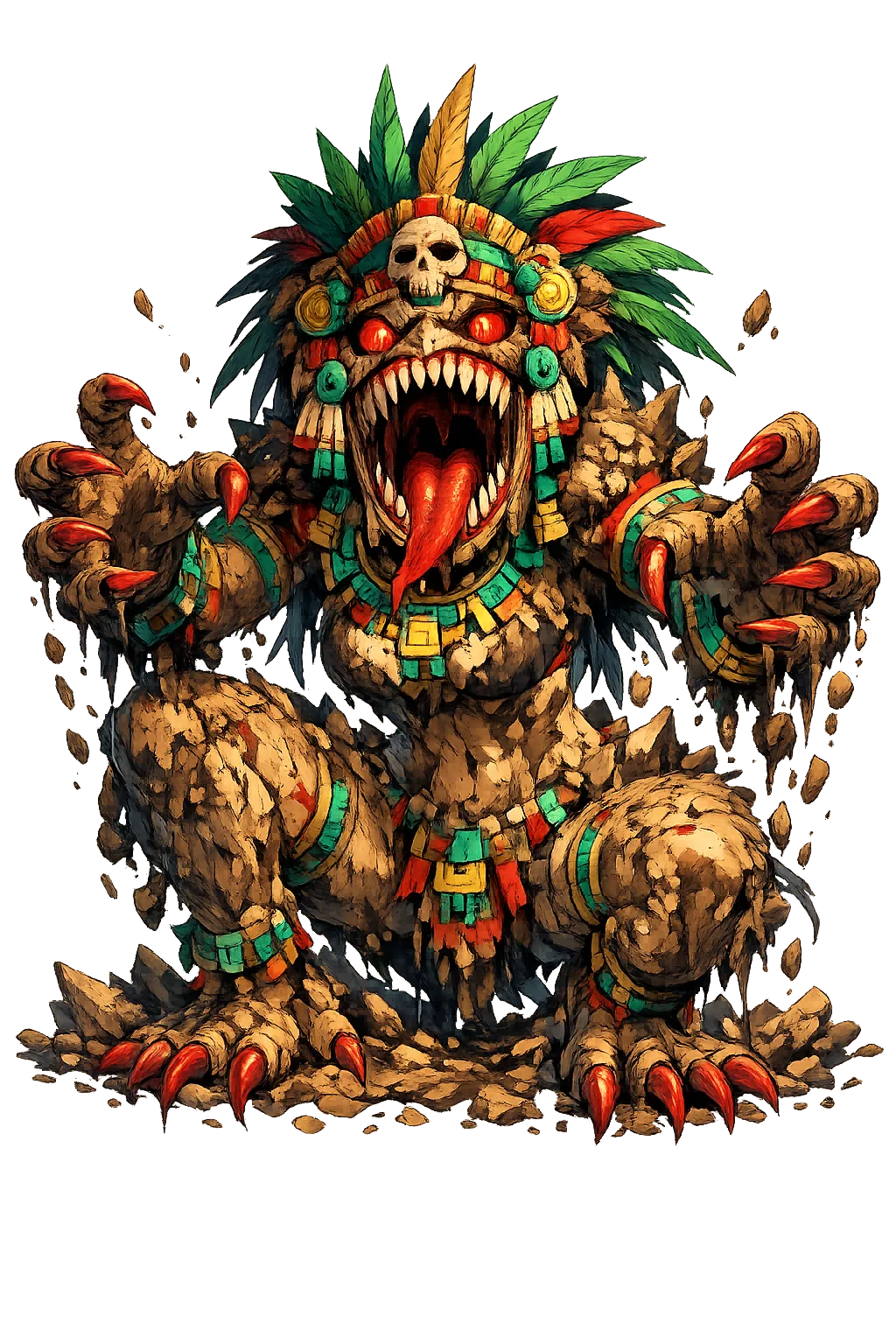
Tlāltēcuhtli is the living earth beneath the feet of the Fifth Sun, the monster-toad whose body became the world and whose gaping mouth swallows the sun each evening. Unlike the sky gods who demand attention with thunder and light, Tlāltēcuhtli works in silence: receiving the dead, pushing up crops, and reminding mortals that every step is taken on a conscious being.
Mountains rise from Tlāltēcuhtli's back; rivers flow from its folds; caves are its open mouth.
The sun descends into Tlāltēcuhtli's jaws at sunset; corpses return to the earth that fed them.
Maize, beans, squash, and cotton rise from its body; offerings of blood ensure the earth's continued fruitfulness.
The earth consumes and renews; Tlāltēcuhtli is both tomb and womb, endings and beginnings.
Stories of Tlāltēcuhtli
Tlāltēcuhtli appears in several Mesoamerican creation accounts as the earth monster who must be defeated and dismembered before the present world can exist. The most detailed Nahuatl version is preserved in the Quiché Popol Vuh through its Maya cognates, while Nahua sources describe the earth's body as the substrate of the Fifth Sun.
In the Nahua cosmogony preserved by colonial sources, the gods created the present earth from the body of a great monster. In some versions Quetzalcōātl and Tezcatlipoca seized Tlāltēcuhtli or a crocodilian earth-being and tore it in two: one half became the sky, the other the earth. From its body the mountains, rivers, and valleys were formed, and its hair became trees and plants. The story is cognate with Maya accounts of the Hero Twins defeating the earth deity Vucub-Caquix and his kin. (Leyenda de los Soles; Popol Vuh parallels.)
Each evening the sun descends into the gaping mouth of Tlāltēcuhtli in the west. The earth devours the luminary, holds it through the night, and gives birth to it again in the east. This daily swallowing and rebirth mirrors the agricultural cycle and the human journey from death to afterlife.
The Florentine Codex records that before any building, planting, or burial, the Nahua made offerings to Tlāltēcuhtli: food, flowers, incense, and sometimes blood. Without this payment the earth would refuse to receive or sustain. The practice expressed a contractual relationship between humans and the ground they walked upon.
Every civilization needs a name for the ground it stands on. Tlāltēcuhtli is one of the most direct: 'Lord of the Earth.' But the name is not a title of ownership; it is a title of relation. The earth is not property but a being with jaws, with hunger, with the power to refuse. To walk on Tlāltēcuhtli is to incur a debt.
Enter Extended Lore