PuniCodex

Extended Lore

Tlāltēcuhtli

Etymology · Phonology · Orthography · Cultural Legacy · Primary Sources

Tier 1 Tlāltēcuhtli
Tlāltēcuhtli — Earth
01

Quick Facts

Essential information about Tlāltēcuhtli, Earth

Scholarly TransliterationTlāltēcuhtli
Unicode RestorationTlāltēcuhtli
Reconstructed Pronunciation/tɬaːɬˈteː.kʷet͡ɬi/
PantheonNahuatl
DomainEarth
MeaningLord of the earth
ClassificationTier 1
Primary DomainTlāltēcuhtli
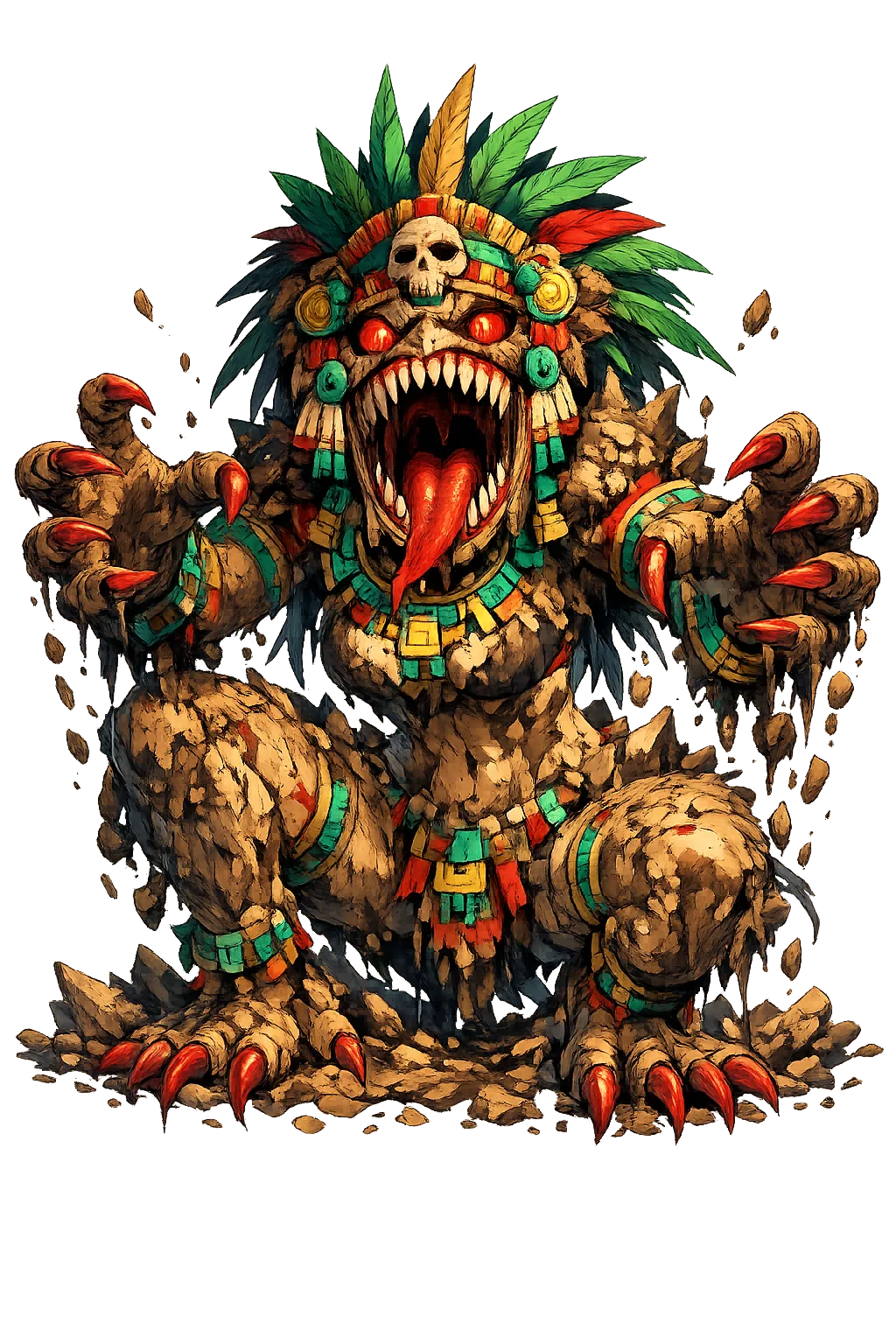
Sacred SymbolsCrouching toad, Gaping jaws, Curved fangs and claws, Blood-red coloring
02

Etymology & Word Family

From original script to Unicode restoration

Scholarly Transliteration Tlāltēcuhtli Tlāltēcuhtli — "Lord of the earth"
Unicode Restoration Tlāltēcuhtli Restored stress, length, and script
Modern ASCII tlaltecuhtli Plain-ASCII fallback

The name is a straightforward compound of tlālli ('earth') and tēcuhtli ('lord'). The honorific suffix is not gender-exclusive in Nahuatl; Tlāltēcuhtli is depicted as both male and female, and sometimes as a toad-like being. Tier 1: the macrons on ā and ē preserve reconstructed vowel length.

03

Unicode Character Breakdown

Character-by-character philological analysis

CharacterUnicodeNameBlockPhonetic Role
TU+0054Latin Capital Letter TBasic LatinSame, capitalized
lU+006CLatin Small Letter LBasic LatinSame
āU+0101Latin Small Letter A with MacronLatin Extended-ALong vowel
lU+006CLatin Small Letter LBasic LatinSame
tU+0074Latin Small Letter TBasic LatinSame
ēU+0113Latin Small Letter E with MacronLatin Extended-ALong vowel
cU+0063Latin Small Letter CBasic LatinSame
uU+0075Latin Small Letter UBasic LatinSame
hU+0068Latin Small Letter HBasic LatinSame
tU+0074Latin Small Letter TBasic LatinSame
lU+006CLatin Small Letter LBasic LatinSame
iU+0069Latin Small Letter IBasic LatinSame

The Tier 1 classification reflects which ancient features stress, length, or script are preserved in this restoration.

04

Cultural Significance

From ancient cult to modern Unicode

Ancient Domain

Tlāltēcuhtli is the living earth beneath the feet of the Fifth Sun, the monster-toad whose body became the world and whose gaping mouth swallows the sun each evening. Unlike the sky gods who demand attention with thunder and light, Tlāltēcuhtli works in silence: receiving the dead, pushing up crops, and reminding mortals that every step is taken on a conscious being.

Tlāltēcuhtli in Later Traditions

Tlāltēcuhtli overlaps with Cōātlīcue, Tōnantzin, and other female earth figures in Nahuatl religion; the gender and precise identity of the earth lord were fluid across regions and periods. In Maya traditions the cognate figure is often the crocodilian earth monster whose body supports the sky. Colonial Christian writers interpreted the earth devourer as a demonic figure, but the persistence of earth shrines and offerings suggests a deeper continuity of chthonic devotion.

Modern Legacy

Tlāltēcuhtli entered global consciousness through the vivid monolith discovered during the Templo Mayor excavations in Mexico City — a massive red-painted stone slab showing the crouching, fanged earth lord. The image has become a staple of museum exhibitions on Aztec cosmology and a touchstone for discussions of ecological reciprocity in pre-Columbian thought. Contemporary Mesoamericanist artists and environmental writers invoke Tlāltēcuhtli to express the idea of the earth as a living, conscious, and hungry body.

Unicode Restoration as Cultural Act

Restoring Tlāltēcuhtli in a domain name is more than orthographic accuracy. It is a statement that the internet should recognize the full range of human writing — not only the ASCII keyboard.

05

Frequently Asked Questions

Common questions about Tlāltēcuhtli, Earth, and Unicode restoration

01How do you pronounce Tlāltēcuhtli?

In reconstructed pronunciation, Tlāltēcuhtli is /tɬaːɬˈteː.kʷet͡ɬi/ — approximately 'TLAH-lteh-KWEH-tlee' — begin with the single 'tl' sound, hold the first and second vowels long, and treat the final -tl as one release..

02What does Tlāltēcuhtli mean?

Tlāltēcuhtli means Lord of the earth in the nahuatl tradition.

03What are the symbols of Tlāltēcuhtli?

Tlāltēcuhtli is associated with Crouching toad (The common posture of Tlāltēcuhtli images, expressing the earth as a low, wide, waiting creature), Gaping jaws (The mouth that receives the setting sun and the bodies of the dead), Curved fangs and claws (Predatory features that mark the earth's power to destroy as well as nourish), Blood-red coloring (Aztec depictions often paint Tlāltēcuhtli red, the color of vitality and sacrifice).

04Why restore Tlāltēcuhtli in Unicode?

Plain ASCII tlaltecuhtli strips the stress, length, and script that make the name specific. Unicode restoration returns the name to its original written dignity.

05What is the most important myth about Tlāltēcuhtli?

In the Nahua cosmogony preserved by colonial sources, the gods created the present earth from the body of a great monster. In some versions Quetzalcōātl and Tezcatlipoca seized Tlāltēcuhtli or a crocodilian earth-being and tore it in two: one half became the sky, the other the earth. From its body the mountains, rivers, and valleys were formed, and its hair became trees and plants. The story is cognate with Maya accounts of the Hero Twins defeating the earth deity Vucub-Caquix and his kin. (Leyenda de los Soles; Popol Vuh parallels.)

06

Scholarly Sources

The philological foundations of this restoration

Every claim on this page is grounded in established scholarship. The orthographic restorations follow disciplinary convention. The etymological chain follows the best available reference works. This is not invention — it is resurrection through scholarship.

Lexicography & Philology

  • Florentine Codex
  • Sahagún

Primary Texts

  • The Florentine Codex (Sahagún); the Anales de Cuauhtitlan; colonial Nahuatl testimonies and pictorial manuscripts.

Archaeology & Art History

  • Matos Moctezuma, The Great Temple of the Aztecs
  • The most spectacular find is the monolithic Tlāltēcuhtli sculpture uncovered in 2006 near the Templo Mayor, measuring more than 4 meters on a side and preserving red and yellow pigment. Templo Mayor excavations have located Tlāltēcuhtli shrines, offering caches, and sculptural reliefs showing the sun entering the earth's mouth. Postclassic and early colonial pictorial manuscripts such as the Codex Borgia and Codex Magliabechiano preserve ritual and iconographic details of the earth lord.

Religious Studies

  • Sahagún, Florentine Codex
  • Leyenda de los Soles
  • Popol Vuh (Maya parallels)
  • Durán, Book of the Gods and Rites
  • Karttunen, An Analytical Dictionary of Nahuatl
  • López Austin, Tamoanchan, Tlalocan
  • Heyden, 'Metaphors, Nahualtocaitl, and Other 'Disguised' Terms'
Return

The Surface Awaits

You have traced the name from its earliest attestation to its Unicode restoration. Now return to the myth. The story is where the name lives.

Back to Lore
Tlāltēcuhtli mascot