
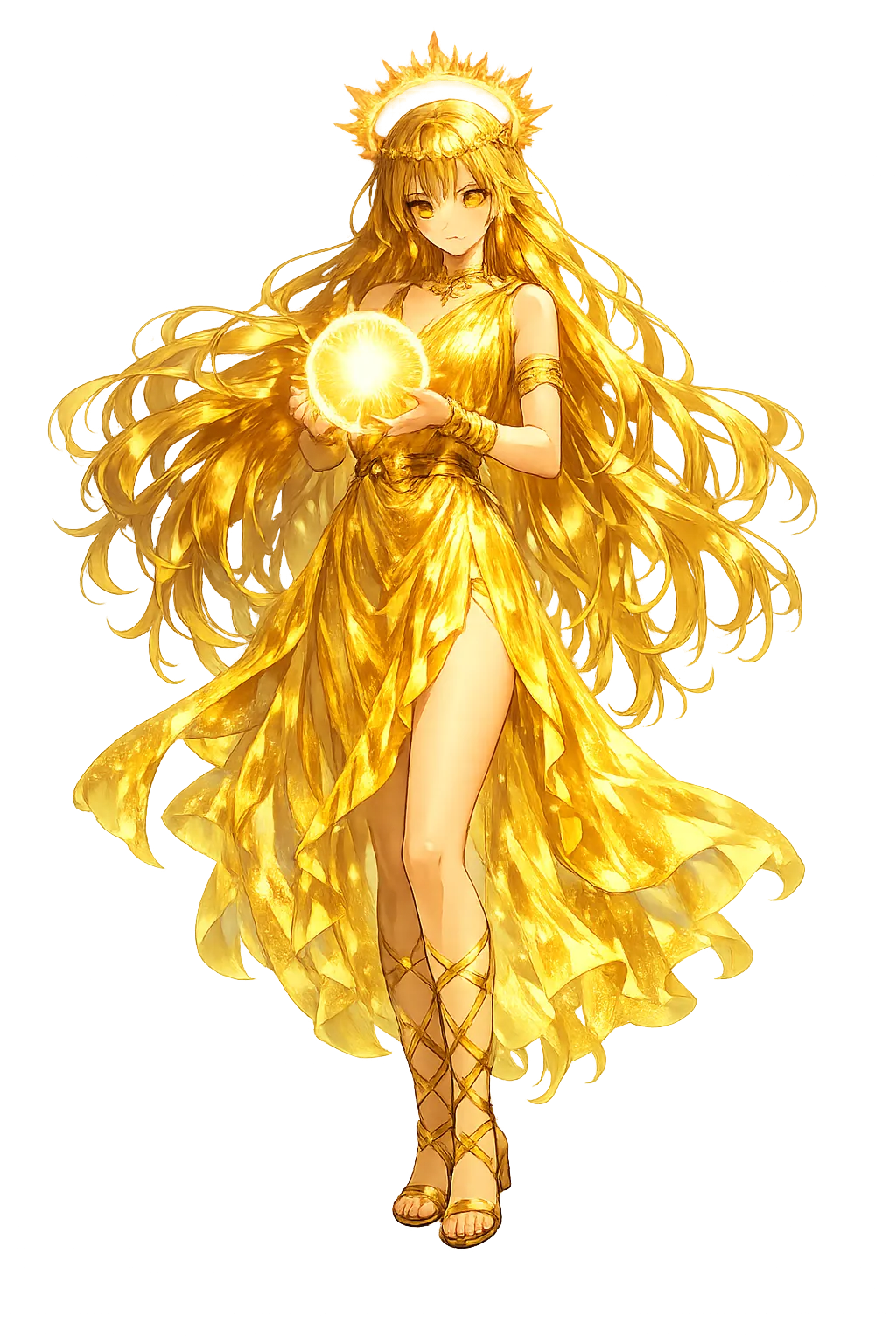
From Greek to Unicode: the journey of Theía
Long before it was a domain, this name traveled through scripts. Theía begins in Greek, passes through scholarly transliteration, and ends — for now — inside the punycode machinery of the global DNS. Each stage of that journey preserves some information and loses some, and the craft of restoration is knowing exactly which marks matter. This post follows the name stage by stage: the original script, the reconstructed pronunciation, the mythological record, the material evidence, and finally the Unicode form that carries all of it into the address bar. Think of it as a biography of a name, told through its spelling.
At a Glance
- Restored name: Theía
- ASCII form: theia
- Meaning: "Goddess, divine"
- Domain of influence: Titaness of Sight
- Pantheon: Greek
- Classification: Tier 1
- Original script: Θεία (Greek)
- Live domain: theía.com
Overview
Theía (theia) is the Titaness of sight and shining: daughter of [[ouranos|Ouranós]] and [[gaia|Gaîa]], sister-wife of [[hyperion|Hyperiōn]], and — her one indispensable role — mother of [[helios|Hēlios]], [[selene|Selēnē]], and [[eos|Ēōs]]: sun, moon, and dawn. The name is simply the feminine of θεῖος, 'divine': she is 'the goddess' made into a particular goddess, the luminous source from which the visible lights of heaven descend.
Hesiod gives her everything she has: a place among the twelve Titans and the single genealogy on which her whole significance hangs — 'Theia, won by Hyperion, bore great Helios and bright Selene, and Eos who brings light to all mortals and immortal gods.' Pindar opens an ode with her — 'Mother of the Sun, many-named Theia' — and says that through her mortals prize gold, the metal that most nearly holds her light.
PuniCodex restores the name as Theía and serves this temple at theía.com. The Greek Θεία carries both length — the ει diphthong — and the acute stress on its second syllable, and exactly one historically valid Unicode restoration exists, so the name sits in Tier 1; the ASCII form theia is the modern fallback imposed by the early domain-name system.
The Name
Θεία is the feminine form of the adjective θεῖος, 'divine': the name declares its bearer to be, simply, 'the divine one'. Hesiod's catalogue of Titans performs the transformation — what is elsewhere a description becomes, in the genealogy, a proper name with a single cosmic assignment: the mothering of light.
Poets and lexicographers have always heard in the name the family of sight-words — θέα, 'a seeing', θεάομαι, 'to gaze upon', θαῦμα, 'a wonder' — an association that suits the mother of sun, moon, and dawn. The kinship is poetically exact but etymologically unproven: the ultimate derivation of θεός and its adjective θεῖος remains disputed in the dictionaries, and the sight-family connection is best taken as an ancient and modern resonance, not a demonstration.
The PuniCodex restoration Theía keeps the acute on the second syllable; the ει diphthong supplies the length, and both features together place the name in Tier 1. The letter-by-letter transformation runs:
- t → T — T uppercase
- h → h — h same
- e → e — e same
- i → í — Acute on i
- a → a — a same
The project holds the domain theía.com (xn--thea-xpa.com) as the canonical home of this name.
The Original Script
The name is written in Greek as Θεία: theta, then epsilon-iota with an acute on the iota, then alpha. Both of the name's prosodic honors are visible in that spelling: ει is a true diphthong and therefore long by nature, and the acute on its second element marks the pitch peak of the spoken word — length and stress together, the double feature that places Theía in Tier 1. Classical inscriptions, which predate the accent system, show simply ΘΕΙΑ.
This original script is the measure of both the ASCII fallback theia and the PuniCodex restoration Theía: the restoration keeps the acute of the edited Greek, so that a reader typing the modern address still speaks the ancient name.
Pronunciation
The reconstructed pronunciation of the name is /tʰeː.ía/ — Attic Greek Reconstruction.
Phoneme by phoneme:
- Th- — Aspirated theta [tʰ], the breathy initial consonant.
- -ē- — Long eta [ɛː], the first syllable's length.
- -ía — Short iota with acute plus alpha — the pitch peak on the second syllable.
For the modern speaker, the closest approximation is: 'thay-EE-ah' — the first syllable is long and level, the second pitched high and bright.
Kindred and historical forms of the name:
- Greek — Θεία (Theía), Titaness of sight, shining, and the bright upper air
- Root — θέα (théa), 'sight, view'; related to θεάομαι, 'to gaze'
- Children — Hēlios, Selēnē, and Eōs — sun, moon, and dawn
Theía is Tier 1 because the Greek Θεία contains both length (η in the first syllable) and stress (acute on the ι of the second). She is the Titaness whose children are the celestial lights.
Mythology
Theía has no independent narrative myths; her importance is genealogical and cosmological. Through her, the Titans bequeath light to the Olympian cosmos.
Birth of the Luminaries (Hesiod, Theogony 371–374)
Hesiod names Theía among the twelve Titans and gives her the single act on which everything else depends: won by [[hyperion|Hyperiōn]], she bore great [[helios|Hēlios]], bright [[selene|Selēnē]], and [[eos|Ēōs]], 'who brings light to all mortals and immortal gods.' Without Theia, the visible heavens have no source.
The Wide-Shining Mother (Homeric Hymn 31)
The short Hymn to Helios names the sun's mother as Euryphaessa, 'wide-shining' — daughter of Earth and starry Heaven, wife of Hyperion, mother of the same three lights. Ancient commentators and modern scholars alike read the name as a transparent alias for Theía: the same genealogy under a speaking name.
Pindar's Invocation (Isthmian 5)
Pindar opens an ode for an Aeginetan victor with a cry to her — 'Mother of the Sun, many-named Theia' — and credits her with gold's prestige among mortals; the ancient scholia on the line connect her many names with honors paid to her on Aegina itself.
The Question of Cult
No sanctuary of Theía is securely attested by archaeology or by the periegetic sources; later summaries sometimes credit her with local cults, but the one secure footprint is literary — Pindar's invocation and its scholia.
Theía in Thessaly (Cult)
Pausanias mentions a sanctuary of Theía in Thessaly, where she was honored as mother of the sun. Her cult was local and relatively rare, overshadowed by the greater worship of her children.
Sight and Divinity (Etymology)
The name Theía is related to Greek words for sight and wonder; some ancient sources connected it with θεός, 'god,' via the idea that the divine is what is seen or what shines forth. The etymology is linguistically uncertain but poetically suggestive.
Symbols & Iconography
No fixed attribute attaches to Theía in ancient art or cult — her 'symbols' are her offspring and the materials her light makes precious:
- Sun, moon, and dawn — her three children are her only certain emblems: where Helios rises, Selene wanes, and Eos reddens, the genealogy itself is on display.
- Gold — Pindar binds her to the metal that does not tarnish: through Theia, he says, mortals hold gold most mighty — brilliance made durable.
- Radiance — poetry gives her the predicate 'wide-shining' (Euryphaessa), but painters and sculptors never fixed her a type; she shines, as it were, only through her children.
No secure iconographic type of Theía exists. She is a genealogical power rather than a visual one, and the standard iconographic lexicon can assemble no certain image of her; the female Titans of Archaic Titanomachy vases are anonymous, and none is labelled Theía. Even the battle-scenes that might include her are read by shield-devices and inscriptions, and no inscription names her. Her presence in art is entirely vicarious: the horses and chariot of the rising Helios on the Parthenon's east pediment, and the countless figures of [[selene|Selḗnē]] and [[eos|Ēōs]] in Greek and Roman art, are — genealogically speaking — portraits of her legacy.
Epithets & Cult Titles
Theía's few titles all circle her single function — the shining that begets sight:
- Εὐρυφάεσσα (Eurupháessa) — 'wide-shining'; her name in the Homeric Hymn to Helios.
- πολυώνυμος (poluṓnumos) — 'many-named'; Pindar's salutation at the head of Isthmian 5.
- Μᾶτερ Ἀελίου (Mâter Aelíou) — 'Mother of the Sun'; the same Pindaric line, her functional title.
- θεῖα (theîa) — 'the divine one'; her name is simply the feminine of the adjective 'divine,' which Hesiod's catalogue turns into a proper name.
- Mother of Selene — the title that traveled furthest: when planetary science needed a name for the Moon-forming impactor, it reached for the mother of the Moon goddess.
The Homeric Hymns
No Homeric Hymn is addressed to Theía by name, but the short Homeric Hymn to Helios (no. 31) nearly reaches her: it names the sun's mother as Euryphaessa, 'wide-shining,' born of Earth and starry Heaven — a transparent alias that ancient commentators and modern scholars alike identify with the Titaness Theía. Her earliest explicit attestation is Hesiod, who lists her among the Titans and gives her the genealogy on which everything else depends: by Hyperion she bore great Helios, bright Selene, and Eos who brings light to mortals. The Orphic corpus keeps her in the family: the Hymn to the Titans (no. 37) names her in the roll-call of the first gods — her only hymnic address in her own person.
Oracle Sites & Sanctuaries
Theía had no oracle, and no Panhellenic sanctuary bore her name: state cult and prophecy belonged to her children, above all to [[helios|Hḗlios]] on Rhodes, whose election as the island's patron Pindar sings. Her one secure cultic footprint is literary. Pindar opens an ode for an Aeginetan victor with the cry 'Mother of the Sun, many-named Theía,' and the ancient scholia connect those many names with honors paid to her on Aegina. The Homeric Hymn to Helios gives her the sky for a temple: its geography is the daily circuit of her son, and its closing prayer asks the sun not for prophecy but for a favorable life. Otherwise the Titaness of sight was revered by proxy — wherever dawn, sun, and moon were greeted, her genealogy did the worship.
Archaeology & Evidence
Theía has no archaeological record of her own: no sanctuary, altar, temple, or securely identified image is attested anywhere in the Greek world. Her one cultic trace is textual — Pindar's invocation of 'Mother of the Sun, many-named Theia' and the ancient scholia that connect it with honors on Aegina.
Her presence in the material record is vicarious but splendid. The east pediment of the Parthenon frames the birth of Athena with [[helios|Hēlios]] rising in his chariot at one corner and [[selene|Selēnē]]'s weary horse sinking at the other — the whole visible heaven of her children carved in marble at the center of Classical Athens.
Realm & Domain
Theía's domains are light in its three visible forms and the precious things that hold it.
Mother of Lights
By [[hyperion|Hyperiōn]] she bore [[helios|Hēlios]], [[selene|Selēnē]], and [[eos|Ēōs]] — sun, moon, and dawn, the three bodies by which the Greeks measured day, month, and hour.
Goddess of Sight
Her name belongs to the family of θέα, 'a seeing': she is the divine condition under which there is anything to see and any light to see it by.
The Brilliance of Gold
Pindar says that through her mortals prize gold above all else — the incorruptible metal being the nearest earthly keeper of her shining.
Titanic Lineage
A daughter of [[ouranos|Ouranós]] and [[gaia|Gaîa]], sister of [[kronos|Krónos]] and [[rhea|Rhéā]], she stands in the generation before Zeus: her light predates Olympus and survives it.
Across Cultures
Theía's nearest identification is internal to Greek tradition itself: the Homeric Hymn to Helios calls the sun's mother Euryphaessa, 'wide-shining', and the equation with Theía — same parents, same husband, same children — was already obvious to ancient readers. In the Orphic corpus she keeps her place among the primordial powers: the Orphic Hymn to the Titans names her in the family roll-call.
Otherwise she was absorbed rather than translated. Her functions flowed down into her children — [[helios|Hēlios]], [[selene|Selēnē]], and [[eos|Ēōs]] each inherited one of her lights and all of her visibility — and Roman mythographers simply repeat Hesiod's list, Theia among the Titans, without developing a cult. She remains what she was for Hesiod: a node of pure genealogy, the luminous junction between the first gods and the daily sky.
Cultural Legacy
Theía survives along two tracks, one lexical and one astronomical. The sight-family heard in her name — θέα, θεάομαι — gave Greek its vocabulary of contemplation, and through it gave English theory, theater, and theorem: words that all assume, as she does, that seeing is a way of knowing.
The second track is literal. In the giant-impact hypothesis for the Moon's origin, the Mars-sized body that struck the early Earth is named Theia — after the Titaness who mothered Selene, the Moon goddess: the impactor dies, and from its debris the Moon is born. The name was introduced into the scientific literature by Alex Halliday in 2000.
The Scholarly Record
The account of Theía given in this edition rests on the witnesses and reference works listed below. Lexica and etymological dictionaries secure the form and meaning of the name; the literary and religious texts supply the narrative evidence.
- Liddell-Scott-Jones Greek-English Lexicon, 9th ed. with 1996 supplement, s.v. θεῖος. Full text
- Hesiod, Theogony 132–136, 371–374 (Loeb Classical Library No. 57). Full text
- Homeric Hymn to Helios (no. 31).
- Pindar, Isthmian 5.1–10, with the ancient scholia.
- Pindar, Olympian 7 (the Rhodian cult of Helios).
- Orphic Hymns, no. 37 (to the Titans).
- Hyginus, Fabulae, praefatio.
- Lexicon Iconographicum Mythologiae Classicae (LIMC), s.v. 'Theia'.
- Halliday, A. N., Nature 408 (2000), 505–506.
- Oxford English Dictionary, s.v. 'theory'.
A Meditation
Theía is the unseen source of all that is seen. She has no myths because her power is too basic for narrative: it is the condition under which any story can be witnessed. To honor her is to recognize that light is not merely physical but epistemic — we know by seeing, and we are known by being seen.
Her restoration in Unicode is fitting. The very act of reading a restored Greek name on a screen depends on light, on sight, on the luminous technology that her children prefigured. Theía reminds us that behind every visible marvel there is an older, quieter power: the brightness that makes brightness possible.
The Unicode Restoration
Theía is classified as Tier 1: the original carries both stress and length, and only one valid Unicode restoration exists. The ASCII fallback theia still resolves everywhere, but it is the restored form that carries the name's full information. Across the 5 characters of the name, the restoration adjusts 1: 1 mark of stress (í). That is the whole thesis of this temple: the marks are the message.
The Domain Name
The restored name is live as a working domain: theía.com, which the DNS carries in punycode form as xn--thea-xpa.com — an ASCII-compatible encoding that lets a non-ASCII name travel the global network without breaking older infrastructure. The visitor sees Theía; the machines see the encoding. That duality is the engineering compromise on which the entire restoration rests, and it is why a name written the way its own tradition wrote it in Greek can now be typed into any browser on earth.
Why This Restoration Matters
Every stage of the journey from Greek to Unicode was an act of care: the scribe who first wrote the name, the lexicographer who glossed it, the engineer who taught the DNS to carry it. The PuniCodex restoration is the latest stage, not the last word — the Scholarly Edition is revised as the evidence improves. What does not change is the principle: a name deserves to be written the way its own tradition wrote it. Theía in the address bar is that principle, made routable.
Explore Further
This post is one doorway into the temple. The home page carries the full character breakdown and the ambient canvas; the lore page tells the myths in long form; the Scholarly Edition preserves the sources, pronunciation data, and revision history; and the patron wall supports the restoration directly. For the wider map, browse the Lexicon, explore the Pantheon, or return to the PuniCodex blog.
Related Names
Sources
The full scholarly apparatus — every citation, revision, and review — lives in the Scholarly Edition. Key references for this post:
- Liddell-Scott-Jones Greek-English Lexicon, 9th ed. with 1996 supplement, s.v. θεῖος.
- Hesiod, Theogony 132–136 and 371–374 (Theía among the Titans; the birth of the luminaries).
- Pindar, Isthmian 5.1–10 (Mother of the Sun, many-named Theia).
- Pindar, Isthmian 5.1–10.
- Lexicon Iconographicum Mythologiae Classicae (LIMC), s.v. 'Theia' (no certain images).
- Homeric Hymn to Helios (no. 31: Euryphaessa as the sun's mother).
- Lexicon authorities for this entry: Hesiod, LSJ.