Unicode restoration and ASCII comparison
Θεία
The name in its original Greek form. Theía (Θεία) is attested in the source tradition — “Goddess, divine”. Its diphthongs and acute accents carry the full phonetic and orthographic weight of the source tradition.
theia
Reduced to plain theia, the name loses everything that made it specific: diphthongs and acute accents. What remains is an ASCII string that machines can parse but that no longer speaks with its original voice.
Theía
The Unicode restoration recovers what ASCII flattened. Theía restores diphthongs and acute accents, returning the name to its original written dignity. The domain encodes to Punycode, but the browser displays the truth.
Theía.com → xn--thea-xpa.com
The non-ASCII characters in Theía are encoded while the ASCII remains visible. To the DNS, it is Punycode. To humanity, it is Theía.
How Theía is preserved in writing
A bespoke provenance study for Theía is being prepared by the PUNICODEX scholarly team.
Contribute scholarly provenance →How Theía was spoken
Brilliance, The Eyes, The Celestial Luminaries
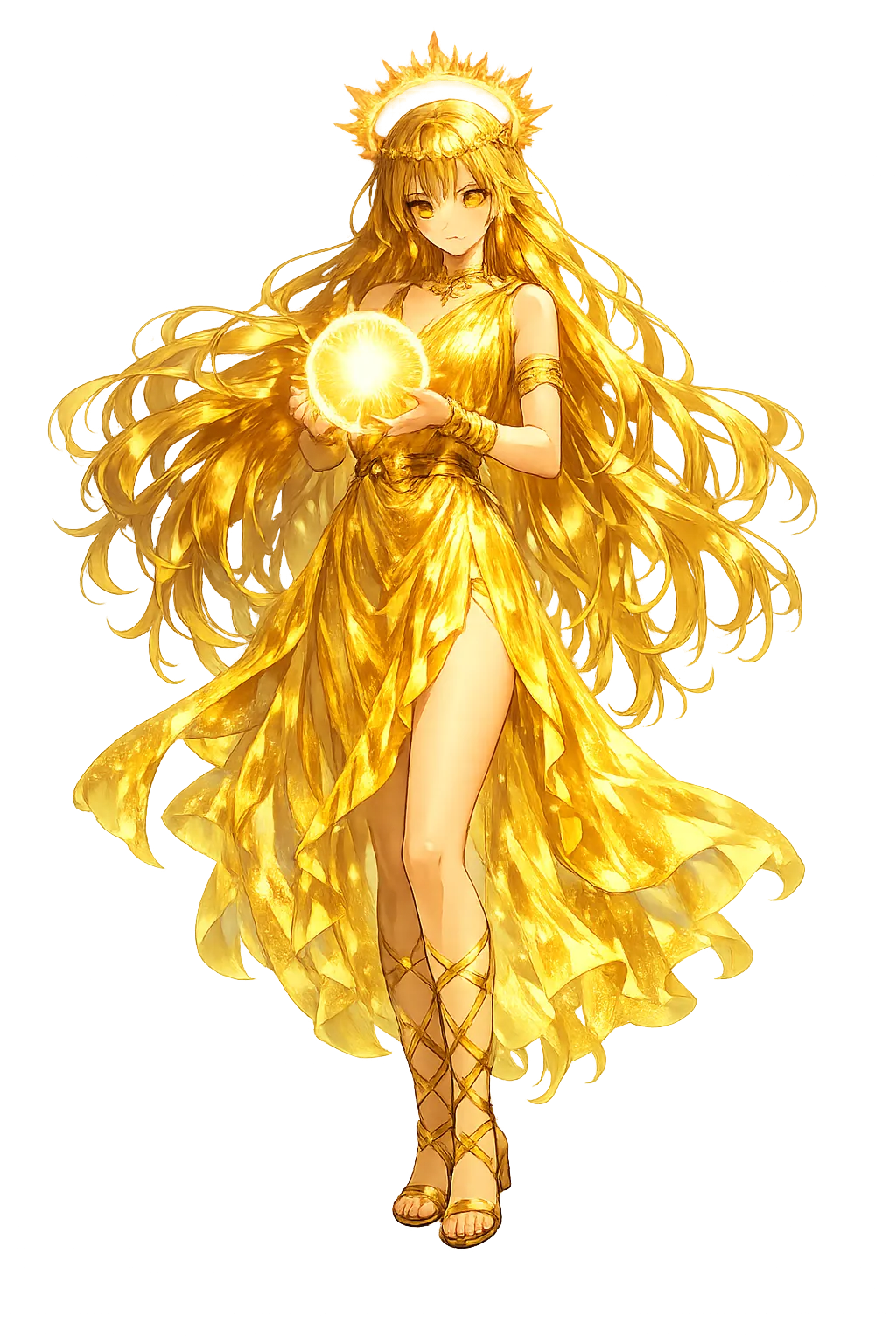
Theía is the Titaness of sight, shining, and the bright ether. Though less famous than her children Hēlios, Selēnē, and Eōs, she is the luminous source from which they spring — the divine principle that makes seeing and being seen possible.
By Hyperion she bore the sun, moon, and dawn — the three great celestial bodies.
Her name links her to θέα, 'sight'; she is the power behind clear vision.
She personifies the bright upper air through which light travels.
Daughter of Ouranos and Gē, sister of Kronos and Rhea, aunt of Zeus.
Stories of Theía
Theía has no independent narrative myths; her importance is genealogical and cosmological. Through her, the Titans bequeath light to the Olympian cosmos.
Hesiod names Theía as the wife of Hyperion and mother of Hēlios (Sun), Selēnē (Moon), and Eōs (Dawn). The trio governs the visible heavens; without Theía, there is no source from which these lights can arise.
Pausanias mentions a sanctuary of Theía in Thessaly, where she was honored as mother of the sun. Her cult was local and relatively rare, overshadowed by the greater worship of her children.
The name Theía is related to Greek words for sight and wonder; some ancient sources connected it with θεός, 'god,' via the idea that the divine is what is seen or what shines forth. The etymology is linguistically uncertain but poetically suggestive.
Theía is the unseen source of all that is seen. She has no myths because her power is too basic for narrative: it is the condition under which any story can be witnessed. To honor her is to recognize that light is not merely physical but epistemic — we know by seeing, and we are known by being seen.
Enter Extended Lore