
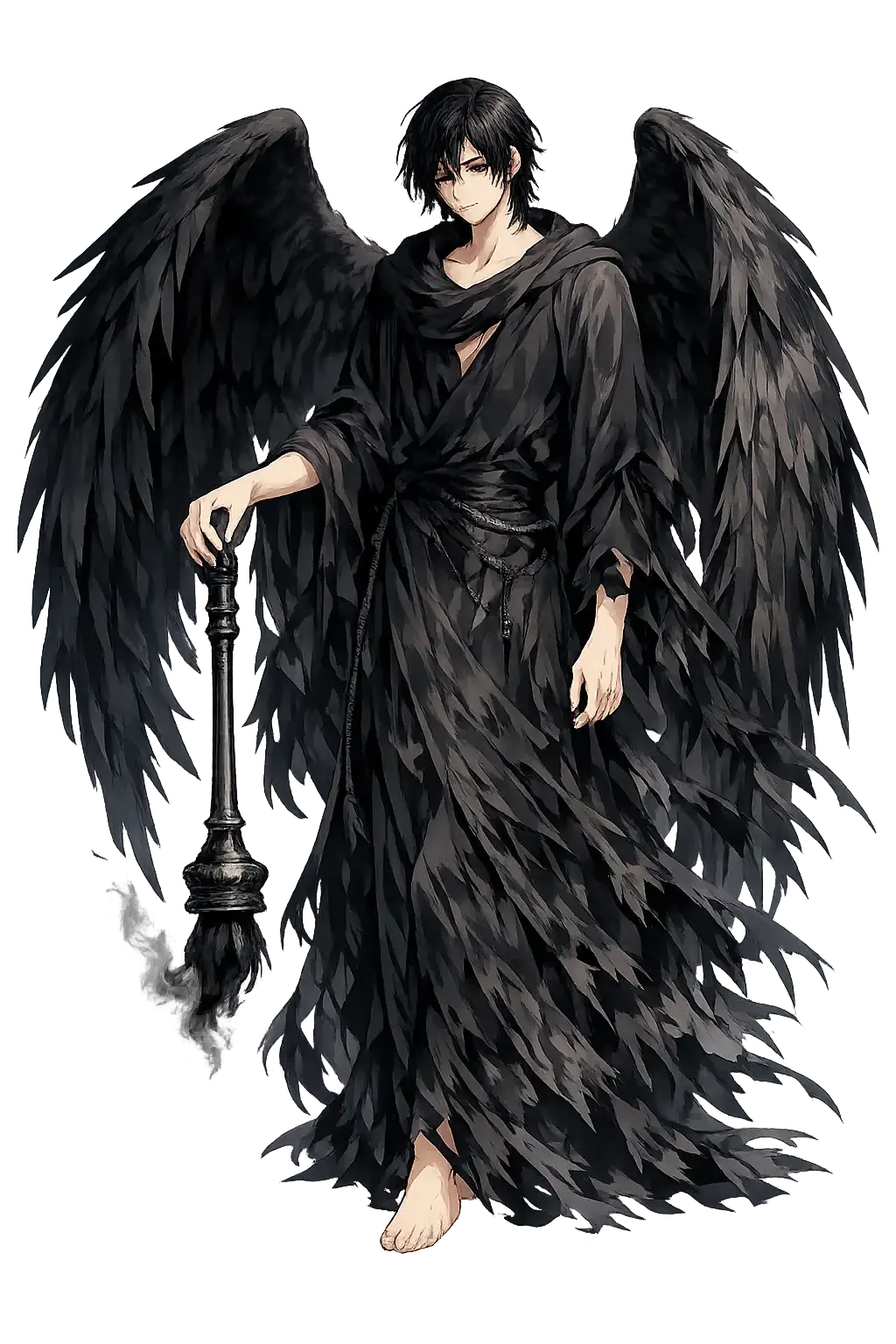
Thánatos: the stories first, then the spelling
The marks in Thánatos make the most sense standing next to the myths they have to carry. So the myths come first.
The Stories That Carry the Name
The Body of Sarpedon. When the Lycian prince Sarpedon fell before Patroclus, Zeus commanded Apollo to cleanse the body and summon Hýpnos and Thánatos to carry it home. The twin brothers lifted the hero in their arms and bore him through the air to Lycia, where his kin gave him funeral rites. It is one of the most moving images of death in Homer: not grim, but almost filial.
Heracles Bound. In Euripides' Alcestis, Admetus has won the right to substitute another for his own death. His wife Alcestis volunteers. Heracles, passing through, learns what has happened, wrestles Thánatos at her grave, and forces the god to release her.
Son of Night. Hesiod makes Thánatos the child of Nyx (Night), without a father, and the twin brother of Hýpnos (Sleep). Together they dwell in the dark caves of the underworld, near the river Lethe, emerging only when a mortal's day is done. They are not cruel; they are the ministers of necessary law.
And Here Is What the Spelling Preserves
Against those stories, the attestation: Θάνατος, as Hesiod, Theogony and Homer, Iliad preserve it. The name means "Death".
The restoration keeps one feature the ASCII form thanatos cannot show:
- a → á — Acute on a: where the voice peaks.
A storyteller pronouncing the name would restore every one of them by instinct. The file only writes down what the voice already knows.
At a Glance
- Restored name: Thánatos
- ASCII form: thanatos
- Meaning: "Death"
- Domain of influence: Death
- Pantheon: Greek
- Classification: Tier 2
- Original script: Θάνατος
- Series: The Restoration Files, No. 237 of 271
The Name Travels
Roman Mors never achieved the visual and literary richness of Greek Thánatos. In later European art, Thánatos merged with the Grim Reaper, the Christian angel of death, and allegorical figures of mortality.
The Address It Earned
The temple of Thánatos stands at /sites/thanatos/ — lore, scholars, patterns — because a name carrying this much story deserves more than a parking page. The restoration keeps one feature the ASCII form drops. One is enough to matter, and the label says so plainly: Tier-2.
The Sources Are Open
The myths above are retold from the temple's record; the primary voices are in the Sacred Texts: Theogony, Homeric Hymns, and Works and Days. Nothing in this file outranks them.
The File Continues
Read the founding dispatch for the name's full story, the Resonance File for the archetype at work — or the whole archive in one sitting.
Continue the series — previous file: Tēzcatlīpōca (read it here) · next file: Théia (read it here).
The Restoration Files are written from the same canonical record as the temples themselves: the lexicon, the lore catalog, the pattern atlas, and the cited scholarly sources. If a file ever disagrees with its temple, the temple is right — tell us, and the file will be corrected.