
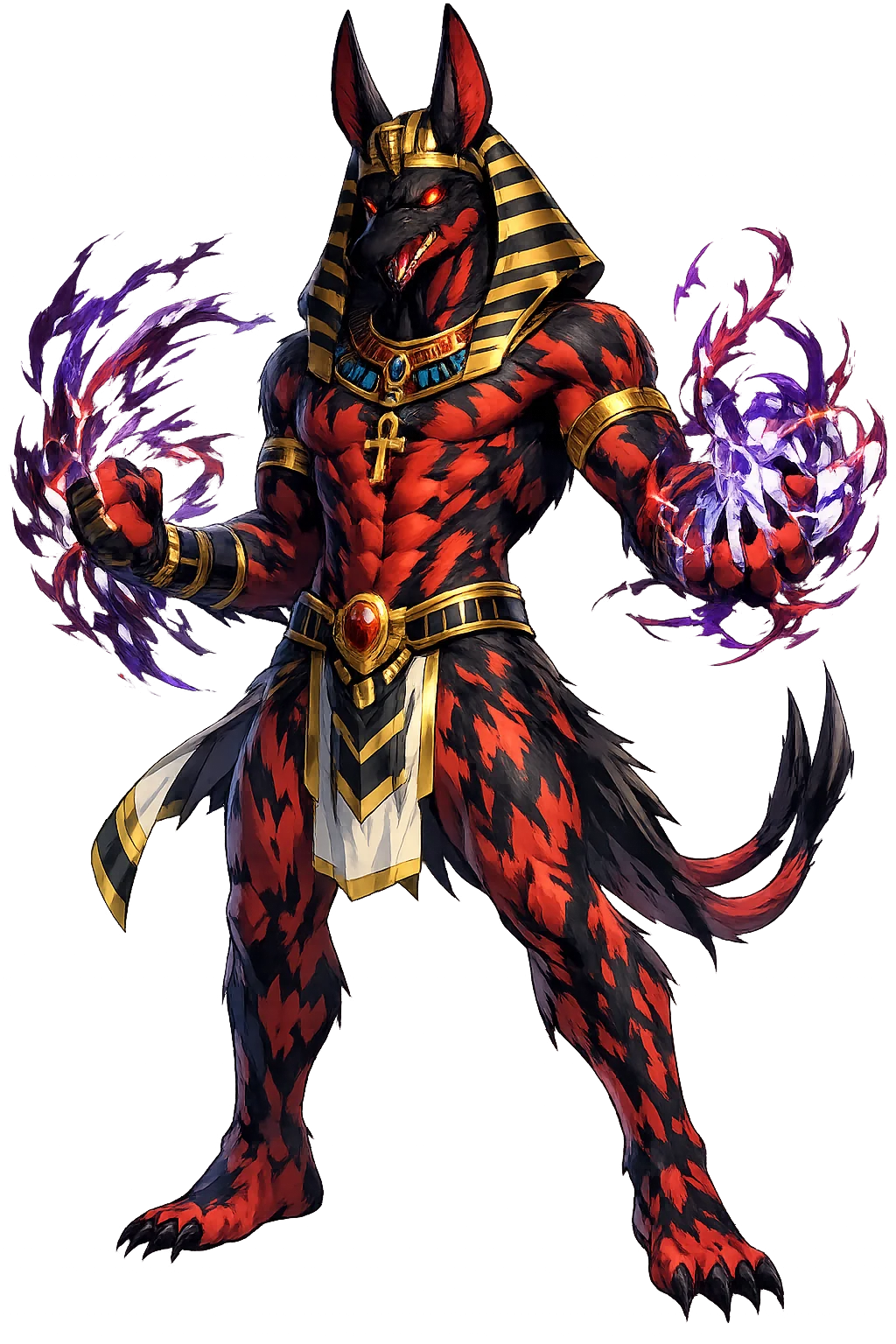
Stress-testing Stḫ: do the industry seats hold?
The stress test for Stḫ. Every seat in the atlas was attacked with the same question — is the match real, or is it poetry? — and the survivors are recorded with their evidence.
At a Glance
- Temple: Stḫ
- Pantheon: Egyptian
- Domain of influence: Desert, Storm, Strength
- Pattern seats: 4
- Sectors touched: Commerce & Governance · Energy & Natural World
- Strongest seat: Defense, Military & Security
- Series: The Resonance Files, No. 229 of 271
The Test
Seat 1: Defense, Military & Security
Claim: The necessary strength posted at the prow; patron of the warrior line of pharaohs. Exhibit: The Dismemberment — The centre of his infamy: stḫ kills his brother Osiris — by trickery in the chest episode Plutarch records, by violence in the Egyptian litanies — scatters the body through Egypt, and claims the throne.
Verdict: survives scrutiny. The myth and the trade do the same work.
Seat 2: Disaster Resilience & Recovery
Claim: The storm that also defends; chaos harnessed at the prow. Exhibit: Eighty Years Against Horus — The Contendings of Horus and Set (Papyrus Chester Beatty I) stages the gods' longest lawsuit: eighty years of trials, battles, and tricks — the hippopotamus duel, the lettuce episode, the trial by boat — until the Ennead divides the inheritance: Horus takes the black land, stḫ the desert and the foreign countries.
Verdict: survives scrutiny. The myth and the trade do the same work.
Seat 3: Environmental & Climate Services
Claim: Desert and storm; the harsh powers the land must be read with. Exhibit: The Spear of the Night Barque — The Amduat and the Books of the Netherworld give him the office no gentle god could hold: standing at the prow of Ra's night barque, stḫ spears Apophis — the giant serpent who swallows the sun each night — because only his strength, his violence, and his willingness to fight monsters suffice.
Verdict: survives scrutiny. The myth and the trade do the same work.
Seat 4: Meteorology & Weather Intelligence
Claim: Lord of the desert storm and the chaos front. Exhibit: The Dismemberment — The centre of his infamy: stḫ kills his brother Osiris — by trickery in the chest episode Plutarch records, by violence in the Egyptian litanies — scatters the body through Egypt, and claims the throne.
Verdict: survives scrutiny. The myth and the trade do the same work.
The Control Group
Against the seats that survived, one control: the temple's own summary of its figure — No Egyptian god has a stranger career: royal patron of the Second Dynasty, villain of the Osiris cycle, defender of the sun, and finally — in the Greco-Roman dusk — demonized as Typhon. The seats do not drift far from it. That is the audit's cleanest result.
The Method, Stated Plainly
The atlas is not a horoscope. Seats are earned from the sources — argued, weighted, published — and every one of them can be challenged at the methodology page. A match that cannot survive an argument does not survive review. That is the whole trick: the patterns are claims, and claims can be tested.
For the Ones Who Work There
For a sponsor in defense, military & security, the fit here is not adjacency — it is inheritance. Your trade already tells this story every working day; the temple simply holds the original. The patron tier and the advertising terms carry the mechanics; the myths above carry the reason.
The File Continues
This is one of 271 Resonance Files — the third dispatch from every flagship temple, where the myths meet the markets. The temple's founding dispatch tells the name's story; its Restoration File tells the spelling's; the blog index holds the whole archive.
Continue the series — previous: Sphínx (read it) · next: Stýx (read it).
The Resonance Files are argued from the same canonical record as the pattern atlas itself: the lexicon, the lore catalog, and the cited sources. Every seat can be challenged at the methodology page — and the challenge is the point.