
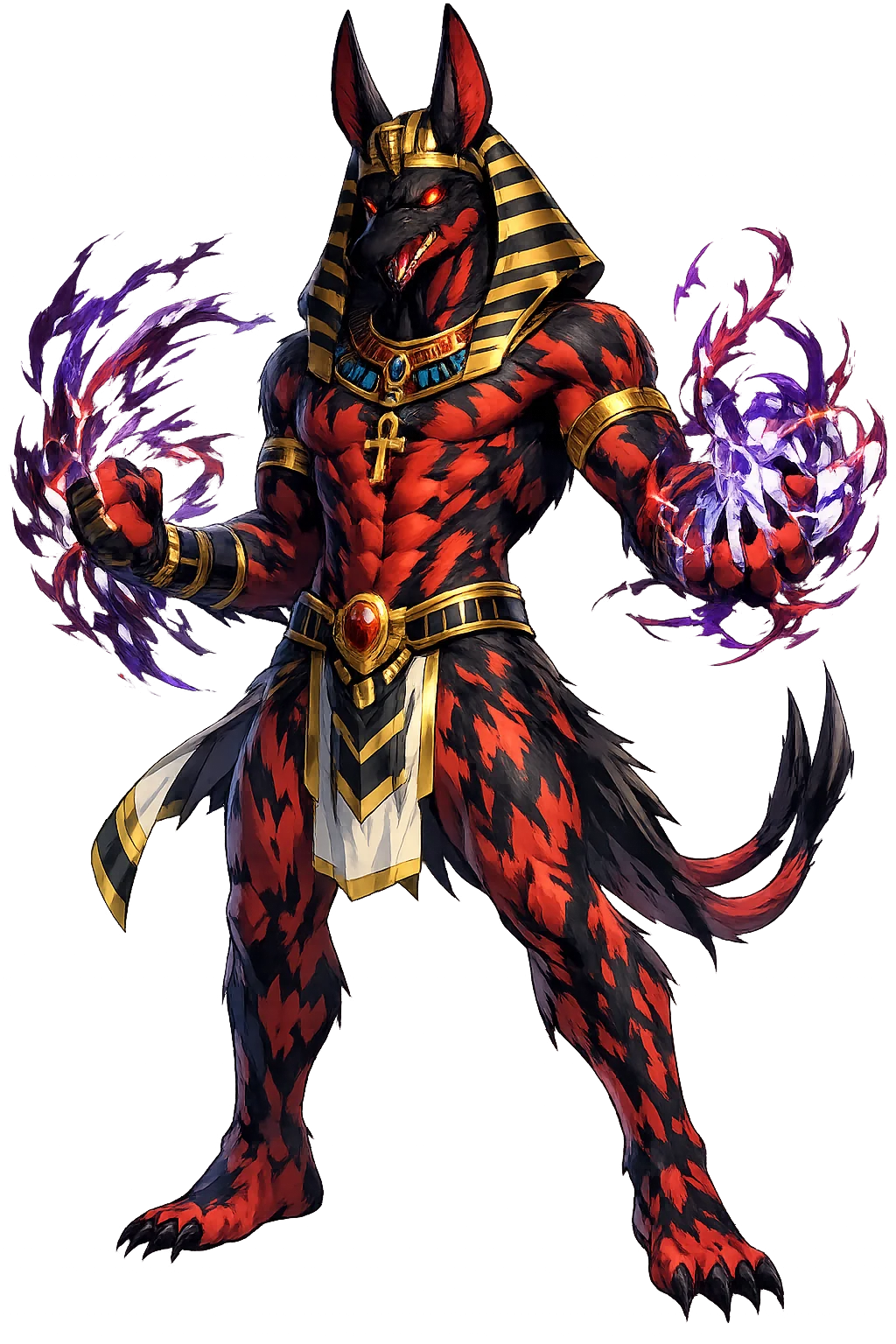
The many faces of Stḫ
No important name has only one face. Stḫ appears as a figure of myth, a scholarly reconstruction, a piece of material culture, a memory carried across languages, and — most recently — a Unicode domain. This post looks at each face in turn: the name and its roots, the Hieroglyphs original, the reconstructed pronunciation, the mythological record, the symbols and sanctuaries, the cross-cultural afterlife, and the engineering that lets the restored spelling resolve in a browser. Taken together, those faces explain why steh was never going to be enough — and why the restored form is worth a domain of its own.
At a Glance
- Restored name: Stḫ
- ASCII form: steh
- Meaning: "The god Seth/Setekh; etymology disputed, possibly "the one who separates""
- Domain of influence: Desert, Storm, Strength
- Pantheon: Egyptian
- Classification: Tier 2
- Original script: 𓋴𓏏𓐍 (Hieroglyphs)
- Live domain: stḫ.com
Overview
Stḫ (steh) — The Lord of the Red Land — belongs to the Egyptian tradition, where it is catalogued under the domain "Desert, Storm, Strength". The name means "The god Seth/Setekh; etymology disputed, possibly "the one who separates"".
stḫ is the god Egypt could neither worship comfortably nor live without: lord of the red desert, the storm, and the foreign lands — the murderer of Osiris, and also the only god strong enough to stand at the prow of Ra's barque and spear the serpent of chaos, night after night.
PuniCodex restores the name as Stḫ and serves its temple at stḫ.com. The original preserves one prosodic feature — stress or vowel length — rather than both, which places the name in Tier 2. The plain ASCII form steh survives as a modern convenience imposed by the early domain-name system; the restoration, not the fallback, is the form the project defends as philologically complete.
The Name
The name is attested in Hieroglyphs as 𓋴𓏏𓐍. Etymologically it means "The god Seth/Setekh; etymology disputed, possibly "the one who separates"".
The ASCII form steh survives only because the early domain-name system could not carry diacritics; it is a technological compromise, not an ancient spelling. The Unicode restoration Stḫ recovers the full diacritic detail of the scholarly transliteration directly in the address bar. The original preserves one prosodic feature — stress or vowel length — rather than both, which places the name in Tier 2.
The letter-by-letter transformation runs:
- s → S — Same letter
- t → t — Same letter
- e → ḫ — Script-specific letter
- h → — — Dropped in the Unicode form
The project holds the domain stḫ.com (xn--st-cvs.com) as the canonical home of this name.
The Original Script
The name is preserved in Hieroglyphs as 𓋴𓏏𓐍.
The scholarly transliteration is stḫ.
The rendering proceeds step by step:
- S29 folded cloth (𓋴) = s
- X1 bread loaf (𓏏) = t
- V28 wick of twisted flax (𓐍) = ḫ (cheth)
- stḫ is the god of the desert and foreign lands, Greek Σήθ (Seth)
Written s-t-ḫ with the seated Set-animal (Gardiner E20/E21) as determinative — the enigmatic "sha" beast with its squared ears and forked tail, a creature that has never been securely identified with any living species. In later, demonized periods the animal is often erased or replaced by the seated-god determinative: damnatio memoriae in the spelling itself.
Pronunciation
The reconstructed pronunciation of the name is /ˈsɛː.tɛx/ — Egyptological (from stḫ).
For the modern speaker, the closest approximation is: The name ends in the cheth (ḫ), a strong h-sound; Greeks rendered him as Σήθ (Seth).
Kindred and historical forms of the name:
- Egyptian — stḫ
- Greek — Σήθ (Seth)
- Owned form — stḫ
The consonantal skeleton stḫ (also stš) is conventionally vocalized "Setekh" or "Setesh"; the Greek Seth and Coptic Sēt preserve the shell. The underdotted ḥ is the voiceless pharyngeal fricative — the restoration keeps the Egyptological transliteration rather than the familiar but softened "Seth."
Mythology
No Egyptian god has a stranger career: royal patron of the Second Dynasty, villain of the Osiris cycle, defender of the sun, and finally — in the Greco-Roman dusk — demonized as Typhon. stḫ is all of them at once, and the texts refuse to choose.
The Dismemberment (The Murder)
The centre of his infamy: stḫ kills his brother Osiris — by trickery in the chest episode Plutarch records, by violence in the Egyptian litanies — scatters the body through Egypt, and claims the throne. Isis and Nephthys gather the pieces; ꜣnpw wraps them; and the god of chaos becomes, unwillingly, the reason the world has resurrection.
Eighty Years Against Horus (The Contest)
The Contendings of Horus and Set (Papyrus Chester Beatty I) stages the gods' longest lawsuit: eighty years of trials, battles, and tricks — the hippopotamus duel, the lettuce episode, the trial by boat — until the Ennead divides the inheritance: Horus takes the black land, stḫ the desert and the foreign countries. Not defeat but partition: Egypt writes chaos into the constitution.
The Spear of the Night Barque (The Prow)
The Amduat and the Books of the Netherworld give him the office no gentle god could hold: standing at the prow of Ra's night barque, stḫ spears Apophis — the giant serpent who swallows the sun each night — because only his strength, his violence, and his willingness to fight monsters suffice. The cosmos depends on the murderer of Osiris doing his job.
Patron of Warriors (The Kings)
Pharaohs of the warrior line took his name — Seti, "man of Set" — and Ramesses II praised him at Qadesh; the Hyksos had earlier made him their chief god at Avaris, identifying him with Baal. The Nineteenth Dynasty kept his temple at Ombos (Nubt), the gold town, and his priests never disappeared: strength, in Egypt, was sacred even when it was frightening.
Symbols & Iconography
The iconography associated with Stḫ concentrates in a small set of recurring attributes, each a compressed statement about the name:
- The Set animal — The unidentifiable beast — ambiguity made heraldry
- The red crown's opposite — Lord of the red desert, against Horus of the black land
- The iron — "The iron of Set" — the Egyptians' name for meteoric metal and hardness
Archaeology & Evidence
His cult centre was Nubt (Ombos, near modern Naqada), the "gold town," where temple remains and the predynastic votives tie him to Egypt's earliest strata; Set-animal standards appear on the Scorpion macehead and the Narmer palette's war context. The sha-beast's erasure is itself archaeological: reliefs at Karnak and elsewhere show the animal chiseled out in the Late Period and restored by modern epigraphy. The Edfu temple texts preserve the fullest dramatic liturgy of the Horus-Set conflict, performed as temple drama.
His cult cities map the two Egypts he ruled and menaced: Nubt (Ombos), the 'gold town' near Naqada, was his ancient capital — temple remains and predynastic votives tie him to the state's first strata. Avaris in the Delta became his second capital under the Hyksos, who made him their chief god; the Nineteenth Dynasty, born of that region, restored his honour with the temple of Seti I at Abydos inscriptions and the great Memphis colossi of Set-named kings. At Edfu, the dramatic texts of his defeat by Horus were performed as temple liturgy — the demonized god still necessary to the play.
Realm & Domain
stḫ is the god Egypt could neither worship comfortably nor live without: lord of the red desert, the storm, and the foreign lands — the murderer of Osiris, and also the only god strong enough to stand at the prow of Ra's barque and spear the serpent of chaos, night after night.
The Was-Sceptre
The forked staff of power, headed with his animal — the sceptre every god carries carries his face.
The Storm
Thunder, desert wind, and the red land's violence — Egypt's weather of war.
Slayer of Apophis
Each night in the Duat he spears the chaos-serpent from the barque's prow — order's strongest arm.
The Sha
His unidentified animal: part greyhound, part aardvark, part donkey — a creature as unclassifiable as the god.
Across Cultures
The New Kingdom identified him with Baal, the Syrian storm god — an equation made by warriors, for warriors. The Greeks, reading the Osiris cycle, identified him with Typhōn, the hundred-headed enemy of Zeús, and as Egypt's religion closed, the identification became damnation: Set-Typhon absorbed all evil, his animal was hacked from the reliefs, his name excised. Te Velde's classic study calls the process "the demonization of a god" — the first documented case of a deity becoming a devil.
Kindred figures in the PuniCodex cross-tradition index include [[apep|Ꜥpp]] (chaos / primordial / world serpent), [[baal|Baꜥal]] (thunder / storm sovereignty), [[chaos|Cháos]] (chaos / primordial / world serpent), [[enlil|Enlīl]] (thunder / storm sovereignty), [[jormungandr|Jǫrmungandr]] (chaos / primordial / world serpent), and [[leviathan|Liwyāṯān]] (chaos / primordial / world serpent).
Cultural Legacy
He is the ancestor of every "god of the enemy" in Western imagination — the Typhonian tradition runs from Plutarch through modern occultism. Egyptology's rehabilitation of him (as the necessary opposite, strength without which order is defenceless) is one of the field's signature achievements. The Set animal remains the standard icon of ambiguity itself, and "Sethian" survives as a scholarly label for Gnostic sects who saw the world as his kind of storm.
The Scholarly Record
The account of Stḫ given in this edition rests on the witnesses and reference works listed below. Lexica and etymological dictionaries secure the form and meaning of the name; the literary and religious texts supply the narrative evidence.
- H. te Velde, Seth, God of Confusion, Brill, Probleme der Ägyptologie 6, 1967.
- A Concise Dictionary of Middle Egyptian, Griffith Institute, 1962. Full text
- Alan H. Gardiner, Egyptian Grammar: Being an Introduction to the Study of Hieroglyphs, Griffith Institute / Oxford University Press (3rd ed. 1957), 1927. Full text
- James P. Allen, Middle Egyptian: An Introduction to the Language and Culture of Hieroglyphs, Cambridge University Press, 2000. Full text
- D. Bonneau, La Crue du Nil, Librairie C. Klincksieck, Paris, 1964.
- Egyptology (modern Egyptological scholarship), UCLA Encyclopedia of Egyptology / field standard, ongoing. Full text
A Meditation
stḫ is the god of the strength you hope never to need. Egypt's answer to evil was not to banish it but to post it at the prow: the desert's violence pointed outward, against the true nothing. He asks every ordered world the question it least likes: what, in you, is strong enough to fight the serpent — and where will you let it stand?
The Unicode Restoration
Stḫ is classified as Tier 2: the original preserves at least one philological feature that ASCII cannot encode. The ASCII fallback steh still resolves everywhere, but it is the restored form that carries the name's full information. Across the 4 characters of the name, the restoration adjusts 2: 2 further adjustments (ḫ, h). That is the whole thesis of this temple: the marks are the message.
Character by Character
The journey from steh to Stḫ, one character at a time:
- s → S — Same letter
- t → t — Same letter
- e → ḫ — Script-specific letter
- h → h — Dropped in the Unicode form
The Domain Name
The restored name is live as a working domain: stḫ.com, which the DNS carries in punycode form as xn--st-cvs.com — an ASCII-compatible encoding that lets a non-ASCII name travel the global network without breaking older infrastructure. The visitor sees Stḫ; the machines see the encoding. That duality is the engineering compromise on which the entire restoration rests, and it is why a name written the way its own tradition wrote it in Hieroglyphs can now be typed into any browser on earth.
The Egyptian Pantheon
Stḫ is one of 67 entries the PuniCodex lexicon catalogues under the Egyptian pantheon. The Pantheon page gathers the tradition's major figures in one place, and the Lexicon lets you filter all 915 restorations by tradition, tier, or script — the fastest way to see where this name sits among its kin.
Frequently Asked Questions
What does Stḫ mean? The traditional gloss is "The god Seth/Setekh; etymology disputed, possibly "the one who separates"."
Which tradition does Stḫ belong to? Stḫ is catalogued in the Egyptian pantheon of the PuniCodex lexicon.
Why is Stḫ classified as Tier 2? Because the original preserves at least one philological feature that ASCII cannot encode — and the marks in the restored spelling preserve exactly that evidence.
Is Stḫ a working domain? Yes — stḫ.com resolves today and routes to this temple.
What is the punycode for stḫ.com? The DNS encoding is xn--st-cvs.com; browsers perform the translation automatically, so visitors only ever see the restored name.
Typing Stḫ
You do not need a special keyboard to use this restoration. The PuniCodex Type Tool converts the ASCII form steh into Stḫ as you type, and the browser extension offers the same conversion inside any text field. Copy the restored form, paste it into the address bar, and the DNS does the rest.
Sister Temples
Other temples in the Egyptian pantheon include Pꜣḫt, Rnnwtt, and Serapis — each with its own restoration story, its own scholarly record, and its own place in the lexicon.
Why This Restoration Matters
Myth, script, sound, cult, legacy, domain: the faces of Stḫ add up to a single argument — that a name is a record, and records deserve fidelity. The PuniCodex restoration keeps that record in working order: the temple presents it, the Scholarly Edition footnotes it, the lexicon catalogs it, and the domain makes it addressable. steh will always exist as a fallback. But fallback is not identity. Stḫ is the name; everything else is a convenience.
Explore Further
This post is one doorway into the temple. The home page carries the full character breakdown and the ambient canvas; the lore page tells the myths in long form; the Scholarly Edition preserves the sources, pronunciation data, and revision history; and the patron wall supports the restoration directly. For the wider map, browse the Lexicon, explore the Pantheon, or return to the PuniCodex blog.
Related Names
Sources
The full scholarly apparatus — every citation, revision, and review — lives in the Scholarly Edition. Key references for this post:
- A Concise Dictionary of Middle Egyptian, Griffith Institute, 1962.
- Alan H. Gardiner, Egyptian Grammar: Being an Introduction to the Study of Hieroglyphs, Griffith Institute / Oxford University Press (3rd ed. 1957), 1927.
- James P. Allen, Middle Egyptian: An Introduction to the Language and Culture of Hieroglyphs, Cambridge University Press, 2000.
- Egyptology (modern Egyptological scholarship), UCLA Encyclopedia of Egyptology / field standard, ongoing.
- H. te Velde, Seth, God of Confusion, Brill, Probleme der Ägyptologie 6, 1967.
- Te Velde, Seth; the Edfu temple texts (Fairman).
- D. Bonneau, La Crue du Nil, Librairie C. Klincksieck, Paris, 1964.
- Te Velde, Seth, God of Confusion (titles and their history).
- Lexicon authorities for this entry: Faulkner, Gardiner, Te Velde.