Unicode restoration and ASCII comparison
𓋴𓏏𓐍
The name in its original Egyptian form. Stḫ (𓋴𓏏𓐍) is attested in the source tradition — “The god Seth/Setekh; etymology disputed, possibly "the one who separates"”. Its original diacritics and script distinctions carry the full phonetic and orthographic weight of the source tradition.
steh
Reduced to plain steh, the name loses everything that made it specific: original diacritics and script distinctions. What remains is an ASCII string that machines can parse but that no longer speaks with its original voice.
Stḫ
The Unicode restoration recovers what ASCII flattened. Stḫ restores original diacritics and script distinctions, returning the name to its original written dignity. The domain encodes to Punycode, but the browser displays the truth.
Stḫ.com → xn--st-cvs.com
The non-ASCII characters in Stḫ are encoded while the ASCII remains visible. To the DNS, it is Punycode. To humanity, it is Stḫ.
How Stḫ travels from ancient script to the modern URL
How Stḫ was spoken
Chaos, Strength, the Desert, and the Spear Against Apophis
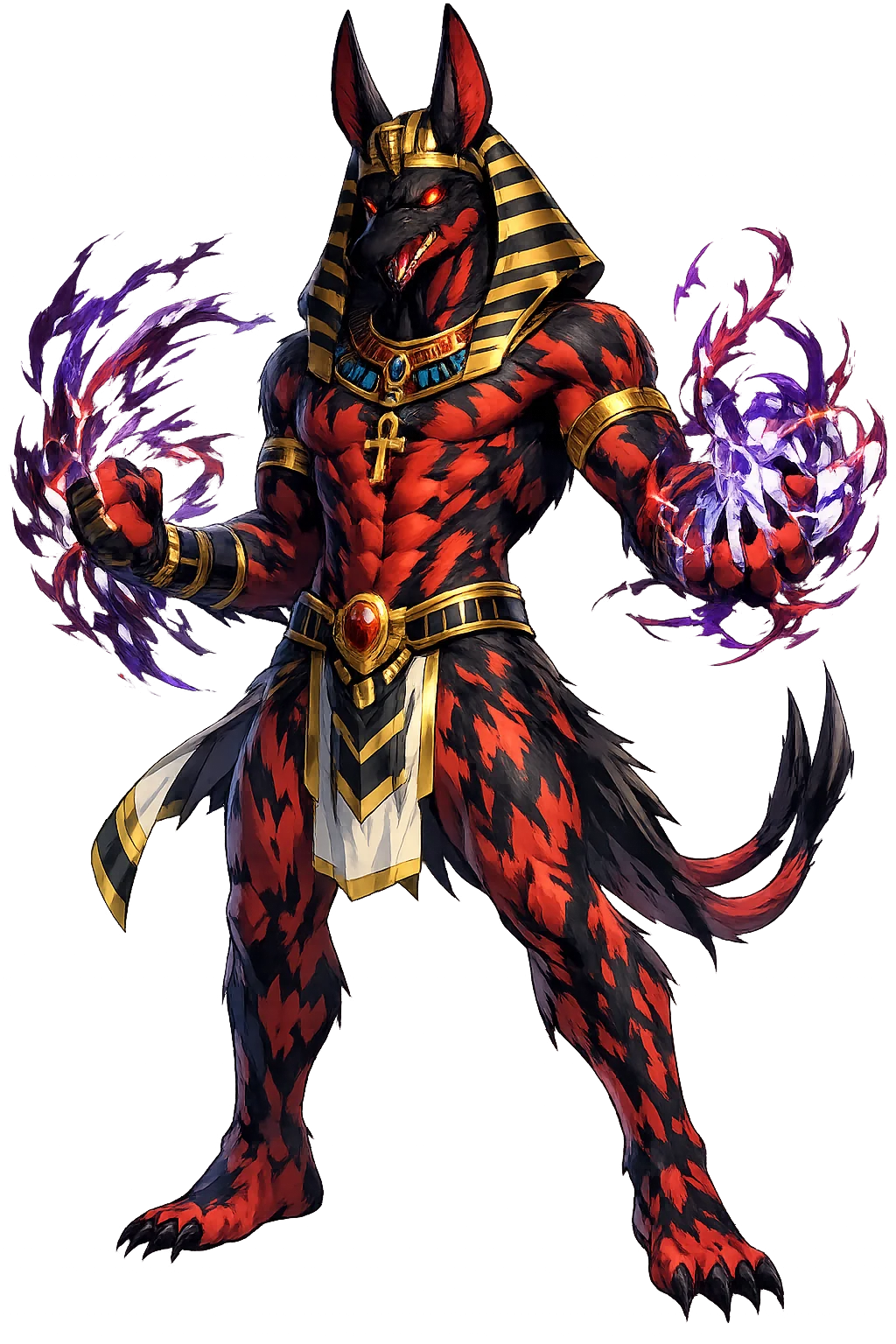
stḫ is the god Egypt could neither worship comfortably nor live without: lord of the red desert, the storm, and the foreign lands — the murderer of Osiris, and also the only god strong enough to stand at the prow of Ra's barque and spear the serpent of chaos, night after night.
The forked staff of power, headed with his animal — the sceptre every god carries carries his face.
Thunder, desert wind, and the red land's violence — Egypt's weather of war.
Each night in the Duat he spears the chaos-serpent from the barque's prow — order's strongest arm.
His unidentified animal: part greyhound, part aardvark, part donkey — a creature as unclassifiable as the god.
Stories of Stḫ
No Egyptian god has a stranger career: royal patron of the Second Dynasty, villain of the Osiris cycle, defender of the sun, and finally — in the Greco-Roman dusk — demonized as Typhon. stḫ is all of them at once, and the texts refuse to choose.
The centre of his infamy: stḫ kills his brother Osiris — by trickery in the chest episode Plutarch records, by violence in the Egyptian litanies — scatters the body through Egypt, and claims the throne. Isis and Nephthys gather the pieces; ꜣnpw wraps them; and the god of chaos becomes, unwillingly, the reason the world has resurrection.
The Contendings of Horus and Set (Papyrus Chester Beatty I) stages the gods' longest lawsuit: eighty years of trials, battles, and tricks — the hippopotamus duel, the lettuce episode, the trial by boat — until the Ennead divides the inheritance: Horus takes the black land, stḫ the desert and the foreign countries. Not defeat but partition: Egypt writes chaos into the constitution.
The Amduat and the Books of the Netherworld give him the office no gentle god could hold: standing at the prow of Ra's night barque, stḫ spears Apophis — the giant serpent who swallows the sun each night — because only his strength, his violence, and his willingness to fight monsters suffice. The cosmos depends on the murderer of Osiris doing his job.
Pharaohs of the warrior line took his name — Seti, "man of Set" — and Ramesses II praised him at Qadesh; the Hyksos had earlier made him their chief god at Avaris, identifying him with Baal. The Nineteenth Dynasty kept his temple at Ombos (Nubt), the gold town, and his priests never disappeared: strength, in Egypt, was sacred even when it was frightening.
stḫ is the god of the strength you hope never to need. Egypt's answer to evil was not to banish it but to post it at the prow: the desert's violence pointed outward, against the true nothing. He asks every ordered world the question it least likes: what, in you, is strong enough to fight the serpent — and where will you let it stand?
Enter Extended Lore