
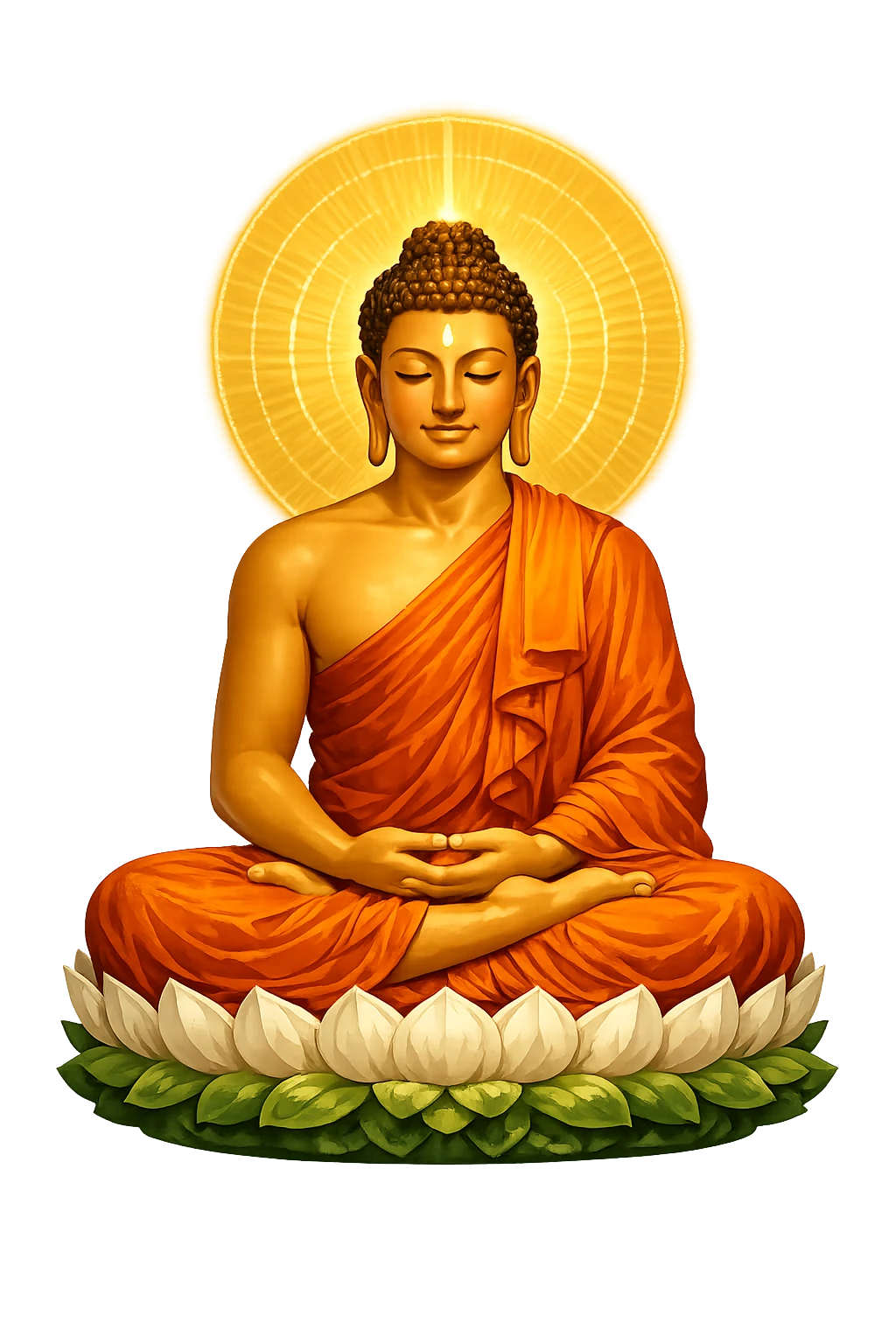
The working life of Śākyamuni: from the myths to the modern trades
Every age hires the same gods; only the job titles change. Śākyamuni never stopped working.
The life of Śākyamuni is the best-attested sacred biography of the ancient world — told in the Pāli Nikāyas, versified by Aśvaghoṣa, expanded in the Nidānakathā and the Lalitavistara, and anchored in the ground by Aśoka's own inscriptions.
The pattern atlas — which maps every flagship temple to the industries its archetype demonstrably resonates with, each match argued and open to challenge — seats this temple in 3 industries. This file reads those seats the way they were earned: through the myths.
At a Glance
- Temple: Śākyamuni
- Pantheon: Buddhist
- Domain of influence: Enlightenment, Teaching, Historical Buddha
- Pattern seats: 3
- Sectors touched: Society & Spirit · Health & Wellbeing
- Strongest seat: Education, Research & Knowledge
- Series: The Resonance Files, No. 218 of 271
The Myth at Work
The Birth at Lumbinī. Queen Māyā, traveling to her father's house, gave birth standing in the grove at Lumbinī, holding the branch of a sāla tree; the child took seven steps and declared this his last birth. The legends multiplied — the shower of blossoms, the two streams of water, the prophecy of the sage Asita — but the place is fixed in stone: Aśoka's pillar at Rummindei, raised in his twentieth regnal year, reads in plain Prakrit, hida budhe jāte sakyamuni — "here the Buddha Śākyamuni was born. — hold that image; the industries below are where it goes to work.
The Four Sights and the Going Forth. Sheltered in three palaces, the young Śākyan saw what his father had fenced out: an old man, a sick man, a corpse, and a wandering ascetic — the four sights the later tradition makes the hinge of his life. In the Majjhima Nikāya's Ariyapariyesanā Sutta (MN 26) he tells it himself: he shaved his hair, put on the ochre robe, and went forth from home into homelessness while still young, in the prime of life, with his parents weeping. — hold that image; the industries below are where it goes to work.
The Seats
Each of these is argued in the atlas with a weight and a why-line. What the atlas cannot fit in one line is the whole myth — so here is each seat with its story restored.
Education, Research & Knowledge
Schools, universities, and research institutions. (Sector: Society & Spirit)
The teacher of the path; forty-five years of turning the wheel. Swap the costume and the sentence is indistinguishable from the myth. That is what a resonance seat means.
Faith & Spiritual Organizations
Religious institutions, faith media, and devotional services. (Sector: Society & Spirit)
The founder; the tradition begins under his tree. — the atlas stops there, out of discipline. The myth keeps going: the function Śākyamuni performs in the stories is precisely the function this industry sells.
Yoga, Meditation & Holistic Wellness
Yoga, meditation, and mind-body practice. (Sector: Health & Wellbeing)
The why-line says it in one breath: The source of meditation; the mindfulness economy traces every breath to his seat under the tree. That is not a resemblance; it is the same act, performed in a newer building.
Read the myth again after the seats and it stops sounding ancient: The life of Śākyamuni is the best-attested sacred biography of the ancient world — told in the Pāli Nikāyas, versified by Aśvaghoṣa, expanded in the Nidānakathā and the Lalitavistara, and anchored in the ground by Aśoka's own inscriptions. The age changed. The work did not.
The Method, Stated Plainly
None of this is numerology. A seat exists only where the match can be argued from the deity's documented domains and deeds — weighted, published, and falsifiable. The full derivation, the weights, and the challenge process are public on the methodology page. If a seat in this file reads wrong, the atlas itself tells you how to prove it — and the correction becomes part of the record.
For the Ones Who Work There
If you work in education, research & knowledge, faith & spiritual organizations, or any trade this temple holds a seat in, this is the honest version of what a placement means: your industry beside the story it has been re-telling all along — on the temple floor itself, before an audience that came specifically to read it. The patron tier and the advertising terms describe the mechanics; the resonance above describes the fit. The story is the pitch; the seats are just where it already works.
The File Continues
This is one of 271 Resonance Files — the third dispatch from every flagship temple, where the myths meet the markets. The temple's founding dispatch tells the name's story; its Restoration File tells the spelling's; the blog index holds the whole archive.
Continue the series — previous: Sšꜣt (read it) · next: Šamaš (read it).
The Resonance Files are argued from the same canonical record as the pattern atlas itself: the lexicon, the lore catalog, and the cited sources. Every seat can be challenged at the methodology page — and the challenge is the point.