
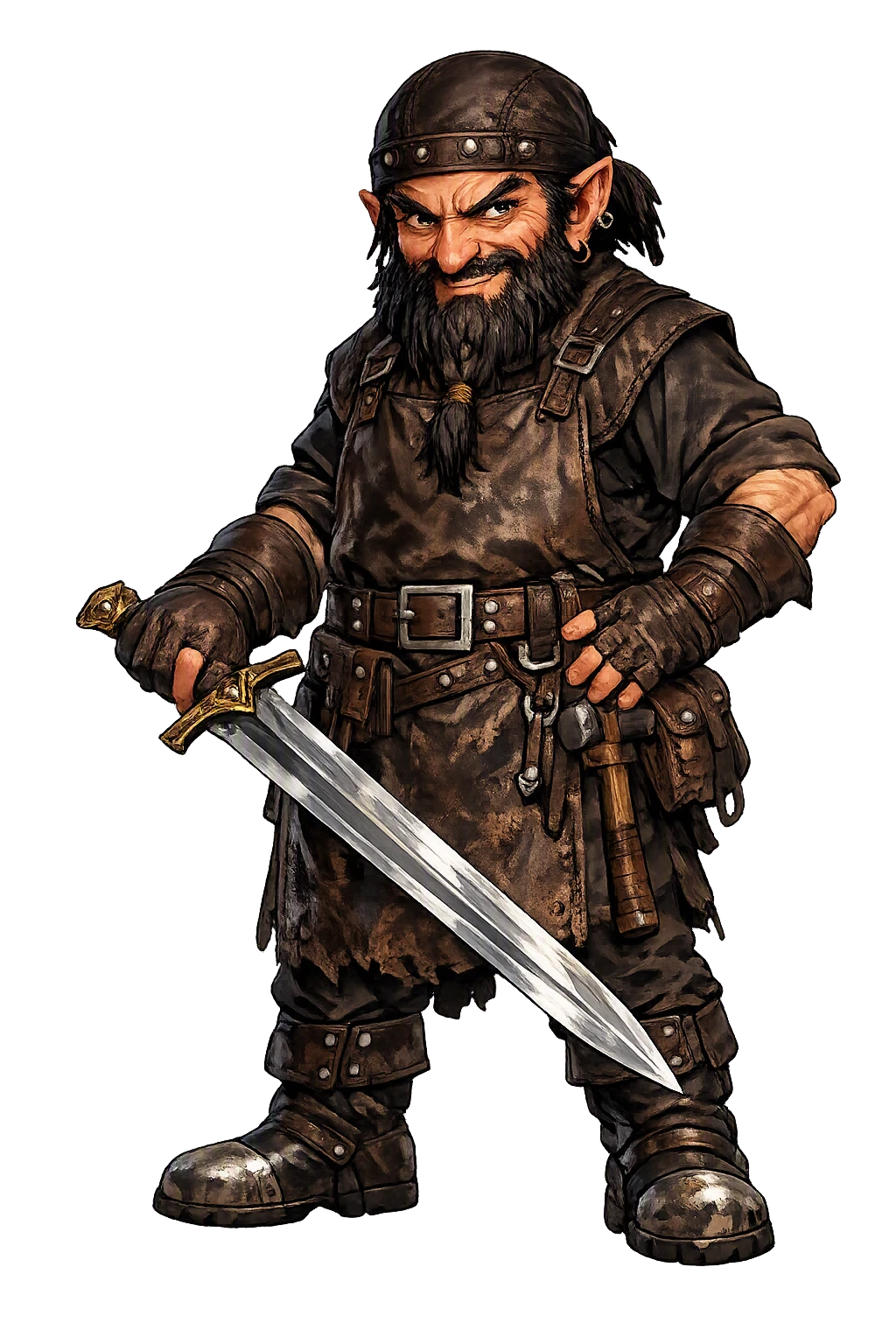
Why Reginn belongs in your address bar
Every address bar is a choice. When you type Reginn, you are not typing a novelty; you are restoring a name that the early DNS, built for English typewriters, could not carry. The plain ASCII form reginn is a leftover of that constraint, not the name itself. This post is the long version of the restoration: where the name comes from, how the Younger Futhark tradition wrote it, how it is pronounced, what the myths and the material record preserve, and why its Unicode form now lives as a working domain. The claim throughout is simple — the original spelling is not decoration. It is the name.
At a Glance
- Restored name: Reginn
- ASCII form: reginn
- Meaning: "The great one"
- Domain of influence: Dwarf Smith, Fafnir's Brother
- Pantheon: Norse
- Classification: Tier 2
- Original script: ᚱᛁᚴᛁᚾᚾ (Younger Futhark)
Overview
Reginn (reginn) — Dwarf Smith, Fafnir's Brother · The great one — is the master smith of the Völsung cycle: son of Hreiðmarr, brother of Fáfnir and Ótr, foster-father of Sigurðr, and the forger of the sword Gram from the shards of Sigmundr's blade. Cheated of his share of the cursed otter-ransom when Fáfnir murdered their father for the gold of Andvari, he spent a lifetime arming an instrument of revenge — and was killed by it, on the counsel of birds, when Sigurðr tasted the dragon's blood and understood their speech.
The name belongs to the same word as ragnarök's regin: Old Norse regin, 'the ruling powers, the gods', which as a compounding prefix intensifies to 'mighty, great' — hence the traditional gloss 'the great one'. The eddic prose describes him with exact economy: the most skilled of all men, a dwarf in stature, wise, grim, and skilled in magic.
PuniCodex restores the name as Reginn — identical to the ASCII input but for the capital, because normalized Old Norse writes no diacritic in this name. The mechanical rule therefore places the name in Tier 2: nothing distinctive is lost in transit, a statement about orthography and never about the smith. The temple is domain-less: the plain-ASCII reginn.com is registered to a third party outside the collection and is watched for release.
The Name
The name is attested in Old Norse as Reginn — the smith of the Völsung cycle and, in the dwarf-catalogue of Völuspá, simply one dwarf among the many made. Its etymology is among the more satisfying in the northern onomasticon. Reginn belongs with Old Norse regin (neuter plural), 'the ruling powers, the gods' — Germanic ragina-, 'counsel, decree', compare Gothic ragin, 'counsel, decision' — the very word that stands inside ragnarök, 'the doom of the powers'. As the first element of compounds the same stem intensifies: reginþing is the mighty assembly, and Cleasby–Vigfusson gloss the prefix use as 'great, mighty'. The personal name therefore means 'the mighty one, the great one' — a dwarf carrying the word for the gods themselves, which the tradition may well have intended as irony.
The ASCII form is not a fallback here but the form itself: normalized Old Norse writes six plain Latin letters and a capital. The Unicode restoration Reginn therefore preserves nothing the ASCII alphabet loses, and the mechanical rule classifies the name Tier 2 — an orthographic fact, not a judgment on the figure.
The letter-by-letter transformation runs:
- r → R — Same, capitalized
- e → e — Same
- g → g — Same
- i → i — Same
- n → n — Same
- n → n — Same
The project holds no domain for this name. The plain-ASCII reginn.com is registered to a third party outside the collection and is watched for release; this temple claims nothing it does not hold.
The Original Script
The name is preserved in medieval Icelandic manuscripts in the Latin alphabet as Reginn — Old Norse (North Germanic), attested 13th c. CE in the Codex Regius of the Poetic Edda (Reginsmál, Fáfnismál) and the codices of Snorri's Edda, recording material centuries older. Before the Latin bookhand, Old Norse names were carved in the Younger Futhark; no runic attestation of the name survives, though the Sigurðr stones carve his story, so the manuscript form remains the primary witness. The runic rendering is ᚱᛁᚴᛁᚾᚾ (r-i-k-i-n-n).
The scholarly rendering proceeds step by step:
- The name is a simplex, not a compound: six letters, two syllables, a geminate nn the manuscripts write double.
- In the Younger Futhark, ᛁ (ís) writes both /i/ and /e/, and ᚴ (kaun) writes both /k/ and /g/ — the spelling rikinn is therefore a normalized phonetic reconstruction, since the sixteen-rune row distinguishes neither voicing nor vowel height here.
- Old Norse orthography needs no diacritic: both vowels are short, and no distinctive letter (þ, ð, æ, ǫ) occurs in the name.
- The Unicode restoration Reginn is therefore identical to the ASCII form — the restoration is a matter of canonical reference, not rescued orthography.
- The name's etymology — Old Norse regin 'the ruling powers, the gods', the word inside ragnarök, with the intensifying prefix use 'mighty' — is registered in the lexica, not settled by the spelling.
Pronunciation
The reconstructed pronunciation of the name is /ˈreɣ.inː/ — Old Norse Reconstruction.
Phoneme by phoneme:
- Re- — Voiced alveolar trill [r] and short close-mid front [e], stressed on the first syllable as in every Old Norse word
- -ginn — Medial g after a vowel is the voiced velar fricative [ɣ], a soft scrape in the throat rather than a stop, then short [i], then the geminate nasal [nː] held audibly across the close
For the modern speaker, the closest approximation is: 'REH-yin' — two beats, the medial g softened toward the light fricative of Spanish lago, the final n held a fraction long.
Kindred and historical forms of the name:
- Old Norse — Reginn, son of Hreiðmarr, foster-father of Sigurðr
- Younger Futhark — ᚱᛁᚴᛁᚾᚾ (r-i-k-i-n-n), the Viking-Age runic rendering
- Continental Germanic — no Reginn by name; the Nibelungenlied's Mime is the corresponding smith-fosterer of Siegfried
- Modern Scandinavian — Regin, the simplified modern form, with Icelandic keeping Reginn
Reginn is Tier 2 because the restoration preserves nothing the ASCII form loses: no diacritic, no distinctive letter, no vowel length. English and Old Norse write the name identically.
Mythology
Reginn's mythology runs the length of the Völsung cycle — the ransom in Skáldskaparmál, the fosterage in Reginsmál and Völsunga saga, the reforging of Gram, and the death on Fáfnir's heath.
The Otter's Ransom (Skáldskaparmál)
Óðinn, Hœnir and Loki came to Andvari's falls, where Reginn's brother Ótr fished in otter shape; Loki killed him with a stone, and the gods carried the skin into Hreiðmarr's house and boasted of the catch. Hreiðmarr and his sons seized the gods and demanded weregild — the skin filled and covered with gold. Loki forced the dwarf Andvari to yield his hoard and, at the last, the ring Andvaranautr; Andvari laid the curse: the gold would be the death of two brothers and the strife of eight princes, and no man should enjoy it. The curse kept its accounts. Hreiðmarr refused his sons any share; Fáfnir killed his father in his sleep and took all; Reginn got nothing, and Fáfnir went out to Gnitaheiðr to brood on the hoard in dragon shape.
The Foster-Father (Reginsmál; Völsunga saga)
The eddic prose introduces him exactly: Reginn was Hreiðmarr's son, the most skilled of all men and a dwarf in stature; he was wise, grim, and skilled in magic. He came to King Hjálprek's court, where the boy Sigurðr — Sigmundr's posthumous son — was being raised, and became his foster-father, teaching him chess, runes and tongues. All the while he worked on the boy's pride: Fáfnir lies on Gnitaheiðr, and your father left you nothing. With Óðinn's counsel, in the stranger's guise the poems call Hnikarr, Sigurðr chose the horse Grani, Grani's sire being of Sleipnir's line.
The Reforging of Gram (Völsunga saga)
Sigurðr demanded a sword. Reginn forged the best his craft could make; Sigurðr struck it on the anvil and it shattered. A second, better blade broke the same way. Then Hjördís gave up the fragments of Sigmundr's sword — the blade Óðinn himself had shattered in her husband's last battle — and from them Reginn reforged Gram. It bit the anvil down to the stock and did not break, and it cut a pack of wool drifting on the Rhine as easily as it cut water. The tradition's purest statement about craft: peerless skill, wholly in service of a grudge.
The Blood on the Tongue (Fáfnismál; Völsunga saga)
On Gnitaheiðr Sigurðr dug a pit in the dragon's path and drove Gram up into Fáfnir's heart from below. Dying, the dragon warned him: the gold will be your death, and Reginn betrayed me — he will betray you. Reginn crept out, praised the killing, and asked one service: cut out the heart, roast it, and let me eat it. Testing the roast, Sigurðr burned his finger and put it to his mouth; the dragon's blood touched his tongue and he understood the speech of birds. The nuthatches said: Reginn lies in the heather planning betrayal; eat the heart yourself and grow wise; cut off his head. Sigurðr took the counsel, and the curse closed its second account — two brothers dead, and the gold passed on with Andvaranautr, unenjoyed.
Symbols & Iconography
The iconography of Reginn is narrative rather than cultic — the corpus gives him no regalia but fixed around his scenes a small set of objects no retelling can omit:
- The sword Gram — reforged from the shards of Sigmundr's blade, keen enough to cleave the anvil to the stock and cut a floating wool-pack in the Rhine: craft completing a broken lineage, and the instrument of its maker's death
- The anvil — the measure of true forging, where two flawed blades broke before Gram stood the test: the smith's honesty enforced by his own work
- Andvaranautr — the cursed ring of the otter's ransom, which Andvari swore would kill two brothers: the feud's first cause
- The dragon's blood — the taste on Sigurðr's tongue that opened bird-speech: the moment the foster-son learned the foster-father's plan
- The nuthatches — the birds on Gnitaheiðr whose counsel no retelling omits: let the ring be the brother's ransom, and cut off his head
Archaeology & Evidence
Reginn is a textual figure, but the Völsung cycle is among the most picture-rich narratives in the North, and the smith's scenes were carved. The Viking-Age Sigurðr iconography survives on the Swedish runestones at Ramsund (Sö 101) and Gök (Sö 327) in Södermanland and on the Drävle stone (U 1163) in Uppland; the Ramsund carving shows the cycle's whole cast — the slain dragon as the rune-bearing serpent band, Sigurðr at the fire with his thumb in his mouth, the horse Grani loaded with the hoard, the birds in the tree, the otter by the falls — and, at the carving's edge, the smith's tools laid beside a headless body, the standard scholarly reading of which is the killed Reginn. In the Insular world the Manx crosses at Jurby, Malew and Andreas carry the roasting scene, and in England the Halton cross in Lancashire and the York Minster grave slab carry related episodes.
The manuscript witnesses are the Codex Regius of the Poetic Edda for Reginsmál and Fáfnismál, the codices of Snorri's Edda for Skáldskaparmál's prose account of the ransom, and the vellum of Völsunga saga with its paper descendants for the fullest prose life. No runic inscription invokes Reginn by name; the carvings tell the story, and the stones keep their silence about the smith except where the tools lie by the headless man.
Realm & Domain
Reginn is catalogued under Dwarf Smith, Fafnir's Brother — and the pairing is exact: the sources define him wholly by his craft and his feud, and the feud is the brother's.
Dwarf Smith
The eddic prose makes him 'the most skilled of all men, and a dwarf in stature' — the tradition's finest smith, teacher of chess, runes and tongues, and the only craftsman in the cycle whose work never fails. His brothers-in-craft among the gods' smiths are Brokkr and Sindri, who forge Mjölnir and Draupnir for a wager; Reginn forges for revenge.
Fafnir's Brother
Everything Reginn does follows from the otter's ransom: Fáfnir killed their father Hreiðmarr for Andvari's gold and kept it all, and Reginn — wronged and patient — went to breed the dragon-slayer.
Fosterage
At King Hjálprek's court he fostered the young Sigurðr, the strongest tie the northern world knew short of blood — made, in his case, in order to be broken.
Betrayal
The cycle's coldest arc: the hand that reforged Gram meant to claim the hoard, and only the speech of birds told the foster-son in time.
Across Cultures
Reginn's clearest kin are inside the Germanic corpus itself. The Nibelungenlied's Mime — the smith who fosters Siegfried, forges for him, and schemes to send him against the dragon so the hoard will come free — is the Continental form of the same figure, softened in the High German epic but identical in structure: the fosterer who breeds his own instrument. Old English tradition preserves the smith-type differently, in Weland of Beowulf and Deor, the artificer whose craft serves his revenge — the type to which Reginn belongs.
Within the Norse corpus his brothers-in-craft are the dwarf-smiths of the gods: Brokkr and Sindri, who forge Mjölnir, Draupnir and Gullinbursti for stakes no higher than a wager — the clean contrast that shows what Reginn is: a smith whose work serves a feud instead of a boast. The modern handbooks keep him where the sources put him — the Völsung cycle's necessary smith, indispensable and damned, and the tradition's study in fosterage betrayed. Within the corpus, his related figures are the household his story binds and breaks: Fáfnir, Andvari, and Sigurðr.
Cultural Legacy
Reginn's afterlife runs along two tracks. In the learned tradition he survived with the whole Völsung material: William Morris's Sigurd the Volsung (1876) gives the foster-smith his full cold arc — the broken blades, the shards of Sigmundr, the anvil test — and Wagner compressed Reginn with Mime into the Nibelung smith of the Ring cycle, where the brother scheming for the hoard survives almost intact.
In the comparative tradition he stands beside Weland and the Greek Hephaistos as the northern proof that the master craftsman is never a safe ally: modern scholarship treats him as the cycle's study in fosterage betrayed, the figure through whom the tradition asks what a teacher owes a student. Retellings of the Sigurðr story, from the Victorian paraphrases to the modern handbooks, keep all four of his scenes — the ransom, the fosterage, the reforging, and the birds.
The Scholarly Record
The account of Reginn given in this edition rests on the witnesses and reference works listed below. Skáldskaparmál supplies the ransom and the curse; Reginsmál and Fáfnismál the eddic fosterage and the killing; Völsunga saga the fullest prose life; Cleasby–Vigfusson and Zoëga the name's form, with de Vries, Simek and Lindow arbitrating etymology and motif.
- Snorri Sturluson, Edda, Skáldskaparmál (the otter's ransom; Andvari's gold and Andvaranautr; the curse; Fáfnir's parricide; the dwarf-smiths' wager), trans. Anthony Faulkes (London: Viking Society for Northern Research, 1998).
- The Poetic Edda, trans. Carolyne Larrington, 2nd ed. (Oxford: Oxford University Press, 2014): Reginsmál (the fosterage; the gold's history; the choosing of Grani); Fáfnismál (the dragon's warnings; the nuthatches; the killing of Reginn); Völuspá (Reginn in the dwarf-catalogue).
- Völsunga saga, chs. 13–20 (Reginn at Hjálprek's court; the fosterage; the reforging of Gram from Sigmundr's shards; the deaths of Fáfnir and Reginn), trans. Jesse L. Byock (Berkeley: University of California Press, 1990).
- Cleasby, Richard, and Guðbrandur Vigfússon, An Icelandic-English Dictionary, 2nd ed. (Oxford: Clarendon Press, 1957), s.v. regin.
- Zoëga, Geir T., A Concise Dictionary of Old Icelandic (Oxford: Clarendon Press, 1910), s.v. regin, Reginn.
- de Vries, Jan, Altnordisches etymologisches Wörterbuch, 2nd ed. (Leiden: Brill, 1962), s.v. regin, Reginn.
- Simek, Rudolf, Dictionary of Northern Mythology, trans. Angela Hall (Cambridge: D. S. Brewer, 1993), s.v. Regin.
- Lindow, John, Norse Mythology: A Guide to the Gods, Heroes, Rituals, and Beliefs (Oxford: Oxford University Press, 2001), s.v. Regin, Fafnir.
- Gordon, E. V., An Introduction to Old Norse, 2nd ed. rev. A. R. Taylor (Oxford: Clarendon Press, 1957).
- Morris, William, The Story of Sigurd the Volsung and the Fall of the Niblungs (London: Ellis and White, 1877).
A Meditation
Reginn is the Edda's coldest lesson about skill without loyalty. Everything he makes is perfect: the teaching, the horse-choosing, the reforged blade, the patient plan. Everything he is fails. The tradition states the paradox without comment — the most skilled of all men, a dwarf in stature, wise and grim and versed in magic — and then lets the birds say what no human in the story can afford to say: the foster-father is lying in the heather, measuring the boy for a grave.
What damns Reginn is not incompetence but inversion. Fosterage was the northern world's sacred adoption; the smith turned it into a tool. The sword he forged was true, and the hand that forged it was false, and the whole cycle hangs on the difference between those two sentences. In a mythology that runs on oaths, Reginn is the oath kept to the letter of revenge and broken in the spirit of kinship — and Gram, the blade that would not break, is the tradition's way of saying that craft outlives the craftsman, and testifies against him.
The Unicode Restoration
Reginn is classified as Tier 2: the restoration needs no distinctive letters or diacritics its ASCII form would lose. The ASCII fallback reginn still resolves everywhere, but it is the restored form that carries the name's full information. That is the whole thesis of this temple: the marks are the message.
Why This Restoration Matters
Restoring Reginn is part of a larger effort to make the web multilingual by default. The PuniCodex project does not ask users to learn a new alphabet; it asks the infrastructure to respect the alphabets that already exist. Every section of this post — the script, the sound, the myths, the evidence — converges on the same point: the marks in Reginn are information, and information deserves an address of its own. A single Unicode domain is a small proof, but it is a proof that scales: every name restored makes the next one easier, and every visit to the temple is a vote for the restored form.
Explore Further
This post is one doorway into the temple. The home page carries the full character breakdown and the ambient canvas; the lore page tells the myths in long form; the Scholarly Edition preserves the sources, pronunciation data, and revision history; and the patron wall supports the restoration directly. For the wider map, browse the Lexicon, explore the Pantheon, or return to the PuniCodex blog.
Related Names
Sources
The full scholarly apparatus — every citation, revision, and review — lives in the Scholarly Edition. Key references for this post:
- Snorri Sturluson, Edda, Skáldskaparmál (the otter's ransom; the curse of Andvari; Fáfnir's parricide), trans. Anthony Faulkes (London: Viking Society for Northern Research, 1998).
- de Vries, Jan, Altnordisches etymologisches Wörterbuch, 2nd ed. (Leiden: Brill, 1962), s.v. regin, Reginn.
- Reginsmál (prose introduction), trans. Carolyne Larrington, The Poetic Edda, 2nd ed. (Oxford: Oxford University Press, 2014).
- de Vries, Jan, Altnordisches etymologisches Wörterbuch, 2nd ed. (Leiden: Brill, 1962), s.v. regin, Reginn; Cleasby, Richard, and Guðbrandur Vigfússon, An Icelandic-English Dictionary, 2nd ed. (Oxford: Clarendon Press, 1957), s.v. regin.
- Lexicon authorities for this entry: Poetic Edda, Cleasby-Vigfusson.