Unicode restoration and ASCII comparison
ᚱᛁᚴᛁᚾᚾ
The name in its original Norse form. Reginn (ᚱᛁᚴᛁᚾᚾ) is attested in the source tradition — “The great one”. Its original diacritics and script distinctions carry the full phonetic and orthographic weight of the source tradition.
reginn
The plain reginn form is identical to the Unicode restoration. Because this name is already written in Latin letters, no diacritics, stress, or script information were lost — only capitalization differs.
Reginn
The Unicode restoration does not need to recover lost marks for Reginn. Its value is canonical spelling and consistent cataloguing, not the reconstruction of erased orthography. The domain is readable as-is to both DNS and humanity.
Reginn.com → reginn.com
The non-ASCII characters in Reginn are encoded while the ASCII remains visible. To the DNS, it is Punycode. To humanity, it is Reginn.
How Reginn travels from ancient script to the modern URL
Owned, ideal, and ASCII forms of Reginn
Reginn
Restores ᚱᛁᚴᛁᚾᚾ. The full Unicode restoration. reginn.com is not in the PuniCodex collection — it is watched for release; if it drops, this temple upgrades to an owned flagship.
How Reginn was spoken
The Smith Who Forged a Dragon-Slayer
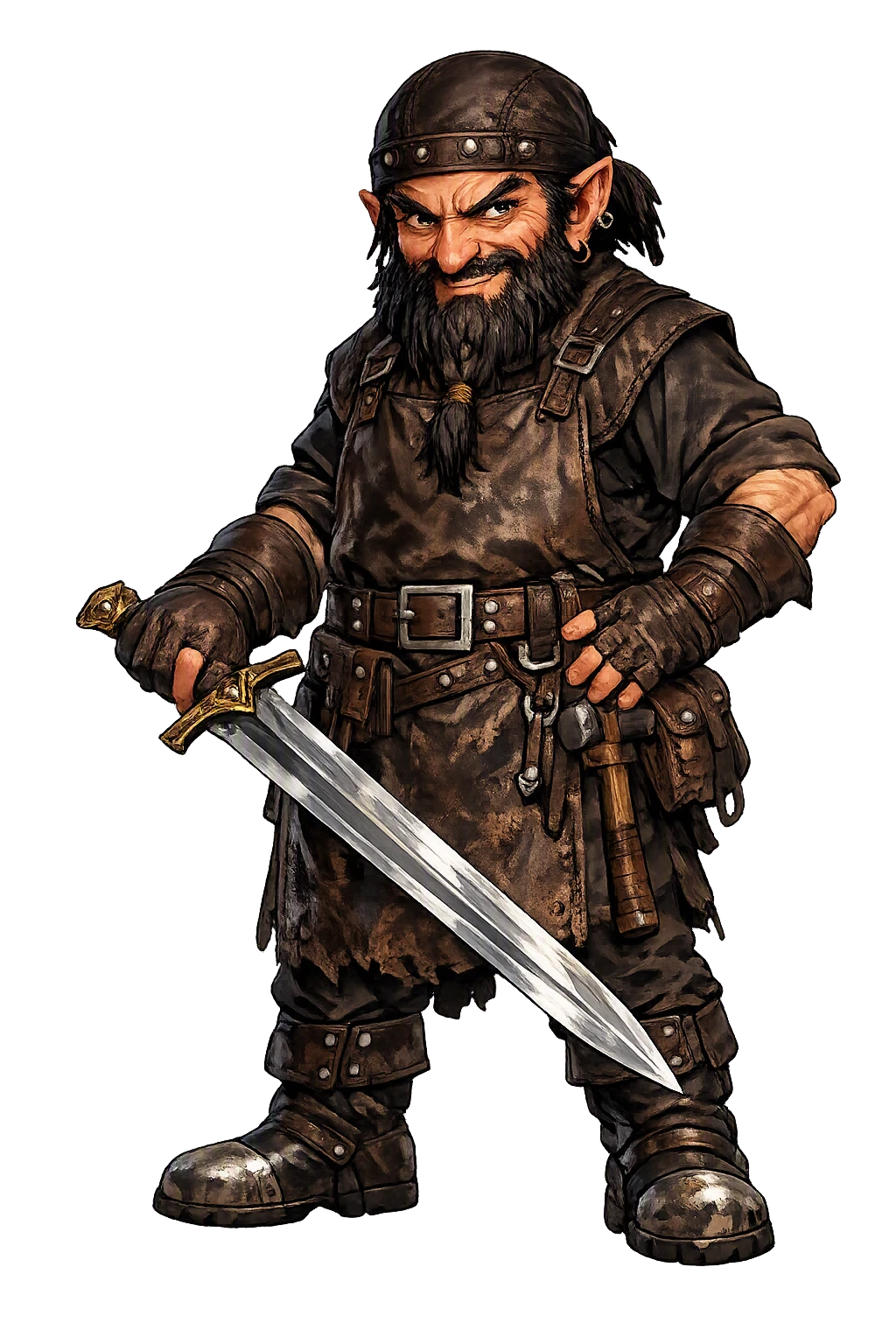
Reginn, son of Hreiðmarr and brother of Fáfnir and Ótr, is the master smith of the Völsung cycle — 'a dwarf in stature', the eddic prose says, 'wise, grim, and skilled in magic'. Cheated of his share of the cursed otter-ransom when his brother Fáfnir murdered their father for the gold, he fostered the young Sigurðr at King Hjálprek's court and reforged from the shards of Sigmundr's blade the sword Gram — the one weapon that could kill the dragon. But the hand that forged the slayer meant to claim the hoard, and when Sigurðr tasted the dragon's blood and understood the speech of birds, the foster-son turned Gram on the foster-father.
Reforged from the shattered fragments of Sigmundr's blade — so keen it clove Reginn's anvil to the stock and cut a floating wool-pack in the Rhine against the current.
The forge where Reginn's craft outran his loyalty: two blades broke there before Sigmundr's shards were brought, and the third stood the anvil's test.
Andvari's gold and the ring Andvaranautr, paid to Hreiðmarr for Ótr's skin — the cursed hoard that set brother against brother and began the feud.
The birds whose speech Sigurðr understood when Fáfnir's heart-blood touched his tongue: 'few would behave more wretchedly — cut off his head'.
Stories of Reginn
Reginn's dossier runs through the whole Völsung cycle: the otter's ransom in Skáldskaparmál, the fosterage in Reginsmál and Völsunga saga, the reforging of Gram, and the death on Fáfnir's heath when the birds spoke. He is the cycle's great ambiguous figure — the finest smith in the tradition and its coldest traitor, teacher and would-be murderer of the same boy.
It begins with a skinned otter. Óðinn, Hœnir and Loki came to Andvari's falls, where Reginn's brother Ótr fished in otter shape; Loki killed him with a stone, and that evening the gods carried the skin into Hreiðmarr's house and boasted of the catch. Hreiðmarr and his sons Fáfnir and Reginn seized the gods and demanded weregild: the otter's skin filled with gold, and covered with gold besides. Loki forced the dwarf Andvari to yield his hoard, and when Andvari tried to keep back one ring, Loki took that too — Andvaranautr. Andvari laid the curse: that gold would be the death of two brothers and the strife of eight princes, and no man should enjoy his wealth.
The curse kept its accounts. Hreiðmarr refused his sons any share of the ransom; Fáfnir killed his father in his sleep and took all the gold, and Reginn got nothing. Fáfnir went out to Gnitaheiðr, brooded on the hoard in the shape of a dragon, and Reginn — wronged, patient, and very clever — went to find an instrument.
The eddic prose introduces him with exact economy: Reginn was Hreiðmarr's son, 'the most skilled of all men, and a dwarf in stature; he was wise, grim, and skilled in magic'. He came to the court of King Hjálprek in Denmark, where the boy Sigurðr — son of the slain Sigmundr and Hjördís — was being raised, and Reginn became his foster-father. The Völsunga saga lets him teach the boy chess, runes and tongues, and all the while he worked on the boy's pride: Fáfnir lies on Gnitaheiðr in dragon shape, he said, and your father left you nothing.
The foster-bond was the strongest tie the northern world knew short of blood — fosterage made family. Reginn made it in order to break it, and the tradition never forgives him for that inversion: every retelling keeps the same chill, that the hand which armed Sigurðr was already measuring him for the grave.
Sigurðr demanded a sword, and Reginn forged him one — the best his craft could make. Sigurðr took it to the anvil and struck, and the blade shattered. Reginn forged a second, better than the first; it broke too. Then Sigurðr went to his mother and asked for the fragments of his father's sword — the blade Óðinn himself had shattered in Sigmundr's last battle — and Hjördís gave him the shards. From them Reginn reforged Gram: it shone in the forge, says the saga, like fire, and when Sigurðr struck the anvil the blade bit down to the stock and did not break. They laid a pack of wool on the Rhine, and the current carried it against the edge, and the sword cut it in two as easily as it cut water.
The scene is the tradition's purest statement about craft: Reginn's skill is real, peerless, and wholly in service of his revenge. He made the one weapon that could kill his brother — and put it into the hand of a boy he intended to outlive.
On Gnitaheiðr Sigurðr dug a pit in the dragon's path and drove Gram up into Fáfnir's heart from below. Dying, the dragon spent his last breath on a warning: Reginn betrayed me, and he will betray you. Reginn crept out, praised the killing, and asked one service — cut out the heart, roast it, and let me eat it. Sigurðr set the heart over the fire, and when he touched it to test the roasting and put his finger to his mouth, the dragon's blood touched his tongue and he understood the speech of birds. The nuthatches in the branches said: there sits Sigurðr roasting Fáfnir's heart — he should eat it himself and become wise; and Reginn lies in the heather, planning to betray the boy who trusts him; let the ring be the brother's ransom, and cut off his head.
Sigurðr took the counsel: he cut off Reginn's head, ate of the heart, and rode to the hoard. So the curse closed its second account — two brothers dead, Hreiðmarr and then Reginn, and the gold passed on with Andvaranautr, unspent and unenjoyed, exactly as the dwarf had sworn.
Reginn is the Edda's coldest lesson about skill without loyalty. Everything he makes is perfect: the teaching, the horse-choosing, the reforged blade, the patient plan. Everything he is fails. The tradition states the paradox without comment — the most skilled of all men, a dwarf in stature, wise and grim and versed in magic — and then lets the birds say what no human in the story can afford to say: the foster-father is lying in the heather, measuring the boy for a grave. What damns Reginn is not incompetence but inversion. Fosterage was the northern world's sacred adoption; the smith turned it into a tool. The sword he forged was true, and the hand that forged it was false, and the whole cycle hangs on the difference between those two sentences. In a mythology that runs on oaths, Reginn is the oath kept to the letter of revenge and broken in the spirit of kinship — and Gram, the blade that would not break, is the tradition's way of saying that craft outlives the craftsman, and testifies against him.
Enter Extended Lore