
Why Ptḥ is spelled that way — and what it costs to get it right
There is a version of this name the early internet had to settle for: ptah. This is the file on how Ptḥ replaced it.
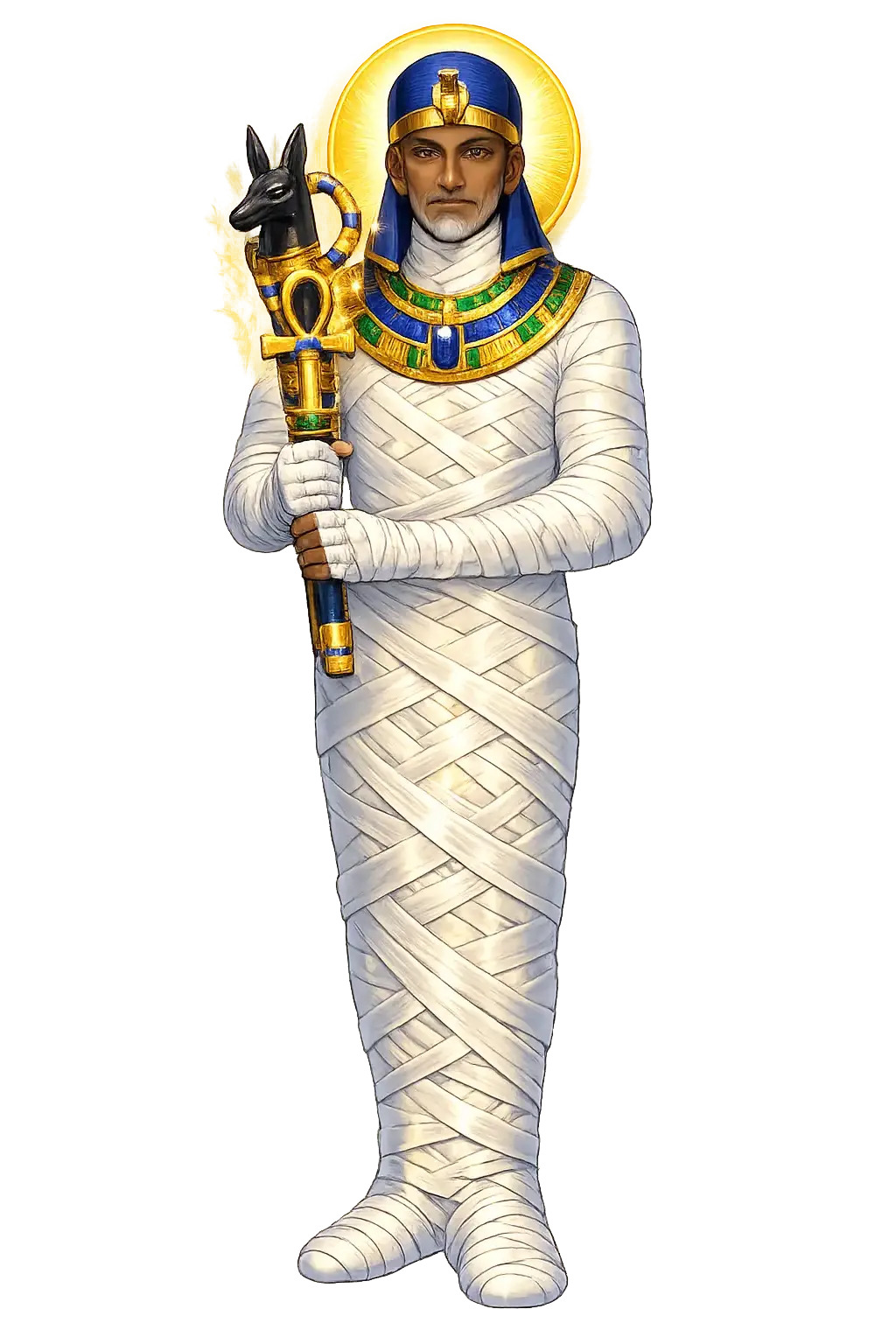
Ptḥ's mythology is less a cycle of adventures than a theology of making. His great text, the Memphite Theology, claims that Ptḥ's heart conceived and his tongue pronounced the gods, cities, and sacred rites of Egypt. Creation here is not a battle with chaos but an act of authoritative speech: what Ptḥ names, exists.
At a Glance
- Restored name: Ptḥ
- ASCII form: ptah
- Meaning: "Sculptor (Egyptian ptḥ)"
- Domain of influence: Craftsmen, Creation, Memphis
- Pantheon: Egyptian
- Classification: Tier 1
- Original script: 𓁣
- Series: The Restoration Files, No. 200 of 271
The Name Before the Marks
Spoken, the name runs `/pəˈtaːħ/` — puh-TAHKH — the final consonant is a dry, breathy 'kh' made in the back of the throat, not the soft 'h' of English.
The Temple That Stands Now
The restored name is not a plaque; it is an address. The temple of Ptḥ lives at /sites/ptah/, with its mythology in the lore halls, its peer-reviewed record in the Scholarly Edition, and its place in the pattern atlas on the patterns floor.
The restoration preserves more than the ASCII form can express — stress, length, or a letter the Latin keyboard lost — which places it, mechanically, in Tier-1.
Where the Name Stood First
Ptḥ's primary cult center was the temple complex at Hut-ka-Ptḥ in Memphis, where remains of a vast enclosure, colossal statues of Ramses II, and the Serapeum where Apis bulls were buried have been excavated. The Shabaka Stone, now in the British Museum, preserves the Memphite Theology. Statues, stelae, and offering tables from workshops across Egypt invoke Ptḥ as patron of craftsmen, while composite Ptḥ-Sokar-Osiris figures are common in funerary assemblages from the Late and Ptolemaic periods. The temple on the web is the newest of these addresses — the first one that fits in a pocket.
The Archetype at Work
The pattern atlas seats this temple in 4 industries, each match argued and weighted: Construction & Engineering (the creator who made the world by craft and word; Egypt’s patron of artisans and builders.); Manufacturing, Craft & Automation (patron of craftsmen whose name Egypt itself remembers.); Architecture & Spatial Design (craftsman-god of Memphis, patron of builders.). The Resonance File reads those seats through the myths themselves.
In the Sacred Texts
The Egyptian tradition is not a vibe; it is a library. The Sacred Texts collection holds The Book of the Dead — the primary sources the temple's scholarship is built on. The temple is the argument; the texts are the evidence.
The File Continues
The temple's founding dispatch tells the name's story; its Resonance File reads the myths into the industries; the blog index holds the whole archive.
Continue the series — previous file: Promētheús (read it here) · next file: Pūṣan (read it here).
The Restoration Files are written from the same canonical record as the temples themselves: the lexicon, the lore catalog, the pattern atlas, and the cited scholarly sources. If a file ever disagrees with its temple, the temple is right — tell us, and the file will be corrected.