The Authentic Orthography
Craftsmen, Creation, Memphis · Sculptor (Egyptian ptḥ)
Unicode restoration and ASCII comparison
𓁣
The name in its original Egyptian form. Ptḥ (𓁣) is attested in the source tradition — “Sculptor (Egyptian ptḥ)”. Its emphatic consonants carry the full phonetic and orthographic weight of the source tradition.
ptah
Reduced to plain ptah, the name loses everything that made it specific: emphatic consonants. What remains is an ASCII string that machines can parse but that no longer speaks with its original voice.
Ptḥ
The Unicode restoration recovers what ASCII flattened. Ptḥ restores emphatic consonants, returning the name to its original written dignity. The domain encodes to Punycode, but the browser displays the truth.
Ptḥ.com → xn--pt-tus.com
The non-ASCII characters in Ptḥ are encoded while the ASCII remains visible. To the DNS, it is Punycode. To humanity, it is Ptḥ.
How Ptḥ travels from ancient script to the modern URL
Egyptian ptḥ; the original vocalisation is unknown. The name is conventionally rendered Ptah and may mean “sculptor, opener" or be connected with the foundation ceremony.
Craftsmen, Creation, Memphis
The Unicode restoration Ptḥ uses Egyptological characters registrable in .com; hieroglyphs are outside the .com IDN table.
How Ptḥ was spoken
Craft, Creation, and the Speaking Heart
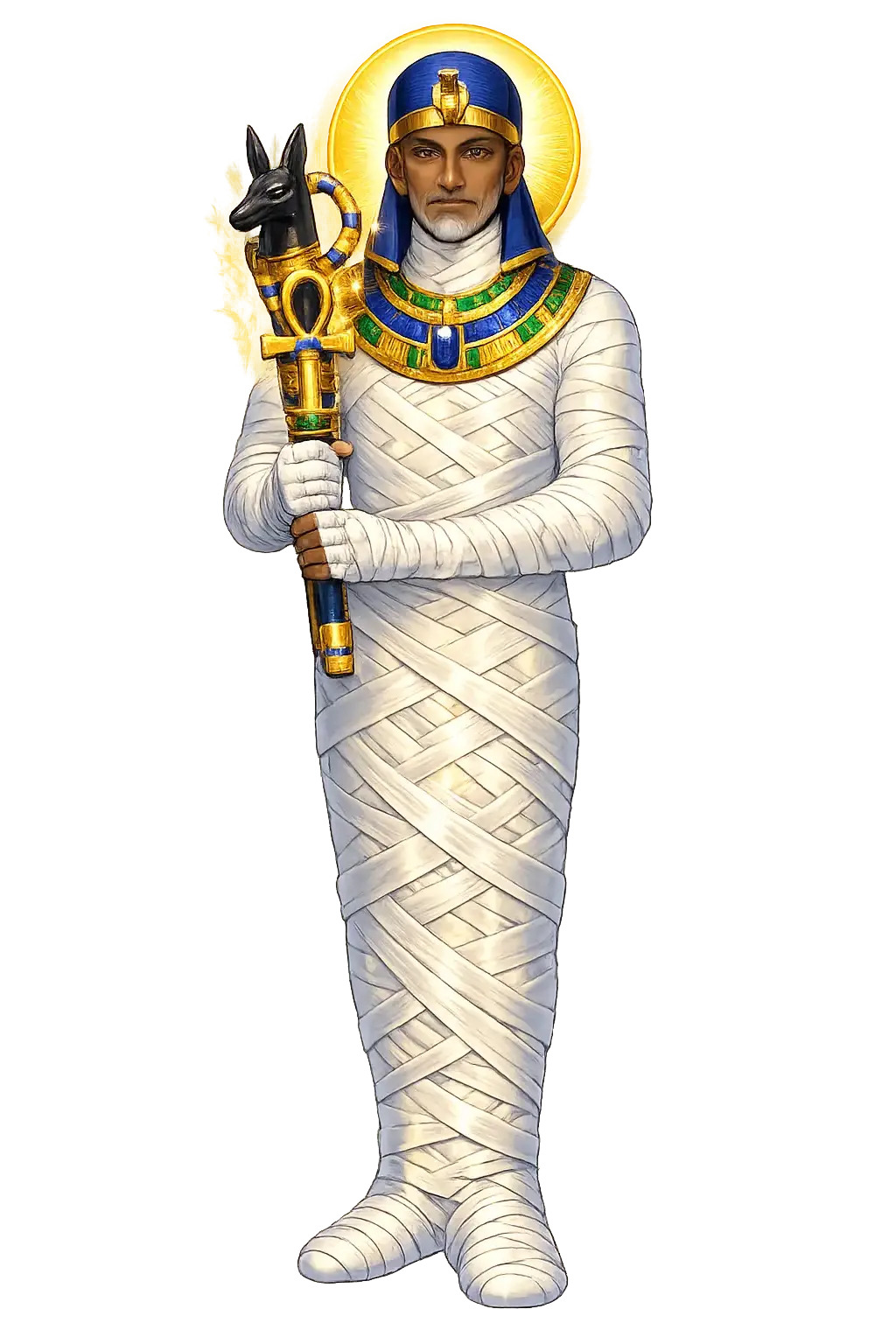
Ptḥ is the creator god of Memphis, the ancient capital whose white walls enclosed Egypt's foremost workshop of stone and bronze. Unlike solar creators who speak light into being, Ptḥ creates through the heart's intention and the tongue's command: every god, every city, every craft is first thought, then pronounced, then made. He is therefore the patron of sculptors, metalworkers, carpenters, and architects — the one who shapes the raw stuff of the world into enduring form.
Ptḥ fashions the gods and their kas through heart and tongue; the Memphite Theology calls him the source of every creative word.
Sculptors, goldsmiths, carpenters, and shipwrights claimed Ptḥ as their divine foreman; his priests guarded the secrets of the craft.
His temple at Hut-ka-Ptḥ, 'the mansion of the ka of Ptḥ,' gave Egypt its Greek name Aígyptos.
In mortuary cult he merges with Sokar and Osiris, guardian of mummification and the nocturnal regeneration of the dead.
Stories of Ptḥ
Ptḥ's mythology is less a cycle of adventures than a theology of making. His great text, the Memphite Theology, claims that Ptḥ's heart conceived and his tongue pronounced the gods, cities, and sacred rites of Egypt. Creation here is not a battle with chaos but an act of authoritative speech: what Ptḥ names, exists.
The Shabaka Stone preserves a theological narrative from Memphis in which Ptḥ stands above Atum and the Ennead. Where Atum created through semen and spit, Ptḥ created through the heart's intention and the tongue's command. Every divine name, every cult place, every offering ritual was first a thought in Ptḥ's heart and then a spoken word that made it real. The text is not merely poetic; it is a philosophical claim that language precedes and governs material reality.
In royal ideology the pharaoh is the bodily son of Ra, but Ptḥ fashions the king's ka and equips him with craft, counsel, and the power to build. Temple reliefs show Ptḥ leading the king by the hand and inscribing his name on the leaves of the ished tree, ensuring that the royal essence endures as surely as a carved monument.
From the New Kingdom onward, Ptḥ was syncretized with Sokar, god of the Memphite necropolis, and Osiris, lord of the dead. As Ptḥ-Sokar-Osiris he became a focus of mummification and rebirth. Small statues and coffins in his composite form were placed in tombs to guarantee the deceased's transformation and safe passage through the night hours of the Duat.
Ptḥ teaches that making is a sacred act. Before the chisel strikes stone, the heart must see the form and the tongue must name it. In an age of mass production, Ptḥ asks us to recover the dignity of craft: the slow, deliberate work by which thought becomes thing. To restore his name in Unicode is to remember that Egypt was not only a land of kings and priests but a civilization of makers, and that the first maker was a god who spoke the world into shape.
Enter Extended Lore