PuniCodex

Extended Lore

Ὀρφεύς Orpheús

Etymology · Phonology · Orthography · Cultural Legacy · Primary Sources

Tier 1 Orpheús.com
Orpheús — Poet, Musician, Underworld
01

Quick Facts

Essential information about Orpheús, Poet, Musician, Underworld

Original ScriptὈρφεύς
Unicode RestorationOrpheús
Reconstructed Pronunciation/or.pʰeús/
PantheonGreek
DomainPoet, Musician, Underworld
MeaningDarkness of the night
ClassificationTier 1
Primary DomainOrpheús.com
Sacred SymbolsThe lyre, The laurel, The nightingale
02

Etymology & Word Family

From original script to Unicode restoration

Original Script Ὀρφεύς Orpheús — "Darkness of the night"
Unicode Restoration Orpheús Restored stress, length, and script
Modern ASCII orpheus Plain-ASCII fallback

Greek Ὀρφεύς stresses the final syllable — Orpheús — and the restoration keeps the acute where the tradition puts it. The etymology is debated (perhaps from a root for "orphan" or the "darkness" of his descent); the name is older than its explanations, which is exactly right for the singer who is all voice.

03

Unicode Character Breakdown

Character-by-character philological analysis

CharacterUnicodeNameBlockPhonetic Role
OU+004FLatin Capital Letter OBasic LatinSame
rU+0072Latin Small Letter RBasic LatinSame
pU+0070Latin Small Letter PBasic LatinSame
hU+0068Latin Small Letter HBasic LatinSame
eU+0065Latin Small Letter EBasic LatinSame
úU+00FALatin Small Letter U with AcuteLatin-1 SupplementAcute on the final syllable
sU+0073Latin Small Letter SBasic LatinSame

The Tier 1 classification reflects how much of the original phonology this restoration preserves — stress and vowel length for Greek names, distinctive letters and diacritics for every other tradition.

04

Cultural Significance

From ancient cult to modern Unicode

Ancient Domain

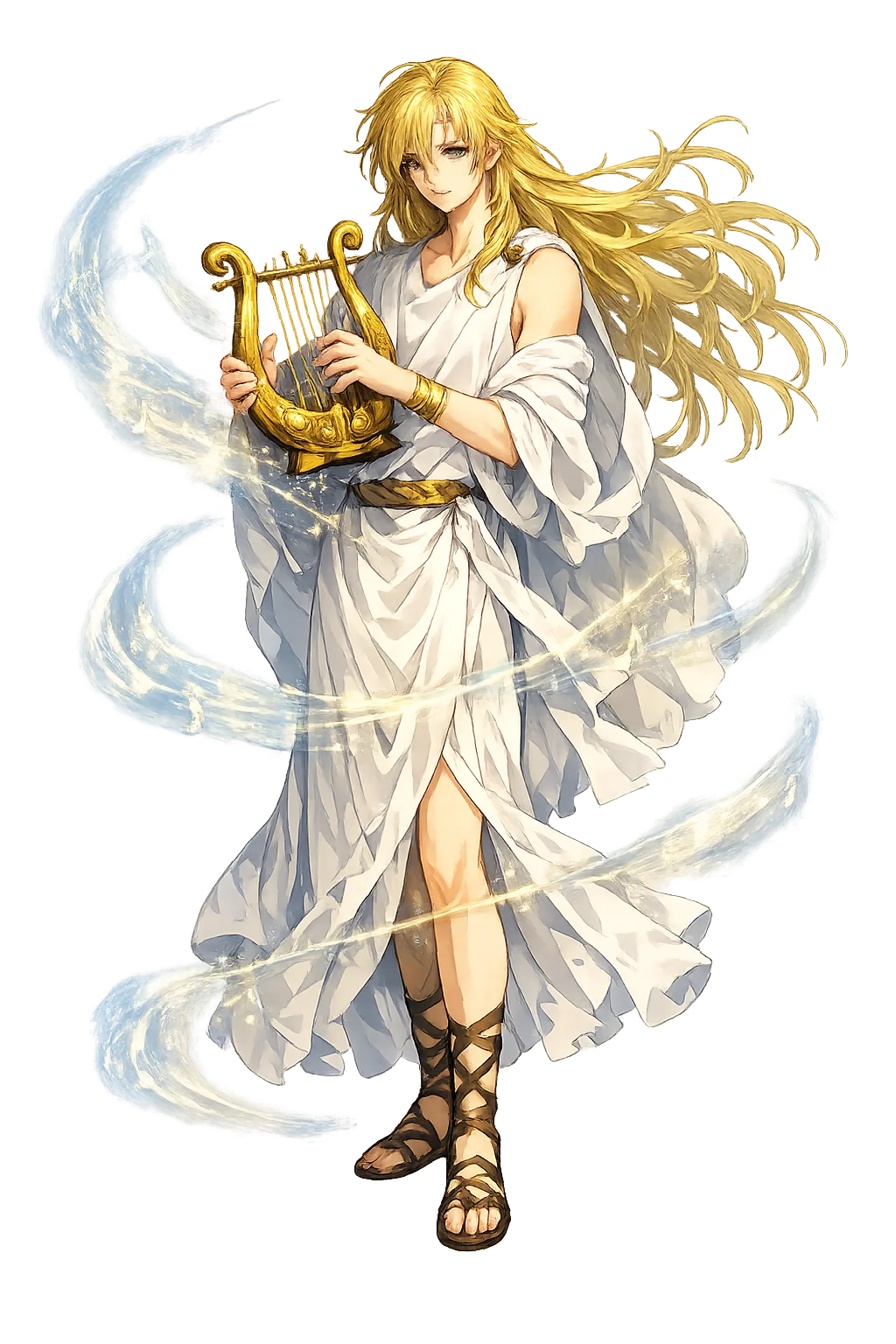
Orpheús is the archetype of art itself: the Thracian singer whose lyre moved stones and stopped rivers, who went down living into the underworld for his wife, and whose single look back is the West's permanent parable of love and loss.

Orpheús in Later Traditions

The mystery-religion that took his name — Orphism — made him the patron of the soul's journey: the gold tablets, the egg, Phánēs, the afterlife's map all carry the Orphic brand, though the historical singer and the theology are centuries apart. Christianity read him as a type of Christ (the descent, the harrowing, the animal-charming); the Renaissance made him the emblem of poetry itself; and opera was effectively invented for him — Monteverdi's Orfeo (1607) is the first great opera, and there have been hundreds since.

Modern Legacy

"Orphic" is the word for haunting, entrancing beauty; the lyre constellation (Lyra) is his; and the look-back is literature's most quoted failure — from Virgil to Rilke's Sonnets to Orpheus to Cocteau's Orphée and Baz Luhrmann's Moulin Rouge. Every artist who has tried to retrieve something from loss — and failed at the threshold of the work — is his descendant. Music's power to move the world is his biography; its limits are his lesson.

Unicode Restoration as Cultural Act

Restoring Orpheús in a domain name is more than orthographic accuracy. It is a statement that the internet should recognize the full range of human writing — not only the ASCII keyboard.

05

Frequently Asked Questions

Common questions about Orpheús, Poet, Musician, Underworld, and Unicode restoration

01How do you pronounce Orpheús?

In reconstructed pronunciation, Orpheús is /or.pʰeús/ — approximately or-FEWS — the stress lands on the last syllable..

02What does Orpheús mean?

Orpheús means Darkness of the night in the greek tradition.

03What are the symbols of Orpheús?

Orpheús is associated with The lyre (Art as the measure of the world — the cosmos tuned to a string), The laurel (His prophetic-grove crown at Pieria), The nightingale (His bird — song persisting through darkness).

04Why restore Orpheús in Unicode?

Plain ASCII orpheus strips the stress, length, and script that make the name specific. Unicode restoration returns the name to its original written dignity.

05What is the most important myth about Orpheús?

The tradition is unanimous: when Orpheús played, the trees uprooted themselves to follow, the rivers halted, the wild beasts lay down beside the sheep. Simonides' line — "the birds flew above him, the fish leapt from the water" — is the oldest surviving witness. His mother was the Muse Kalliopē; his lyre, some say, Apóllōn's own gift: music as the one power that rivals the gods'.

06

Scholarly Sources

The philological foundations of this restoration

Every claim on this page is grounded in established scholarship. The orthographic restorations follow disciplinary convention. The etymological chain follows the best available reference works. This is not invention — it is resurrection through scholarship.

Lexicography & Philology

  • Liddell, H. G., Scott, R., & Jones, H. S. A Greek-English Lexicon. Oxford: Clarendon Press, 9th ed. 1996.
  • Pape, W., & Benseler, G. E. Wörterbuch der griechischen Eigennamen. Braunschweig: Vieweg, 1884.
  • Beekes, R. S. P. Etymological Dictionary of Greek. Leiden: Brill, 2010.

Primary Texts

  • Euripides
  • Ovid
  • Apollodorus
  • Pindar

Archaeology & Art History

  • Material evidence — iconography, inscriptions, and temple archaeology — for Orpheús and related cults.
  • The Orphic gold tablets — thin gold leaves buried with initiates from Thessaly to South Italy, instructing the dead ("say: I am a child of Earth and starry Heaven") — are his cult's material archive. Vase-painting shows him in Thracian dress charming the Greeks, then charming the animals, then (favorite Roman motif) playing to underworld figures. The Piraeus relief of Orpheus among the Maenads (Naples) and the Thracian singers' cult sites at Pangaion mark his geography.

Religious Studies

  • Apollonius
  • Cambridge
Return

The Surface Awaits

You have traced the name from its earliest attestation to its Unicode restoration. Now return to the myth. The story is where the name lives.

Back to Lore
Orpheús mascot