
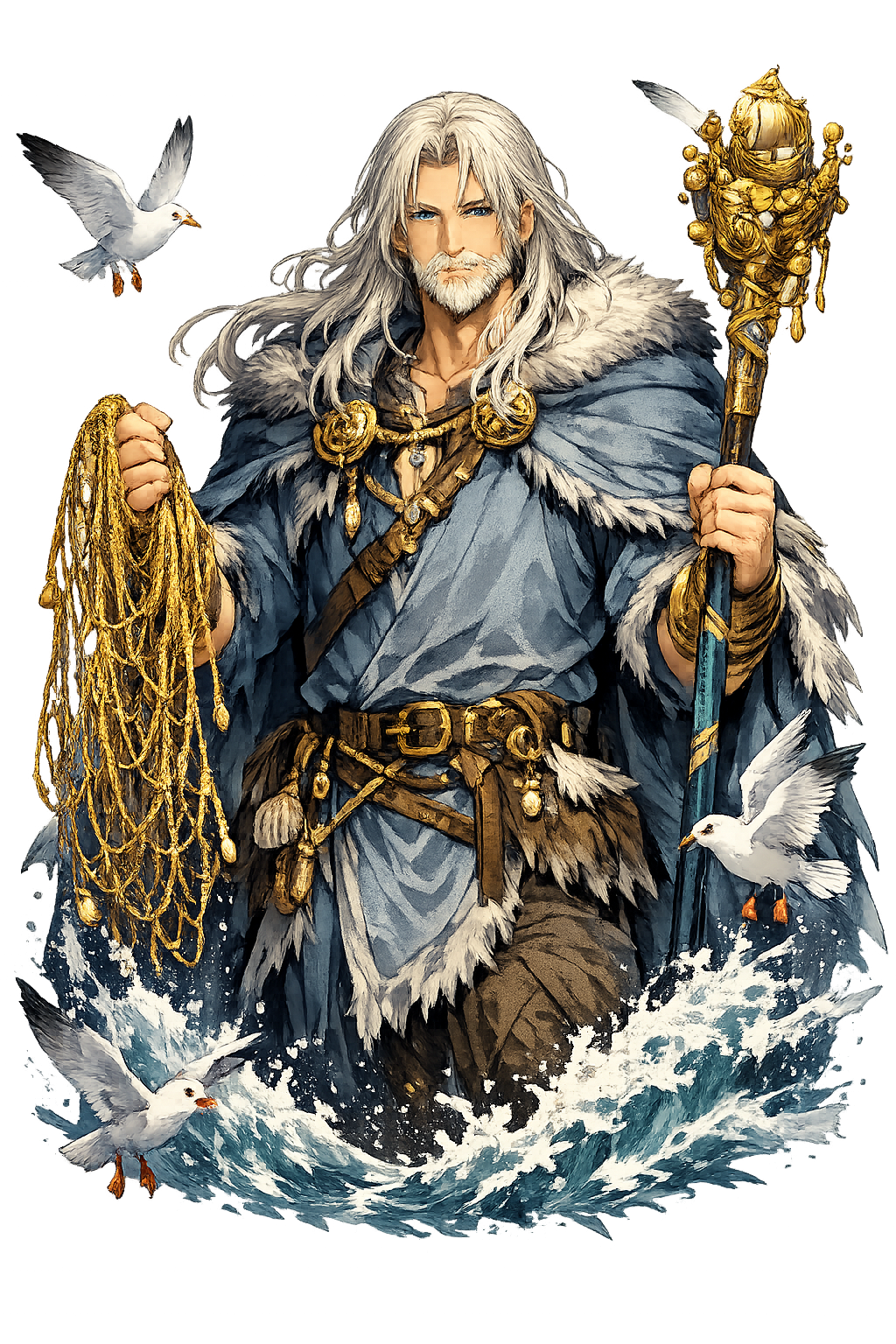
The appointments Njǫrðr made — and who is keeping them
One myth is a story. A cycle of myths is a specification. Read Njǫrðr's cycle in order and the industries fall out of it one by one.
At a Glance
- Temple: Njǫrðr
- Pantheon: Norse
- Domain of influence: Sea, Wind, Fishing, Wealth
- Pattern seats: 5
- Sectors touched: Commerce & Governance · Energy & Natural World
- Strongest seat: Finance, Wealth & Commerce
- Series: The Resonance Files, No. 166 of 271
The Cycle, Read Forward
Finance, Wealth & Commerce — through The Calmer of Sea and Flame
In Gylfaginning 23, Snorri records that Njǫrðr 'rules over the course of the wind and stills sea and fire. ' Sailors and fishermen call on him because he can flatten a swell or quiet a blaze.
The atlas states the seat in one line: Sea-borne wealth; the fishing fleet’s prosperity. The story above is the long version of the same sentence. Industries do not invent their archetypes; they inherit them and call them best practice.
Maritime, Shipping & Ocean Industries — through Nóatún, the Ships' Haven
In the Grímnismál, Óðinn lists the halls of the gods and places Njǫrðr at Nóatún, 'the Enclosure of Ships. ' The name imagines a safe anchorage, a god whose house is a harbor.
The atlas states the seat in one line: God of harbors, hauls of fish, and Nóatún, the Ships’ Haven — the Norse sea negotiated, not fought. The story above is the long version of the same sentence. Industries do not invent their archetypes; they inherit them and call them best practice.
Agriculture, Food & Harvest — through The Hostage of the Vanir
After the catastrophic war between Æsir and Vanir, the two tribes exchanged hostages. The Vanir sent Njǫrðr and his son Freyr to Ásgarðr; the Æsir sent Hœnir and Mímir to Vanaheimr.
The atlas states the seat in one line: Fish and net: the skill that turns water into food. The story above is the long version of the same sentence. Industries do not invent their archetypes; they inherit them and call them best practice.
Insurance & Protection Services — through The Feet in the Hall
The giantess Skaði came to Ásgarðr seeking weregild for her father Þjazi. As compensation she was allowed to choose a husband from among the gods — but only by his feet.
The atlas states the seat in one line: He stills sea and fire — marine and flame, the two oldest insured perils, answered by one god. The story above is the long version of the same sentence. The trade thinks it is optimizing a process. It is re-enacting a charter.
The Theme That Runs the Cycle
Njǫrðr's myths are stories of arrival and accommodation: the hostage who becomes indispensable, the sea-god who marries the mountain, the father of the two most beloved gods of the Viking Age. His drama is quieter than Óðinn's or Þórr's, but it turns on the same cosmic question — how do unlike powers share one world?
The Method, Stated Plainly
The atlas is not a horoscope. Seats are earned from the sources — argued, weighted, published — and every one of them can be challenged at the methodology page. A match that cannot survive an argument does not survive review. That is the whole trick: the patterns are claims, and claims can be tested.
For the Ones Who Work There
If you work in finance, wealth & commerce, maritime, shipping & ocean industries, or any trade this temple holds a seat in, this is the honest version of what a placement means: your industry beside the story it has been re-telling all along — on the temple floor itself, before an audience that came specifically to read it. The patron tier and the advertising terms describe the mechanics; the resonance above describes the fit.
The File Continues
One of 271 Resonance Files — the series where the pantheon goes to work. Read the founding dispatch for the name, the Restoration File for the spelling, or the whole archive end to end.
Continue the series — previous: Nirmātā (read it) · next: Nōaḥ (read it).
The Resonance Files are argued from the same canonical record as the pattern atlas itself: the lexicon, the lore catalog, and the cited sources. Every seat can be challenged at the methodology page — and the challenge is the point.