
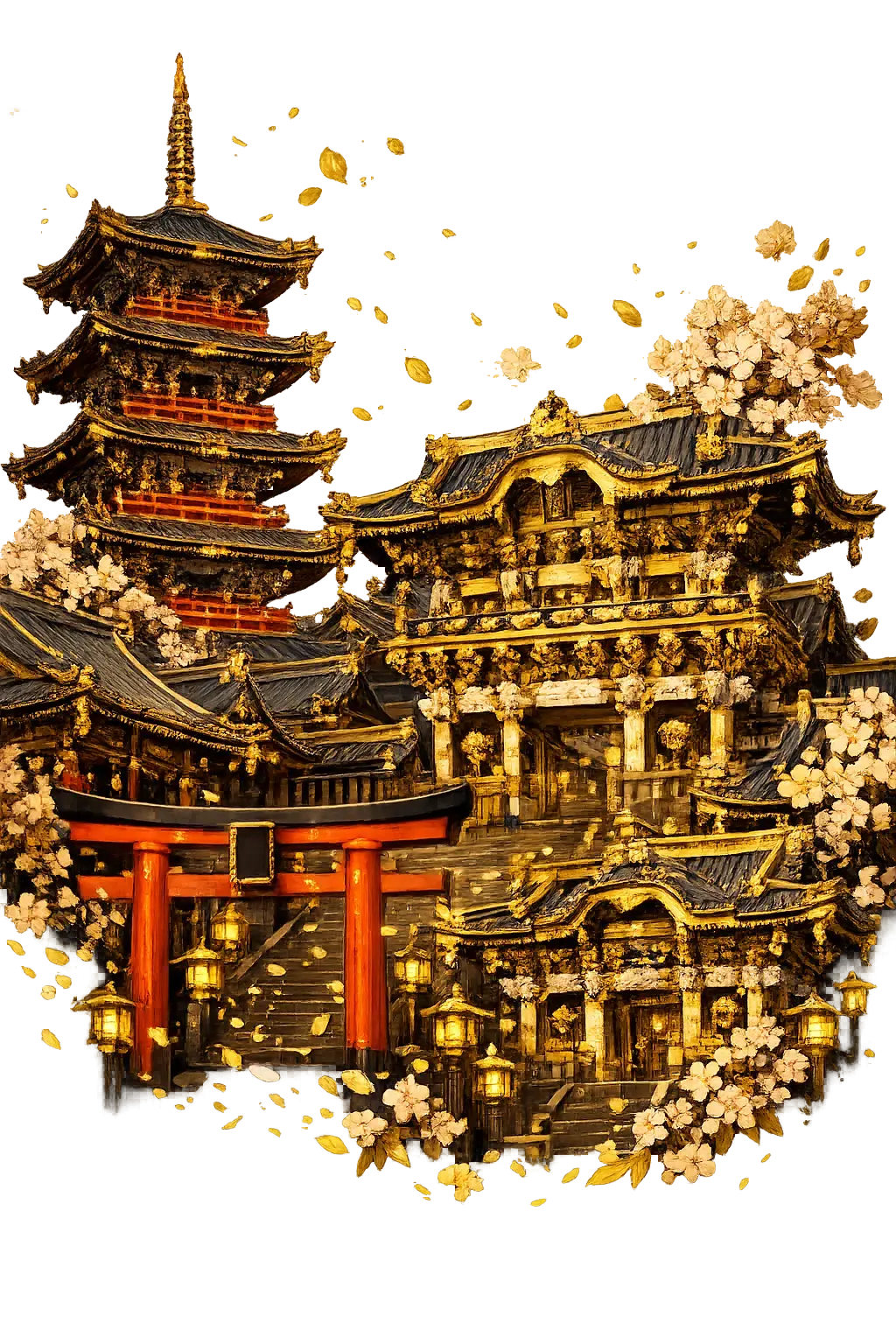
The provenance file on Nikkō
The provenance file for Nikkō. Nothing here is unsourced; that is what the file is for.
Provenance
1. The attestation. 日光 — "Sunlight". On record: Kojiki (foundation myths and kami references), Nihon Shoki (imperial chronicle to 697 CE), Tōshōgū engi and Tokugawa-period shrine records, Aston, Nihongi: Chronicles of Japan from the Earliest Times to A.D. 697.
2. The preserved evidence. o → ō (Macron: long vowel) — absent from the ASCII form nikko, present in the restoration, verifiable against the sources above.
3. The narrative record. Shōdō Shōnin and the Sacred Bridge — According to tradition, the Buddhist monk Shōdō Shōnin founded the first temple at Nikkō in the 8th century. When he could not cross the turbulent Daiya River, the mountain deity appeared in a dream and offered two serpents to form a bridge. The Deification of Tokugawa Ieyasu — After his death in 1616, Tokugawa Ieyasu was enshrined at Nikkō as Tōshō Daigongen, a manifestation of the Buddhist divinity Yakushi Nyorai and the Shinto sun goddess Amaterasu. His grandson Iemitsu rebuilt the complex between 1634 and 1636 with staggering opulence, employing thousands of craftsmen.
4. The physical record. The Tōshōgū complex as it exists today is primarily an Edo-period creation (1634–1636), though it rests on older religious layers. The main hall, Yōmeimon gate, five-storied pagoda, and Okumiya inner shrine are outstanding examples of early Edo architecture and polychrome decoration. The Shinkyō bridge, rebuilt in 1904, preserves the form of the original sacred crossing. Archaeological and architectural study of the site has documented the materials, craftsmen, and techniques employed in Iemitsu's rebuilding, while the surrounding cedar avenue (planted in the 17th century) remains one of Japan's most impressive designed landscapes.
5. The current holding. The temple at /sites/nikko/, classified Tier 1. Tier-1 is not a compliment; it is a measurement. This restoration keeps something the ASCII form provably loses, and the measurement is repeatable.
6. The documented resonances. Travel, Tourism & Place Branding, Architecture & Spatial Design, Forestry, Conservation & Outdoor Industries — seats argued and weighted in the pattern atlas, read through the myths in this temple's Resonance File.
7. The primary sources. Kojiki, Nihon Shoki — the library this file answers to, open at the Sacred Texts collection.
8. The continuing record. Nikkō is one of Japan's most visited sacred sites and a UNESCO World Heritage property. Its autumn maples, snow-covered gates, and the famous proverb Nikkō wo mizu shite kekkō to iu nakare (日光を見ずして結構と言うなかれ — 'don't say «splendid» until you've seen Nikkō') continue to shape Japanese aesthetics.
At a Glance
- Restored name: Nikkō
- ASCII form: nikko
- Meaning: "Sunlight"
- Domain of influence: Sacred Site, Tochigi
- Pantheon: Japanese
- Classification: Tier 1
- Original script: 日光
- Series: The Restoration Files, No. 164 of 271
The File Continues
Read the founding dispatch for the name's full story, the Resonance File for the archetype at work — or the whole archive in one sitting.
Continue the series — previous file: Níkē (read it here) · next file: Nirmātā (read it here).
The Restoration Files are written from the same canonical record as the temples themselves: the lexicon, the lore catalog, the pattern atlas, and the cited scholarly sources. If a file ever disagrees with its temple, the temple is right — tell us, and the file will be corrected.