
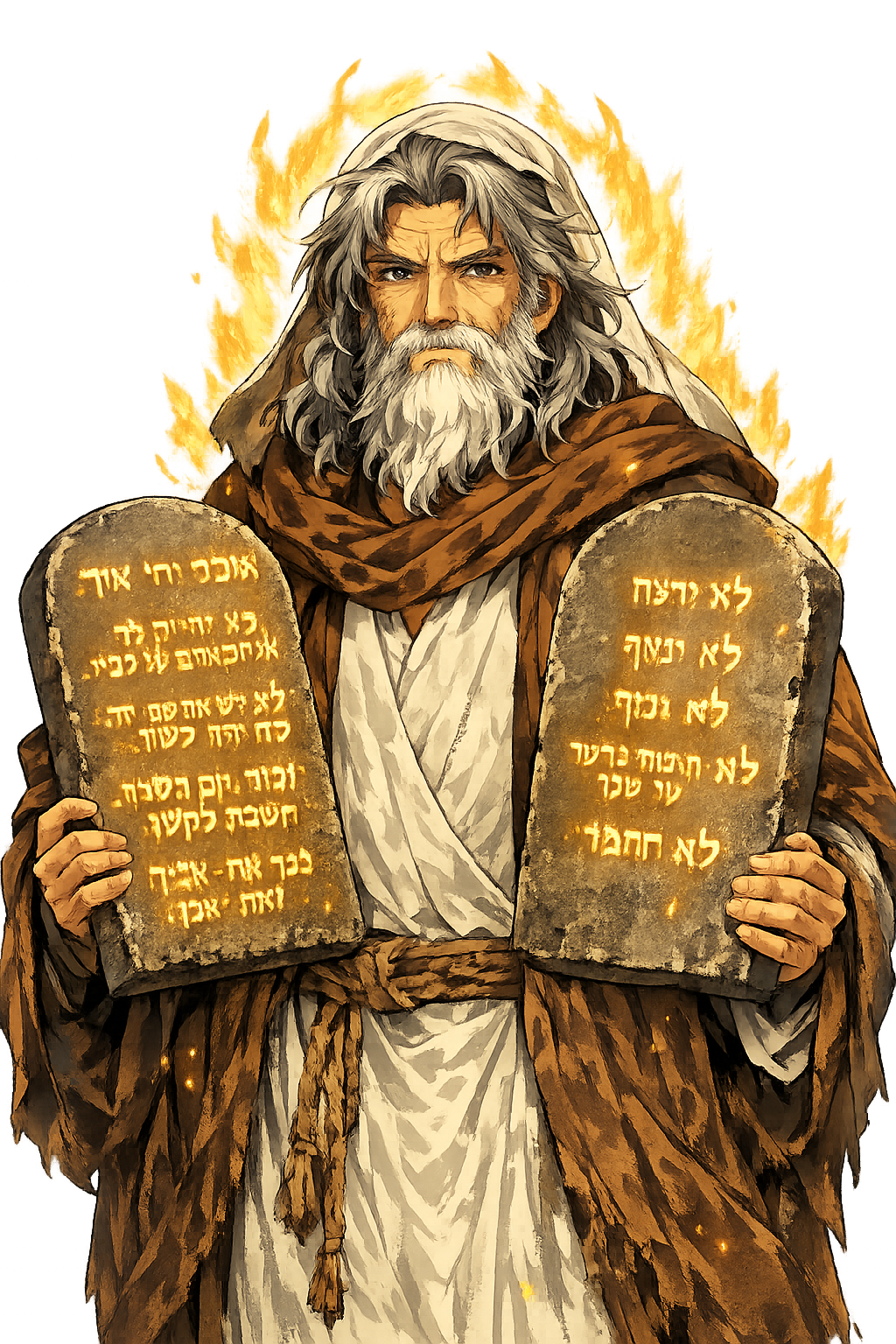
Mōšeh, translated into industries: what the archetype actually does
Archetypes are not metaphors; they are job descriptions written early. Mōšeh's was unusually clear.
Moses' story is not a single hero's quest but a forty-year negotiation between a people and their god. Every episode tests whether liberation can become responsibility, and whether a reluctant mediator can hold both sides to the covenant.
The pattern atlas — which maps every flagship temple to the industries its archetype demonstrably resonates with, each match argued and open to challenge — seats this temple in 4 industries. This file reads those seats the way they were earned: through the myths.
At a Glance
- Temple: Mōšeh
- Pantheon: Canaanite
- Domain of influence: Prophet, Lawgiver
- Pattern seats: 4
- Sectors touched: Society & Spirit · Commerce & Governance · Culture & Entertainment
- Strongest seat: Faith & Spiritual Organizations
- Series: The Resonance Files, No. 158 of 271
The Myth at Work
The Child in the Basket. Born under Pharaoh's edict of death, the infant Moses is hidden in a papyrus basket on the Nile and discovered by Pharaoh's daughter. The name Mōšeh is explained as a pun on Hebrew māšâ, 'to draw out,' though Egyptologists also hear in it the common New Kingdom name element -mose, 'born of' (a deity). — hold that image; the industries below are where it goes to work.
The Reluctant Prophet. At Horeb, God speaks from a burning bush and commissions Moses to confront Pharaoh. Moses objects five times: Who am I? — hold that image; the industries below are where it goes to work.
The Seats
Each of these is argued in the atlas with a weight and a why-line. What the atlas cannot fit in one line is the whole myth — so here is each seat with its story restored.
Faith & Spiritual Organizations
Religious institutions, faith media, and devotional services. (Sector: Society & Spirit)
The why-line says it in one breath: The prophet and lawgiver of the Exodus; the covenant he carried down the mountain still anchors three living faiths. That is not a resemblance; it is the same act, performed in a newer building.
Leadership, Governance & Public Administration
Government, executive leadership, and statecraft. (Sector: Commerce & Governance)
The liberator who led a nation out of bondage; forty years of statecraft without a crown. Swap the costume and the sentence is indistinguishable from the myth. That is what a resonance seat means.
Legal, Justice & Compliance
Law, courts, and regulatory compliance. (Sector: Commerce & Governance)
The lawgiver; the tablets still anchor jurisprudence. — the atlas stops there, out of discipline. The myth keeps going: the function Mōšeh performs in the stories is precisely the function this industry sells.
Writing, Publishing & Media
Books, journalism, and content platforms. (Sector: Culture & Entertainment)
The why-line says it in one breath: The traditional author of the Torah; the five books behind Western publishing’s longest-running title. That is not a resemblance; it is the same act, performed in a newer building.
Read the myth again after the seats and it stops sounding ancient: Moses' story is not a single hero's quest but a forty-year negotiation between a people and their god. The age changed. The work did not.
The Method, Stated Plainly
None of this is numerology. A seat exists only where the match can be argued from the deity's documented domains and deeds — weighted, published, and falsifiable. The full derivation, the weights, and the challenge process are public on the methodology page. If a seat in this file reads wrong, the atlas itself tells you how to prove it — and the correction becomes part of the record.
For the Ones Who Work There
If you work in faith & spiritual organizations, leadership, governance & public administration, or any trade this temple holds a seat in, this is the honest version of what a placement means: your industry beside the story it has been re-telling all along — on the temple floor itself, before an audience that came specifically to read it. The patron tier and the advertising terms describe the mechanics; the resonance above describes the fit. The story is the pitch; the seats are just where it already works.
The File Continues
This is one of 271 Resonance Files — the third dispatch from every flagship temple, where the myths meet the markets. The temple's founding dispatch tells the name's story; its Restoration File tells the spelling's; the blog index holds the whole archive.
Continue the series — previous: Monókerōs (read it) · next: Mūt (read it).
The Resonance Files are argued from the same canonical record as the pattern atlas itself: the lexicon, the lore catalog, and the cited sources. Every seat can be challenged at the methodology page — and the challenge is the point.