
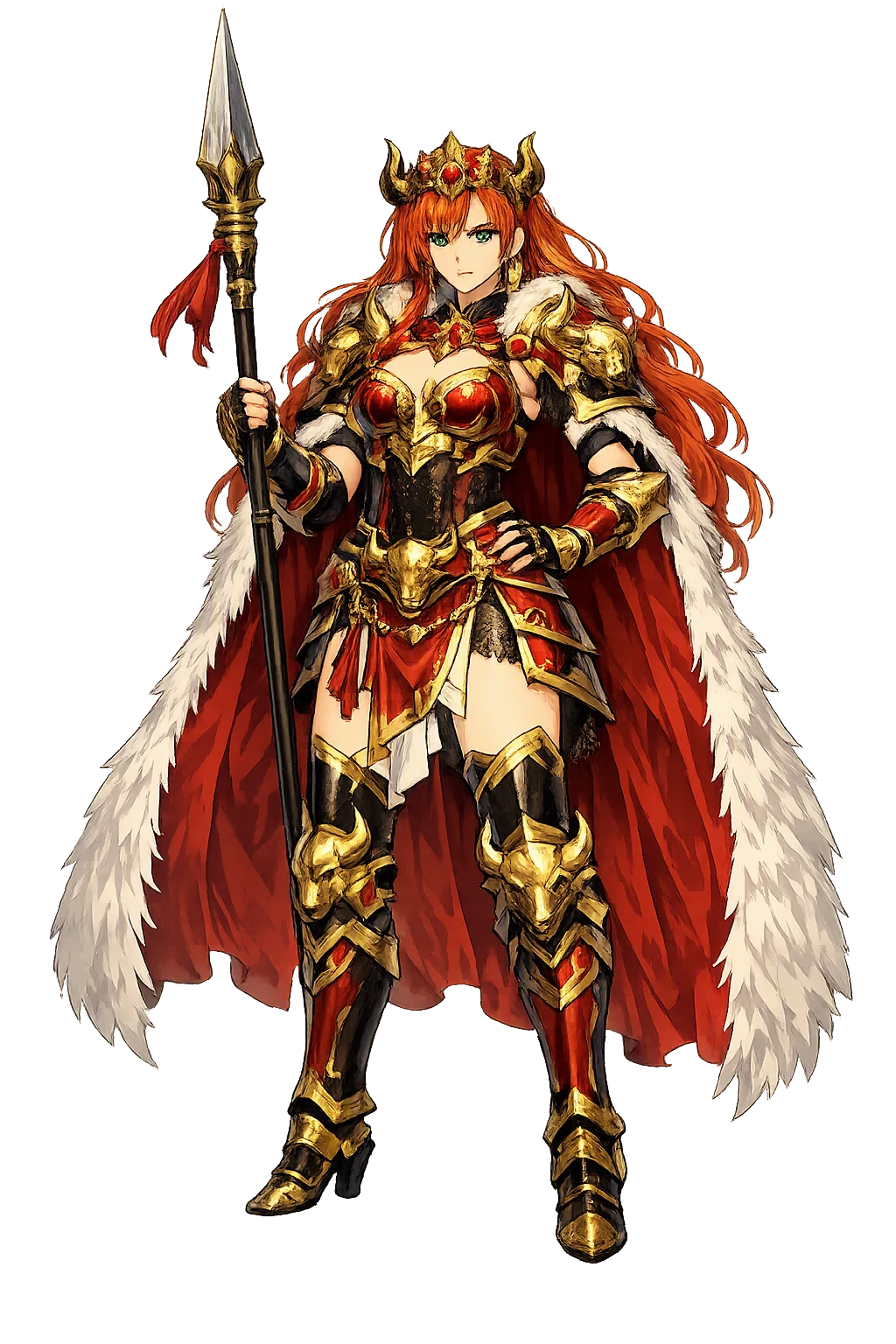
The hidden history behind Medb
Behind the modern ASCII form medb hides a much longer story. Medb reaches back through manuscripts, inscriptions, and oral tradition long before it ever touched a keyboard, and every mark in the restored spelling is a receipt from that journey. In what follows we trace the name from its Celtic transcription attestations through its mythology, its cult, its symbols, and its afterlife in other cultures — and we show how the PuniCodex project turned that philological record into a Unicode domain that resolves today. The history was never lost. It was only waiting for the infrastructure to catch up.
At a Glance
- Restored name: Medb
- ASCII form: medb
- Meaning: "'The intoxicating one' (Old Irish medb, cognate with 'mead'), Queen of Connacht who drives the cattle raid of the Táin Bó Cúailnge."
- Domain of influence: Sovereignty, War, Intoxication
- Pantheon: Celtic
- Classification: Tier 2
Overview
Medb (medb) — Sovereignty, War, Intoxication · 'The intoxicating one' — is the ruling queen of Connacht and the driving will of the Táin Bó Cúailnge, the longest and greatest tale of the Ulster Cycle: the woman who audited fortunes with her husband Ailill in the pillow-talk at Crúachan, found herself one bull short of equality, and marched the hosting of four provinces against Ulster to take the Donn of Cúailnge.
Old Irish Medb means 'the intoxicating one' — the same word as the noun medb, 'mead' — and the etymology is one of the most secure in the Celtic corpus, continuing Proto-Indo-European médhu, 'sweet drink': English mead, Greek méthu, and Sanskrit mádu are the same word. Because the name is the sovereignty drink itself, scholarship since Mac Cana has read Medb of Crúachan as Ireland's clearest euhemerized sovereignty goddess — the land's power to make and unmake kings, wearing a queen's body — and the Táin lets her state her own charter: she demanded of every husband a bride-gift no woman had asked before, 'a husband without meanness, without jealousy, without fear'.
PuniCodex restores the name as Medb — identical to the ASCII input, because normalized Old Irish writes no diacritic in this name. The mechanical rule therefore places it in Tier 2: nothing distinctive is lost in transit, a statement about orthography and never about the queen. No domain is claimed: the plain-ASCII medb.com is registered to a third party outside the collection and is watched for release.
The Name
The name is attested in Old and Middle Irish as Medb (genitive Medba, later Meadba; Modern Irish Meadhbh, Anglicized Maeve), and it doubles as a common noun: medb f. means both 'mead, the intoxicating drink' and 'intoxicating, she who intoxicates'. The etymology is not in dispute: it continues Proto-Indo-European médhu, 'sweet drink, honey-drink', with Welsh meddw, 'drunk', as the Brythonic cognate of the adjective and English mead, Greek méthu, and Sanskrit mádu as the wider family.
The name's meaning is its interpretation. Because Irish inauguration ideology bound the kingship to a drink and a marriage — the banais ríghe, the 'wedding-feast of kingship', in which the goddess of the territory offered the king the cup — a queen named 'the intoxicating one' reads as that ideology incarnate, and Mac Cana's foundational study of the king-and-goddess theme made Medb its type-case. The tradition itself kept a namesake to confirm the pattern: Medb Lethderg of Tara, of whom the Book of Leinster records that she slept with nine kings of Ireland and that no king ruled at Tara who had not slept with her.
The ASCII form medb loses nothing, because the normalized Old Irish spelling is already plain Latin letters; the restoration is therefore a matter of canonical reference, not rescued diacritics, and the name is classified Tier 2 by the project's mechanical rule.
The letter-by-letter transformation runs:
- m → M — Same, capitalized
- e → e — Same
- d → d — Same
- b → b — Same
The project holds no domain for this name: medb.com is registered to a third party outside the PuniCodex collection and is watched for release. The temple lives at its canonical lexicon address.
The Original Script
The name is preserved in medieval Irish manuscripts in the Latin alphabet as Medb (genitive Medba) — Old Irish / Middle Irish in Insular script, attested from the Old Irish period, c. 7th–10th c. CE onward, in the glossaries and in the great codices that preserve the Táin Bó Cúailnge: Lebor na hUidre (c. 1106) and the Book of Leinster (12th c.). The earlier monumental alphabet, ogham, predates the manuscript tradition and attests the name-type once, in the genitive MEDVVI at Oweynagat, Rathcroghan; the manuscript form remains the primary witness for the queen.
The scholarly rendering proceeds step by step:
- Old Irish was written in the Latin alphabet using Insular minuscule from the early medieval period; the spelling Medb requires no diacritic.
- The Dictionary of the Irish Language resolves the name as the noun and adjective medb, 'mead; intoxicating', continuing Proto-Celtic medu- and Indo-European médhu — the same word as English mead.
- The intervocalic d and final b are lenited in pronunciation — [ð] and [v] — but the orthography writes plain d and b; nothing distinctive is lost in ASCII.
- The Unicode restoration Medb is therefore identical to the ASCII form apart from the capital; the temple form is a canonical reference, not a rescued spelling.
One caution attaches to the record: the name's etymology — 'the intoxicating one', the mead of the king-making feast — is also its whole interpretation, and the sovereignty-goddess reading built on it, however well founded in Mac Cana's work, remains an interpretation of a literary queen, not a datum about a cult.
Pronunciation
The reconstructed pronunciation of the name is /ˈmʲeðv/ — Old Irish Reconstruction.
Phoneme by phoneme:
- M- — Slender (palatalized) m [mʲ], the m of 'muse' rather than 'mud', with short stressed [e] following
- -d- — Lenited [ð], the voiced dental fricative of English 'this', written with plain d in Old Irish orthography
- -b — Final lenited b, [v]: the sound that survives as the -bh of Modern Irish Meadhbh and as the v of the Anglicized 'Maeve'
For the modern speaker, the closest approximation is: 'MYETHV' — one short syllable, the d melted into a soft 'th', finishing on 'v'; the modern Irish Meadhbh ('Maeve') has collapsed the middle consonant entirely.
Kindred and historical forms of the name:
- Old Irish — Medb, genitive Medba; the common noun medb, 'mead'
- Modern Irish — Meadhbh, the unbroken living form; Anglicized Maeve
- Welsh cognate — meddw, 'drunk, intoxicated' — the same adjective
- Indo-European root — PIE *médhu, 'sweet drink': English mead, Greek méthu, Sanskrit mádu
Medb is Tier 2 because the restoration preserves nothing ASCII loses: the letters of the manuscript form are the letters of the keyboard. The capital alone marks the temple form.
Mythology
Medb's mythology is the Táin Bó Cúailnge, with the death-tale Aided Meidbe as its coda — and the tradition never decides whether she is a goddess remembered as a queen or a queen worshipped as a goddess.
The Pillow-Talk (Táin, Recension I)
In the bolster-conversation at Crúachan, Medb and Ailill count their entire wealth — cups, rings, cattle, sheep, horses — and find themselves exactly equal save one item: the bull Finnbennach, born in Medb's herd, had scorned to be a woman's chattel and walked over into Ailill's. To restore the equality she would not live without, Medb sought the Donn of Cúailnge from Dáire mac Fiachna on a year's loan at princely terms; Dáire agreed, until her drunken messengers boasted they would have taken the bull by force anyway, and the loan died of the boast. Medb resolved on war.
The Bride-Gift Speech (Táin, Recension I)
The Táin lets Medb state her own terms: daughter of Eochu Feidlech, high king of Ireland, wooed by the kings of Ireland, she refused them all, 'for I asked a strange bride-gift such as no woman before me had asked of a man of the men of Ireland — a husband without meanness, without jealousy, without fear.' Such a man she found in Ailill mac Máta; she brought him the bride-gift, and it is into her province, not his, that he came.
The Debility and the Boy at the Ford (Táin)
Medb timed the raid for the pangs of the Ulstermen, the debility Macha laid on them for forcing her to race the king's horses while great with child. With Ulster abed, one boy held the fords: Cú Chulainn, untouched by the curse. Medb spent everything on him — terms, ambushes, satirists, her daughter Findabair promised to a dozen champions at once — and the hardest price fell on Ferdia, Cú Chulainn's foster-brother, plied with drink and the promise of Findabair until he took the ford and died there on the gae bolga.
The Battle of the Bulls (Táin)
When the pangs lifted and Ulster rose, Medb's army broke at Gáirech and Irgáirech — but the Donn was already driven south, and she covered the retreat herself, in her gush of blood, asking Cú Chulainn's protection for her army's rear. The bulls settled the account: they fought through the night across Ireland, the Donn trampled Finnbennach to pieces, carried the carcass through Connacht, and died of his wounds on his return to Cúailnge. Fergus mac Róich's verdict closes the raid: this is what happens to a herd led by a mare.
The Cheese of Inis Cloithrinn (Aided Meidbe)
Medb outlived Ailill and kept her sovereignty into age at her island on Lough Ree, where she bathed every morning. She had killed her sister Clothru, and Clothru's son Furbaide — cut from his mother's womb, whence his name Ferbend, 'of the cutting' — measured her bathing place with practice casts until his sling flew true by habit; one sunrise his stone, a ball of hard cheese, struck her dead at the water's edge.
Symbols & Iconography
Medb's regalia are the furniture of her rath and the terms of her marriages — the most domestic and the most political attributes in the Irish corpus:
- The marriage-bed of Crúachan — The site of the pillow-talk: sovereignty as an audit, equality counted treasure for treasure in the dark
- The two bulls — Finnbennach the White-Horned, who scorned a woman's keeping, and the Donn of Cúailnge, the Brown Bull of Cooley: the balance of power on four legs, dead on each other's horns by the tale's end
- The bride-gift terms — No meanness, no jealousy, no fear: the queen's charter, demanded where a dowry was expected
- The march of the four provinces — Connacht, the Leinster Galeóin, and the Ulster exiles under Fergus mac Róich: armies moved by a single insistence that the account be balanced
- Oweynagat, the Cave of the Cats — The Otherworld gate beneath her royal complex at Rathcroghan, whence the things of Samain come up in the tales
Archaeology & Evidence
Medb's mythic address is the best-documented royal landscape in Ireland: Crúachan Aí, the Rathcroghan complex in County Roscommon, a five-kilometre spread of more than two hundred and forty recorded monuments — ring-barrows, mounds, and enclosures — dominated by the great flat-topped Rathcroghan Mound itself. Beneath the complex opens Oweynagat, the Cave of the Cats, the natural cave the medieval tales call a gate of the Otherworld; within it stand two ogham stones, one reading VRAICCI MAQI MEDVVI, '(the stone of) Fráech, son of Medb' — the name-type's only epigraphic attestation, at the site the tradition assigns to the queen herself.
Her death-place, Inis Cloithrinn (Inchcleraun), survives as the largest island of Lough Ree on the Shannon, crowned by early monastic ruins; her reputed grave is the great unexcavated Neolithic cairn (c. 3200 BCE) on the summit of Knocknarea above Sligo — Miosgán Meadhbha, 'Medb's heap' — which local tradition insists she fills standing upright, spear in hand, facing Ulster. The textual witnesses are exact: the oldest substantially complete Táin (Recension I) is in Lebor na hUidre, the Book of the Dun Cow, written at Clonmacnoise around 1106, and the fullest recension in the twelfth-century Book of Leinster; O'Rahilly's editions are the modern bases. Mallory's In Search of the Irish Dreamtime (2016) is the standard archaeological cross-examination of the whole epic.
Realm & Domain
Medb is catalogued under the domain 'Sovereignty, War, Intoxication' — three words that map onto the queen's office, her great deed, and her name.
Sovereignty
She is the ruler whose consent makes kings: the Táin is blunt that Ailill is king of Connacht because he is married to Medb of Crúachan, and her bride-gift speech — a husband 'without meanness, without jealousy, without fear' — is the charter of a queenship that chooses rather than is chosen. Scholarship reads behind her the sovereignty goddess of Irish inauguration ideology, the land's power to confer and withdraw the kingship.
War
The Táin Bó Cúailnge is her war: raised on a point of equality, timed for the debility Macha laid on the Ulstermen, waged by armies she spent without hesitation — allies, exiles, her daughter's promised hand — and covered in retreat by her own body when it broke.
Intoxication
Her name is the drink and the state at once: medb, 'mead; she who intoxicates'. The mead of the king-making feast and the recklessness of the raid are the same word working at two scales — the cup that confers power and the will that spends it.
The Audit
Her defining act is a counting: the pillow-talk in which every treasure of two rulers is weighed and found equal — save one bull. Sovereignty, war, and intoxication all begin in that arithmetic.
Across Cultures
The Welsh corpus preserves no Medb, but it preserves her word — Welsh meddw, 'drunk', is the same adjective — and the Mabinogi gives the Brythonic side of the theme she embodies: Rhiannon arriving as a mounted marvel no rider can catch, and the footholder Goewin whose office is bound to Math's life, belong to the same kingship-and-goddess complex that Mac Cana traced through Irish literature.
Medb's deepest kin are lexical and ritual at once. Her name is the same word as the drink by which Irish kings were made: the inauguration knew the banais ríghe, the 'wedding-feast of kingship', in which the goddess of the territory offered the king the cup or the bed, and Mac Cana's study of the king-and-goddess theme reads Medb of Crúachan as that figure euhemerized into a queen — with the Book of Leinster's Medb Lethderg of Tara, who slept with nine kings of Ireland, as the tradition's own corroboration. More skeptical scholarship, notably Mallory's, has tested the Táin against the Iron Age record and counsels reading her as a literary queen of the medieval tellers rather than a window on pagan ritual; the debate itself is now part of her dossier. Her closest kin inside the lexicon are the pantheon's other keepers of the land's consent: Macha, whose curse opened Ulster to her army, and the Mórrígan, who rides the same war-paths from the Otherworld side.
Cultural Legacy
The Táin's modern reception made Medb the most argued-over woman in Irish literature. Lady Gregory's Cuchulain of Muirthemne (1902) carried the epic into English; Thomas Kinsella's translation (1969), with Louis le Brocquy's ink drawings, fixed the Táin as the Irish national epic for the modern reader — and Medb at its centre as its engine rather than its ornament. Scholarship split over her nature: Mac Cana's sovereignty goddess, euhemerized into a queen, against the more skeptical readings that test the tale against the Iron Age and find a medieval literary construction.
Popular culture settled the argument in its own way: the Anglicized Maeve has become one of the most fashionable Irish girls' names in the English-speaking world, and 'Queen Maeve' — the woman who wrote her own terms, chose her own husbands, and out-argued every man in the tale — stands as a feminist icon far beyond the universities. The cairn on Knocknarea that folklore calls her grave draws climbers every summer; the visitor centre at Rathcroghan interprets her rath and her cave; and in Irish itself Meadhbh never left: the living name has meant the same ungovernable queen for twelve hundred years of the written language.
The Scholarly Record
The account of Medb given in this edition rests on the witnesses and reference works listed below. The Táin Bó Cúailnge supplies the narrative spine in O'Rahilly's two editions; Aided Meidbe the death-tale; the Dictionary of the Irish Language and the etymological dictionaries secure the name; Mac Cana's studies frame the sovereignty reading, with Mallory as the standing cross-examination; the epigraphic and archaeological material is cited from McManus and Waddell.
- O'Rahilly, Cecile, ed. and trans., Táin Bó Cúailnge, Recension 1 (Dublin: Dublin Institute for Advanced Studies, 1976).
- O'Rahilly, Cecile, ed. and trans., Táin Bó Cúailnge from the Book of Leinster (Dublin: Dublin Institute for Advanced Studies, 1967).
- Kinsella, Thomas, trans., The Táin (Oxford: Oxford University Press, 1969).
- Hull, Vernam, ed. and trans., 'Noinden Ulad: The Debility of the Ulidians', Celtica 8 (1968), 1–30.
- Dictionary of the Irish Language (Dublin: Royal Irish Academy, 1913–76; electronic ed. eDIL 2019), s.v. medb.
- Matasović, Ranko, Etymological Dictionary of Proto-Celtic (Leiden: Brill, 2009), s.v. *medu-.
- Thurneysen, Rudolf, Die irische Helden- und Königsage bis zum siebzehnten Jahrhundert (Halle: Niemeyer, 1921).
- Mac Cana, Proinsias, 'Aspects of the Theme of King and Goddess in Irish Literature', Études Celtiques 7 (1955–56), 76–114, 356–413; 8 (1958–59), 59–65.
- Mac Cana, Proinsias, Celtic Mythology (London: Hamlyn, 1970).
- Sjoestedt, Marie-Louise, Gods and Heroes of the Celts, trans. Myles Dillon (London: Methuen, 1949).
- Koch, John T., ed., Celtic Culture: A Historical Encyclopedia, 5 vols. (Santa Barbara: ABC-CLIO, 2006), s.v. Medb, Táin Bó Cúailnge, Crúachan.
- MacKillop, James, Dictionary of Celtic Mythology (Oxford: Oxford University Press, 1998), s.v. Medb, Maeve.
- McManus, Damian, A Guide to Ogam, Maynooth Monographs 4 (Maynooth: An Sagart, 1991).
- Waddell, John, The Prehistoric Archaeology of Ireland (Dublin: Wordwell, 1998).
- Mallory, J. P., In Search of the Irish Dreamtime: Archaeology and Early Irish Literature (London: Thames & Hudson, 2016).
- Gregory, Lady Augusta, Cuchulain of Muirthemne (London: John Murray, 1902).
A Meditation
Medb is the only great figure in the Celtic corpus who insists, in her own voice, on being counted equal — and then proves the point by going to war over the one item on which she was not. Read her as a goddess and she is sovereignty itself, the land auditing its king; read her as a woman and she is something rarer in medieval literature: a ruler whose motives are entirely legible and entirely her own. The pillow-talk is not vanity. It is the whole doctrine of her queenship in one scene — that the account must balance, that consent is owed to her and not by her, that a husband is a choice with terms attached.
The tradition punishes her and cannot dismiss her. The raid ends in ruin, the bulls destroy each other, the covering of the retreat is hers to do in the tale's most humiliating passage — and afterward she goes home and keeps the throne, keeps her terms, keeps choosing, until a nephew's measured patience and a piece of cheese end her at her morning bath. Medb asks the question the audit poses: what would you move an army to keep equal — and what, when the counting is done, was ever actually at stake?
The Unicode Restoration
Medb is classified as Tier 2: the restoration needs no distinctive letters or diacritics its ASCII form would lose. The ASCII fallback medb still resolves everywhere, but it is the restored form that carries the name's full information. That is the whole thesis of this temple: the marks are the message.
Why This Restoration Matters
The story of Medb did not end in antiquity; it changed medium. Names that survive for millennia do so because each generation finds a new carrier for them — clay, papyrus, print, and now DNS. The PuniCodex restoration simply makes the carrier honest: the spelling that resolves is the spelling the evidence supports. If this post showed anything, it is that medb and Medb are not the same name with different styling. They are a summary and the text it summarizes. The web can now serve the text.
Explore Further
This post is one doorway into the temple. The home page carries the full character breakdown and the ambient canvas; the lore page tells the myths in long form; the Scholarly Edition preserves the sources, pronunciation data, and revision history; and the patron wall supports the restoration directly. For the wider map, browse the Lexicon, explore the Pantheon, or return to the PuniCodex blog.
Related Names
Sources
The full scholarly apparatus — every citation, revision, and review — lives in the Scholarly Edition. Key references for this post:
- O'Rahilly, Cecile, ed. and trans., Táin Bó Cúailnge, Recension 1 (Dublin: Dublin Institute for Advanced Studies, 1976).
- Dictionary of the Irish Language (Dublin: Royal Irish Academy, 1913–76; electronic ed. eDIL 2019), s.v. medb.
- Mac Cana, Proinsias, 'Aspects of the Theme of King and Goddess in Irish Literature', Études Celtiques 7 (1955–56), 76–114, 356–413; 8 (1958–59), 59–65.
- Matasović, Ranko, Etymological Dictionary of Proto-Celtic (Leiden: Brill, 2009), s.v. medu- 'mead'.
- Lexicon authorities for this entry: Táin Bó Cúailnge, Irish folklore.