
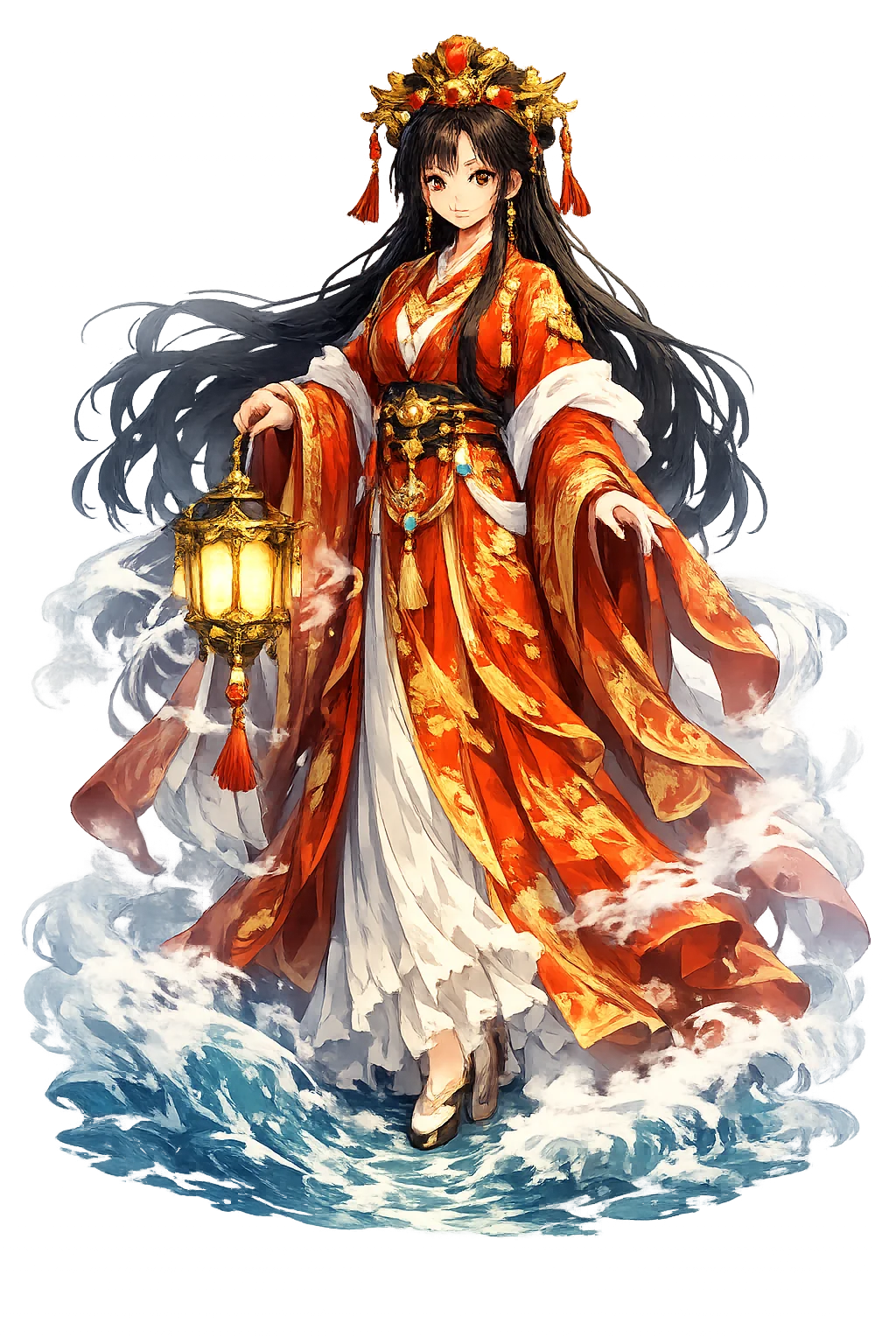
The appointments Māzǔ made — and who is keeping them
The mistake is reading myths as entertainment. Māzǔ's cycle reads more like a charter — each story assigning a duty the modern world still pays for.
At a Glance
- Temple: Māzǔ
- Pantheon: Chinese
- Domain of influence: Sea, Protection, Seafaring
- Pattern seats: 4
- Sectors touched: Commerce & Governance · Society & Spirit · Culture & Entertainment
- Strongest seat: Disaster Resilience & Recovery
- Series: The Resonance Files, No. 148 of 271
The Cycle, Read Forward
Disaster Resilience & Recovery — through The Silent Girl of Meizhou
Lín Mòniáng was born on Meizhou island in 960 CE, and tradition says she did not cry at birth — hence "Silent Maiden. " She learned to read the weather on her father's fishing boat, stood on the shore watching for lost sails, and was seen in dreams guiding drowning sailors home.
The atlas states the seat in one line: The storm-answerer; the seas own emergency line. The story above is the long version of the same sentence. Industries do not invent their archetypes; they inherit them and call them best practice.
Faith & Spiritual Organizations — through From Daughter to Empress of Heaven
The dynasties out-titled each other: the Song made her Consort of Heaven, the Yuan made her Princess, the Ming made her Holy Mother, the Qing made her Tiānhòu — Empress of Heaven. The historical woman is buried in the titles: the fishing daughter became, by twelve centuries of gratitude, the highest-ranked goddess of the Chinese sea, outranking every god the bureaucracy could promote her past.
The atlas states the seat in one line: The most-worshipped sea goddess on earth; her temples line every coast of the Chinese world and her red lanterns still guide sailors home. The story above is the long version of the same sentence. Industries do not invent their archetypes; they inherit them and call them best practice.
Travel, Tourism & Place Branding — through Eyes and Ears of the Sea
Her two attendants are the myth of vigilance itself: Qiānlǐyǎn ("thousand-mile eye") and Shùnfēng'ěr ("with-the-wind ear"), the demon-generals she tamed to watch and listen for sailors in distress. Their horned, fierce statues flank her in every temple — the goddess's instruments: nothing that happens on her sea goes unseen or unheard.
The atlas states the seat in one line: The Dajia procession and Meizhou pilgrimage draw millions yearly. The story above is the long version of the same sentence. The trade thinks it is optimizing a process. It is re-enacting a charter.
Leadership, Governance & Public Administration — through The Island Procession
Her living myth is the Dajia Māzú pilgrimage: each year her statue walks 340 kilometers around Taiwan for nine days, and a million people walk with it — touch the palanquin, kneel as it passes, weep when it returns home. The largest annual religious procession in the Chinese world is not to a cathedral but after a fisherman's daughter, walking the roads she still guards.
The atlas states the seat in one line: The sea has a government, and it is her temple network. The story above is the long version of the same sentence. The trade thinks it is optimizing a process. It is re-enacting a charter.
The Theme That Runs the Cycle
Māzǔ's myth is a life, not a legend: the historical Lín Mòniáng of 10th-century Meizhou, whose silence, visions, and early death became the sea's own religion.
The Method, Stated Plainly
Skeptical? Good — the system is built for you. Every seat in this file carries its why-line and its weight, the full derivation is public at the methodology page, and the challenge process is part of the design. Falsifiable is not a posture here; it is the mechanism.
For the Ones Who Work There
If you work in disaster resilience & recovery, faith & spiritual organizations, or any trade this temple holds a seat in, this is the honest version of what a placement means: your industry beside the story it has been re-telling all along — on the temple floor itself, before an audience that came specifically to read it. The patron tier and the advertising terms describe the mechanics; the resonance above describes the fit.
The File Continues
One of 271 Resonance Files — the series where the pantheon goes to work. Read the founding dispatch for the name, the Restoration File for the spelling, or the whole archive end to end.
Continue the series — previous: Māra (read it) · next: Médousa (read it).
The Resonance Files are argued from the same canonical record as the pattern atlas itself: the lexicon, the lore catalog, and the cited sources. Every seat can be challenged at the methodology page — and the challenge is the point.