
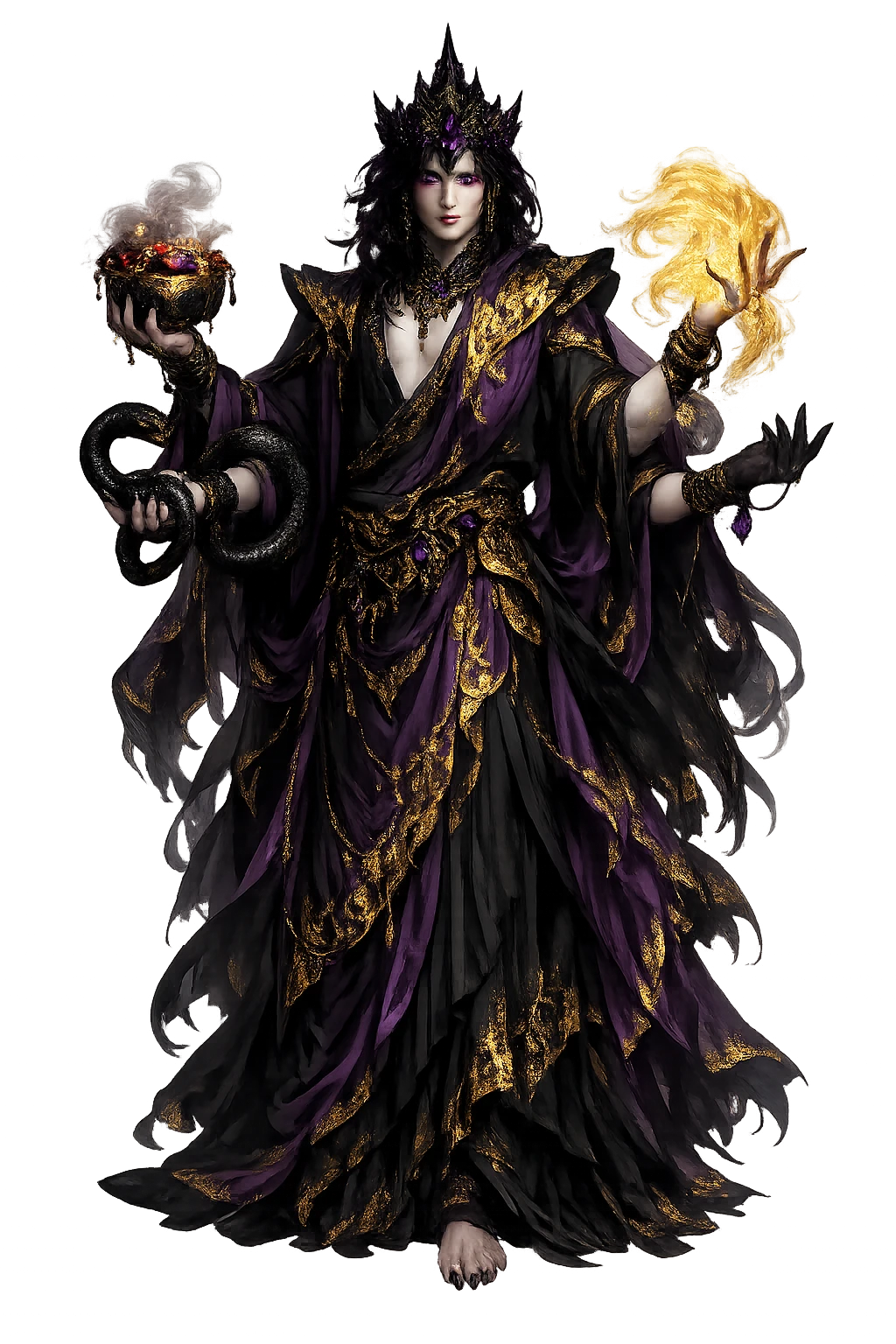
Reading Māra through the work it rules today
Archetypes are not metaphors; they are job descriptions written early. Māra's was unusually clear.
Māra's mythology is the dark half of the Buddhist biography: wherever the teaching advances, the texts station him at the next bend — and his defeats chart the whole path from striving to parinibbāna.
The pattern atlas — which maps every flagship temple to the industries its archetype demonstrably resonates with, each match argued and open to challenge — seats this temple in 3 industries. This file reads those seats the way they were earned: through the myths.
At a Glance
- Temple: Māra
- Pantheon: Buddhist
- Domain of influence: Death, Temptation, Illusion
- Pattern seats: 3
- Sectors touched: Technology & Innovation · Culture & Entertainment · Health & Wellbeing
- Strongest seat: Cybersecurity & Digital Protection
- Series: The Resonance Files, No. 147 of 271
The Myth at Work
The Ten Armies. The Sutta Nipāta's Padhāna Sutta gives his order of battle, and it is a psychology textbook in disguise: sensual pleasure is his first army, discontent the second, hunger and thirst the third, craving the fourth, sloth and torpor the fifth, fear the sixth, doubt the seventh, hypocrisy and obstinacy the eighth, gains, fame, and honor the ninth, and the tenth is self-exaltation joined with contempt for others. The Buddha's answer is the template of every later victory: he sees each army for what it is. — that is not just a story. It is a business model, four thousand years early.
The Night Under the Tree. The full assault is told in the Nidānakathā and versified in Aśvaghoṣa's Buddhacarita, whose canto on the Defeat of Māra is Sanskrit poetry's great set-piece: whirlwinds that cannot stir his robe, a rain of rocks that falls as flowers, darkness that will not spread. Mounted on the elephant Girimekhala, Māra advances his final claim — the seat of awakening is his — and calls his army as witness. — hold that image; the industries below are where it goes to work.
The Seats
Each of these is argued in the atlas with a weight and a why-line. What the atlas cannot fit in one line is the whole myth — so here is each seat with its story restored.
Cybersecurity & Digital Protection
Threat defense, authentication, and digital trust. (Sector: Technology & Innovation)
The adversary who tests the awakened mind; temptation as the original red team. — the atlas stops there, out of discipline. The myth keeps going: the function Māra performs in the stories is precisely the function this industry sells.
Gaming, Fantasy & Entertainment IP
Video games, streaming franchises, and fantasy worlds. (Sector: Culture & Entertainment)
The why-line says it in one breath: The tempter at the final gate; the archetypal endboss of the mind. That is not a resemblance; it is the same act, performed in a newer building.
Mental Health & Emotional Wellness
Therapy, emotional wellbeing, and mindfulness. (Sector: Health & Wellbeing)
The why-line says it in one breath: The voice of doubt and craving; the inner adversary every practice names. That is not a resemblance; it is the same act, performed in a newer building.
Read the myth again after the seats and it stops sounding ancient: Māra's mythology is the dark half of the Buddhist biography: wherever the teaching advances, the texts station him at the next bend — and his defeats chart the whole path from striving to parinibbāna. The age changed. The work did not.
The Method, Stated Plainly
None of this is numerology. A seat exists only where the match can be argued from the deity's documented domains and deeds — weighted, published, and falsifiable. The full derivation, the weights, and the challenge process are public on the methodology page. If a seat in this file reads wrong, the atlas itself tells you how to prove it — and the correction becomes part of the record.
For the Ones Who Work There
If you work in cybersecurity & digital protection, gaming, fantasy & entertainment ip, or any trade this temple holds a seat in, this is the honest version of what a placement means: your industry beside the story it has been re-telling all along — on the temple floor itself, before an audience that came specifically to read it. The patron tier and the advertising terms describe the mechanics; the resonance above describes the fit. The story is the pitch; the seats are just where it already works.
The File Continues
This is one of 271 Resonance Files — the third dispatch from every flagship temple, where the myths meet the markets. The temple's founding dispatch tells the name's story; its Restoration File tells the spelling's; the blog index holds the whole archive.
Continue the series — previous: Mañjuśrī (read it) · next: Māzǔ (read it).
The Resonance Files are argued from the same canonical record as the pattern atlas itself: the lexicon, the lore catalog, and the cited sources. Every seat can be challenged at the methodology page — and the challenge is the point.