
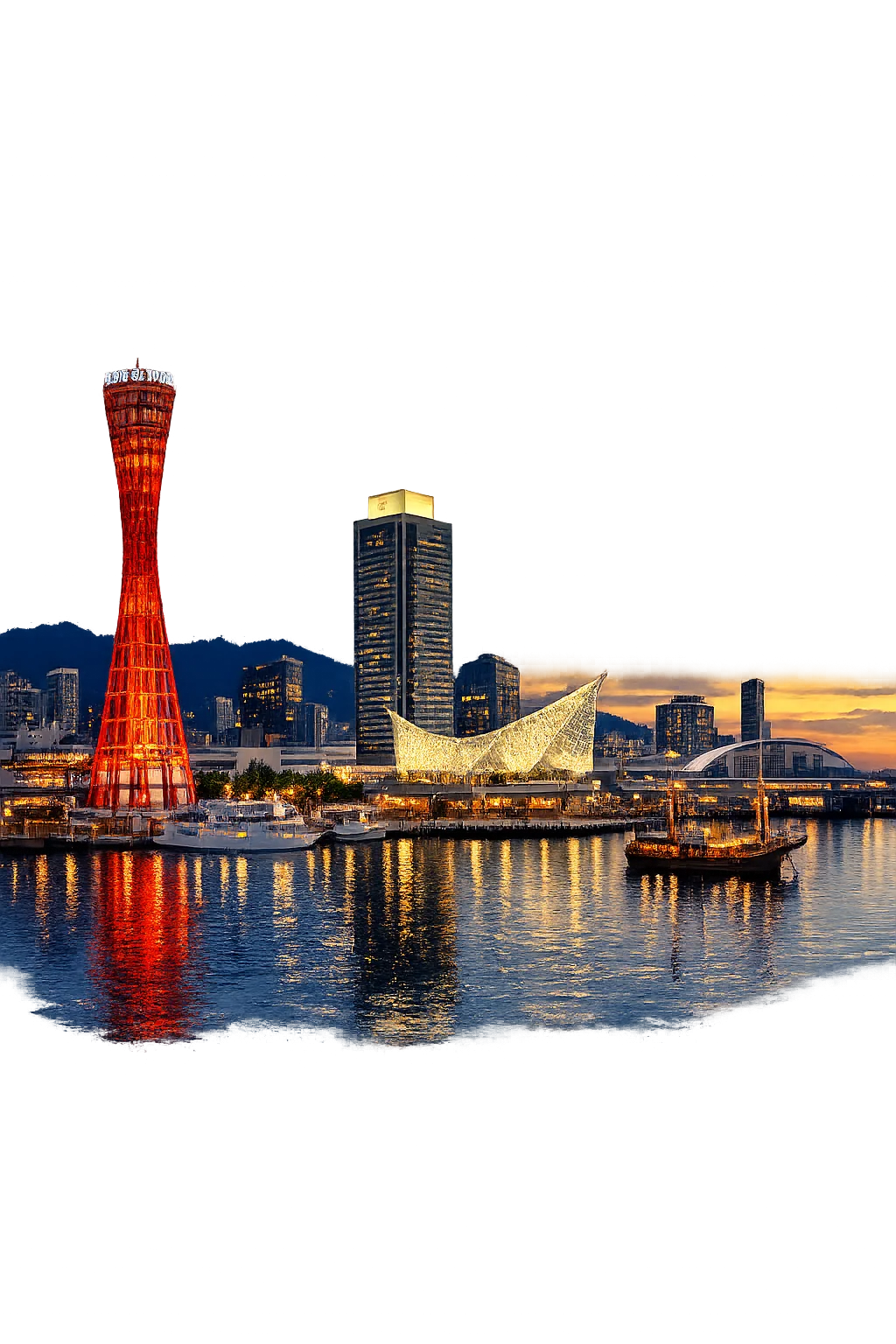
Reading Kōbe through the work it rules today
Archetypes are not metaphors; they are job descriptions written early. Kōbe's was unusually clear.
Kōbe is a city of thresholds: between mountain and sea, between ancient shrine and modern port, between Japan and the wider world. Its name comes from kanbe, the title of the families who served the Ikuta Shrine, and its modern identity was forged when it opened to foreign trade in 1868.
The pattern atlas — which maps every flagship temple to the industries its archetype demonstrably resonates with, each match argued and open to challenge — seats this temple in 3 industries. This file reads those seats the way they were earned: through the myths.
At a Glance
- Temple: Kōbe
- Pantheon: Japanese
- Domain of influence: Port City, Hyōgo
- Pattern seats: 3
- Sectors touched: Culture & Entertainment · Energy & Natural World
- Strongest seat: Travel, Tourism & Place Branding
- Series: The Resonance Files, No. 131 of 271
The Myth at Work
Ikuta Shrine and the Nihon Shoki. The Nihon Shoki, Japan's second-oldest chronicle, records that Empress Jingū founded Ikuta Shrine in AD 201. The shrine gave its name to the surrounding district and to the kanbe — shrine-supporting families — from whom the modern city of Kōbe takes its name. — that is not just a story. It is a business model, four thousand years early.
Owada-no-Tomari and the Medieval Port. By the Nara and Heian periods the harbour here was known as Owada-no-Tomari, a stop for ships travelling between the imperial capital and western Japan. In 1180 Taira no Kiyomori briefly moved the capital to Fukuhara-kyō, in what is now Kōbe, hoping to control both court and commerce. — remember the shape of that act. You will see it again, wearing a logo.
The Seats
Each of these is argued in the atlas with a weight and a why-line. What the atlas cannot fit in one line is the whole myth — so here is each seat with its story restored.
Travel, Tourism & Place Branding
Destinations, heritage tourism, and city branding. (Sector: Culture & Entertainment)
Port city and beef; a global culinary destination. — the atlas stops there, out of discipline. The myth keeps going: the function Kōbe performs in the stories is precisely the function this industry sells.
Agriculture, Food & Harvest
Farming, grain, food production, and agtech. (Sector: Energy & Natural World)
Kobe beef made the city a global food brand. — the atlas stops there, out of discipline. The myth keeps going: the function Kōbe performs in the stories is precisely the function this industry sells.
Maritime, Shipping & Ocean Industries
Shipping, ports, fishing, and ocean exploration. (Sector: Energy & Natural World)
The why-line says it in one breath: A working port city; maritime trade is its founding economy. That is not a resemblance; it is the same act, performed in a newer building.
Read the myth again after the seats and it stops sounding ancient: Kōbe is a city of thresholds: between mountain and sea, between ancient shrine and modern port, between Japan and the wider world. The age changed. The work did not.
The Method, Stated Plainly
None of this is numerology. A seat exists only where the match can be argued from the deity's documented domains and deeds — weighted, published, and falsifiable. The full derivation, the weights, and the challenge process are public on the methodology page. If a seat in this file reads wrong, the atlas itself tells you how to prove it — and the correction becomes part of the record.
For the Ones Who Work There
If you work in travel, tourism & place branding, agriculture, food & harvest, or any trade this temple holds a seat in, this is the honest version of what a placement means: your industry beside the story it has been re-telling all along — on the temple floor itself, before an audience that came specifically to read it. The patron tier and the advertising terms describe the mechanics; the resonance above describes the fit. The story is the pitch; the seats are just where it already works.
The File Continues
This is one of 271 Resonance Files — the third dispatch from every flagship temple, where the myths meet the markets. The temple's founding dispatch tells the name's story; its Restoration File tells the spelling's; the blog index holds the whole archive.
Continue the series — previous: Kēr (read it) · next: Krónos (read it).
The Resonance Files are argued from the same canonical record as the pattern atlas itself: the lexicon, the lore catalog, and the cited sources. Every seat can be challenged at the methodology page — and the challenge is the point.