
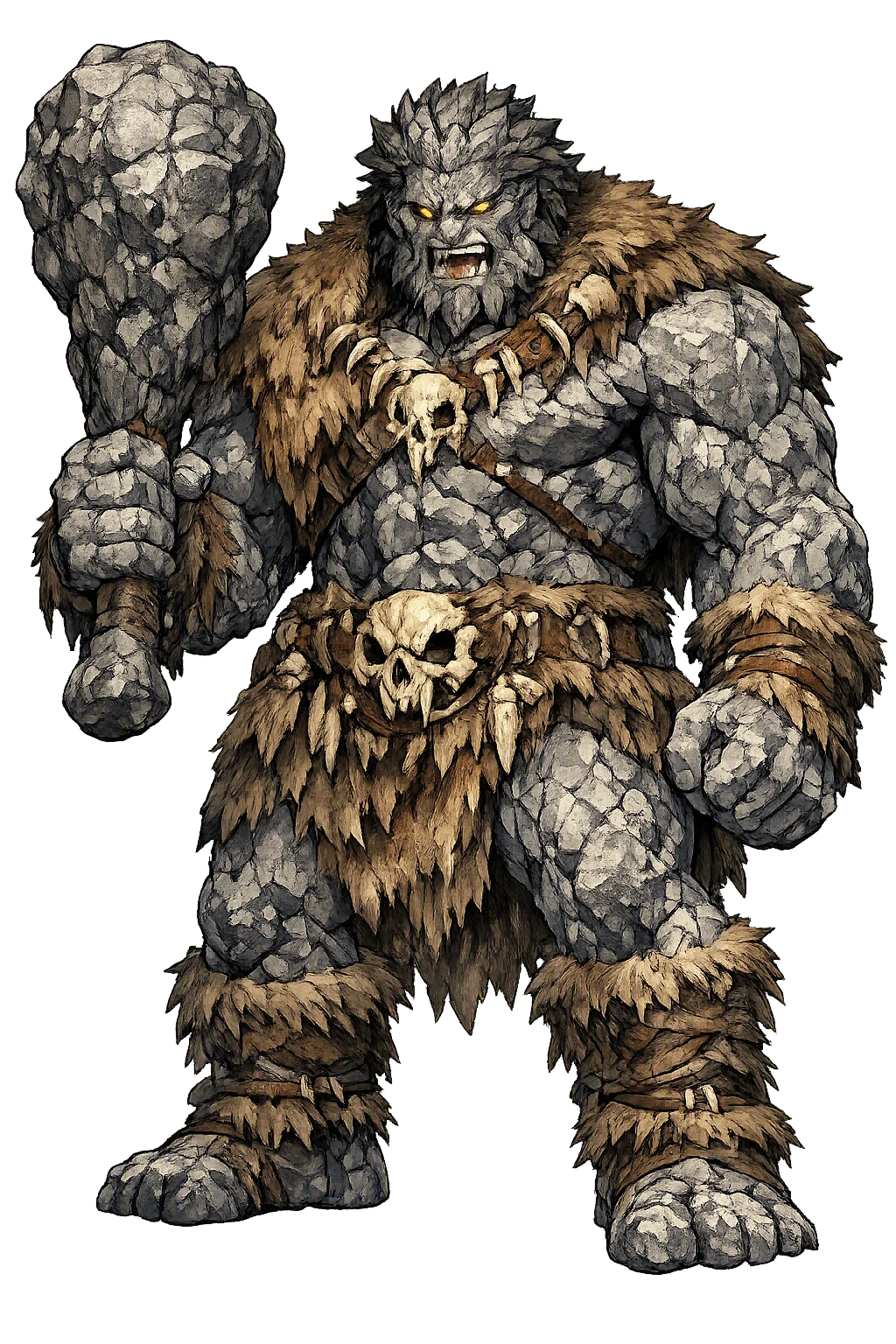
How Hrungnir was rebuilt, mark by mark
The workshop file for Hrungnir. Every rejected form is recorded here too — that is the point of keeping notes.
What We Found
The attestation runs through the tradition's own sources: ᚼᚱᚢᚾᚴᚾᛁᚱ. Meaning: "Brawler".
The figure behind the name: Hrungnir has essentially one story, and it is the greatest fight in the Edda: the wager, the drunken boasting in the hall of the gods, the appointed duel at Grjótúnagarðar, the shattered whetstone, and the fall that left even victorious Thor pinned beneath his enemy's leg.
What the Name Carried In
The Wager of Heads. It begins with a boast Óðinn could not keep to himself. Riding Sleipnir through Jötunheimr, he met the giant Hrungnir, who asked who this man was with the golden helmet, riding so well over sea and air, and praised the horse.
Drunk in the Hall of the Gods. The Æsir received him with the hospitality due an uninvited guest: they set before him the great horns Thor himself drank from, and Hrungnir emptied them one after another. Drunk, he let the boasts out — he would take Valhǫll up and carry it off to Jötunheimr, he would sink Ásgarðr, he would kill all the gods, save only Freyja and Sif, whom he would carry home; and the mead, he said, he would drink up all by himself.
A spelling that has to carry stories like these is not a label. It is equipment.
Where It Stood Before Us
Hrungnir is a textual figure: no runestone invokes him, no votive deposit names him, and no picture stone can be securely tied to the duel — though the tradition of carving mythic combat on picture and rune stones is exactly the world his skald belonged to. His material witness is instead a poem about an object: Þjóðólfr of Hvin's Haustlöng was composed for a painted shield, a Viking-Age prestige object bearing mythic scenes, and the verses Snorri quotes are our evidence that the Hrungnir combat belonged to that visual repertoire in the early tenth century. The myth's own materiality is geological: Snorri anchors the shattered whetstone in the landscape — the hone-rocks of the world are its debris — and the taboo against throwing whetstones across the floor entered Scandinavian folk custom as the myth's trace in daily practice. The literary witnesses hang by the usual threads: Skáldskaparmál in the Codex Regius of the Prose Edda and its sister manuscripts, and the Haustlöng stanzas preserved nowhere else but in Snorri's quotation. The bench inherits all of it — the web temple is the newest site, not the first.
What We Rejected
The plain ASCII hrungnir — admissible as a fallback, never as the primary. A wrong accent would have been worse: the rulebook is explicit that a misplaced mark is worse than none.
What We Set Down
Hrungnir — The restoration keeps one feature the ASCII form drops. One is enough to matter, and the label says so plainly: Tier-2.
For the voice: 'HRUNG-nir' — begin with a breathy h, roll the r straight into a short 'oo' as in 'put', sound both the ng and the g as in 'finger', and trill the final r.
The temple stands at /sites/hrungnir/ — the notes above are public in its Scholarly Edition, sources and all.
At a Glance
- Restored name: Hrungnir
- ASCII form: hrungnir
- Meaning: "Brawler"
- Domain of influence: Giant, Duel with Thor
- Pantheon: Norse
- Classification: Tier 2
- Original script: ᚼᚱᚢᚾᚴᚾᛁᚱ
- Series: The Restoration Files, No. 167 of 397
The File Continues
The temple's founding dispatch tells the name's story; its Resonance File reads the myths into the industries; the blog index holds the whole archive.
Continue the series — previous file: Ḥꜥpy (read it here) · next file: Huītzilōpōchtli (read it here).
The Restoration Files are written from the same canonical record as the temples themselves: the lexicon, the lore catalog, the pattern atlas, and the cited scholarly sources. If a file ever disagrees with its temple, the temple is right — tell us, and the file will be corrected.