
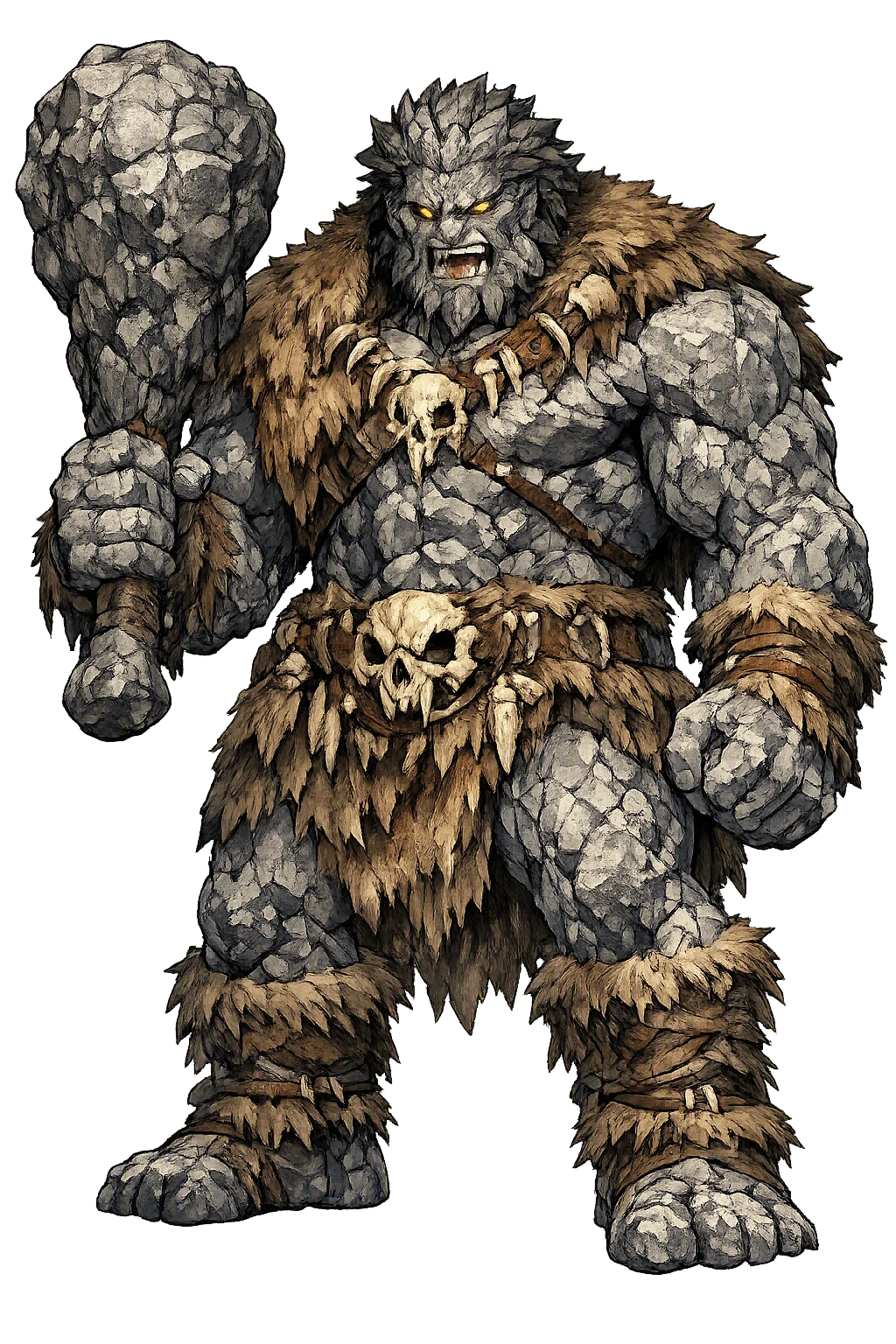
Pronouncing Hrungnir: a guide for the curious
Saying Hrungnir aloud is harder than reading it on a screen, and more rewarding. The restored spelling is a compressed pronunciation guide: every accent and macron is an instruction. This post unpacks those instructions — the reconstructed sound, the phoneme-by-phoneme record, the kindred forms in neighboring languages — and then zooms out to the full record around the name: its Younger Futhark writing, its mythology, its cult, and its modern life as a Unicode domain. Whether you arrive as a linguist, a reader of myth, or a domainer, you will leave able to say the name the way the evidence suggests it was said — and able to type it the way it was written.
At a Glance
- Restored name: Hrungnir
- ASCII form: hrungnir
- Meaning: "Brawler"
- Domain of influence: Giant, Duel with Thor
- Pantheon: Norse
- Classification: Tier 2
- Original script: ᚼᚱᚢᚾᚴᚾᛁᚱ (Younger Futhark)
Overview
Hrungnir (hrungnir) — Giant, Duel with Thor · Brawler — is the strongest of the jötnar and the loser of the most fully narrated single combat in Old Norse myth: the stone-hearted giant who wagered his head on his stallion Gullfaxi against Sleipnir, drank himself boastful in the hall of the gods, and fell to Mjǫllnir at Grjótúnagarðar with a whetstone in his hand.
His story survives in one sustained telling — Snorri's Skáldskaparmál — resting on a verse witness three centuries older: the shield-poem Haustlöng by Þjóðólfr of Hvin, composed in the early tenth century and quoted by Snorri as his authority. The myth's afterlife is written into the world it describes: the whetstone shattered against the hammer fathers every hone-rock on earth, one shard stays lodged in Thor's skull, and the taboo against throwing whetstones across the floor survived in Scandinavian folk custom as the story's trace in daily practice.
PuniCodex restores the name as Hrungnir — identical to the ASCII input, because normalized Old Norse writes no diacritic and no distinctive letter in this name; the mechanical rule therefore places it in Tier 2, a statement about orthography and never about the giant. No domain is claimed: the plain-ASCII hrungnir.com is registered to a third party outside the collection and is watched for release.
The Name
The name is attested in Old Norse as Hrungnir (nominative; genitive Hrungnis). Its etymology is one of the honest open questions of the corpus: de Vries registers it without a secure derivation, and the modern handbooks — Simek, Orchard — repeat the verdict that the name is unexplained. The PuniCodex lexicon's gloss, ‘Brawler’, is a project rendering of the figure's role, not a claimed etymology; the philological record offers nothing firmer. The final -r is the Old Norse masculine nominative ending, carried in the ASCII form itself.
Because normalized Old Norse writes the name in seven plain Latin letters, the Unicode restoration Hrungnir is identical to the ASCII input apart from the capital. There is no diacritic and no distinctive letter to recover, and the mechanical tier rule therefore classifies the name Tier 2: nothing distinctive is lost in transit. The classification is an orthographic report, not a judgment on the myth.
The letter-by-letter transformation runs:
- h → H — Same, capitalized
- r → r — Same
- u → u — Same
- n → n — Same
- g → g — Same
- n → n — Same
- i → i — Same
- r → r — Same
The project holds no domain for this name: hrungnir.com is held outside the collection and watched for release.
The Original Script
The name is preserved in medieval Icelandic manuscripts in the Latin alphabet as Hrungnir — Old Norse (North Germanic), attested 13th–14th c. CE in the Codex Regius of the Prose Edda and related codices, quoting verse composed in the early tenth century. No runic attestation survives, so the manuscript form is the primary witness; a younger-futhark rendering would run ᚼᚱᚢᚴᚾᛁᛦ (h-r-u-k-n-i-R).
The scholarly rendering proceeds step by step:
- The name is a single opaque element plus the masculine nominative ending -r; its etymology is unresolved in the standard handbooks.
- The initial cluster hr- and the medial -ng- are sounded in full: /ˈhruŋɡ.nir/, with the stop g pronounced after the velar nasal.
- Normalized Old Norse orthography writes no diacritic in this name; the Unicode restoration Hrungnir is therefore identical to the ASCII input apart from the capital, and the tier rule classifies it Tier 2 — an orthographic fact, not a judgment.
Pronunciation
The reconstructed pronunciation of the name is /ˈhruŋɡ.nir/ — Old Norse Reconstruction.
Phoneme by phoneme:
- Hru- — Aspirate [h] running straight into trilled [r], then short close back [u]; the initial hr- cluster is genuine Old Norse, preserved in words like hringr ‘ring’ where English later silenced the h
- -ng- — Velar nasal [ŋ] plus a fully sounded stop [g], as in English finger; Old Norse sounded both, never the bare nasal of singer
- -nir — Second [n], short [i], and the final nominative -r, lightly trilled
For the modern speaker, the closest approximation is: ‘HRUNG-nir’ — breathy h, a short ‘oo’ as in put, both the ng and the g sounded, and a trill at the end.
Kindred and historical forms of the name:
- Old Norse — Hrungnir, strongest of the jötnar; no agreed etymology
- Younger Futhark — ᚼᚱᚢᚴᚾᛁᛦ, the Viking-Age runic rendering (h-r-u-k-n-i-R); ᚴ writes both k and g, and ᛦ carries the final nominative -r
- Skaldic attestation — Hrungnir, named in Þjóðólfr of Hvin's Haustlöng (early 10th c.), the name's oldest sustained witness
The stress falls on the first syllable, as in every Old Norse word. Hrungnir is Tier 2 because the restoration preserves nothing the ASCII alphabet loses: the name was plain ASCII all along, in the manuscripts as on the keyboard.
Mythology
Hrungnir's mythology is a single arc — wager, boast, duel, aftermath — told once at length in Skáldskaparmál and vouched for by the oldest mythological praise-poem we have.
The Wager of Heads (Skáldskaparmál 17)
Riding Sleipnir through Jötunheimr, Óðinn meets Hrungnir, who asks who the gold-helmed rider is and praises the horse. Óðinn wagers his head that no horse in Jötunheimr is Sleipnir's equal; Hrungnir springs to Gullfaxi and gives chase in a fury — and, carried past his own turning, gallops through the gates of Ásgarðr itself.
Drunk in the Hall of the Gods (Skáldskaparmál 17)
The Æsir set before him the horns Thor drank from, and Hrungnir empties them all. Drunk, he lets the boasts out: he will carry Valhǫll off to Jötunheimr, sink Ásgarðr, kill every god save Freyja and Sif, whom he will carry home — and drink all the mead himself. The Æsir name Thor; Thor comes in swinging his hammer and demands who gave jötnar leave to drink in Valhǫll. Hrungnir, under Óðinn's safe-conduct, claims the rights of an unarmed man: Thor will win little honour killing him as he is. Let him dare single combat instead, at the frontier, at Grjótúnagarðar. Thor, Snorri says, would by no means refuse.
The Whetstone and the Hammer (Skáldskaparmál 17–19)
The giants make much of the appointment — Hrungnir is their strongest, and they expect the outcome to decide everything — and they build him a second of clay: Mǫkkurkálfi, nine leagues tall, with a mare's heart quaking inside. Hrungnir stands with his stone heart, stone head, and stone shield, holding his hone. Þjálfi runs ahead and calls that Thor is coming from below; Hrungnir sets the shield beneath his feet and stands on it. Thor comes in lightning and hurls Mjǫllnir from afar; Hrungnir throws the hone with both hands, and the weapons meet in the air. The hone bursts: one half falls to earth — from it come all the whetstone rocks — and one half drives into Thor's head. But the hammer does not stop: it crushes Hrungnir's skull, and the giant falls forward across Thor, his foot on the god's neck. Þjálfi goes at Mǫkkurkálfi, and the clay giant falls with little glory.
The Foot and the Forgotten Spell (Skáldskaparmál 19)
Neither Thor nor Þjálfi can shift the foot; all the Æsir come and cannot lift it. At last comes Magni, Thor's son by Járnsaxa, three nights old, and throws it off, saying he thinks he would have struck the giant dead with his fist; Thor gives him Gullfaxi, and Óðinn objects that the fine horse has gone to a giantess's son rather than his own father. The hone stays in Thor's head. The völva Gróa, wife of Aurvandill the Bold, comes to sing it loose, and the stone is already working free — until Thor, to please her, tells how he carried Aurvandill out of Jötunheimr in a basket and set his frozen toe in the sky as a star. Gróa rejoices so greatly that she forgets her spells, and the hone stirs in Thor's head to this day; therefore, Snorri warns, whetstones must never be thrown across the floor.
The Skaldic Witness (Haustlöng)
Snorri's authority is Þjóðólfr of Hvin's Haustlöng, a shield-poem of the early tenth century: the combat, the shaking earth, the whetstone, and the fall are all there in dense dróttkvætt, proving the story was already old and fixed three centuries before Snorri wrote it down. Within the corpus, Hrungnir's duel stands between Thor's other named giant-fights — Geirröðr, killed by a thrown glowing iron, and the fishing for the World Serpent — as the hardest fight the thunderer ever won.
Symbols & Iconography
The iconography of Hrungnir is the iconography of stone: the corpus dresses him in his own geology.
- The whetstone — his hone, hurled with both hands against Mjǫllnir: the stone whose purpose is sharpening other things, shattered on the first iron it met; its fallen half fathers every hone-rock in the world, its flying half still sits in Thor's head
- Gullfaxi — ‘golden mane’, the stallion whose speed was worth a giant's head in Óðinn's wager, and which ends the story in the hands of a three-night-old god
- The three-cornered stone heart — courage of the wrong material: hard, sharp-edged, and entirely without flexibility
- Mǫkkurkálfi — ‘mist-calf’, the giants' clay champion, nine leagues tall and three across the chest, given a mare's heart for want of a bigger one: the archetype of size without courage
- The fallen foot — the leg across Thor's neck that all the Æsir together could not shift: the weight of the foe after the foe is dead
Archaeology & Evidence
No cult site, votive deposit, runestone, or securely identified image of Hrungnir is known; his attestation is literary. The material witness is instead a poem about an object: Haustlöng was composed for a painted shield — a Viking-Age prestige object bearing mythic scenes — and the stanzas Snorri preserves are our evidence that the Hrungnir combat belonged to that visual repertoire in the early tenth century, within the lifetime of the pagan courts.
The myth's own materiality is geological: Snorri anchors the shattered whetstone in the landscape itself, deriving every hone-rock from its fallen half, and the household taboo on thrown whetstones carried the story into daily practice. The literary witnesses hang by the usual threads: Skáldskaparmál in the Codex Regius of the Prose Edda and its sister manuscripts, and the Haustlöng stanzas surviving nowhere but in Snorri's quotation — a giant preserved twice over, in prose and in the verse the prose was written to explain.
Realm & Domain
Hrungnir is catalogued under the domain ‘Giant, Duel with Thor’ — and the sources earn both halves of it.
The Giant
Snorri's formula is that Hrungnir was the strongest of all the jötnar, with a heart of stone — three-cornered and sharp-edged — a head of stone, and a broad shield of stone: a giant made of his own weapon's material, the mountainside given intent.
The Duel
The challenge at Grjótúnagarðar is the corpus's most complete single combat: appointed ground, seconds, terms, and a throw-for-throw exchange of missiles — the whetstone against the hammer — narrated like a formal hólmganga between worlds.
The Wager
Before the duel comes the race: Óðinn wagers his head that no horse in Jötunheimr matches Sleipnir, and Hrungnir's fury at the boast carries him past his own frontier and into the hall of the gods.
The Aftermath
The myth keeps its strangest weight for after the killing: Hrungnir falls forward across Þórr, his foot on the god's neck, and all the Æsir together cannot lift it — until three-night-old Magni throws it off and earns Gullfaxi for the deed.
Across Cultures
Hrungnir resists the usual syncretic moves. The temptation to read him as a reflex of the Indo-European chaos-combat — a stone-bodied being struck down by the thunderer's missile, on the pattern of Vedic Vṛtra — has been tried, but the fit is partial: Hrungnir steals nothing, hoards nothing, and holds back no waters. The handbooks treat the duel as a native Norse contest-epic rather than an inherited dragon-slaying.
His truer company is within the corpus itself. He is one of the named great fights of Þórr, standing beside Geirröðr — killed by a glowing iron thrown back at its sender — and the near-fatal fishing expedition against the Miðgarðsormr; each fight tests the same question with a different weapon. The shard lodged in Thor's skull has been compared with the embedded, unremovable weapons of other traditions, but no source demonstrates a borrowing, and scholarship registers Hrungnir as a distinctively northern invention: a giant built of the very landscape the North knew — stone, clay, and weather.
Cultural Legacy
Hrungnir's afterlife runs through the skalds before it runs through anyone else. Haustlöng made his fall one of the foundation-texts of Old Norse poetics — Snorri quotes it as the authority for the myth — so every student of skaldic verse meets the stone-hearted giant early, embedded in the densest metre the tradition produced.
The myth's debris entered folklore. The aetiology of the hone-rocks and the taboo against throwing whetstones across the floor — lest the shard stir in Thor's head — survived in Scandinavian folk collections as a curiosity of thunder-lore long after the god had faded. In modern reception, Hrungnir is the template for every stone-hearted colossus the fantasy genre has built since: games and novels reach for his duel whenever a hero must fight a mountain that can throw back. His name never entered living use the way Baldr's or Thor's did; it remains exactly what the Edda made it — the name of the strongest thing the hammer ever had to kill.
The Scholarly Record
The account of Hrungnir given in this edition rests on the witnesses and reference works listed below. Skáldskaparmál supplies the narrative; Haustlöng vouches for its age; the lexica and handbooks register the name's unresolved etymology.
- Snorri Sturluson, Edda, Skáldskaparmál 17–19 (the wager, the boasting, the duel at Grjótúnagarðar, Magni and Gróa), ed. and trans. Anthony Faulkes (London: Everyman, 1987).
- Þjóðólfr ór Hvini, Haustlöng, stanzas quoted in Skáldskaparmál 17–19, trans. Faulkes (1987).
- Cleasby, Richard, and Guðbrandur Vigfússon, An Icelandic-English Dictionary, 2nd ed. (Oxford: Clarendon Press, 1957), s.v. Hrungnir, Gullfaxi, Grjótúnagarðar, hein.
- Zoëga, Geir T., A Concise Dictionary of Old Icelandic (Oxford: Clarendon Press, 1910), s.v. Hrungnir.
- de Vries, Jan, Altnordisches etymologisches Wörterbuch, 2nd ed. (Leiden: Brill, 1962), s.v. Hrungnir.
- Simek, Rudolf, Dictionary of Northern Mythology, trans. Angela Hall (Cambridge: D. S. Brewer, 1993), s.v. Hrungnir, Mǫkkurkálfi.
- Orchard, Andy, Dictionary of Norse Myth and Legend (London: Cassell, 1997), s.v. Hrungnir.
- Lindow, John, Norse Mythology: A Guide to the Gods, Heroes, Rituals, and Beliefs (Oxford: Oxford University Press, 2001), s.v. Hrungnir, Haustlöng, Thor.
- Gordon, E. V., An Introduction to Old Norse, 2nd ed. rev. A. R. Taylor (Oxford: Clarendon Press, 1957).
- Barnes, Michael P., Runes: A Handbook (Woodbridge: Boydell Press, 2012).
A Meditation
Hrungnir is the Edda's essay on confidence without flexibility. Every part of him is the hardest available material — heart of stone, head of stone, shield of stone — and the myth's arithmetic is that hardness is not the same as strength. The whetstone is the perfect weapon for him: a stone whose entire purpose is to sharpen other things, hurled once and shattered on the first iron it meets.
Against him the story sets two counter-images. Mǫkkurkálfi, the engineered champion — nine leagues of clay around a mare's heart — is the warning about size without courage. And Magni, three nights old, lifting what all the Æsir together could not, is the warning about measuring strength by age, rank, or expectation. Hrungnir wagered his head on a horse race and lost it in a duel; the strongest thing in the room is a wager too, and someone always holds the hammer.
The Unicode Restoration
Hrungnir is classified as Tier 2: the restoration needs no distinctive letters or diacritics its ASCII form would lose. The ASCII fallback hrungnir still resolves everywhere, but it is the restored form that carries the name's full information. That is the whole thesis of this temple: the marks are the message.
Why This Restoration Matters
Pronunciation turns out to be the heart of the matter. The marks in Hrungnir are instructions for the voice, and a web that strips them is a web that mispronounces the past at scale. The restoration hands the instructions back: say it as the evidence suggests, type it as the tradition wrote it, and let the punycode machinery do the quiet translation in between. That is all the PuniCodex project asks of the infrastructure — and everything it asks of you, the reader, is to use the whole name.
Explore Further
This post is one doorway into the temple. The home page carries the full character breakdown and the ambient canvas; the lore page tells the myths in long form; the Scholarly Edition preserves the sources, pronunciation data, and revision history; and the patron wall supports the restoration directly. For the wider map, browse the Lexicon, explore the Pantheon, or return to the PuniCodex blog.
Related Names
Sources
The full scholarly apparatus — every citation, revision, and review — lives in the Scholarly Edition. Key references for this post:
- Snorri Sturluson, Edda, Skáldskaparmál 17–19 (the wager, the boasting in Valhǫll, the duel at Grjótúnagarðar, Magni and Gróa), ed. and trans. Anthony Faulkes (London: Everyman, 1987).
- Þjóðólfr ór Hvini, Haustlöng, stanzas quoted in Skáldskaparmál 17–19, trans. Faulkes (1987).
- Cleasby, Richard, and Guðbrandur Vigfússon, An Icelandic-English Dictionary, 2nd ed. (Oxford: Clarendon Press, 1957), s.v. Hrungnir, Gullfaxi, Grjótúnagarðar.
- de Vries, Jan, Altnordisches etymologisches Wörterbuch, 2nd ed. (Leiden: Brill, 1962), s.v. Hrungnir; Simek, Rudolf, Dictionary of Northern Mythology, trans. Angela Hall (Cambridge: D. S. Brewer, 1993), s.v. Hrungnir.
- Lexicon authorities for this entry: Cleasby-Vigfusson, Zoëga.