
The Ḥꜥpy file: from hp to the temple it became
Every name in this series was once flattened to fit a keyboard. Ḥꜥpy is what the evidence put back.
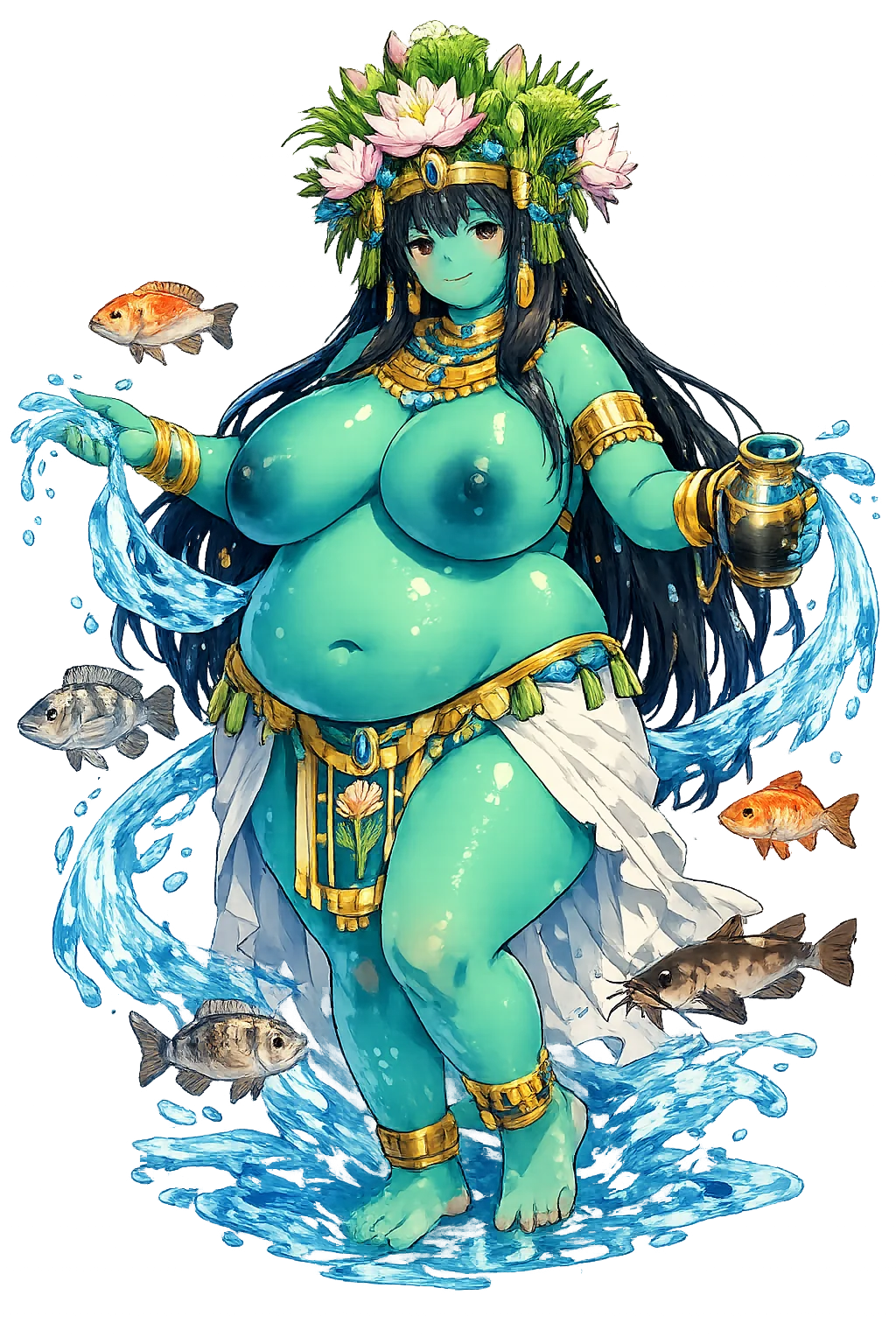
ḥp has no adventures because he is not a character but an event: the flood. His mythology is hydrology made sacred — the river's rhythm given a face, a hymn, and a table of offerings. The great Hymn to Hapi — a school text for a millennium, surviving in New Kingdom copies — calls him "lord of fish and fowl, maker of barley, creator of wheat," and says what every Egyptian knew: when he is high, the land rejoices; when he fails, "the whole land is in panic. " No god in the hymn's Egypt is more feared for absence or praised for arrival.
That is the figure this file is about — and the temple now standing at its restored name.
At a Glance
- Restored name: Ḥꜥpy
- ASCII form: hp
- Meaning: "The Nile flood god Hapi; from ḥꜥpj"
- Domain of influence: Nile, Inundation, Abundance
- Pantheon: Egyptian
- Classification: Tier 1
- Original script: 𓎛𓂝𓊪𓏭𓈘
- Series: The Restoration Files, No. 110 of 271
The Name Before the Marks
Ḥꜥpy preserves its form without added diacritics: the restoration here is the exactness of the spelling itself, the form the tradition's own sources record. hp and Ḥꜥpy may look interchangeable to a search box; they are not interchangeable to a philologist.
The Temple That Stands Now
The restored name is not a plaque; it is an address. The temple of Ḥꜥpy lives at /sites/hp/, with its mythology in the lore halls, its peer-reviewed record in the Scholarly Edition, and its place in the pattern atlas on the patterns floor.
The restoration preserves more than the ASCII form can say — stress, length, or a letter the Latin keyboard lost — which places it in Tier-1: mechanically verifiable, information-rich.
Every flagship temple is hand-built to the same standard: the original script displayed with its provenance, the pronunciation reconstructed phoneme by phoneme, the sources named — because a restoration you cannot audit is just a spelling with confidence.
The Archetype at Work
A temple is also a reading of what this figure means — and meanings have addresses in the modern world. The pattern atlas maps Ḥꜥpy to the industries its archetype genuinely resonates with, each match argued, weighted, and open to challenge:
- Agriculture, Food & Harvest — The flood that feeds; silt, season, and harvest as one god.
- Freshwater & Hydrology — The flood itself, metered by nilometers for three thousand years.
- Disaster Resilience & Recovery — Flood as the thing to measure and survive, not merely praise.
If a match here reads wrong, the atlas says how to challenge it. The patterns are falsifiable — that is what makes them worth publishing.
In the Sacred Texts
The Egyptian tradition is not a vibe; it is a library. The Sacred Texts collection holds The Book of the Dead — the primary sources the temple's scholarship is built on, free to read, cross-linked back to the names they mention. The temple is the argument; the texts are the evidence.
The File Continues
This is one of 271 Restoration Files — a second dispatch from every flagship temple in the fleet. The temple's first dispatch tells the founding story of the name; the blog index holds the whole archive.
Continue the series — previous file: Ḥr (read it here) · next file: Huītzilōpōchtli (read it here).
The Restoration Files are written from the same canonical record as the temples themselves: the lexicon, the lore catalog, the pattern atlas, and the cited scholarly sources. If a file ever disagrees with its temple, the temple is right — tell us, and the file will be corrected.