
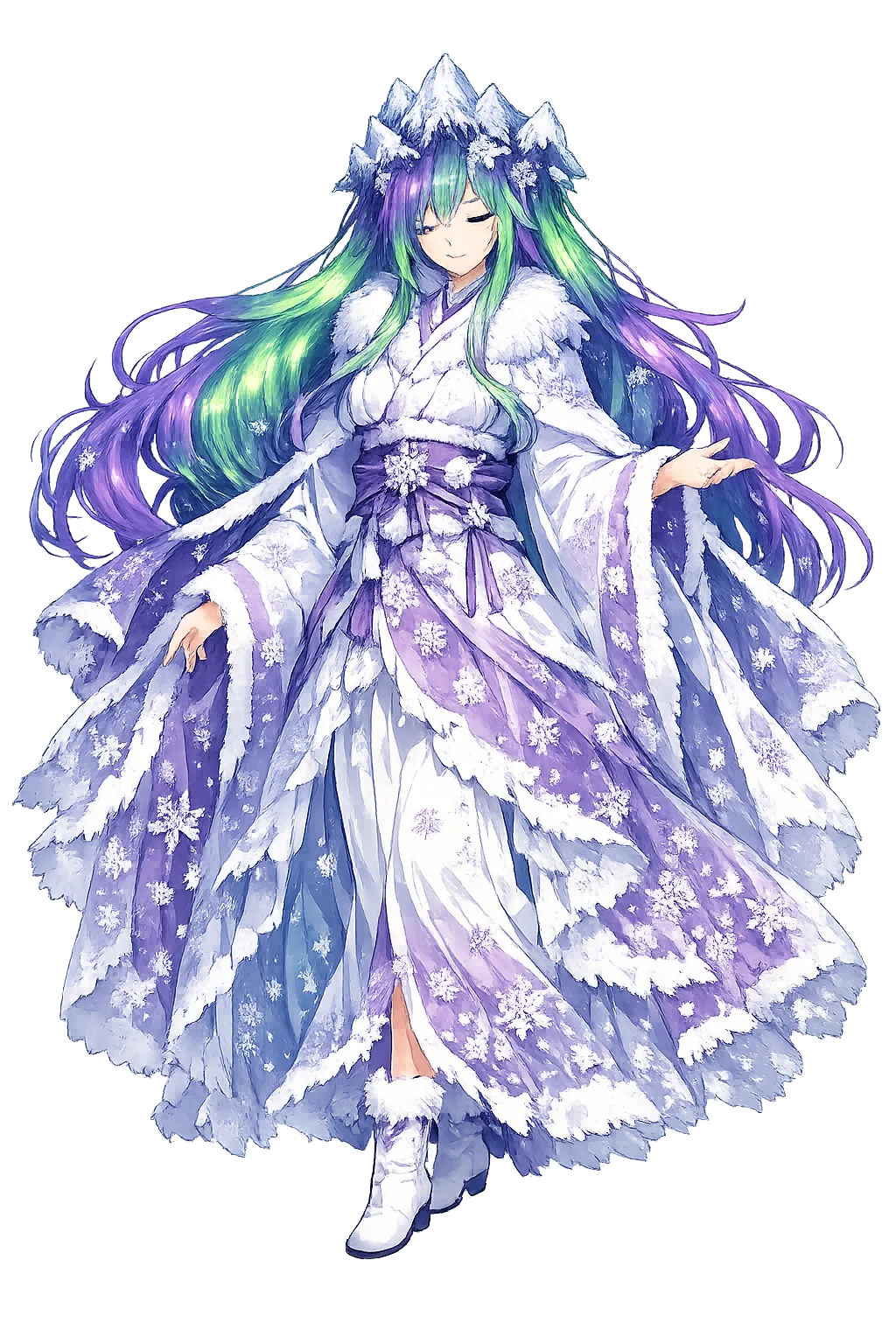
The name Hokkaidō and the world it opens
A name is a door. Hokkaidō opens onto an entire world: the domain of northern island, a Japanese tradition, and centuries of storytelling, worship, and scholarship. This post walks through that world room by room — the name and its roots, the original script, the sound of it, the myths, the symbols, the sites, the afterlife across cultures — and ends at the newest room of all: a Unicode domain that makes the whole structure addressable. hokkaido gets you to the same building, but only the restored form tells you why it was built.
At a Glance
- Restored name: Hokkaidō
- ASCII form: hokkaido
- Meaning: "Northern sea circuit"
- Domain of influence: Northern Island
- Pantheon: Japanese
- Classification: Tier 1
- Original script: 北海道 (Japanese characters)
- Live domain: hokkaidō.com
Overview
Hokkaidō (hokkaido) — The Northern Road — belongs to the Japanese tradition, where it is catalogued under the domain "Northern Island". The name means "Northern sea circuit".
Hokkaidō is Japan's youngest name on its oldest ground: an island inhabited for twenty thousand years, homeland of the Ainu, mapped into the Japanese state only in 1869 — a frontier whose ancient name, Ainu Mosir, still names the deeper country beneath the modern one.
PuniCodex restores the name as Hokkaidō and serves its temple at hokkaidō.com. The original preserves one prosodic feature — stress or vowel length — rather than both, which places the name in Tier 2. The plain ASCII form hokkaido survives as a modern convenience imposed by the early domain-name system; the restoration, not the fallback, is the form the project defends as philologically complete.
The Name
The name is attested in Japanese characters as 北海道. Etymologically it means "Northern sea circuit".
The ASCII form hokkaido survives only because the early domain-name system could not carry diacritics; it is a technological compromise, not an ancient spelling. The Unicode restoration Hokkaidō recovers the vowel length of the original directly in the address bar. The original preserves one prosodic feature — stress or vowel length — rather than both, which places the name in Tier 2.
The letter-by-letter transformation runs:
- h → H — Same
- o → o — Short vowel
- k → k — Same
- k → k — Same
- a → a — Same
- i → i — Same
- d → d — Same
- o → ō — Macron: long vowel
The project holds the domain hokkaidō.com (xn--hokkaid-cmb.com) as the canonical home of this name.
The Original Script
The name is written in Japanese characters as 北海道. This original script is the form against which the ASCII fallback hokkaido and the PuniCodex restoration Hokkaidō are measured: the restoration preserves its vowel quantity of the written form, so that a reader typing the modern address still speaks the ancient name.
Written 北海道: north, sea, road — the three kanji of the Meiji-era name. The older indigenous toponymy is Ainu: Ainu Mosir ("land of the humans"), and the island's pre-modern Japanese name Ezochi ("land of the Ezo") survives in the history books the new name replaced.
Pronunciation
The reconstructed pronunciation of the name is /hok.kai.doː/ — Japanese (Hepburn).
For the modern speaker, the closest approximation is: hok-KAI-doh, with the long final ō.
Kindred and historical forms of the name:
- Japanese — 北海道
- Ainu — Ainu Mosir
- Older name — Ezochi
- Owned form — Hokkaidō
Hokkaidō 北海道 — "North Sea Road" — carries a long final ō, the doubled vowel the macron preserves. The name dates only from 1869, when the explorer Matsuura Takeshirō proposed it for the island the Ainu long called Ainu Mosir, "the quiet land of humans." The long ō of dō is a doubled vowel in kana (どう); the macron is the romanization of that extra beat.
Mythology
Hokkaidō's mythology is Ainu: a kamuy-cosmos where every animal, fire, and tool has a spirit-owner, and where the human world is maintained by right exchange with the unseen.
Ainu Mosir and Kamuy Mosir (The Land)
Ainu oral tradition divides existence between Ainu Mosir, the land of humans, and Kamuy Mosir, the land of the spirits — and teaches that kamuy visit the human world wearing animal bodies as gifts. The bear is the mountain god's greatest visitation; the fire goddess, Ape-huci-kamuy, keeps every hearth and carries every prayer to the spirit world. The island itself is a borderland between the two realms.
Iomante (The Ceremony)
The iomante — "sending off" — returns the visiting bear-spirit to Kamuy Mosir with songs, prayers, and gifts, so that the god will tell the other kamuy of human courtesy and come again in generous flesh. Long misread by outsiders as cruelty, it is among the most studied hunting ceremonies on earth: a theology of gratitude in which killing and honouring are the same act.
From Ezochi to Hokkaidō (The Frontier)
The island's modern foundation-myth is documentary: in 1869 the new Meiji state renamed Ezochi, established the Kaitakushi (Colonization Commission), and invited American advisers — Capron, Clark ("Boys, be ambitious!") — to lay out farms, ports, and Sapporo itself on the American grid. A century of settlement followed; the Ainu were legally recognized as indigenous only in 2008, and the Ainu Promotion Act of 2019 opened a new chapter at last.
Symbols & Iconography
The iconography associated with Hokkaidō concentrates in a small set of recurring attributes, each a compressed statement about the name:
- The bear — Kim-un-kamuy, the mountain god of the Ainu — honoured in the iomante ceremony
- The drift ice — The winter sea that feeds the whole food chain of the north
- The lavender field — Furano's summer signature — the cultivated frontier in bloom
Archaeology & Evidence
Hokkaidō holds some of the world's oldest pottery: Jōmon-period cord-marked vessels from sites like Taishō date beyond 14,000 years, among the earliest ceramic traditions on earth. The Shiretoko peninsula is a UNESCO World Heritage site for its marine-terrestrial food web; the Oshoro stone circles and the Ofuna shell middens mark the island's deep ritual past. Hakodate's Goryōkaku — the star fort of the last Tokugawa loyalists (1869) — is where the old Japan made its final stand on the new island.
Realm & Domain
Hokkaidō is Japan's youngest name on its oldest ground: an island inhabited for twenty thousand years, homeland of the Ainu, mapped into the Japanese state only in 1869 — a frontier whose ancient name, Ainu Mosir, still names the deeper country beneath the modern one.
The Snow Country
Drift ice, powder snow, and the Sapporo Snow Festival — the island's signature climate.
Ainu Mosir
"The quiet land of humans" — the Ainu name for the island, older than any map of Japan.
The Kaitakushi
The Colonization Commission of 1869: the frontier office that made Ezochi into Hokkaidō.
Shiretoko
The peninsula UNESCO calls one of the world's richest temperate ecosystems — Ainu for "the end of the land."
Across Cultures
Ainu religion absorbed and resisted Japanese and Russian pressure in equal measure: Orthodox missions among the Kuril Ainu, Buddhist temples on the coasts, and the yukar epics — sung in an isolate language with no close relatives — keeping the older world intact in verse. The twentieth century added a third strand: the Ainu cultural revival, led by figures like the poet and legislator Kayano Shigeru, made the island's first culture a national conversation.
Within the Japanese tradition, closely related names in the corpus include [[fujin|Fūjin]], [[honshu|Honshū]], [[jizo|Jizō]], [[kobe|Kōbe]], [[kyoto|Kyōto]], and [[kyushu|Kyūshū]].
Cultural Legacy
Hokkaidō supplies a third of Japan's food from a tenth of its land; Sapporo beer, the Snow Festival's ice palaces, and the lavender of Furano are national brands. The 2020 opening of Upopoy, the National Ainu Museum and Park at Shiraoi, gave the island's first people their first national institution. In the history of colonialism, the Kaitakushi is studied worldwide as Japan's own frontier — the laboratory where it practiced the modernization it later exported.
The Scholarly Record
The account of Hokkaidō given in this edition rests on the witnesses and reference works listed below. Lexica and etymological dictionaries secure the form and meaning of the name; the literary and religious texts supply the narrative evidence.
- Kojiki (Records of Ancient Matters), Translated by Basil Hall Chamberlain, 712. Full text
- Nihon Shoki (Chronicles of Japan), Translated by W. G. Aston (excerpts), 720. Full text
- Japanese folklore, Kojiki, Nihon Shoki, and folk tale collections, various.
- Kokugo dictionaries (Nihon Kokugo Daijiten / Kōjien / Daijisen), Shōgakukan / Sanseidō, various.
- Shinto, Kojiki, Nihon Shoki, shrine rituals, and folk practice, various.
- Cambridge Ancient History, Multiple volumes, 1970. Full text
A Meditation
Hokkaidō is the island of two names — the one it was given and the one it had. It asks the frontier's hardest question, the one every settled map must answer: whose land was this before it was yours — and can the new name learn to carry the old one's meaning?
The island's two names have begun, at last, to speak to each other: the Ainu language taught in Upopoy's halls, the iomante explained rather than exoticized, the snow country marketed by its indigenous name's dignity. Frontiers are usually where names die; Hokkaidō is attempting the rarer thing — a map where the new name carries the old one's meaning. It is the experiment every settler society eventually must run, and the north island is running it in public.
And the snow keeps its own counsel over both names. Drift ice feeds the sea, the sea feeds the town, and the bear sleeps through the argument of maps — the kamuy-cosmos and the prefecture sharing one winter. The island's patience is its answer: the land outlasts every name it is given, and quietly teaches each new name what it means.
The drift ice still arrives each winter on schedule older than any name, feeding the bloom that feeds the sea — the island's oldest economy, unbranded. The Ainu ceremony sent the bear-spirit home with gifts so it would return; the modern island sends its food south with the same hope. Frontier or homeland, the north keeps its own account: what the land gives, the land can stop giving — and every name we call it is a promise to keep listening.
The Unicode Restoration
Hokkaidō is classified as Tier 1: the original carries both stress and length, and only one valid Unicode restoration exists. The ASCII fallback hokkaido still resolves everywhere, but it is the restored form that carries the name's full information. Across the 8 characters of the name, the restoration adjusts 1: 1 mark of length (ō). That is the whole thesis of this temple: the marks are the message.
Character by Character
The journey from hokkaido to Hokkaidō, one character at a time:
- h → H — Same
- o → o — Short vowel
- k → k — Same
- k → k — Same
- a → a — Same
- i → i — Same
- d → d — Same
- o → ō — Macron: long vowel
The Domain Name
The restored name is live as a working domain: hokkaidō.com, which the DNS carries in punycode form as xn--hokkaid-cmb.com — an ASCII-compatible encoding that lets a non-ASCII name travel the global network without breaking older infrastructure. The visitor sees Hokkaidō; the machines see the encoding. That duality is the engineering compromise on which the entire restoration rests, and it is why a name written the way its own tradition wrote it in Japanese characters can now be typed into any browser on earth.
The Japanese Pantheon
Hokkaidō is one of 45 entries the PuniCodex lexicon catalogues under the Japanese pantheon. The Pantheon page gathers the tradition's major figures in one place, and the Lexicon lets you filter all 915 restorations by tradition, tier, or script — the fastest way to see where this name sits among its kin.
Frequently Asked Questions
What does Hokkaidō mean? The traditional gloss is "Northern sea circuit."
Which tradition does Hokkaidō belong to? Hokkaidō is catalogued in the Japanese pantheon of the PuniCodex lexicon.
Why is Hokkaidō classified as Tier 1? Because the original carries both stress and length, and only one valid Unicode restoration exists — and the marks in the restored spelling preserve exactly that evidence.
Is Hokkaidō a working domain? Yes — hokkaidō.com resolves today and routes to this temple.
What is the punycode for hokkaidō.com? The DNS encoding is xn--hokkaid-cmb.com; browsers perform the translation automatically, so visitors only ever see the restored name.
Typing Hokkaidō
You do not need a special keyboard to use this restoration. The PuniCodex Type Tool converts the ASCII form hokkaido into Hokkaidō as you type, and the browser extension offers the same conversion inside any text field. Copy the restored form, paste it into the address bar, and the DNS does the rest.
Sister Temples
Other temples in the Japanese pantheon include Tajikarao, Ugayafukiaezu, and Ebisu — each with its own restoration story, its own scholarly record, and its own place in the lexicon.
Why This Restoration Matters
A door only matters if people walk through it. hokkaidō.com is open, and everything behind it — the myths, the scholarship, the canvas, the patrons — hangs on the restored spelling. The PuniCodex project bets that the web will make room for names as they were actually written, and Hokkaidō is one of its standing proofs. Visit, share, cite, type it yourself: each use is a small rehearsal for a web where no name has to hide its marks to be found.
Explore Further
This post is one doorway into the temple. The home page carries the full character breakdown and the ambient canvas; the lore page tells the myths in long form; the Scholarly Edition preserves the sources, pronunciation data, and revision history; and the patron wall supports the restoration directly. For the wider map, browse the Lexicon, explore the Pantheon, or return to the PuniCodex blog.
Related Names
Sources
The full scholarly apparatus — every citation, revision, and review — lives in the Scholarly Edition. Key references for this post:
- Nihon Shoki (Chronicles of Japan), Translated by W. G. Aston (excerpts), 720.
- Kojiki (Records of Ancient Matters), Translated by Basil Hall Chamberlain, 712.
- Cambridge Ancient History, Multiple volumes, 1970.
- Kokugo dictionaries (Nihon Kokugo Daijiten / Kōjien / Daijisen), Shōgakukan / Sanseidō, various.
- Japanese folklore, Kojiki, Nihon Shoki, and folk tale collections, various.
- Shinto, Kojiki, Nihon Shoki, shrine rituals, and folk practice, various.
- The Ainu toponymic studies (Kayano Shigeru); Hokkaido prefectural records.
- Lexicon authorities for this entry: Hepburn, Kojiki.