
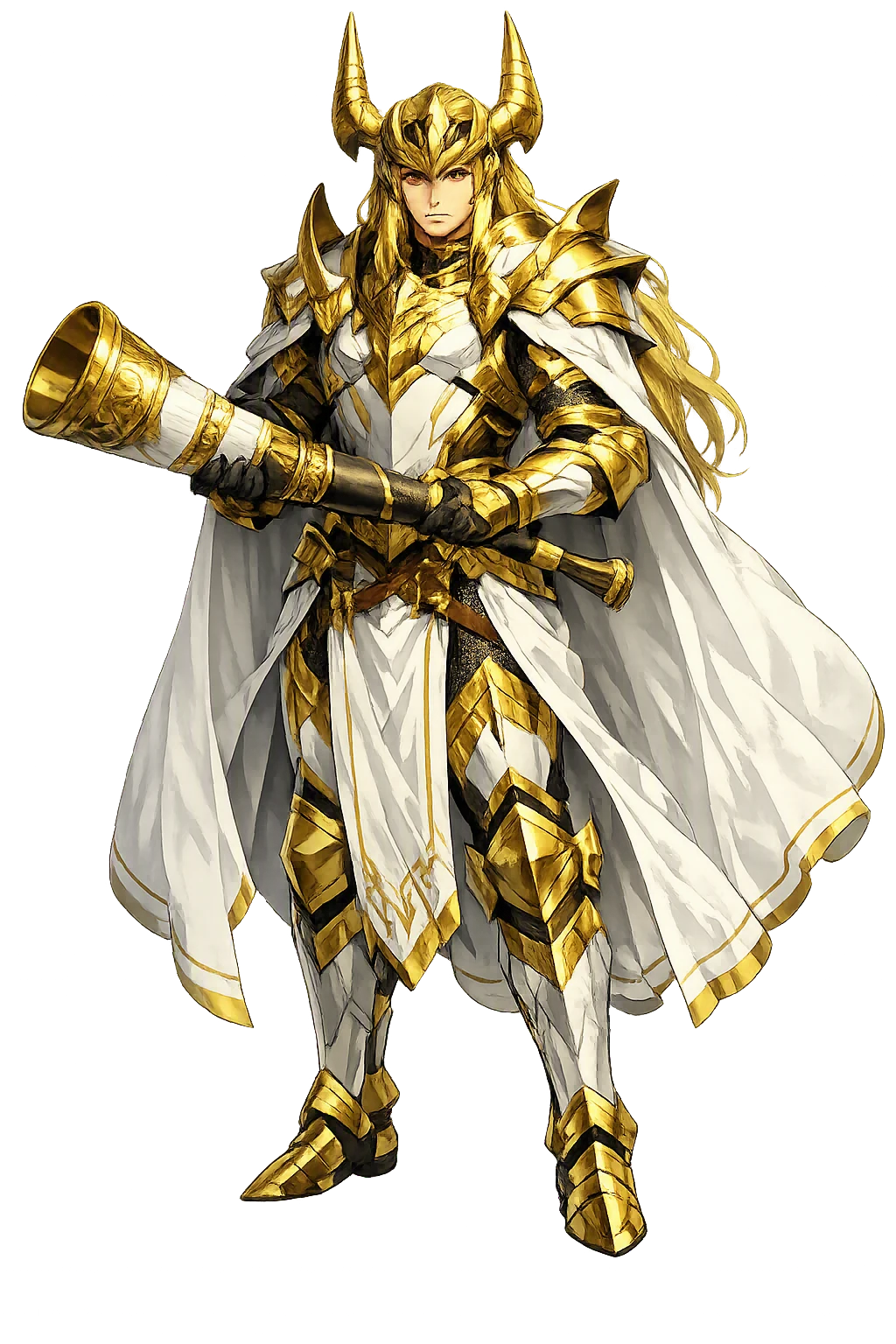
The provenance file on Heimdallr
Catalogue entry — Heimdallr. Every claim below carries its chain of custody.
Provenance
1. The attestation. ᚼᛁᛘᛏᛅᛚᛚᚱ, from the tradition's own record. On record: Poetic Edda: Völuspá 1 and 27 (the sons of Heimdallr; the hearing hidden under the tree) and 46 (the horn at Ragnarǫk); Grímnismál 13 (Himinbjǫrg); Þrymskviða 15 (the whitest of the Æsir, who knows the future like the Vanir); Lokasenna 48 (Loki's taunt to the sleepless watchman); Rígsþula (Rígr and the three classes); Hyndluljóðr 35–38 (the nine mothers), Snorri Sturluson, Prose Edda: Gylfaginning 15 (the Gjallarhorn hidden in Mímir's well), 27 (the fullest portrait: the white god, Hallinskiði, Gullintanni, Gulltoppr, the senses, the horn), 49 (Gulltoppr at Baldr's funeral), 51 (Ragnarǫk: the blast and the last fight with Loki); Skáldskaparmál (Húsdrápa on the seal-fight at Singasteinn; the kennings 'Heimdallr's sword' for head and 'Heimdallr's head' for sword), Úlfr Uggason, Húsdrápa (c. 983), preserved in Skáldskaparmál — the oldest attestation of the feud with Loki, Cleasby–Vigfusson, An Icelandic-English Dictionary, s.v. Heimdallr, dallr, hallinskiði.
2. The narrative record. The Watchman at Himinbjǫrg — Grímnismál counts Himinbjǫrg the eighth of the gods' dwellings, 'and there they say Heimdallr rules over his sanctuaries; there the watchman of the gods drinks, in the peaceful house, gladly, the good mead. ' Snorri fills out the portrait in Gylfaginning: Heimdallr is called the white god, and he is great and holy. Born of Nine Mothers — Hyndluljóðr gives him the strangest birth in the Edda: 'One was born in days of old, greatly increased in strength, of the gods' kin; nine bore him, that spear-glorious man, giant-maids at the edge of the earth. ' The poem names the mothers — Gjálp and Greip, Eistla and Eyrgjafa, Ulfrún and Angeyja, Imðr and Atla and Járnsaxa — and says the child was strengthened with the might of the earth, the ice-cold sea, and sacrificial blood.
3. The physical record. Heimdallr's material record is thin but real. The outstanding witness is the Saltfleetby spindle whorl (Lincolnshire, 10th–11th c.), a lead whorl whose runic inscription calls on Óðinn, Heimdallr, and Þjálfi for help — the only runic charm yet found that invokes the watchman by name, and proof his name travelled to England with the Norse settlers. In art, the Gosforth Cross in Cumbria carries a Ragnarǫk panel with a figure raising a horn, often read as Heimdallr sounding the last alarm, and the Jurby cross-slab on the Isle of Man shows a horn-blowing figure sometimes given the same reading; neither stone names him. Place-names formed on his hall Himinbjǫrg survive in Scandinavia (the Himberg type in Norway and Sweden), and Úlfr Uggason's Húsdrápa — composed about the carvings in Óláfr pái's hall at Hjarðarholt — proves his myth decorated a chieftain's hall by the 980s. Of the texts: the Codex Regius preserves Völuspá, Grímnismál, Þrymskviða, and Lokasenna; Rígsþula survives only in the Codex Wormianus; Hyndluljóðr in Flateyjarbók.
4. The current holding. The temple at /sites/heimdallr/, classified Tier 2. Tier-2 here means one preserved truth — not less important, just singular. The temple shows it and names it.
5. The documented resonances. Defense, Military & Security, Environmental & Climate Services, Communication, Messaging & Logistics — seats argued and weighted in the pattern atlas, read through the myths in this temple's Resonance File.
6. The primary sources. Poetic Edda, Prose Edda — the library this file answers to, open at the Sacred Texts collection.
7. The continuing record. Heimdallr's afterlife runs on the horn and the watch. The name never left the North — Norwegian Heimdal survives in place-names and as a given name, and Icelandic keeps Heimdallur — and in modern reception he has become the fixed image of the gatekeeper: the cinema's Heimdall, sighting across the Bifröst, is now the spelling most of the world meets first, and security software borrows the name when it wants to promise that nothing gets past.
At a Glance
- Restored name: Heimdallr
- ASCII form: heimdallr
- Meaning: "World-brightener (from heimr + dallr)"
- Domain of influence: Foreknowledge, Watchman, Bifrost
- Pantheon: Norse
- Classification: Tier 2
- Original script: ᚼᛁᛘᛏᛅᛚᛚᚱ
- Series: The Restoration Files, No. 147 of 397
The File Continues
Read the founding dispatch for the name's full story, the Resonance File for the archetype at work — or the whole archive in one sitting.
Continue the series — previous file: Hē (read it here) · next file: Ḥkꜣ (read it here).
The Restoration Files are written from the same canonical record as the temples themselves: the lexicon, the lore catalog, the pattern atlas, and the cited scholarly sources. If a file ever disagrees with its temple, the temple is right — tell us, and the file will be corrected.