
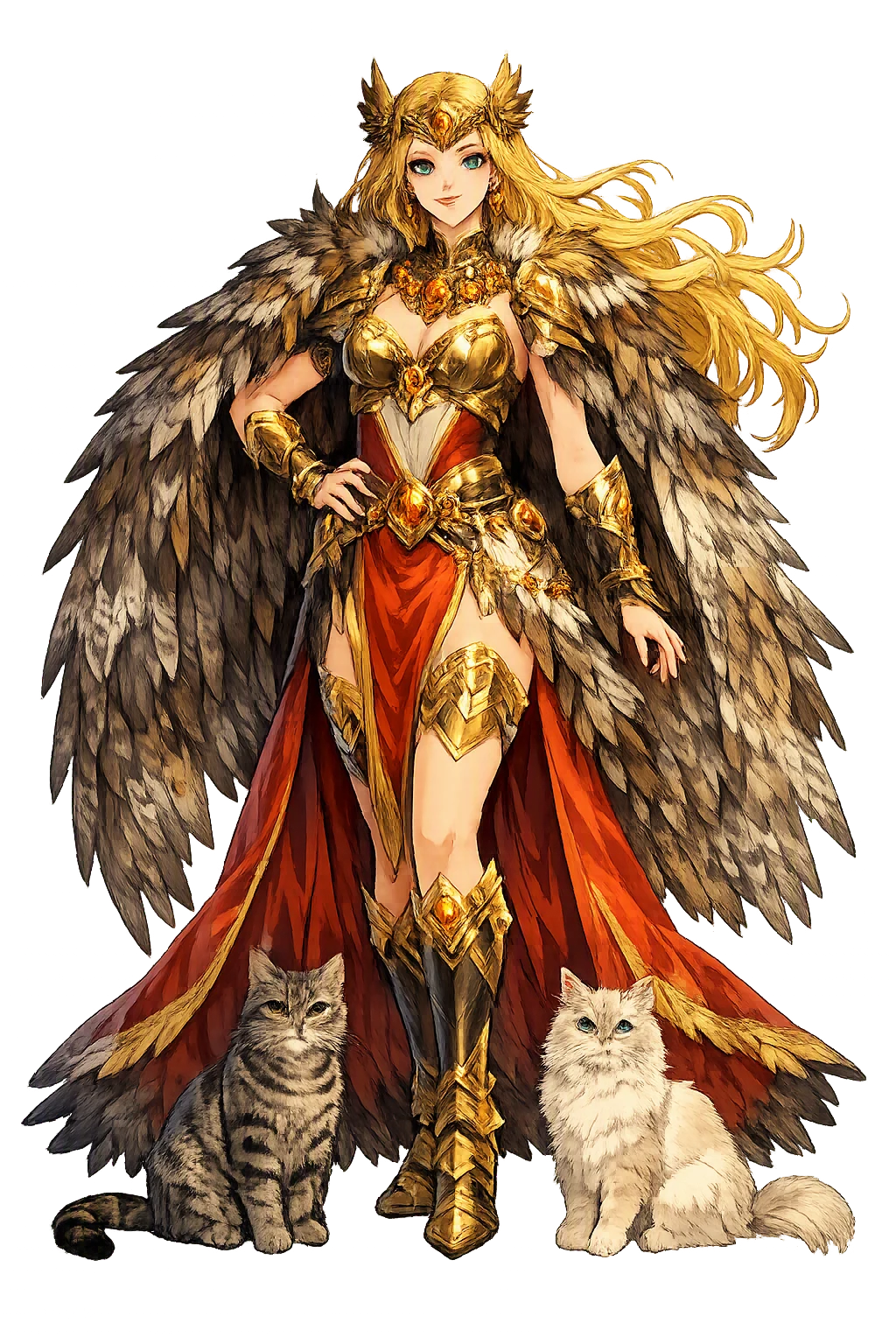
From Younger Futhark to Unicode: the journey of Freyja
Long before it was a domain, this name traveled through scripts. Freyja begins in Younger Futhark, passes through scholarly transliteration, and ends — for now — inside the punycode machinery of the global DNS. Each stage of that journey preserves some information and loses some, and the craft of restoration is knowing exactly which marks matter. This post follows the name stage by stage: the original script, the reconstructed pronunciation, the mythological record, the material evidence, and finally the Unicode form that carries all of it into the address bar. Think of it as a biography of a name, told through its spelling.
At a Glance
- Restored name: Freyja
- ASCII form: freyja
- Meaning: "Lady (from *frawjōn)"
- Domain of influence: Love, Fertility, Seiðr
- Pantheon: Norse
- Classification: Tier 2
- Original script: ᚠᚱᛅᚢᛁᛅ (Younger Futhark)
Overview
Freyja (freyja) — Love, War, Magic · The Lady of the Vanir — is the preeminent goddess of the Norse pantheon: owner of the necklace Brísingamen, mistress of seiðr magic, driver of a chariot drawn by cats, and chooser of half the battle-dead, whom she seats in her hall Sessrúmnir on the field Fólkvangr.
Old Norse Freyja is the common noun freyja ‘lady’ elevated to a proper name — the feminine counterpart of her brother Freyr, ‘lord’, and the direct cognate of the modern German Frau. She belongs to the Vanir, the gods of fertility and wealth, but dwells among the Æsir after the war between the two kindreds; Heimskringla remembers that it was she who first taught the Æsir seiðr, ‘which had been customary among the Vanir’. Her mythology is the richest of any Norse goddess: the refusal of the hammer-ransom in Þrymskviða, the ride for Óttarr in Hyndluljóð, the weeping of red gold for the absent Óðr, the necklace won back in seal-shape, and the standing doctrine that she takes half the slain.
PuniCodex keeps the name as Freyja — which is also the Old Norse spelling, letter for letter. Unusually among the restorations, ASCII loses nothing here: the normalized form carries no diacritic, no thorn, no eth, so the name is classified Tier 2, plain and complete. The plain-ASCII domain freyja.com is registered outside the collection and watched for release; the temple stands canonically at its /sites/freyja/ path in the meantime.
The Name
The name is attested in Old Norse as Freyja (nominative), identical with the common noun freyja ‘lady, mistress of a household’. It is not a compound but a transparent title: the feminine formation on the same root as freyr ‘lord’, her brother's name, both descending from Proto-Germanic frawjǭ / frawô. The cognate line is one of the clearest in Germanic: Old High German frouwa gives modern German Frau, and Old English frēa ‘lord’ preserves the masculine side. To name the goddess was simply to say ‘the Lady’.
The name's aliases are part of its record: Snorri's Skáldskaparmál lists Vanadís ‘dís of the Vanir’, Hörn, Gefn, Sýr ‘Sow’, and Mardöll, and she is Valfreyja, ‘Lady of the Slain’, for her share of the battle-dead.
Because the attested spelling is plain Latin letters, the ASCII form freyja loses nothing — there is no accent, length mark, or distinctive letter to restore. The name is therefore Tier 2: complete in ASCII, with only capitalization separating the temple form from the dictionary entry.
The letter-by-letter transformation runs:
- f → F — Same, capitalized
- r → r — Same
- e → e — Same
- y → y — Same
- j → j — Same
- a → a — Same
The domain freyja.com is registered outside the PuniCodex collection; the project watches it for release and serves the temple at /sites/freyja/.
Etymology & Roots
The recorded derivation reads: Lady (from *frawjōn)
The reconstructed proto-form is *frawjōn (proto-indo-european), glossed as "Lady".
The reconstruction is classed as attested.
The Original Script
The name is preserved in medieval Icelandic manuscripts in the Latin alphabet as Freyja — Old Norse (North Germanic), attested 13th c. CE in the Codex Regius of the Poetic Edda and the Prose Edda's codices, recording material centuries older. Before the Latin bookhand, Old Norse names were carved in the Younger Futhark; no runic attestation of this theonym survives, so the manuscript form is the primary witness.
The scholarly rendering is, for once, a short story:
- The name is the common noun freyja ‘lady’, feminine counterpart of freyr ‘lord’, used as a theonym.
- Old Norse orthography writes the diphthong as ey (runic ᛅᚢ, the au-rune) and requires no accent or special letter anywhere in the word.
- A hypothetical Younger Futhark rendering approximates ᚠᚱᛅᚢᛁᛅ (f-r-au-i-a).
- The temple form Freyja and the ASCII form freyja are therefore the same letters; the restoration is complete in plain Latin, and the name is Tier 2 by rule.
The plain-ASCII domain freyja.com is registered outside the PuniCodex collection and watched for release; the temple is served canonically at /sites/freyja/.
Pronunciation
The reconstructed pronunciation of the name is /ˈfrœy.jɑ/ — Old Norse Reconstruction.
Phoneme by phoneme:
- Frey- — Voiceless labiodental [f], trilled [r], and the Old Norse diphthong ey, a rounded front glide [œy] that survives in modern Icelandic as a sound close to English ‘ay’ in ‘say’; the first syllable carries the stress, as in all Old Norse words
- -ja — Palatal glide [j] followed by open [ɑ], the unstressed second syllable sounding like English ‘ya’
For the modern speaker, the closest approximation is: ‘FRAY-ya’ — the first syllable as in ‘fray’, the second a light ‘ya’.
Kindred and historical forms of the name:
- Old Norse — Freyja, ‘the Lady’, the attested form
- Proto-Germanic — *frawjǭ, ‘lady’, the reconstructed ancestor
- Old High German — frouwa, ancestor of modern German Frau
- Modern Icelandic — Freyja, unchanged, and still a living given name
Freyja is Tier 2 because the attested form needs nothing ASCII lacks: every letter of the Old Norse spelling is already a plain Latin letter, and the diphthong ey was never marked with a diacritic. English ‘Freyja’ and Old Norse Freyja are the same word in the same letters.
Mythology
Freyja's mythology is the fullest of any Norse goddess, spread across both Eddas and Heimskringla.
The Half of the Slain (Gylfaginning 24; Grímnismál)
Snorri numbers Freyja with Frigg as foremost of the goddesses and gives her a war-office no other goddess holds: ‘whenever she rides to battle, she takes half of the slain, and half belong to Óðinn’. Her hall is Sessrúmnir, ‘seat-roomy’, on the field Fólkvangr. Grímnismál preserves the same doctrine in older verse — she chooses her half of the slain each day.
She Taught the Æsir Seiðr (Ynglinga saga 4)
Heimskringla's euhemerized account makes her the transmitter of magic: Freyja, a sacrificial priestess of the Vanir, ‘was the first to teach the Æsir seiðr, which had been customary among the Vanir’. The same chapter says Óðinn learned the art and wielded it beyond anyone — the Vanir craft passing to the Æsir through her hands.
The Hammer-Ransom (Þrymskviða)
When Þrymr steals Mjölnir and demands Freyja as his bride, her refusal shakes the hall of the Æsir and bursts the Brísingamen at her throat: ‘You will know me to be most mad for a man, if I drive with you to the realm of the giants.’ Þórr goes in her stead, dressed in her bridal linen with her necklace at his throat and Loki as handmaid, and recovers the hammer beneath the veil.
Óttarr and Hyndla (Hyndluljóð)
Freyja protects her devotee Óttarr, transformed into her boar Hildisvíni, and forces the giantess Hyndla to recite the ancestry his inheritance depends on — demanding the memory-ale that will carry the lore through his lawsuit.
Óðr, the Gold, and the Necklace (Skáldskaparmál)
Her husband Óðr fares away on long journeys; she seeks him among strange peoples and weeps tears of red gold. Her daughters are Hnoss and Gersimi — ‘Treasure’ and ‘Gem’. And the necklace: Húsdrápa remembers that Loki and Heimdallr fought for the Brísingamen at Singasteinn, each in the shape of a seal.
The Flyting (Lokasenna)
When Freyja speaks against Loki at Ægir's feast, he answers with the flyting's standard charge against her lovers; Njǫrðr her father replies: ‘It is no great harm though a woman gets herself a man, a husband or a lover or both.’ The corpus's own verdict on her independence.
Symbols & Iconography
Freyja's attributes are the most concrete of any Norse goddess — the corpus hands her a full set of regalia:
- Brísingamen — the necklace of the Brísings, her great treasure: worn by Þórr in his bridal disguise, fought for by Loki and Heimdallr in seal-shape at Singasteinn, and so bound to her that gold itself takes her name in the kennings
- The cat-drawn chariot — she drives a wagon harnessed to two cats, the only such team in the Eddas; the household animal raised to divine harness
- The falcon-feather cloak — her valshamr, the coat that lends flight between worlds; Loki borrows it twice, and the giant Þjazi names it as part of her ransom-price
- Hildisvíni — ‘battle-swine’, the boar she rides in Hyndluljóð, her devotee Óttarr in animal shape beneath her
- Tears of red gold — her weeping for Óðr on his long journeys, the myth the skalds built into the kenning ‘Freyja's tears’ for gold
- Sessrúmnir — ‘the seat-roomy hall’ on Fólkvangr, where her half of the slain are housed
Archaeology & Evidence
No inscription names the goddess Freyja: like most of the pantheon, her attestation is textual, and the material record offers context rather than proofs. The theophoric place-names of Sweden and Norway are dense with the Frö-/Frøy- element, but most are assigned to her brother Freyr; a smaller set — Norway's island Frøya among them — is argued either way, and the name's transparency (‘the Lady’) makes secure attribution harder, not easier.
The strongest material witness belongs to her craft rather than her cult. The seiðr she taught the Æsir is the best-attested ritual complex in the Viking-Age graves: the so-called völva burials of Scandinavia, furnished with iron staffs, high-status goods, and in some cases the seeds of mind-altering plants, are the archaeological frame in which Neil Price's The Viking Way reads the whole practice. Small silver pendants of standing female figures, long labelled valkyries, have been drawn into the same reinterpretation — the tradition's seeress and its Lady overlap in the metal as they do in the verse.
Realm & Domain
Freyja governs the triad her temple carries — Love, War, Magic — and the sources give each sphere a concrete, attested shape.
Love
Goddess of desire and of its costs: she weeps tears of red gold for the absent Óðr, and the skalds call gold itself ‘Freyja's tears’ in her memory.
War
She rides to battle and takes half the slain, seating them in Sessrúmnir on Fólkvangr — the only figure in the pantheon who divides the war-dead with Óðinn as an equal.
Magic
Mistress of seiðr: Heimskringla remembers that she, a blótgyðja of the Vanir, first taught the art to the Æsir — the craft Óðinn would later wield beyond anyone.
The Vanir
She is Vanadís, ‘the dís of the Vanir’: fertility, wealth, and desire carried into the Æsir's halls after the war between the two kindreds.
Across Cultures
The great open question of Freyja scholarship is her relationship to Frigg. Both are chief goddesses; both own a falcon cloak; both weep for a wandering husband — and Óðr's name is a consonant's breadth from Óðinn's. Since the nineteenth century, scholars have argued whether the two were originally one goddess whom the recording traditions split in two; the sources leave the question open, and the modern handbooks — Simek, Orchard, Lindow — still mark it unsettled rather than resolved.
The interpretatio latina equated her with Venus, and the Germanic week keeps the trace: Friday is dies Veneris, ‘the Lady's day’ — though whether the day was named for Freyja or for Frigg is itself part of the same debate. Beyond Germania there is no borrowing to claim: the Vanir complex — fertility, wealth, seiðr, and a share of the battle-dead — is the North's own construction, and the goddess who taught magic to the Æsir has no exact counterpart in any other pantheon. Closely related figures in the corpus include Freyr (her brother and masculine counterpart), Óðinn (who shares the slain with her and learned her craft), and Heimdallr (who fought for her necklace in seal-shape).
Cultural Legacy
Freyja's afterlife is the longest of any Norse goddess. Wagner fused her with Iðunn into Freia, the goddess of the golden apples whose ransom sets the Ring cycle in motion, and the nineteenth-century mythographies cast her as the Venus of the North — a comparison older than the Romantics, since the interpretatio latina had made it a millennium before.
In modern practice she stands at the center of Heathenry and Ásatrú: honored as mistress of seiðr, patron of the half of the slain, and model of ungoverned desire; the contemporary revival of seiðr work in Scandinavia and beyond traces its warrant directly to her teaching in Ynglinga saga, with Neil Price's scholarship as its academic frame. Her name never left Scandinavia: Freyja is a living — and in recent decades a strikingly popular — girls' given name in Iceland and across the North. And the week still keeps her cognate every Friday, dies Veneris, the Lady's day, whichever goddess the naming finally credited.
The Scholarly Record
The account of Freyja given in this edition rests on the witnesses and reference works listed below. The Eddas and Heimskringla supply the narrative; the lexica secure the name's etymology; the modern handbooks and Price's study of seiðr frame the interpretation.
- Snorri Sturluson, Edda, Gylfaginning 24, 35 (Freyja; Fólkvangr; the half of the slain) and Skáldskaparmál (Óðr, the gold-kennings, the aliases, Húsdrápa), ed. and trans. Anthony Faulkes (London: Everyman, 1987).
- The Poetic Edda, trans. Carolyne Larrington, 2nd ed. (Oxford: Oxford University Press, 2014): Grímnismál, Þrymskviða, Hyndluljóð, Lokasenna.
- Snorri Sturluson, Heimskringla, Ynglinga saga 4 (Freyja teaches seiðr), trans. Lee M. Hollander (Austin: University of Texas Press, 1964).
- Cleasby, Richard, and Guðbrandur Vigfússon, An Icelandic-English Dictionary, 2nd ed. (Oxford: Clarendon Press, 1957), s.v. freyja, freyr.
- Zoëga, Geir T., A Concise Dictionary of Old Icelandic (Oxford: Clarendon Press, 1910), s.v. Freyja.
- de Vries, Jan, Altnordisches etymologisches Wörterbuch, 2nd ed. (Leiden: Brill, 1962), s.v. freyja.
- Simek, Rudolf, Dictionary of Northern Mythology, trans. Angela Hall (Cambridge: D. S. Brewer, 1993), s.v. Freyja.
- Orchard, Andy, Dictionary of Norse Myth and Legend (London: Cassell, 1997), s.v. Freyja.
- Lindow, John, Norse Mythology: A Guide to the Gods, Heroes, Rituals, and Beliefs (Oxford: Oxford University Press, 2001), s.v. Freyja.
- Price, Neil, The Viking Way: Magic and Mind in Late Iron Age Scandinavia, 2nd ed. (Oxford: Oxbow, 2019).
A Meditation
Freyja holds two things the world keeps trying to separate. She is the goddess of love — desire, gold, the necklace, the weeping for Óðr — and she is a commander of the dead, choosing half the slain before Óðinn takes his half. The Edda refuses the split: the same figure who weeps tears of red gold rides to battle; the same word that means ‘lady’ heads a war-dead of her own.
Her refusals are as load-bearing as her powers. Offered to Þrymr as a bride-price, she does not argue; the hall shakes and the necklace bursts. Charged by Loki with her lovers, the tradition answers through her father: it is no shame. The corpus never lets her be traded, commanded, or shamed — only impersonated, invoked, and followed. To say her name in Old Norse was simply to say ‘the lady’: the title and the goddess are one word, and the one word was always enough.
The Unicode Restoration
Freyja is classified as Tier 2: the restoration needs no distinctive letters or diacritics its ASCII form would lose. The ASCII fallback freyja still resolves everywhere, but it is the restored form that carries the name's full information. That is the whole thesis of this temple: the marks are the message.
Why This Restoration Matters
Every stage of the journey from Younger Futhark to Unicode was an act of care: the scribe who first wrote the name, the lexicographer who glossed it, the engineer who taught the DNS to carry it. The PuniCodex restoration is the latest stage, not the last word — the Scholarly Edition is revised as the evidence improves. What does not change is the principle: a name deserves to be written the way its own tradition wrote it. Freyja in the address bar is that principle, made routable.
Explore Further
This post is one doorway into the temple. The home page carries the full character breakdown and the ambient canvas; the lore page tells the myths in long form; the Scholarly Edition preserves the sources, pronunciation data, and revision history; and the patron wall supports the restoration directly. For the wider map, browse the Lexicon, explore the Pantheon, or return to the PuniCodex blog.
Related Names
Sources
The full scholarly apparatus — every citation, revision, and review — lives in the Scholarly Edition. Key references for this post:
- Snorri Sturluson, Edda, Gylfaginning 24 and 35 (Freyja, Fólkvangr, the half of the slain), ed. and trans. Anthony Faulkes (London: Everyman, 1987).
- Cleasby, Richard, and Guðbrandur Vigfússon, An Icelandic-English Dictionary, 2nd ed. (Oxford: Clarendon Press, 1957), s.v. freyja, freyr.
- Snorri Sturluson, Heimskringla, Ynglinga saga 4 (Freyja teaches seiðr), trans. Lee M. Hollander (Austin: University of Texas Press, 1964).
- Cleasby, Richard, and Guðbrandur Vigfússon, An Icelandic-English Dictionary, 2nd ed. (Oxford: Clarendon Press, 1957), s.v. freyja.
- Lexicon authorities for this entry: Cleasby-Vigfusson, Zoëga.