
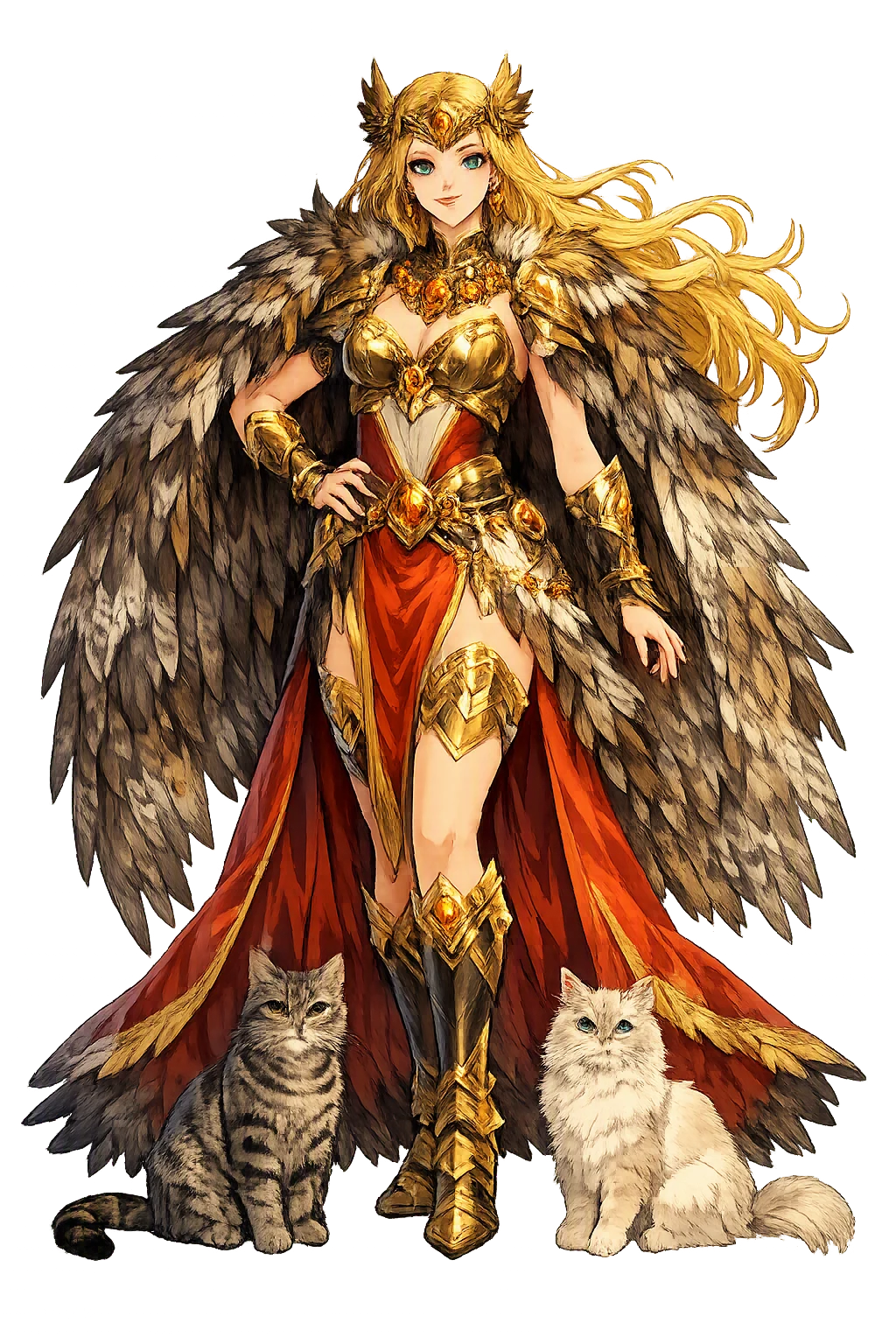
How Freyja was rebuilt, mark by mark
The workshop file for Freyja. Every rejected form is recorded here too — that is the point of keeping notes.
What We Found
The attestation runs through the tradition's own sources: ᚠᚱᛅᚢᛁᛅ. Meaning: "Lady (from *frawjōn)".
The figure behind the name: Freyja is everywhere in the Norse corpus: the Poetic Edda, Snorri's prose, and the opening chapters of Heimskringla all circle her — her hall among the dead, her magic, her necklace, her lost husband, and the flyting in which Loki names her last.
What the Name Carried In
Fólkvangr and the Half of the Slain. Snorri places Freyja beside Frigg as foremost among the goddesses, and gives her what no other goddess has: a share of the battle-dead. 'Her hall is called Sessrúmnir, and it is large and fair.
She Taught the Æsir Seiðr. Heimskringla's euhemerized history makes Freyja the magic's transmitter: 'Freyja was a blótgyðja, a sacrificial priestess, and she was the first to teach the Æsir seiðr, which had been customary among the Vanir. ' Seiðr — the far-reaching, fate-working magic that let its practitioner know the future and shape events — was Vanir craft, and it crossed into the Æsir's world through her; Ynglinga saga adds that Óðinn himself learned it and wielded it beyond anyone.
A spelling that has to carry stories like these is not a label. It is equipment.
Where It Stood Before Us
Freyja's attestations are textual — the Codex Regius of the Poetic Edda and the Prose Edda's codices (13th-14th c.), with skaldic verse centuries older — but her world has a material record. The theophoric place-names of Sweden and Norway are dense with the Frö-/Frøy- element, though most are assigned to her brother Freyr; a smaller set (Norway's Frøya island among them) is argued either way. The seiðr she taught the Æsir is the best-attested ritual complex in the graves: the 'völva burials' of Viking-Age Scandinavia, with their iron staffs, high-status grave goods, and in some cases mind-altering seeds, are the material context Neil Price's The Viking Way reads as the practice's archaeology. Small silver pendants of standing female figures, once loosely called valkyries, have been reinterpreted in the same frame — the tradition's seeress and its Lady overlap in the metal as they do in the verse. The bench inherits all of it — the web temple is the newest site, not the first.
What We Rejected
The plain ASCII freyja — admissible as a fallback, never as the primary. A wrong accent would have been worse: the rulebook is explicit that a misplaced mark is worse than none.
What We Set Down
Freyja — The restoration keeps one feature the ASCII form drops. One is enough to matter, and the label says so plainly: Tier-2.
For the voice: fRAY-ya — the first syllable is the diphthong ey, close to English 'ay' in 'say' with rounded lips; stress falls on the first syllable, and the -ja sounds like English 'ya'.
The temple stands at /freyja/ — the notes above are public in its Scholarly Edition, sources and all.
At a Glance
- Restored name: Freyja
- ASCII form: freyja
- Meaning: "Lady (from *frawjōn)"
- Domain of influence: Love, Fertility, Seiðr
- Pantheon: Norse
- Classification: Tier 2
- Original script: ᚠᚱᛅᚢᛁᛅ
- Series: The Restoration Files, No. 126 of 406
The File Continues
The temple's founding dispatch tells the name's story; its Resonance File reads the myths into the industries; the blog index holds the whole archive.
Continue the series — previous file: Forseti (read it here) · next file: Freyr (read it here).
The Restoration Files are written from the same canonical record as the temples themselves: the lexicon, the lore catalog, the pattern atlas, and the cited scholarly sources. If a file ever disagrees with its temple, the temple is right — tell us, and the file will be corrected.