
Why Efnysien belongs in your address bar
Every address bar is a choice. When you type Efnysien, you are not typing a novelty; you are restoring a name that the early DNS, built for English typewriters, could not carry. The plain ASCII form efnysien is a leftover of that constraint, not the name itself. This post is the long version of the restoration: where the name comes from, how the Celtic transcription tradition wrote it, how it is pronounced, what the myths and the material record preserve, and why its Unicode form now lives as a working domain. The claim throughout is simple — the original spelling is not decoration. It is the name.
At a Glance
- Restored name: Efnysien
- ASCII form: efnysien
- Meaning: "Double enemy"
- Domain of influence: Trouble, Mischief
- Pantheon: Celtic
- Classification: Tier 2
Overview
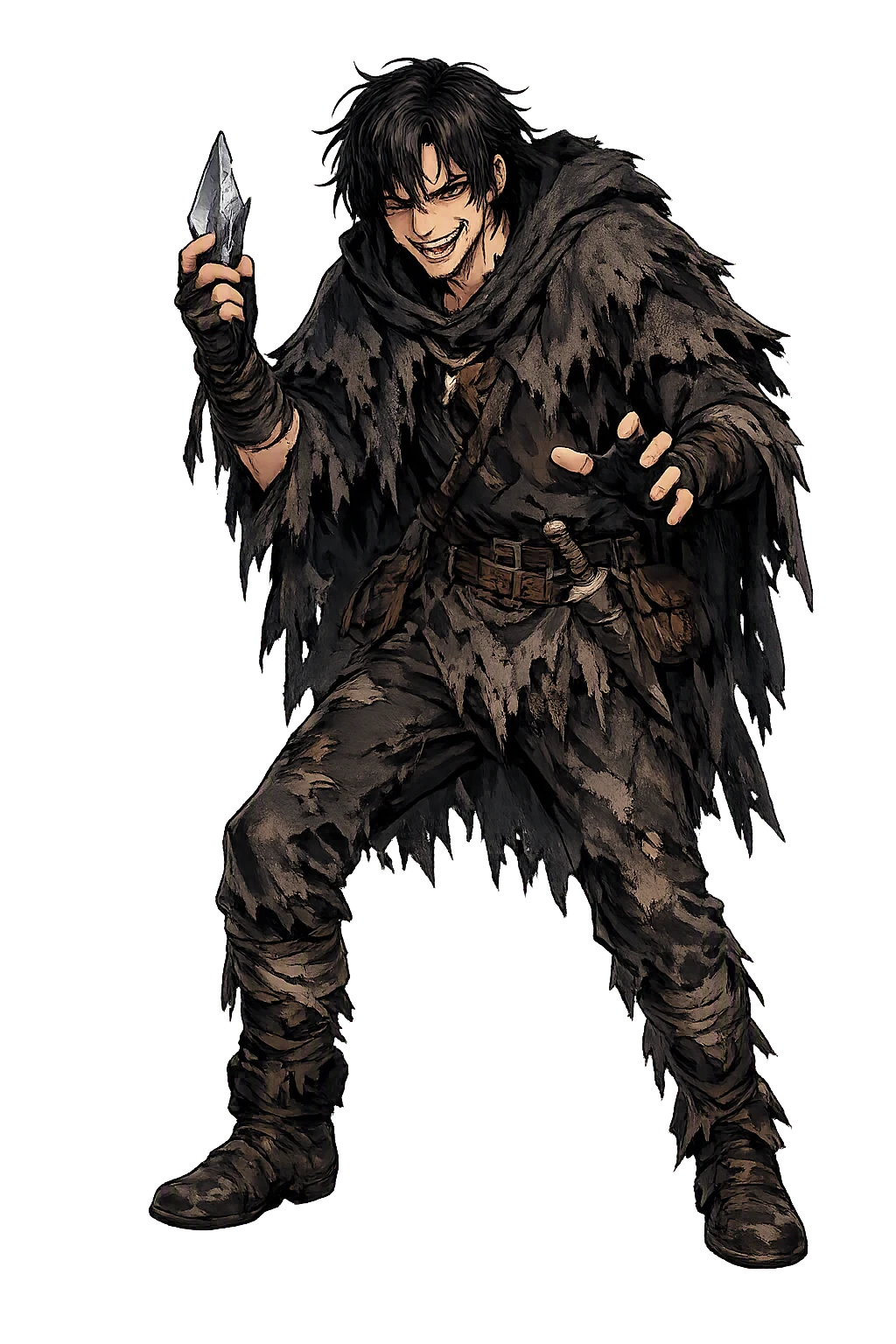
Efnysien (efnysien) — Trouble, Mischief · Double enemy — is the destroyer of the Second Branch of the Mabinogi: the half-brother of Brân the Blessed, Branwen, and Manawydan, whose one unprovoked act — the maiming of King Matholwch's horses at the wedding feast of Aberffraw — sets Britain and Ireland on the road to a war that leaves Ireland wasted and only seven men of Brân's host alive.
The tale introduces him in a single balanced sentence it never takes back. Penarddun ferch Beli bore two sons to Euroswydd: Nisien, a good youth who could make peace between two armies at their most embittered, and Efnysien, who would set two brothers at strife when they loved each other most. His dossier is one branch of one book — the maimed horses, the hundred men crushed in their flour-bags, the child Gwern thrown into the fire, and at the end the Cauldron of Rebirth burst from within at the price of his own heart — and it is among the most unflinching portraits of malice and its cost in medieval literature.
PuniCodex restores the name as Efnysien — identical to the ASCII input, because Middle Welsh writes the name in plain Latin letters with no diacritic for the restoration to recover; the name is Tier 2 by the mechanical rule. The plain-ASCII efnysien.com is held by a third party outside the PuniCodex collection and is watched for release; no form of the name is currently owned, and this temple claims none.
The Name
The name is attested in Middle Welsh as Efnisien (the modern standard spelling; the temple's form Efnysien follows the same name with the common y-spelling), son of Euroswydd and Penarddun ferch Beli, in the Second Branch of the Mabinogi. Its etymology is debated rather than settled, and honest scholarship labels it accordingly. What is secure is the literary construction: the branch pairs Efnisien with his brother Nisien as a named opposition — the peace-maker and the strife-maker — and the handbooks read the pair as an embodiment of contraries, with Efnisien's name traditionally glossed on the 'enemy, hostile' side of the contrast. The lexicon's gloss 'Double enemy' follows MacKillop's rendering of the name.
The ASCII form is not a compromise here: Middle Welsh writes the name in plain Latin letters, and normalized Welsh orthography attaches no diacritic to it. There is nothing distinctive for the ASCII alphabet to lose; only the capital distinguishes the restored form from the input, which places the name in Tier 2 by the mechanical rule.
The letter-by-letter transformation runs:
- e → E — Same, capitalized
- f → f — Same
- n → n — Same
- y → y — Same
- s → s — Same
- i → i — Same
- e → e — Same
- n → n — Same
The project holds no domain for this name: efnysien.com is registered to a third party outside the PuniCodex collection and is watched for release. The temple is served at /sites/efnysien/ and claims no domain it does not hold.
The Original Script
The name is preserved in Middle Welsh manuscripts in the Latin alphabet as Efnisien — Middle Welsh (Brythonic Celtic), attested in the White Book of Rhydderch (c. 1350) and the Red Book of Hergest (c. 1382–1410), recording material composed centuries earlier. The script is written left-to-right in the medieval Welsh bookhand.
The scholarly rendering proceeds step by step:
- Middle Welsh writes the name in plain Latin letters; the manuscript spelling Efnisien and the temple's form Efnysien carry the same name with the common i/y spelling variation of Welsh orthography.
- No diacritic attaches to the name in any witness: normalized Middle Welsh orthography and the ASCII spelling are identical.
- Welsh f writes the voiced sound /v/ (the digraph ff writes /f/), and Welsh y in a non-final syllable writes /ɪ/ — values the letters carry in Welsh, not marks the restoration must recover.
- The Unicode restoration Efnysien therefore changes nothing but the capital; the name stands in Tier 2 by the mechanical rule, and the plain-ASCII domain efnysien.com — held by a third party outside the PuniCodex collection and watched for release — is the philologically complete form.
Pronunciation
The pronunciation of the name in Modern Welsh is /ɛvˈnɪs.jɛn/ — Modern Welsh; the Middle Welsh value is held to be substantially the same.
Phoneme by phoneme:
- E- — Short open-mid front [ɛ], as in English 'elf'; light and unstressed
- -f- — Voiced labiodental [v]: Welsh writes the v-sound with a single f (the digraph ff writes the f-sound) — the name's first trap for English readers
- -nis- — Alveolar nasal [n], short [ɪ] — the value Welsh y carries in a non-final syllable — and [s]; the stressed syllable, since Welsh stresses the penult
- -ien — Palatal glide [j] with short open [ɛ], closing on [n]; the final syllable falls away unstressed
For the modern speaker, the closest approximation is: 'ev-NIS-yen' — the f sounded as v, the weight on the middle syllable, the ending quick and light.
Kindred and historical forms of the name:
- Middle Welsh — Efnisien, son of Euroswydd and Penarddun, in the White Book of Rhydderch and the Red Book of Hergest
- Modern Welsh — Efnisien, the standard modern spelling
- The named opposite — Nisien, his brother: the tale's peace-maker set against its strife-maker
- English translations — Efnisien (Guest), Efnysien — the same name carried into English prose
Efnysien is Tier 2 by the mechanical rule: the Middle Welsh form is already plain ASCII, and the restoration preserves nothing the ASCII form loses. The weight of the name is semantic and narrative, not orthographic.
Mythology
Efnysien's mythology is one tale — the Second Branch of the Mabinogi, Branwen ferch Llŷr — and within it he is the engine of both the catastrophe and its ending.
The Two Brothers (Second Branch)
The branch introduces him through his mother. Penarddun ferch Beli, daughter of Beli Mawr, bore to Llŷr the three great children — Brân the Blessed (Bendigeidfran), Branwen, and Manawydan — and to Euroswydd two more sons: Nisien and Efnysien. Nisien, the text says, could make peace between two armies at their most embittered; Efnysien would set two brothers at strife when they loved each other best. The whole branch is the working-out of that sentence.
The Maiming of the Horses (Second Branch)
When Brân, the crowned king of Britain and a giant no house or ship could hold, gave Branwen to Matholwch, king of Ireland, the wedding feast was held at Aberffraw and the Irish horses stabled for the night. Efnysien asked whose they were, and was told they belonged to the man who had married his sister. 'Is this what they have done with a maiden as fine as her — given her away without asking me?' He went under the horses and cut off their lips to the teeth, their ears to the head, their tails to the rumps, and their eyelids to the bone. Matholwch rose in silence and made for his ships; Brân's embassy, Manawydan among it, won him back with honour-price: a silver staff as tall as himself, a plate of gold as broad as his face, fresh horses, and the Cauldron of Rebirth, which had come to Brân from Llasar Llaes Gyfnewid and Cymidei Cymeinfoll, wanderers fled out of Ireland.
The Starling and the Crossing (Second Branch)
The compensation did not hold. In Ireland the injury was remembered and Matholwch was shamed by his own nobles; Branwen was sent to the kitchen, and the butcher boxed her ear every day. She reared a starling, taught it speech, tied a letter under its wing, and sent it to Brân. He mustered Britain and waded the sea, for no ship could carry him; when the Irish destroyed the bridge over the river, he lay down across it himself — 'He who would be a leader, let him be a bridge.'
The Hundred Bags (Second Branch)
The Irish sued for terms: the kingship would pass to Gwern, Branwen's son, and they would build Brân a house great enough to hold him — the first house he had ever entered. But in that house they hung a hundred bags on the pillars, an armed man in each. Efnysien came in ahead of the company, laid his hand on each bag — 'What is in here?' 'Flour.' — and squeezed each head through the sacking until the skull gave, a hundred times down the hall.
The Boy in the Fire and the Breaking of the Cauldron (Second Branch)
At the feast the boy Gwern was invested as king and went, charming everyone, from lap to lap — Brân, Manawydan, Nisien — until he came to Efnysien's lap. 'Why does my nephew not come to me?' Efnysien asked; and when the boy was given to him he seized him by the feet and threw him headlong into the fire. Branwen would have leapt in after him, but Brân caught her with one hand and raised his shield with the other, and the hall rose in war. In the battle the Irish could not be beaten: each night they cast their slain into the cauldron, and each morning the dead rose as fighting men, speechless but whole. Then Efnysien, seeing the ruin he had made, lay down among the Irish dead as a corpse, was thrown into the cauldron with them, and stretched himself out until the vessel burst into four pieces — and his heart burst with it, and so he died.
The Aftermath (Second Branch)
The branch closes in grief, not triumph. Ireland was wasted; of Brân's host only seven men came home — Pryderi, Manawydan, Glifieu, Taliesin, Ynawg, Gruddieu, and Heilyn — bearing Brân's head, for the king had taken a poisoned spear in the foot and commanded his own beheading. Branwen, looking on the two wasted islands, died of a broken heart at Aber Alaw in Anglesey and was buried in a four-sided grave on the riverbank. The head went with the seven to Harlech and to Gwales and at last to the White Mount in London, buried facing France as a ward against invasion — where it stayed, the tradition says, until Arthur dug it up, declaring he would defend the island by his own strength alone.
Symbols & Iconography
The iconography of Efnysien is narrative rather than cultic — medieval Welsh prose preserves no regalia for him, but the Second Branch fixed a small set of objects and images no retelling can omit:
- The maimed horses — The Irish king's horses with their lips, ears, tails, and eyelids cut away: pride made visible, the insult no payment could erase
- The Cauldron of Rebirth (Pair Dadeni) — The vessel Brân gave in compensation, which returns the slain to life as speechless fighting men: war stripped of death's limit, until the man who breaks it breaks himself
- The hundred flour-bags — Treachery hung on the pillars of the great house built for Brân, read and crushed by the only guest whose mind ran that way
- The fire and the child — Gwern cast into the flames from his uncle's lap: the point past which the tale permits no return
- The broken heart — His only wound: he stretched himself inside the cauldron until it burst, and his heart burst with it
- The four-sided grave — Not his but Branwen's, dug on the bank of the Alaw for the sister whose fate his acts set in motion
Archaeology & Evidence
No cult site, votive deposit, or inscription of Efnysien is known; his attestation is entirely literary. His evidence is manuscript evidence: the Second Branch survives complete in the White Book of Rhydderch (Aberystwyth, National Library of Wales, Peniarth MSS 4–5, c. 1350) and the Red Book of Hergest (Oxford, Jesus College MS 111, c. 1382–1410), with earlier fragments in Peniarth 6; the tales' composition is argued rather than documented, most often placed in the later eleventh or early twelfth century.
The geography of his story is real: Aberffraw, the royal court of Gwynedd where the horses were maimed; Harlech, where Brân's court sat; and the Anglesey shore where the survivors landed. The tradition's one material anchor is Bedd Branwen, a cairn on the bank of the Afon Alaw identified since the Middle Ages with Branwen's 'four-sided grave'; excavated by Frances Lynch in 1967–68, it proved to hold Early Bronze Age cremations — far older than any Mabinogi event. The identification is the folklore, not the archaeology, and the record is the more valuable for keeping the two distinct.
Realm & Domain
Efnysien is the Mabinogi's embodiment of trouble and mischief — but the branch's words are sharper than the categories: he is the man who would set two loving brothers at strife, and the tale spends its whole length proving the sentence.
Strife-Making
His defining act needs no army and no grievance: insulted that his half-sister Branwen was given to Matholwch of Ireland without his consent, he maims the Irish king's horses in their stable at Aberffraw — lips to the teeth, ears to the head, tails to the rumps, eyelids to the bone. The honour-price Brân pays cannot bury the insult, and the branch's whole tragedy unfolds from that one night.
The Sight That Sees Traps
In Ireland, it is Efnysien alone who reads the great house correctly: a hundred flour-bags on the pillars, an armed man in each. He walks the row and crushes every skull through the sacking with his fingers — treachery undone by the one mind that thinks in treachery.
The Unforgivable Act
At the peace feast, when the child Gwern — Branwen's son, newly invested as king — goes from lap to lap among his kinsmen, Efnysien seizes him and throws him into the fire. After Gwern, the tale permits no reconciliation: only war.
Destruction Turned on Destruction
His last act is the only constructive one of his life: thrown alive into the Cauldron of Rebirth among the Irish dead, he stretches himself until the vessel bursts into four pieces and his own heart breaks. The destroyer dies destroying the engine of endless war — the branch offers the act without eulogy, and without calling it redemption.
Across Cultures
The comparison that follows Efnysien everywhere is with Loki: the malice inside the kin-group, the sworn relative whose mischief costs the community its peace, the trickster the tale can neither spare nor save. MacKillop registers the parallel as typological rather than genealogical — the Mabinogi's strife-maker is a prince of the Children of Llŷr, not a god, and his story answers to Welsh legal and social concerns: the honour-price, the insult remembered, the compensation that fails.
The truer Celtic company is the cauldron-complex. The Cauldron of Rebirth belongs to the same deep stock as the cauldron of the Dagda from Murias in the Lebor Gabála Érenn, from which no company went away unsatisfied, and the Second Branch itself gives the vessel an Irish provenance through the fugitive Llasar Llaes Gyfnewid — Mac Cana's study of the branch's Irish affinities makes the cauldron and the whole Irish war central to its composition. Within the corpus his closest kin are Nisien, the brother he was written as the opposite of; Matholwch, the king his pride destroyed; and Manawydan, the brother who survived to carry the head home.
Cultural Legacy
Lady Charlotte Guest's translation of the Mabinogion (1838–49) carried the Second Branch into the English-speaking world, and Efnysien's maiming of the horses and death in the cauldron became set-pieces of the Victorian Celtic revival. Evangeline Walton retold the branch at full length in The Children of Llyr (1971), the second volume of her Mabinogion tetralogy, giving the destroyer a modern novel's interior view without softening him.
His widest-reaching legacy is the cauldron itself: Lloyd Alexander drew the deathless cauldron-born warriors of his Prydain chronicles — above all The Black Cauldron (1965), filmed by Disney in 1985 — directly from the Welsh matter, in which a vessel that returns the slain to silent service can be stopped only from within, at terrible cost. In Welsh memory the branch left two landmarks: the proverb 'A fo ben, bid bont' — he who would be a leader, let him be a bridge — and Bedd Branwen on the bank of the Alaw, the grave the tradition dug for the sister his acts helped kill.
A Meditation
Efnysien is what a story looks like when it refuses to flatter anyone — including itself. The Second Branch never explains him. He is not possessed, not wronged first, not mad; the tale simply pairs him with Nisien and lets the contrast stand: what one brother binds, the other unbinds, and the world has both kinds of man in it. His evil is small in scale and total in consequence — a night with a knife in a stable, and two kingdoms bleed for a generation. That is the branch's hardest teaching about trouble: it does not need to be great, only timely, and no compensation is large enough to make an injured king forget.
And then the ending, which the Welsh text declines to call redemption. Efnysien sees what his mischief has cost — the speechless dead rising nightly from the cauldron — and lies down among the corpses of the enemy to be thrown in with them. No one forgives him in the text; no one praises him; the branch records only that the cauldron broke and his heart broke. The destroyer is allowed one act of destruction aimed at destruction itself, and it costs exactly everything he has. The Mabinogi does not promise that the man who sets the fire can put it out. It shows him choosing to burn with it.
The Unicode Restoration
Efnysien is classified as Tier 2: the restoration needs no distinctive letters or diacritics its ASCII form would lose. The ASCII fallback efnysien still resolves everywhere, but it is the restored form that carries the name's full information. That is the whole thesis of this temple: the marks are the message.
Why This Restoration Matters
Restoring Efnysien is part of a larger effort to make the web multilingual by default. The PuniCodex project does not ask users to learn a new alphabet; it asks the infrastructure to respect the alphabets that already exist. Every section of this post — the script, the sound, the myths, the evidence — converges on the same point: the marks in Efnysien are information, and information deserves an address of its own. A single Unicode domain is a small proof, but it is a proof that scales: every name restored makes the next one easier, and every visit to the temple is a vote for the restored form.
Explore Further
This post is one doorway into the temple. The home page carries the full character breakdown and the ambient canvas; the lore page tells the myths in long form; the Scholarly Edition preserves the sources, pronunciation data, and revision history; and the patron wall supports the restoration directly. For the wider map, browse the Lexicon, explore the Pantheon, or return to the PuniCodex blog.
Related Names
Sources
The full scholarly apparatus — every citation, revision, and review — lives in the Scholarly Edition. Key references for this post:
- The Mabinogi, Second Branch (Branwen ferch Llŷr), trans. Sioned Davies (Oxford: Oxford University Press, 2007).
- Mac Cana, Proinsias, The Mabinogi, 2nd ed. (Cardiff: University of Wales Press, 1992); Mac Cana, Proinsias, Branwen Daughter of Llŷr (Cardiff: University of Wales Press, 1958).
- PuniCodex domain register for this entry: efnysien.com held outside the collection, watched for release; temple served at /sites/efnysien/.
- Williams, Ifor, ed., Pedeir Keinc y Mabinogi (Cardiff: University of Wales Press, 1930); Geiriadur Prifysgol Cymru / A Dictionary of the Welsh Language (Cardiff: University of Wales Press), s.v. Efnisien.
- Lexicon authorities for this entry: Mabinogion, MacKillop.