
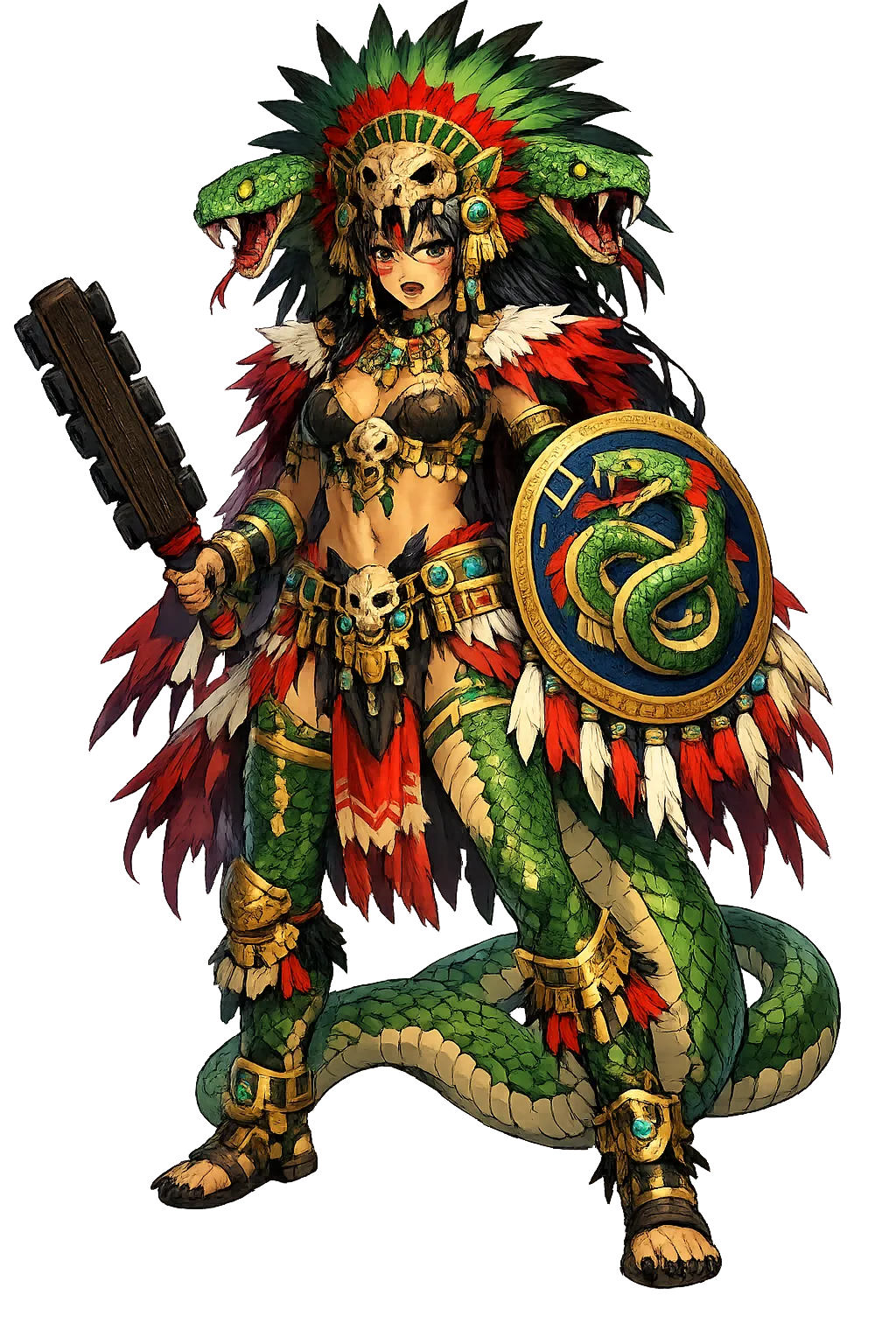
The appointments Cihuacōātl made — and who is keeping them
One myth is a story. A cycle of myths is a specification. Read Cihuacōātl's cycle in order and the industries fall out of it one by one.
At a Glance
- Temple: Cihuacōātl
- Pantheon: Nahuatl
- Domain of influence: Childbirth, Motherhood, Earth
- Pattern seats: 3
- Sectors touched: Health & Wellbeing · Home & Lifestyle
- Strongest seat: Women's Health & Femtech
- Series: The Resonance Files, No. 57 of 271
The Cycle, Read Forward
Women's Health & Femtech — through The Midwives' Prayer
Sahagún's informants describe how midwives addressed the newborn as a captive taken in battle and invoked Cihuacōātl as the divine protectress of the birthing chamber. The afterbirth was buried as an offering, and the child was ritually presented to the gods.
The atlas states the seat in one line: The divine midwife invoked in Sahagún's birthing-chamber prayers; maternal health is her ancient portfolio and swaddling-clothes her emblem. The story above is the long version of the same sentence. The trade thinks it is optimizing a process. It is re-enacting a charter.
Wedding, Family & Maternity — through The Cihuapipiltin and the Crossroads
Women who died in childbirth were believed to become cihuapipiltin, 'noble women,' powerful spirits who wandered at night. They appeared at crossroads, weeping for their lost children, and could seize men or foretell disaster.
The atlas states the seat in one line: The snake woman of childbirth; motherhood and its fierce protection. The story above is the long version of the same sentence. The trade thinks it is optimizing a process. It is re-enacting a charter.
Mental Health & Emotional Wellness — through The Cihuacōātl of Tenochtitlan
The title Cihuacōātl was also borne by a senior Mexica official, sometimes described as a 'vice-ruler' or chief counselor. The title's association with a powerful female deity suggests that the office carried sacred as well as administrative authority, perhaps overseeing internal order and justice while the tlātoāni managed external affairs.
The atlas states the seat in one line: La Llorona, her colonial heir, is the hemisphere's enduring icon of maternal grief; the weeping at the crossroads is loss given voice. The story above is the long version of the same sentence. Industries do not invent their archetypes; they inherit them and call them best practice.
The Theme That Runs the Cycle
Cihuacōātl's mythology is preserved in the birth rituals recorded by Sahagún and in the widespread Mexican legend of the weeping woman. She is both a beneficent guardian and a terrifying ghost, a duality that reflects the high mortality of childbirth in the pre-modern world.
The Method, Stated Plainly
The atlas is not a horoscope. Seats are earned from the sources — argued, weighted, published — and every one of them can be challenged at the methodology page. A match that cannot survive an argument does not survive review. That is the whole trick: the patterns are claims, and claims can be tested.
For the Ones Who Work There
If you work in women's health & femtech, wedding, family & maternity, or any trade this temple holds a seat in, this is the honest version of what a placement means: your industry beside the story it has been re-telling all along — on the temple floor itself, before an audience that came specifically to read it. The patron tier and the advertising terms describe the mechanics; the resonance above describes the fit.
The File Continues
One of 271 Resonance Files — the series where the pantheon goes to work. Read the founding dispatch for the name, the Restoration File for the spelling, or the whole archive end to end.
Continue the series — previous: Cháos (read it) · next: Cōātlīcue (read it).
The Resonance Files are argued from the same canonical record as the pattern atlas itself: the lexicon, the lore catalog, and the cited sources. Every seat can be challenged at the methodology page — and the challenge is the point.