
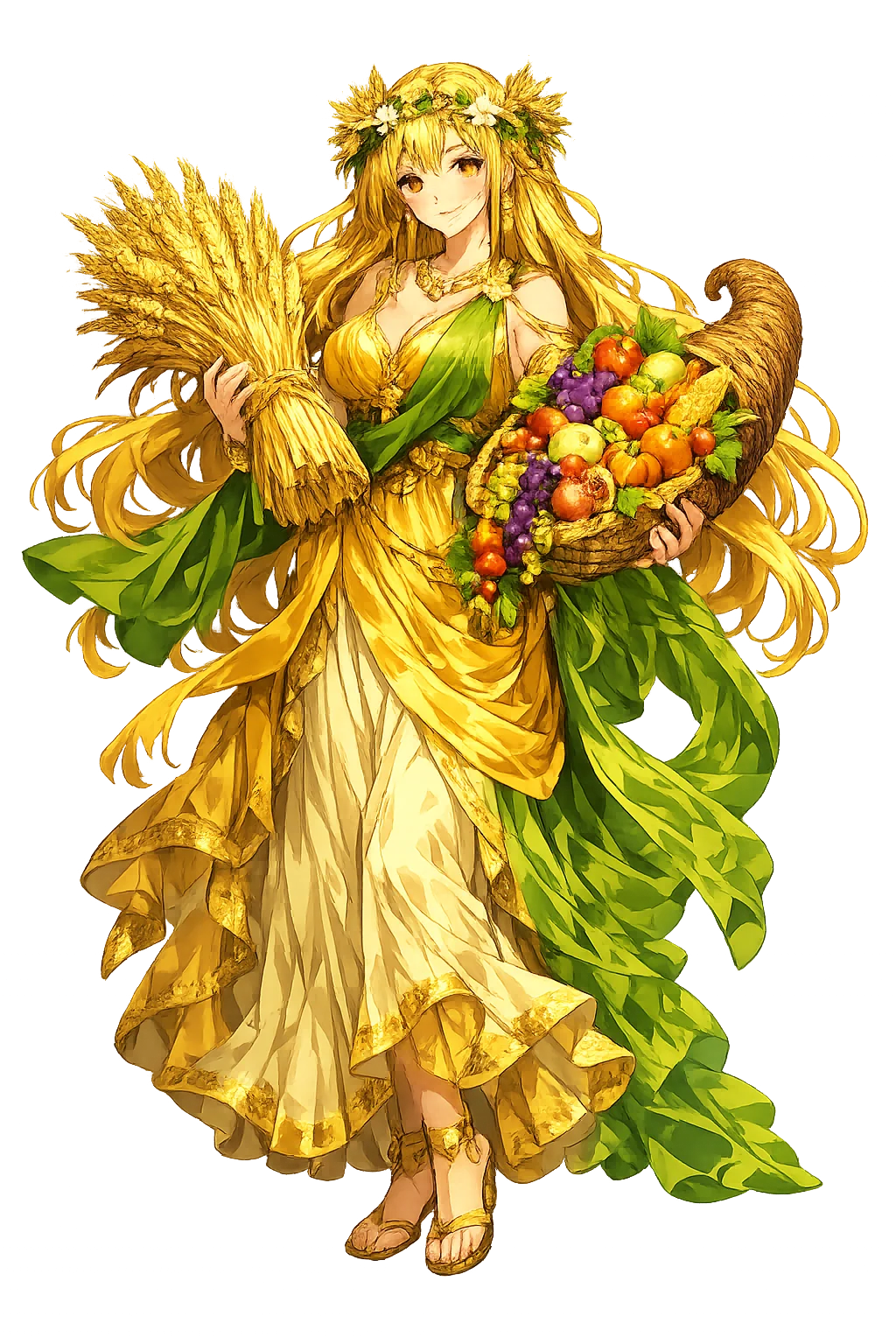
The hidden history behind Cerēs
Behind the modern ASCII form ceres hides a much longer story. Cerēs reaches back through manuscripts, inscriptions, and oral tradition long before it ever touched a keyboard, and every mark in the restored spelling is a receipt from that journey. In what follows we trace the name from its Original Script attestations through its mythology, its cult, its symbols, and its afterlife in other cultures — and we show how the PuniCodex project turned that philological record into a Unicode domain that resolves today. The history was never lost. It was only waiting for the infrastructure to catch up.
At a Glance
- Restored name: Cerēs
- ASCII form: ceres
- Meaning: "Goddess of grain and growth — the source of the word "cereal""
- Domain of influence: Agriculture, Grain, Harvest
- Pantheon: Roman
- Classification: Tier 1
- Live domain: cerēs.com
Overview
Cerēs (ceres) — Agriculture, Grain, Harvest · Goddess of grain and growth — the source of the word "cereal" — belongs to the Roman tradition, where it is catalogued under the domain "Agriculture, Grain, Harvest". The name means "Goddess of grain and growth — the source of the word "cereal"".
Cerēs is Rome's oldest working goddess: the power of grain and growth, patron of the plebeians who eat it, and the deity whose Greek sister's myth (Dēmētēr and Persephonē) she borrowed so completely that Rome's religion of the field became one with the mystery of the seasons.
PuniCodex restores the name as Cerēs and serves its temple at cerēs.com. The restoration preserves at least one distinctive feature — a diacritic or a distinctive letter — that the ASCII form loses, and exactly one historically valid Unicode restoration exists, which places the name in Tier 1. The plain ASCII form ceres survives as a modern convenience imposed by the early domain-name system; the restoration, not the fallback, is the form the project defends as philologically complete.
The Name
No indigenous written attestation survives for this name; Cerēs is a scholarly transliteration of the reconstructed spoken form. Etymologically the name means "Goddess of grain and growth — the source of the word "cereal"".
The ASCII form ceres survives only because the early domain-name system could not carry diacritics; it is a technological compromise, not an ancient spelling. The Unicode restoration Cerēs recovers the full diacritic detail of the scholarly transliteration directly in the address bar. The restoration preserves at least one distinctive feature — a diacritic or a distinctive letter — that the ASCII form loses, and exactly one historically valid Unicode restoration exists, which places the name in Tier 1.
The letter-by-letter transformation runs:
- c → C — Same
- e → e — Same
- r → r — Same
- e → ē — Long ē
- s → s — Same
The project holds the domain cerēs.com (xn--cers-dva.com) as the canonical home of this name.
The Original Script
The original script for this roman name has not yet been added to PUNICODEX. The form shown is a scholarly transliteration.
The form Cerēs is therefore a scholarly transliteration rather than an attested ancient spelling; it encodes the reconstructed sound of the name for modern use, and no mark in it is decorative.
Pronunciation
The reconstructed pronunciation of the name is /ˈke.reːs/ — Classical Latin.
For the modern speaker, the closest approximation is: KEH-rehs — hard c, long second vowel.
Kindred and historical forms of the name:
- Latin — Cerēs
- Greek twin — Δημήτηρ
- Owned form — Cerēs
Latin Cerēs carries the long ē of the first syllable — the same root that gives "create" and "grow" (crescere): the goddess named for growth itself. Her name is the ancestor of the word "cereal," which is why her temple's bread is etymological. The hard c of the classical period later softened in Italian mouths; the temple keeps the older, harder reading.
Mythology
Cerēs' myths are Rome's double helix: the Greek mother-goddess woven into the Italian grain-god, until the field and the mystery were one.
The Teaching of the Furrow (The Gift)
Before Cerēs, the poets say, humanity ate acorns and called it food. She taught the cutting of the furrow, the keeping of seed, the harvest's measure — and with grain came surplus, and with surplus came law: Ovid and Cicero both note that Rome's oldest laws guarded the field and its boundaries, because the goddess who invented agriculture also, necessarily, invented property. Her temple was the archive of the plebeians' laws: grain and statute, one house.
The Torches of Cerēs (The Search)
When Plūtō took Proserpina, Cerēs lit torches at Aetna's crater and searched the world for nine days, fasting and raging. Finding her daughter queen of the underworld, she refused the compromise until the earth starved with her; the settlement — Proserpina's year divided between the realms — is the myth that explains why the field sleeps and wakes. Rome told it as the charter of the Cerealia, her April festival of the grain's return.
The Aventine Triad (The People)
Her great temple on the Aventine (493 BCE) belonged not to the patricians but to the plebs: Cerēs, Liber, and Libera — grain, wine, and growth — were the people's trinity, the asylum where debtors sheltered and the archive where the plebeians kept their laws. When the plebs seceded to the Sacred Mount, it was to her hill they walked: the goddess of bread is also, in Rome, the goddess of the bargain between bread and power.
Symbols & Iconography
The iconography associated with Cerēs concentrates in a small set of recurring attributes, each a compressed statement about the name:
- The wheat-sheaf — The gift that made agriculture — and law — possible
- The torch — The search that never ends — maternal persistence as cosmic order
- The poppy — Sleep and renewal — the flower of the fallow field
Epithets & Cult Titles
Her titles are the grain-year in Latin.
- Cerēs — from crescere, 'to grow'; the name that becomes 'cereal.'
- Augusta — 'the Venerable'; her imperial title.
- Frugifera — 'fruit-bearing'; the harvest office.
- Legifera — 'law-bearer'; the goddess of the plebeian statutes.
- Dea Sancta — 'the holy goddess'; the Aventine's own address.
Oracle Sites & Sanctuaries
Her great seat was the Aventine temple of Cerēs, Liber, and Libera (493 BCE) — the plebeian trinity beside the Circus Maximus, asylum of debtors and archive of the people's laws; its platform survives. Enna in Sicily — the myth's own meadow — kept her sanctuary as the island's patroness, and Eleusis' Roman pilgrims (Cicero among them) brought her Greek mysteries home to her. The Cerealia games of April staged her return at the Circus every year.
Archaeology & Evidence
Her Aventine temple's platform survives beside the Circus Maximus; the Enna sanctuary in Sicily — her mythic meadow — preserves its rock-cut shrines. The Cerealia's games are documented in the fasti; her bronze and terracotta votives from the grain-districts of Sicily and Latium fill the museums, and the Plebeian Games' theater-temple complex on the Aventine marks the political grain-cult's ground.
Realm & Domain
Cerēs is Rome's oldest working goddess: the power of grain and growth, patron of the plebeians who eat it, and the deity whose Greek sister's myth (Dēmētēr and Persephonē) she borrowed so completely that Rome's religion of the field became one with the mystery of the seasons.
The Sheaf
The wheat-sheaf she carries — the staff of civilization.
The Torches
Her search for Proserpina by torchlight — the mother who would not stop.
The Plebeian Triad
Cerēs, Liber, Libera — the Aventine trinity of the common people.
The Grain Fleet
Rome's annona: the wheat-ships of Sicily and Egypt under her protection.
Across Cultures
Her equation with Dēmētēr was total by the 5th century BCE — the Sibylline Books themselves prescribed the merger — but Rome added its own stresses: the plebeian politics, the annona grain-supply, and the Cerealia's games. Sicily, her mythic homeland and Rome's first granary, kept her temples as the island's patron (Enna, her meadow); and through the grain-fleet she became the one goddess every province ate with daily, the most-consumed deity in the empire.
Within the Roman tradition, closely related names in the corpus include [[diana|Diāna]], [[ianus|Iānus]], [[iuno|Iūnō]], [[iuppiter|Iūppiter]], [[neptunus|Neptūnus]], and [[pluto|Plūtō]].
Cultural Legacy
"Cereal" is her everyday immortality: every breakfast bowl in the West carries her name. Her statue sits atop the Chicago Board of Trade — the grain market's own goddess, uncrowned by any myth but the price of wheat. State seals (New Jersey's, North Carolina's) put her beside Liberty; the dwarf planet Ceres, first-discovered and largest of the asteroids, is NASA's probe Dawn's destination — the grain mother, honored in orbit.
The Scholarly Record
The account of Cerēs given in this edition rests on the witnesses and reference works listed below. Lexica and etymological dictionaries secure the form and meaning of the name; the literary and religious texts supply the narrative evidence.
- Lewis & Short, A Latin Dictionary, Oxford, Clarendon Press; Perseus digitization, 1879. Full text
- Varro, De Lingua Latina / Antiquitates Rerum Divinarum, Loeb Classical Library, 45 BCE.
- Ovid (Publius Ovidius Naso), Metamorphoses / Fasti / Heroides, Loeb Classical Library, 17. Full text
- Cicero, Marcus Tullius — collected works, Loeb Classical Library, 43 BCE. Full text
- Horace, Carmina / Opera, Oxford Classical Texts; Loeb, 23 BCE.
- Cambridge Ancient History, Multiple volumes, 1970. Full text
A Meditation
Cerēs is the goddess of the daily miracle nobody notices: that seeds kept become bread, that fields kept become cities, that mothers searching become seasons. She asks the farmer's and the state's same question: the grain you eat was someone else's keeping — so whose keeping are you, and what will your furrow feed when you are done?
The annona was her quiet empire: fleets of grain-ships from Sicily and Egypt, timed to her calendar, feeding a city that never thanked the ships enough. Rome learned the lesson every state relearns — whoever keeps the grain keeps the peace — and named the fleet's goddess once, correctly, for growth.
Her games told the same truth in lighter dress: the Cerealia, when the city ate well and played hard in her honor, because the goddess of bread was never a goddess of guilt. The granary was her temple; the festival, her thanks; and the law carved at her door was her reminder that food and fairness grow in the same field.
The Unicode Restoration
Cerēs is classified as Tier 1: the restoration preserves at least one distinctive feature — a diacritic or a distinctive letter — that the ASCII form loses, and only one valid Unicode restoration exists. The ASCII fallback ceres still resolves everywhere, but it is the restored form that carries the name's full information. Across the 5 characters of the name, the restoration adjusts 1: 1 further adjustment (ē). That is the whole thesis of this temple: the marks are the message.
Character by Character
The journey from ceres to Cerēs, one character at a time:
- c → C — Same
- e → e — Same
- r → r — Same
- e → ē — Long ē
- s → s — Same
The Domain Name
The restored name is live as a working domain: cerēs.com, which the DNS carries in punycode form as xn--cers-dva.com — an ASCII-compatible encoding that lets a non-ASCII name travel the global network without breaking older infrastructure. The visitor sees Cerēs; the machines see the encoding. That duality is the engineering compromise on which the entire restoration rests, and it is why a name written the way its own tradition wrote it in Original Script can now be typed into any browser on earth.
The Roman Pantheon
Cerēs is one of 8 entries the PuniCodex lexicon catalogues under the Roman pantheon. The Pantheon page gathers the tradition's major figures in one place, and the Lexicon lets you filter all 924 restorations by tradition, tier, or script — the fastest way to see where this name sits among its kin.
Frequently Asked Questions
What does Cerēs mean? The traditional gloss is "Goddess of grain and growth — the source of the word "cereal"."
Which tradition does Cerēs belong to? Cerēs is catalogued in the Roman pantheon of the PuniCodex lexicon.
Why is Cerēs classified as Tier 1? Because the restoration preserves at least one distinctive feature — a diacritic or a distinctive letter — that the ASCII form loses, and only one valid Unicode restoration exists — and the marks in the restored spelling preserve exactly that evidence.
Is Cerēs a working domain? Yes — cerēs.com resolves today and routes to this temple.
What is the punycode for cerēs.com? The DNS encoding is xn--cers-dva.com; browsers perform the translation automatically, so visitors only ever see the restored name.
Typing Cerēs
You do not need a special keyboard to use this restoration. The PuniCodex Type Tool converts the ASCII form ceres into Cerēs as you type, and the browser extension offers the same conversion inside any text field. Copy the restored form, paste it into the address bar, and the DNS does the rest.
Sister Temples
Other temples in the Roman pantheon include Iūppiter — each with its own restoration story, its own scholarly record, and its own place in the lexicon.
Why This Restoration Matters
The story of Cerēs did not end in antiquity; it changed medium. Names that survive for millennia do so because each generation finds a new carrier for them — clay, papyrus, print, and now DNS. The PuniCodex restoration simply makes the carrier honest: the spelling that resolves is the spelling the evidence supports. If this post showed anything, it is that ceres and Cerēs are not the same name with different styling. They are a summary and the text it summarizes. The web can now serve the text.
Explore Further
This post is one doorway into the temple. The home page carries the full character breakdown and the ambient canvas; the lore page tells the myths in long form; the Scholarly Edition preserves the sources, pronunciation data, and revision history; and the patron wall supports the restoration directly. For the wider map, browse the Lexicon, explore the Pantheon, or return to the PuniCodex blog.
Related Names
Sources
The full scholarly apparatus — every citation, revision, and review — lives in the Scholarly Edition. Key references for this post:
- Lewis & Short, A Latin Dictionary, Oxford, Clarendon Press; Perseus digitization, 1879.
- Ovid (Publius Ovidius Naso), Metamorphoses / Fasti / Heroides, Loeb Classical Library, 17.
- Cicero, Marcus Tullius — collected works, Loeb Classical Library, 43 BCE.
- Cambridge Ancient History, Multiple volumes, 1970.
- Lewis & Short, s.v. Ceres; Cicero and Ovid.
- The Aventine excavations; Cicero, Verrines (Enna); the fasti (Cerealia).
- Varro, De Lingua Latina / Antiquitates Rerum Divinarum, Loeb Classical Library, 45 BCE.
- Horace, Carmina / Opera, Oxford Classical Texts; Loeb, 23 BCE.
- Lexicon authorities for this entry: Lewis & Short, Varro, Ovid, Cicero, Horace, Cambridge.