
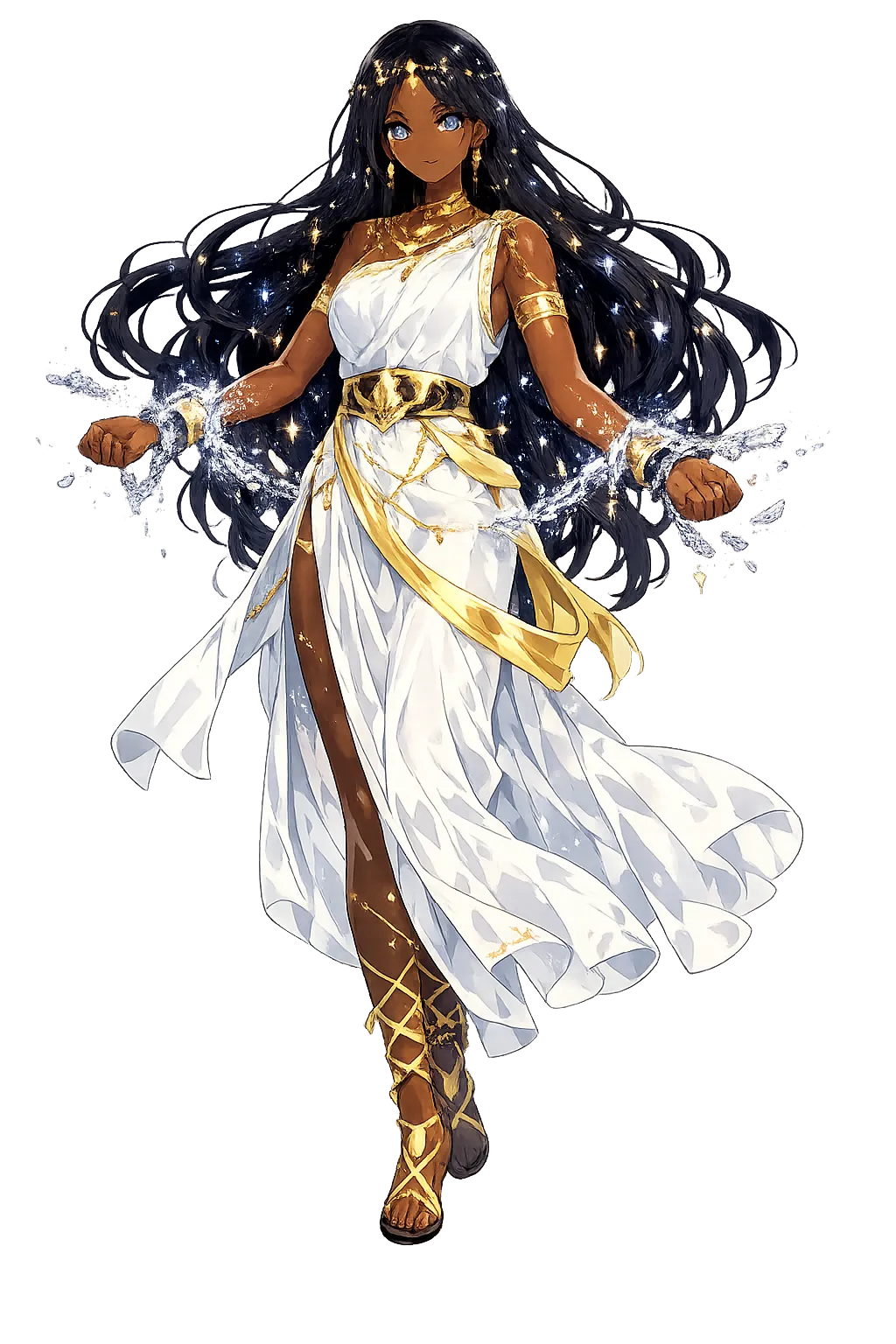
How Andromedē got its accent back
The ASCII form andromeda is missing something. Andromedē restores the marks the source language used to distinguish this name from a thousand others — and those marks change how the name is read, pronounced, and understood. This post explains, with the full scholarly record behind it, what each restored mark preserves: the Greek evidence, the reconstructed sound, the myths the name carries, and the classification logic that separates Tier 1 restorations from Tier 2. By the end, the marks in Andromedē will look less like ornaments and more like what they are — recovered evidence, pinned back in its proper place.
At a Glance
- Restored name: Andromedē
- ASCII form: andromeda
- Meaning: "Ruler of men"
- Domain of influence: Princess, Chained, Rescued by Perseus
- Pantheon: Greek
- Classification: Tier 1
- Original script: Ἀνδρομέδη (Greek)
- Live domain: andromedē.com
Overview
Andromedē (andromeda) — Princess, Chained, Rescued by Perseus · Ruler of men — belongs to the Greek tradition, where it is catalogued under the domain "Princess, Chained, Rescued by Perseus". The name means "Ruler of men".
Andromédē is the princess chained to a sea-rock, offered to a monster and saved by a hero. Her myth is one of the most widely reproduced rescue narratives in Western art, and her catasterism placed her among the stars forever.
PuniCodex restores the name as Andromedē and serves its temple at andromedē.com. The original carries both stress and vowel length, and exactly one historically valid Unicode restoration exists, which places the name in Tier 1. The plain ASCII form andromeda survives as a modern convenience imposed by the early domain-name system; the restoration, not the fallback, is the form the project defends as philologically complete.
The Name
The name is attested in Greek as Ἀνδρομέδη. Etymologically it means "Ruler of men".
The ASCII form andromeda survives only because the early domain-name system could not carry diacritics; it is a technological compromise, not an ancient spelling. The Unicode restoration Andromedē recovers the vowel length of the original directly in the address bar. The original carries both stress and vowel length, and exactly one historically valid Unicode restoration exists, which places the name in Tier 1.
The letter-by-letter transformation runs:
- a → A — Same
- n → n — Same
- d → d — Same
- r → r — Same
- o → o — Same
- m → m — Same
- e → e — Same
- d → d — Same
- a → ē — Macron: long eta
The project holds the domain andromedē.com (xn--andromed-bdb.com) as the canonical home of this name.
The Original Script
The name is preserved in Greek as Ἀνδρομέδη — Greek alphabet (Classical / Attic), attested from the fifth century BCE onward (Herodotus 7.61; Euripides' lost Andromeda), in Greece and the Greek-speaking Mediterranean. The script is written left-to-right.
The scholarly transliteration is Andromédē (Greek alphabet with polytonic accents), giving the normalized reading /an.dro.mé.dɛː/.
The rendering proceeds step by step:
- The Greek form Ἀνδρομέδη is written in the Classical Greek alphabet.
- The acute accent falls on the antepenultimate epsilon (-μέ-), preserving the pitch accent; the final syllable carries the long vowel η.
- The Unicode restoration Andromedē encodes the length of the final η as a macron; the acute is omitted for DNS-registrability, the standard compromise for registrable forms in the corpus.
The compound is transparent Greek: ἀνδρός, the genitive of ἀνήρ ("man"), joined to a stem of μήδομαι ("to devise, take counsel, rule over"), giving "ruler of men" or "she whose counsel is a man's" — a royal name for a princess whose story is anything but Greek in setting. Because the Greek carries both the acute and the long η, and only one historically valid spelling exists, the name stands in Tier 1; the registrable form keeps the macron that marks the length.
Pronunciation
The reconstructed pronunciation of the name is /an.dro.mé.dɛː/ — Attic Greek Reconstruction.
Phoneme by phoneme:
- An- — Short alpha followed by nu; the name opens with a clear, unaspirated 'an'.
- -dro- — Delta-rho-omicron; the root ἀνδρ- means 'man, husband, warrior'.
- -mé- — Long epsilon (eta) with acute [méː] — the pitch peak and a ruler's domain.
- -dē — Delta-eta, long final syllable; the name ends in the feminine agent suffix.
For the modern speaker, the closest approximation is: 'ahn-dro-MAY-day' — the third syllable is pitched and drawn out; the final -ē is long.
Kindred and historical forms of the name:
- Greek — Ἀνδρομέδη (Andromédē), 'she who thinks/ruled like a man' or 'ruler of men'
- Ethiopian/Phoenician — The princess of Aithiopia in most sources; her name is Greek, not local
- Latin — Andromeda, adopted directly into Roman poetry and astronomy
Andromédē is Tier 1 because the Greek Ἀνδρομέδη contains both stress (acute on the long η) and length (η). The compound is transparently Greek, though the princess herself is said to dwell in Ethiopia.
Mythology
Andromédē's story is a chain of consequences: a queen's boast, a god's wrath, a daughter's punishment, and a hero's arrival at the decisive moment. It is also a founding myth of genealogy, linking Greek and Persian royal lines.
The Boast of Kassiepeia (Ovid, Metamorphoses)
Kassiepeia boasted that she — or her daughter — was more beautiful than the Nereids. Poseidôn, enraged on behalf of his sea-nymphs, sent a flood and a sea-monster (ketos) to ravage Aithiopia. The oracle of Ammon declared that only the sacrifice of Andromédē could appease him.
Chained to the Rock (Apollodorus)
Andromédē was stripped and bound to a sea-cliff as the monster approached. The scene became one of the most painted moments in Western art: the maiden's pale body against dark rocks, the hero descending with winged sandals, the creature rising from the foam.
The Stars of Andromeda (Catasterism)
After her death, Athena placed Andromédē in the heavens near Perseus, Kepheus, and Kassiepeia. The constellation preserves the family group in stellar form; the Andromeda Galaxy (M31), visible to the naked eye, bears her name.
Symbols & Iconography
Andromédē's "attributes" are the props of a single scene — the most reproduced rescue tableau of classical myth — and they are narrative rather than cultic, since she was a mortal heroine without a temple.
- Sea-rock and chains — the instruments of her exposure: bound to the coastal cliff as the sea-monster (ketos) approaches (Apollodorus, Library 2.4).
- The Gorgon's head — the weapon Perseus bears at the rescue, fresh from the killing of Medousa; in some versions it is the Gorgoneion, not the sword, that ends the monster.
- The boast of Kassiepeia — not an object but the myth's trigger: the queen's claim to outshine the Nereids, which brings Poseidôn's flood and monster upon Aithiopia.
- Chains that became stars — her catasterism: set among the constellations with her chains still upon her, beside Perseus and her parents (Eratosthenes, Catasterismi 17; Hyginus, Astronomica 2.10).
Andromédē's iconography is one of the most stable in classical art: a richly dressed maiden chained or bound to a sea-rock, the monster rising from the waves, and Perseus descending with winged sandals, harpe, and the Gorgon's head. The scene explodes in popularity after Euripides' tragedy: fourth-century South Italian vases — especially Apulian — show the rescue with theatrical costume and staging, often with Kepheus and Kassiepeia grieving at the side. Pompeian painters made the liberation a favourite wall scene, and a celebrated mosaic from Zeugma (ancient Commagene) gave her rescue pride of place on a Roman villa floor. Catasterism adds her final form: star charts descended from Ptolemy's Almagest draw her among the constellations, still wearing her chains — the only Greek heroine whose iconography survives into modern astronomy.
- Mirror of Kassiepeia — The boast that set the myth in motion: her mother's claim to surpass the Nereids
- Head of Medousa — The weapon Perseus carries when he rescues her
- Wedding crown — Her marriage to Perseus and catasterism into the northern sky
Epithets & Cult Titles
Andromédē was a mortal princess, not a goddess, and carries no cult epithets. Her identity in the sources is fixed by genealogical and narrative descriptors instead:
- daughter of Kepheus and Kassiepeia — her invariable parentage from the earliest accounts (Apollodorus, Library 2.4).
- the Aithiopian princess — her kingdom is Aithiopia in the Greek tradition (Herodotus; Euripides), later localized at Joppa on the Levantine coast.
- bride of Perseus — the rescue defines her; Ovid (Metamorphoses 4) makes the wedding the sequel of the fight.
- mother of Perses — her eponymous son, ancestor of the Persian people (Herodotus 7.61).
- the chained maiden — her iconographic "epithet": bound to the sea-rock, she became one of antiquity's most recognizable figures without ever receiving a divine title.
The Homeric Hymns
No Homeric Hymn to Andromédē exists; she is a heroine of local saga, not a goddess with a hymnic cult. Her earliest certain attestations are classical. Herodotus (7.61) gives her the role that mattered most to Greek historiography: wife of Perseus and mother of Perses, eponymous ancestor of the Persians, linking the royal houses of Argos and Persia. Her tragedy is lost but famous — Euripides' Andromeda of 412 BCE, produced together with Helen, was one of the sensation plays of its year, and its parody in Aristophanes' Thesmophoriazusae proves how familiar the chained-maiden scene had become. The fullest surviving narratives are Apollodorus (Library 2.4) and Ovid (Metamorphoses 4).
Oracle Sites & Sanctuaries
Andromédē had no cult and no oracle of her own, but one oracle is central to her story, and one site was pointed out to ancient tourists:
- The oracle of Ammon — according to Apollodorus (Library 2.4), when Poseidôn sent flood and monster against Aithiopia, the oracle of Ammon — the Libyan Zeus, consulted at the oasis of Siwa — declared that the land could be saved only by exposing Andromédē to the sea-beast. The plot of her myth is thus driven by an oracular response.
- Joppa (Jaffa) — by the Hellenistic period the Levantine port claimed the very rock: Pausanias (Description of Greece 4.35) reports the site and its traditions, and Pliny (Natural History 9) records that bones of the monster were brought from Joppa to Rome and displayed as a public curiosity by the aedile Marcus Scaurus. No temple marked the spot; the relic itself was the attraction.
Archaeology & Evidence
Andromédē was a heroine of saga, not cult; no temple, altar, or votive to her is known, and her archaeology is that of a story and a tourist site. The one place that claimed her was Joppa, the Levantine port: by the Hellenistic period local tradition had fixed her rock there, Pausanias (4.35) reports the site and its traditions, and Pliny (Natural History 9.11) records that the aedile Marcus Scaurus had the "monster's" bones — forty feet of them — shipped from Joppa to Rome for public display. In Greek lands her trace is visual rather than cultic: fourth-century South Italian vases stage the rescue in theatrical costume under the influence of Euripides' play, Roman wall-painters at Pompeii made the liberation a stock scene, and a celebrated mosaic from Zeugma set it on a Roman villa floor. Her final monument is celestial: the star-figure transmitted from Ptolemy's Almagest through Arabic and Renaissance catalogues still wears her chains.
Realm & Domain
Andromédē is the princess chained to a sea-rock, offered to a monster and saved by a hero. Her myth is one of the most widely reproduced rescue narratives in Western art, and her catasterism placed her among the stars forever.
Royal Daughter
Daughter of Kepheus and Kassiepeia, rulers of Aithiopia; her lineage is royal and unfortunate.
Sacrifice to the Sea
Chained to a coastal rock as appeasement to the sea-monster sent by Poseidôn.
Perseus's Rescue
Saved by the gorgon-slayer, she becomes his wife and ancestor of Persian kings.
Constellation
After death she is placed in the northern sky, the Andromeda galaxy her stellar home.
Across Cultures
The Romans adopted Andromeda without renaming her; she is one of the few Greek mythic figures to enter Latin poetry under her original form. In the Middle Ages and Renaissance she became an emblem of rescue, feminine beauty in distress, and the redemptive hero. Modern astronomy keeps her constellation and galaxy names intact. Some scholars compare her Near Eastern analogues — the exposed princess, the sea-monster combat — but the Greek narrative is distinctively tied to Perseus and the Argolid-Persian genealogy.
Within the Greek tradition, closely related names in the corpus include [[acheron|Achérōn]], [[adamas|Adámas]], [[aer|Aḗr]], [[aither|Aithḗr]], [[ananke|Anánkē]], and [[aphrodite|Aphrodítē]].
Cultural Legacy
Andromédē is the Western archetype of the exposed victim rescued at the last moment, and her image has never left circulation. Euripides' lost Andromeda (412 BCE) made her the sensation of the Athenian stage; Aristophanes' parody in the Thesmophoriazusae presumes an audience that knows the chained-maiden scene by heart. In painting she runs from the Apulian vase workshops through the walls of Pompeii to Titian, Rubens, and Burne-Jones's serial Perseus cycle: the composition — pale heroine, dark rock, arriving hero — is among the most durable in European art. Astronomy fixed her name beyond art. Her constellation, catalogued in Ptolemy's Almagest, lends its name to M31, the Andromeda Galaxy some 2.5 million light-years away and among the most distant objects visible to the naked eye. Modern retellings, from the Clash of the Titans films to feminist re-readings of the damsel script, keep alive the tension her myth encoded: the person sacrificed for someone else's pride.
The Scholarly Record
The account of Andromedē given in this edition rests on the witnesses and reference works listed below. Lexica and etymological dictionaries secure the form and meaning of the name; the literary and religious texts supply the narrative evidence.
- Liddell-Scott-Jones Greek-English Lexicon, 9th ed. with 1996 supplement, 1843. Full text
- Beekes, Etymological Dictionary of Greek.
- Apollodorus, Bibliotheca.
- Ovid, Metamorphoses.
- Hyginus, Astronomica.
- Pausanias, Description of Greece.
A Meditation
Andromeda is not a willing victim; she is the price of someone else's pride. Her passivity on the rock is not weakness but the consequence of a cosmic transaction in which she had no voice. The myth therefore asks us to look at the people sacrificed to appease forces they did not create.
Yet her rescue is also the myth's redemption. Perseus does not merely slay the monster; he sees her, chooses her, and makes her his equal in marriage. In that moment, the object of sacrifice becomes a queen and a star. Andromeda reminds us that dignity can survive exposure, and that the gaze that recognizes suffering can also transform it.
The Unicode Restoration
Andromedē is classified as Tier 1: the original carries both stress and length, and only one valid Unicode restoration exists. The ASCII fallback andromeda still resolves everywhere, but it is the restored form that carries the name's full information. Across the 9 characters of the name, the restoration adjusts 1: 1 mark of length (ē). That is the whole thesis of this temple: the marks are the message.
Character by Character
The journey from andromeda to Andromedē, one character at a time:
- a → A — Same
- n → n — Same
- d → d — Same
- r → r — Same
- o → o — Same
- m → m — Same
- e → e — Same
- d → d — Same
- a → ē — Macron: long eta
The Domain Name
The restored name is live as a working domain: andromedē.com, which the DNS carries in punycode form as xn--andromed-bdb.com — an ASCII-compatible encoding that lets a non-ASCII name travel the global network without breaking older infrastructure. The visitor sees Andromedē; the machines see the encoding. That duality is the engineering compromise on which the entire restoration rests, and it is why a name written the way its own tradition wrote it in Greek can now be typed into any browser on earth.
Why This Restoration Matters
The marks in Andromedē were never lost; they were only waiting for a carrier that could hold them. Now that the carrier exists, the burden flips: every use of andromeda is a choice to leave evidence on the table. The PuniCodex temple keeps the restored form in circulation — as a domain, a dataset entry, and a scholarly argument — so that the choice to use it stays easy. Accent by accent, macron by macron, that is how the original names come back: not with a single grand gesture, but with a spelling that finally works everywhere.
Explore Further
This post is one doorway into the temple. The home page carries the full character breakdown and the ambient canvas; the lore page tells the myths in long form; the Scholarly Edition preserves the sources, pronunciation data, and revision history; and the patron wall supports the restoration directly. For the wider map, browse the Lexicon, explore the Pantheon, or return to the PuniCodex blog.
Related Names
Sources
The full scholarly apparatus — every citation, revision, and review — lives in the Scholarly Edition. Key references for this post:
- Liddell-Scott-Jones Greek-English Lexicon, 9th ed. with 1996 supplement, 1843.
- Pape-Benseler, Wörterbuch der griechischen Eigennamen, s.v. Ἀνδρομέδη.
- Beekes, Etymological Dictionary of Greek.
- Apollodorus, Bibliotheca.
- Lexicon Iconographicum Mythologiae Classicae (LIMC), s.v. Andromeda.
- Apollodorus, Library 2.4.
- Lexicon authorities for this entry: LSJ, Pape-Benseler, Beekes.