The Authentic Orthography
Princess, Chained, Rescued by Perseus · Ruler of men
Unicode restoration and ASCII comparison
Ἀνδρομέδη
The name in its original Greek form. Andromedē (Ἀνδρομέδη) is attested in the source tradition — “Ruler of men”. Its long vowels and acute accents carry the full phonetic and orthographic weight of the source tradition.
andromeda
Reduced to plain andromeda, the name loses everything that made it specific: long vowels and acute accents. What remains is an ASCII string that machines can parse but that no longer speaks with its original voice.
Andromedē
The Unicode restoration recovers what ASCII flattened. Andromedē restores long vowels and acute accents, returning the name to its original written dignity. The domain encodes to Punycode, but the browser displays the truth.
Andromedē.com → xn--andromed-bdb.com
The non-ASCII characters in Andromedē are encoded while the ASCII remains visible. To the DNS, it is Punycode. To humanity, it is Andromedē.
How Andromedē is preserved in writing
A bespoke provenance study for Andromedē is being prepared by the PUNICODEX scholarly team.
Contribute scholarly provenance →How Andromedē was spoken
Rescue, Constellation, Royal Sacrifice
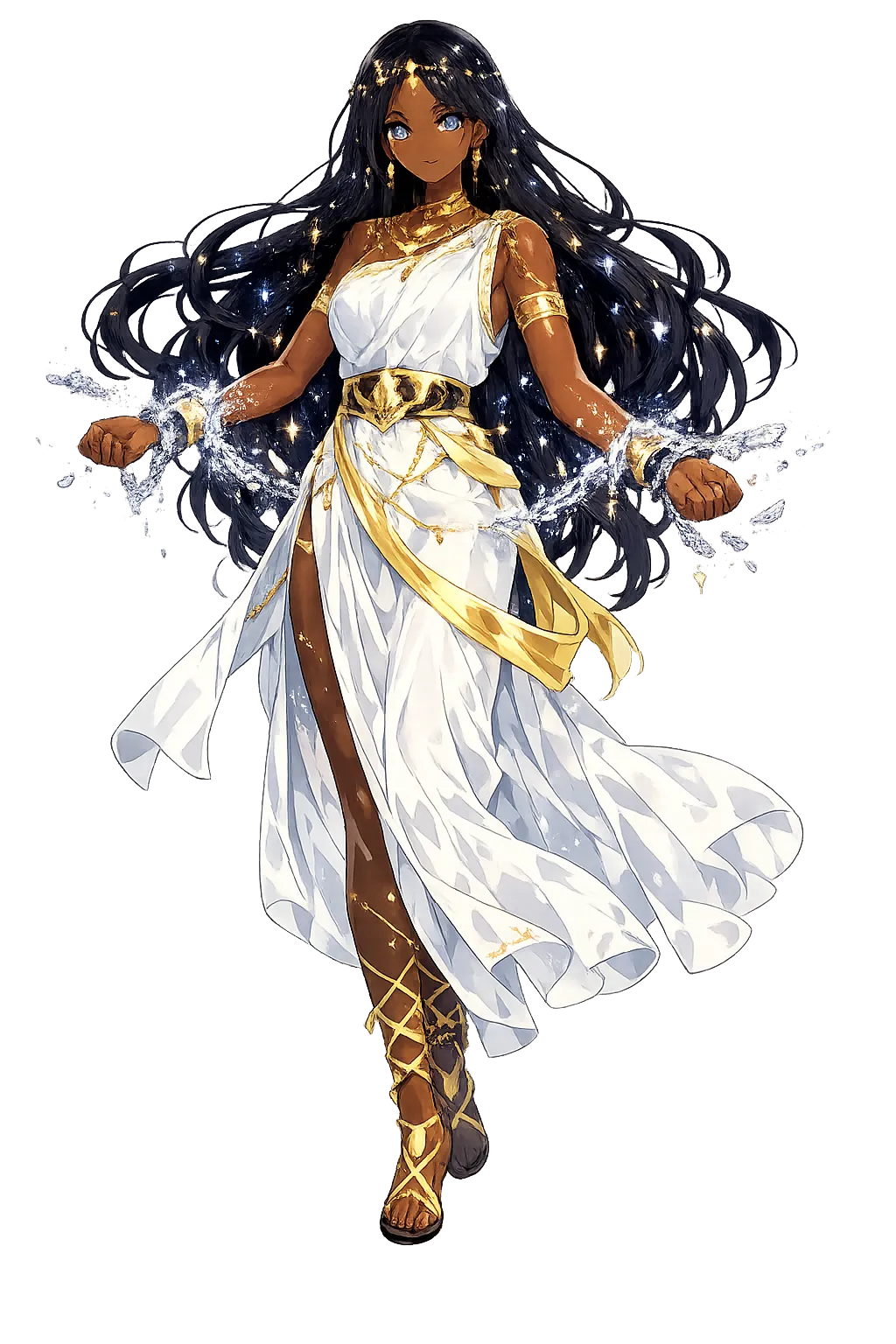
Andromédē is the princess chained to a sea-rock, offered to a monster and saved by a hero. Her myth is one of the most widely reproduced rescue narratives in Western art, and her catasterism placed her among the stars forever.
Daughter of Kepheus and Kassiepeia, rulers of Aithiopia; her lineage is royal and unfortunate.
Chained to a coastal rock as appeasement to the sea-monster sent by Poseidôn.
Saved by the gorgon-slayer, she becomes his wife and ancestor of Persian kings.
After death she is placed in the northern sky, the Andromeda galaxy her stellar home.
Stories of Andromedē
Andromédē's story is a chain of consequences: a queen's boast, a god's wrath, a daughter's punishment, and a hero's arrival at the decisive moment. It is also a founding myth of genealogy, linking Greek and Persian royal lines.
Kassiepeia boasted that she — or her daughter — was more beautiful than the Nereids. Poseidôn, enraged on behalf of his sea-nymphs, sent a flood and a sea-monster (ketos) to ravage Aithiopia. The oracle of Ammon declared that only the sacrifice of Andromédē could appease him.
Andromédē was stripped and bound to a sea-cliff as the monster approached. The scene became one of the most painted moments in Western art: the maiden's pale body against dark rocks, the hero descending with winged sandals, the creature rising from the foam.
After her death, Athena placed Andromédē in the heavens near Perseus, Kepheus, and Kassiepeia. The constellation preserves the family group in stellar form; the Andromeda Galaxy (M31), visible to the naked eye, bears her name.
Andromeda is not a willing victim; she is the price of someone else's pride. Her passivity on the rock is not weakness but the consequence of a cosmic transaction in which she had no voice. The myth therefore asks us to look at the people sacrificed to appease forces they did not create.
Enter Extended Lore