The Authentic Orthography
Supreme Creator, Wisdom, Light · Wise lord
Unicode restoration and ASCII comparison
𐬀𐬵𐬎𐬭𐬀 𐬨𐬀𐬰𐬛𐬁
The name in its original Zoroastrian form. AhuraMazdā (𐬀𐬵𐬎𐬭𐬀 𐬨𐬀𐬰𐬛𐬁) is attested in the source tradition — “Wise lord”. Its macron-length vowels carry the full phonetic and orthographic weight of the source tradition.
ahuramazda
Reduced to plain ahuramazda, the name loses everything that made it specific: macron-length vowels. What remains is an ASCII string that machines can parse but that no longer speaks with its original voice.
AhuraMazdā
The Unicode restoration recovers what ASCII flattened. AhuraMazdā restores macron-length vowels, returning the name to its original written dignity. The domain encodes to Punycode, but the browser displays the truth.
AhuraMazdā.com → xn--ahuramazd-ecb.com
The non-ASCII characters in AhuraMazdā are encoded while the ASCII remains visible. To the DNS, it is Punycode. To humanity, it is AhuraMazdā.
How AhuraMazdā travels from ancient script to the modern URL
Avestan Ahura Mazdā; ahura “lord" is related to Sanskrit asura, and mazdā “wise" to Sanskrit medhā; the supreme creator and wise lord of Zoroastrianism.
Supreme Creator, Wisdom, Light
The Unicode restoration AhuraMazdā uses registrable Latin diacritics; the Avestan script form is not registrable in .com.
How AhuraMazdā was spoken
Supreme Creator, Wisdom, Light, and Order
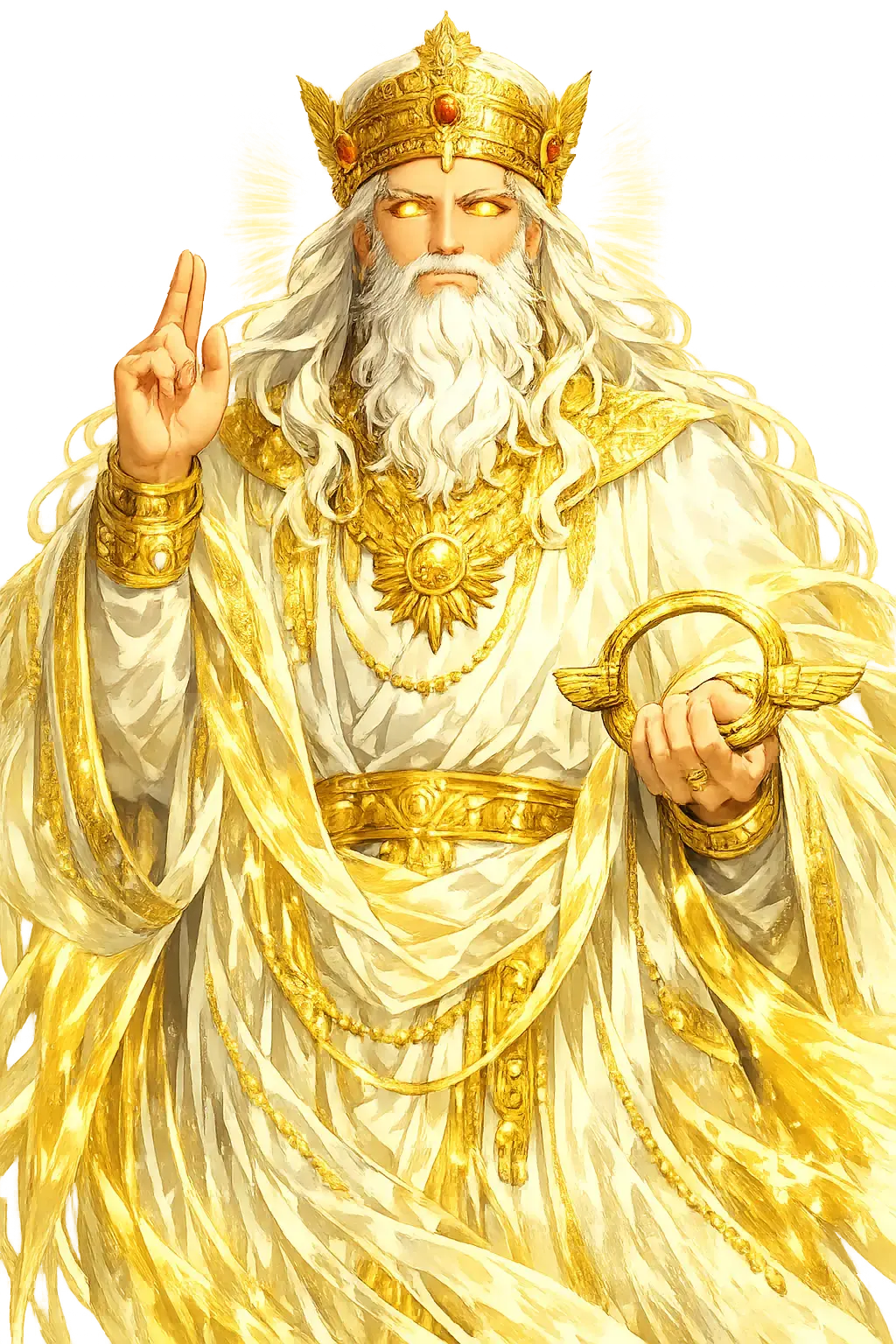
AhuraMazdā is the highest god of Zoroastrianism, the uncreated creator who thinks the cosmos into being and sustains it through truth (Aša), good thought, and the Holy Immortals. He is not a storm warrior or a tribal patron but a cosmic architect whose weapon is wisdom and whose enemy is the lie (Druj). In the Gāthās, the oldest Zoroastrian hymns, he speaks directly to the prophet Zarathustra, asking humanity to choose between good purpose and evil.
AhuraMazdā first conceived the cosmic order in his mind and then spoke it into existence.
Truth, righteousness, and cosmic order (Aša) are his first creation and his greatest gift.
Six divine attributes — Vohu Manah, Aša, Khshathra, Spenta Ārmaiti, Haurvatāt, Ameretāt — emanate from him.
Fire is his visible presence; Zoroastrian temples guard an eternal flame in his honor.
Stories of AhuraMazdā
The mythology of AhuraMazdā is not a cycle of adventures but a grand cosmology: the creation of the world, the fall of the first man Yima, the choice offered to Zarathustra, and the final renovation (Frashokereti) when evil will be destroyed and the world made perfect. Every human moral choice participates in this cosmic drama.
In the Gāthās, AhuraMazdā approaches Zarathustra and asks him to choose between the two primordial spirits: Spenta Mainyu, the holy creative spirit, and Angra Mainyu, the destructive spirit of the lie. Zarathustra chooses good thought, good words, and good deeds, becoming the prophet of the one wise lord. The myth is less a narrative than a summons: every person must make the same choice.
In later Zoroastrian texts, AhuraMazdā creates the world in seven stages: sky, water, earth, plants, animals, humans, and fire. Angra Mainyu (Ahriman) responds by introducing drought, predators, disease, and death. The cosmos becomes a mixed battlefield in which good will ultimately triumph at Frashokereti, the making-fresh of the world.
At the end of time, a savior named Saoshyant will arise, the dead will be resurrected, and AhuraMazdā will purify the world with molten metal and a great flood of wine. The lie and its creatures will be annihilated, and all beings will live forever in righteousness. This vision of cosmic renewal is one of Zoroastrianism's most distinctive contributions to world religion.
AhuraMazdā asks each person to become a co-worker in the creation of goodness. The world is not finished; it is a project, and every choice between truth and the lie either builds or tears it down. In a time of environmental crisis and moral confusion, this vision is radical: the cosmos is not a machine to be used but a garden to be healed, and the divine is present not in miracle but in the steady practice of wisdom and care.
Enter Extended Lore