
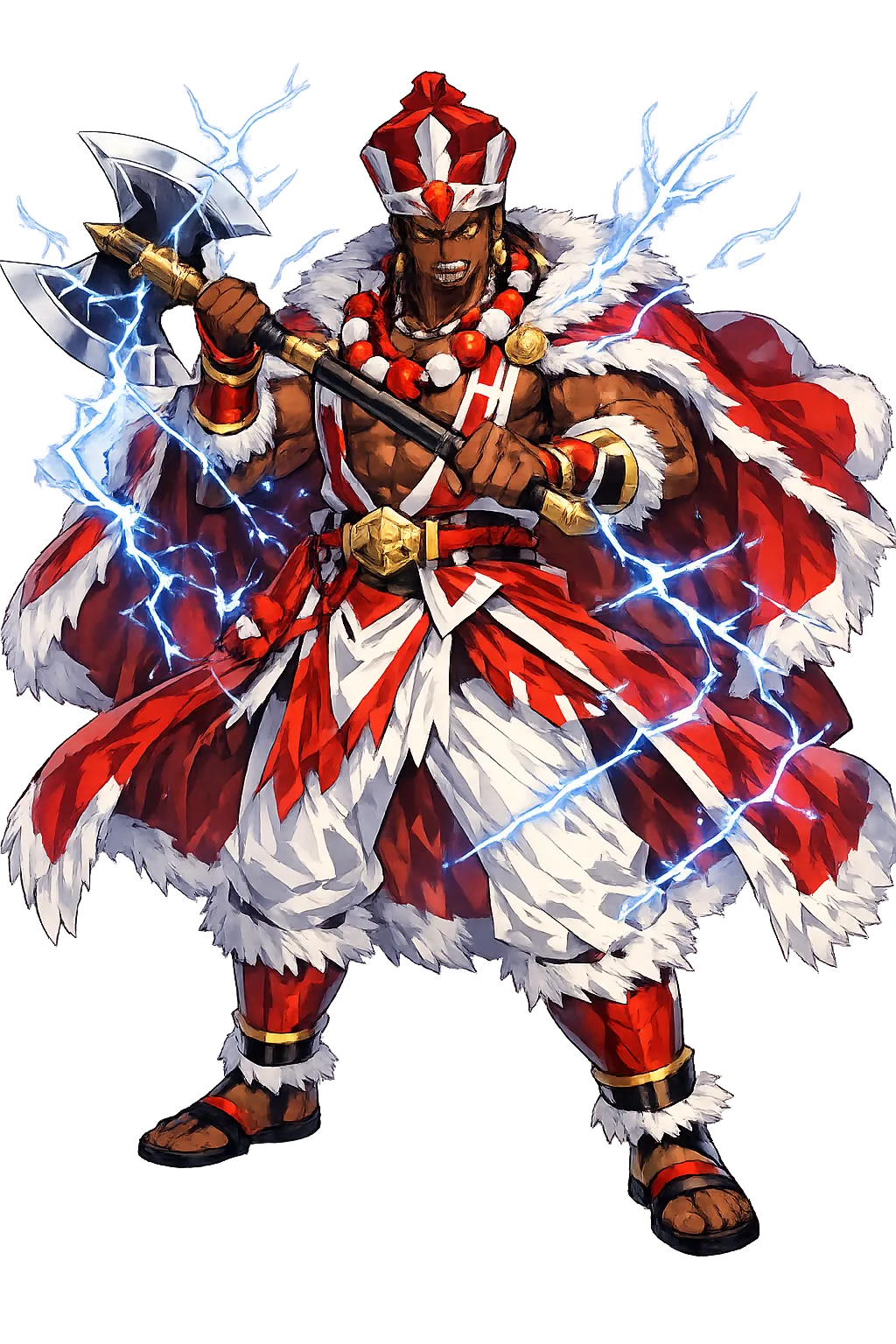
The provenance file on Ṣàngó
Provenance record 438 · Ṣàngó · one temple, fully accounted for.
Provenance
1. The attestation. —, from the tradition's own record. On record: Johnson, The History of the Yorubas (1921), Law, The Oyo Empire c. 1600–c. 1836 (1977), Bascom, Ifa Divination (1969), Mason, Four New World Yoruba Rituals.
2. The preserved evidence. a → à (Grave on a); o → ó (Acute on o) — absent from the ASCII form shango, present in the restoration, verifiable against the sources above.
3. The narrative record. The Fourth Aláàfin of Ọ̀yọ́ — Ṣàngó was the fourth Aláàfin — king — of Ọ̀yọ́, and the traditions collected by Samuel Johnson (The History of the Yorubas, 1921), checked against the chronicles analysed by Robin Law (The Oyo Empire, 1977), make him a historical ruler later wrapped in divinity. His capital was at Koso, and his cult grew from the worship of a deified king: subsequent Aláàfins ruled as his heirs, and the Ṣàngó festival at Ọ̀yọ́ remains an act of state as much as of religion. The Fire That Consumed the Palace — Johnson's chronicle credits Ṣàngó with a fearful sorcery: charms that breathed fire on his enemies. In the most told episode, his own overreaching turned the weapon inward — the fire that burned his foes spread through his palace and his household, and the king who had terrorised Ọ̀yọ́ with thunder-magic died, or fled, by the same element (Johnson 1921; Law 1977 treats the traditions with scholarly reserve).
4. The physical record. The Ṣàngó cult centre at Koso, near Ọ̀yọ́ in present-day Nigeria, preserves the ritual memory of the deified king, and the Ṣàngó festival re-enacts his kingship annually. Prehistoric stone celts — the thunderstones his priests collected as his spent bolts — are held in shrines and museum collections; so are brass double-headed axes, bàtá drums, and the red-and-white bead regalia of his initiates. Diaspora terreiros and ilés conserve his dance wands and thunderstone altars, making Ṣàngó one of the best-documented royal cults in African religious history.
5. The current holding. The temple at /shango/, classified Tier 1. The restoration preserves more than the ASCII form can express — stress, length, or a letter the Latin keyboard lost — which places it, mechanically, in Tier-1.
6. The documented resonances. Meteorology & Weather Intelligence, Faith & Spiritual Organizations, Leadership, Governance & Public Administration — seats argued and weighted in the pattern atlas, read through the myths in this temple's Resonance File.
7. The primary sources. Nigerian Studies — The Orisha Myths — the library this file answers to, open at the Sacred Texts collection.
8. The continuing record. Ṣàngó is one of the most recognisable orishas in the African diaspora. His image strides through Caribbean and Latin American art, music, and festival; his bàtá drumming — carried by Cuban santeros to stages worldwide — has fed into jazz, salsa, and contemporary percussion.
At a Glance
- Restored name: Ṣàngó
- ASCII form: shango
- Meaning: "He who strikes"
- Domain of influence: Thunder, Fire, Justice
- Pantheon: Yoruba
- Classification: Tier 1
- Original script: —
- Series: The Restoration Files, No. 438 of 546
The File Continues
Read the founding dispatch for the name's full story, the Resonance File for the archetype at work — or the whole archive in one sitting.
Continue the series — previous file: Shàngdì (read it here) · next file: Šāpšu (read it here).
The Restoration Files are written from the same canonical record as the temples themselves: the lexicon, the lore catalog, the pattern atlas, and the cited scholarly sources. If a file ever disagrees with its temple, the temple is right — tell us, and the file will be corrected.