PuniCodex

Extended Lore

Ῥέα Rhéā

Etymology · Orthography · Cultural Legacy · Reception · Primary Sources

Tier 1 Rhéā.com
Rhéā — Motherhood, Fertility, Titans
01

Quick Facts

Essential information about Rhéā, Motherhood, Fertility, Titans

Original ScriptῬέα
Unicode RestorationRhéā
Reconstructed Pronunciation/rʰé.aː/
PantheonGreek
DomainMotherhood, Fertility, Titans
MeaningFlow, ease (from ῥέω)
ClassificationTier 1
Primary DomainRhéā.com
Sacred SymbolsSwaddled stone (Omphalos), Cretan cave, Lion, Tympanon drum
02

Etymology & Word Family

From original script to Unicode restoration

Original Script Ῥέα Rhéā — "Flow, ease (from ῥέω)"
Unicode Restoration Rhéā Restored stress, length, and script
Modern ASCII rhea Plain-ASCII fallback

The name Rhéā carries the orthographic signature of the greek tradition: Ῥέα. Unicode restoration recovers what ASCII flattens.

03

Unicode Character Breakdown

Character-by-character philological analysis

CharacterUnicodeNameBlockPhonetic Role
RU+0052Latin Capital Letter RBasic LatinSame
hU+0068Latin Small Letter HBasic LatinRough breathing (rh)
éU+00E9Latin Small Letter E with AcuteLatin-1 SupplementAcute on epsilon (Ῥέα)
āU+0101Latin Small Letter A with MacronLatin Extended-ALong final alpha (Ῥέᾱ)

The Tier 1 classification reflects how much of the original phonology this restoration preserves — stress and vowel length for Greek names, distinctive letters and diacritics for every other tradition.

04

Cultural Significance

From ancient cult to modern memory

Rhéā in Later Traditions

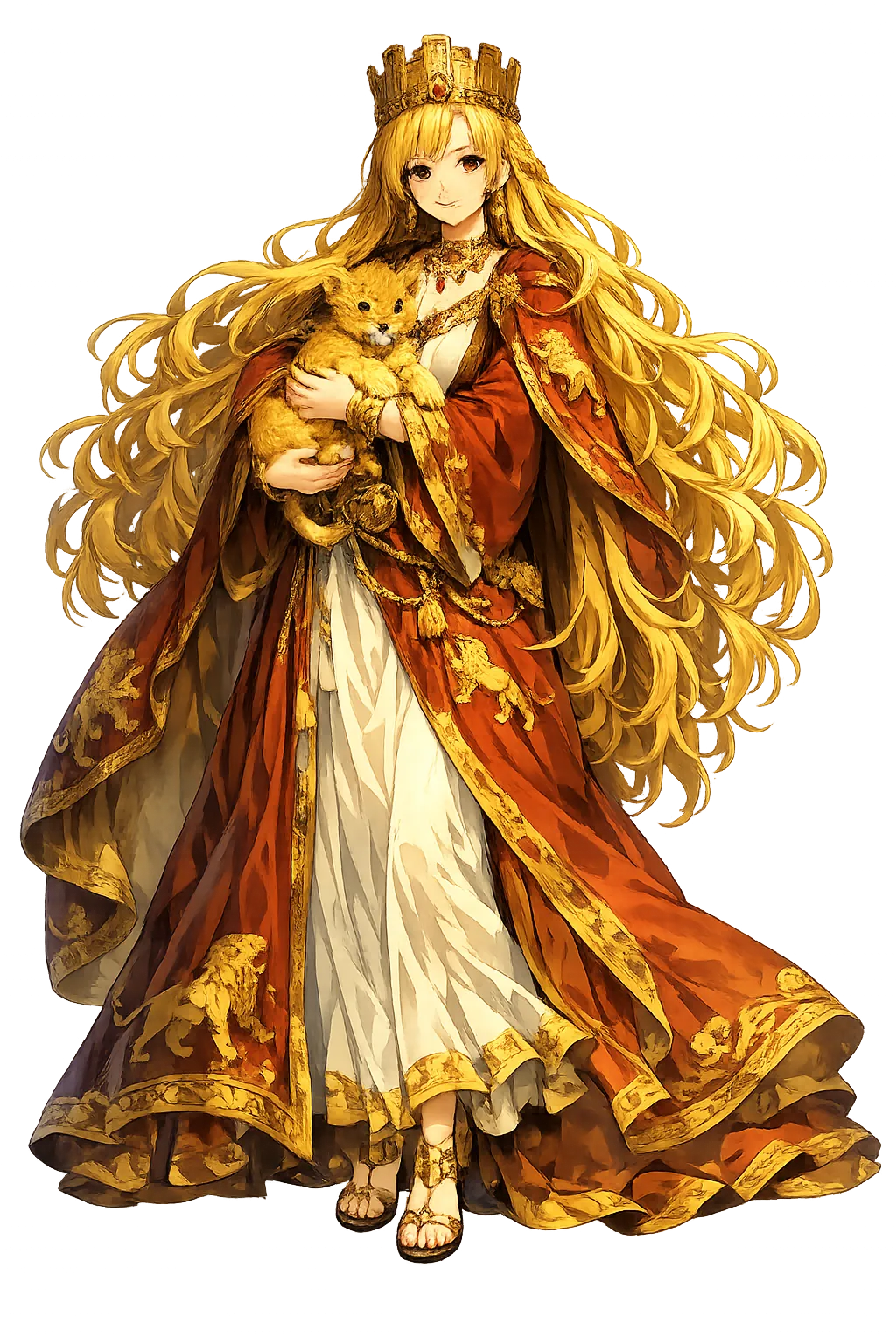
Rhéā's ancient fate was to be absorbed. The Greeks early identified her with the Phrygian Mother of the Gods — Pausanias (7.17) tells the Mother's myth as Rhea's — and by the classical period the identification was so complete that her name and Cybele's could be interchanged in poetry and cult; the lion, the tympanon, and the mural crown of the Phrygian goddess became Rhea's attributes in Hellenistic and Roman art. The Romans received her as Ops, old Italian goddess of abundance and the stored harvest, consort of Saturn: the Saturnalia's licensed feasting and the Opalia's grain-rites both belong to the complex. Later Neoplatonists read her as the prolific 'source of sources', the middle principle between the hidden father and the manifest gods. Her diffusion is so thorough that 'Rhea' rarely names a distinct theology — which is, in a way, her triumph: the mother of the gods became every mother.

Modern Legacy

Rhéā is the mother without whom there is no Olympus; every Olympian god is her descendant, and her rescue of Zeus is the single act that made the classical pantheon possible. Her myth remains a powerful story of maternal resistance against patriarchal violence — retold by feminist writers as the prototype of the mother who outwits the devouring father. In the heavens she is the second-largest moon of Saturn, discovered by Cassini in 1672, orbiting the planet that bears her consort's Roman name — the couple still paired in the sky. Her name surfaces in fantasy and science fiction as an archetype of primordial motherhood, and in psychology the 'Great Mother' of Jung and Neumann descends in part from her Titaness form. The restoration of Rhéā with its long final alpha restores the drawn-out, dignified cry of the mother of gods.

In the Earth

Rhéā's Cretan cult is anchored in two great caves. The Idaean Cave (Ideon Andron) on Mount Ida produced Bronze Age and Archaic votive deposits — bronze shields and vessels, jewelry, and the celebrated inscribed bronze tympanon — showing centuries of continued worship. The Diktean Cave above Psychro, excavated by Hogarth at the end of the nineteenth century, yielded a rich Minoan sanctuary with votive double axes and figurines. Both caves were claimed as Zeus's birthplace, reflecting the Ida/Dikte disagreement preserved in the sources. On the mainland her archaeological footprint merges with that of the Great Mother and of Demeter, a conflation the ancient record itself performs.

05

The Meditation

What Rhéā means — beyond the dictionary

Rhéā is the mother who learns to deceive in order to protect. She does not confront Kronos directly; she outwits him with a stone. This is not weakness but strategic love — the recognition that survival sometimes requires cunning rather than force.

Her story also holds grief. She bore children only to lose them to her husband's belly. The stone she substitutes is a monument to what was swallowed: time, memory, innocence. When it is vomited up and displayed at Delphi, it becomes the center of the world. Rhea teaches that the things hidden in darkness can become, in time, the axis of a new order.

06

Frequently Asked Questions

Common questions about Rhéā, Motherhood, Fertility, Titans, and Unicode restoration

01How do you pronounce Rhéā?

In reconstructed pronunciation, Rhéā is /rʰé.aː/ — approximately 'RHAY-ah' — begin with a breathy 'r', stress the middle syllable, and draw out the final 'ah'.

02What does Rhéā mean?

Rhéā means Flow, ease (from ῥέω) in the greek tradition.

03What are the symbols of Rhéā?

Rhéā is associated with Swaddled stone (Omphalos) (The great stone she wrapped in infant's clothes and gave to Kronos; it was later displayed at Delphi as the navel of the world (Pausanias 10.16.3)), Cretan cave (The hiding place of the infant Zeus — the sources disagree between Mount Ida and Mount Dikte, and both caves became cult sites), Lion (The mountain beast of her later iconography, borrowed from the Phrygian Mother — Rhéā's lions are Cybele's lions), Tympanon drum (The frame drum of ecstatic mountain cult; in the myth it is the beat that once hid the infant's cries from his father).

04Why restore Rhéā in Unicode?

Plain ASCII rhea strips the stress, length, and script that make the name specific. Unicode restoration returns the name to its original written dignity.

05What is the most important myth about Rhéā?

“The Devoured Five” — Rhéā's myth is the hinge between Titanic and Olympian rule. She endures Kronos's violence, then engineers the survival of the son who will overthrow him — the story of how the Olympians were born twice: once in her womb, and once out of a trick. The full telling lives on the lore page.

07

Scholarly Sources

The philological foundations of this restoration

Every claim on this page is grounded in established scholarship. The orthographic restorations follow disciplinary convention. The etymological chain follows the best available reference works. This is not invention — it is resurrection through scholarship.

Lexicography & Philology

  • Liddell, H. G., Scott, R., & Jones, H. S. A Greek-English Lexicon. Oxford: Clarendon Press, 9th ed. 1996.
  • Pape, W., & Benseler, G. E. Wörterbuch der griechischen Eigennamen. Braunschweig: Vieweg, 1884.
  • Beekes, R. S. P. Etymological Dictionary of Greek. Leiden: Brill, 2010.

Primary Texts

  • Hesiod, Theogony 453–491
  • Diodorus Siculus 3.73, 5.70
  • Apollodorus, Bibliotheca 1.1.5–7
  • Pausanias, Description of Greece 7.17, 10.16.3

Archaeology & Art History

  • Material evidence — iconography, inscriptions, and temple archaeology — for Rhéā and related cults.

Religious Studies

  • Beekes, Etymological Dictionary of Greek
  • Callimachus, Hymn to Zeus
  • Nonnus, Dionysiaca 9
Return

The Surface Awaits

You have traced the name from its earliest attestation to its Unicode restoration. Now return to the myth. The story is where the name lives.

Back to Lore
Rhéā mascot