
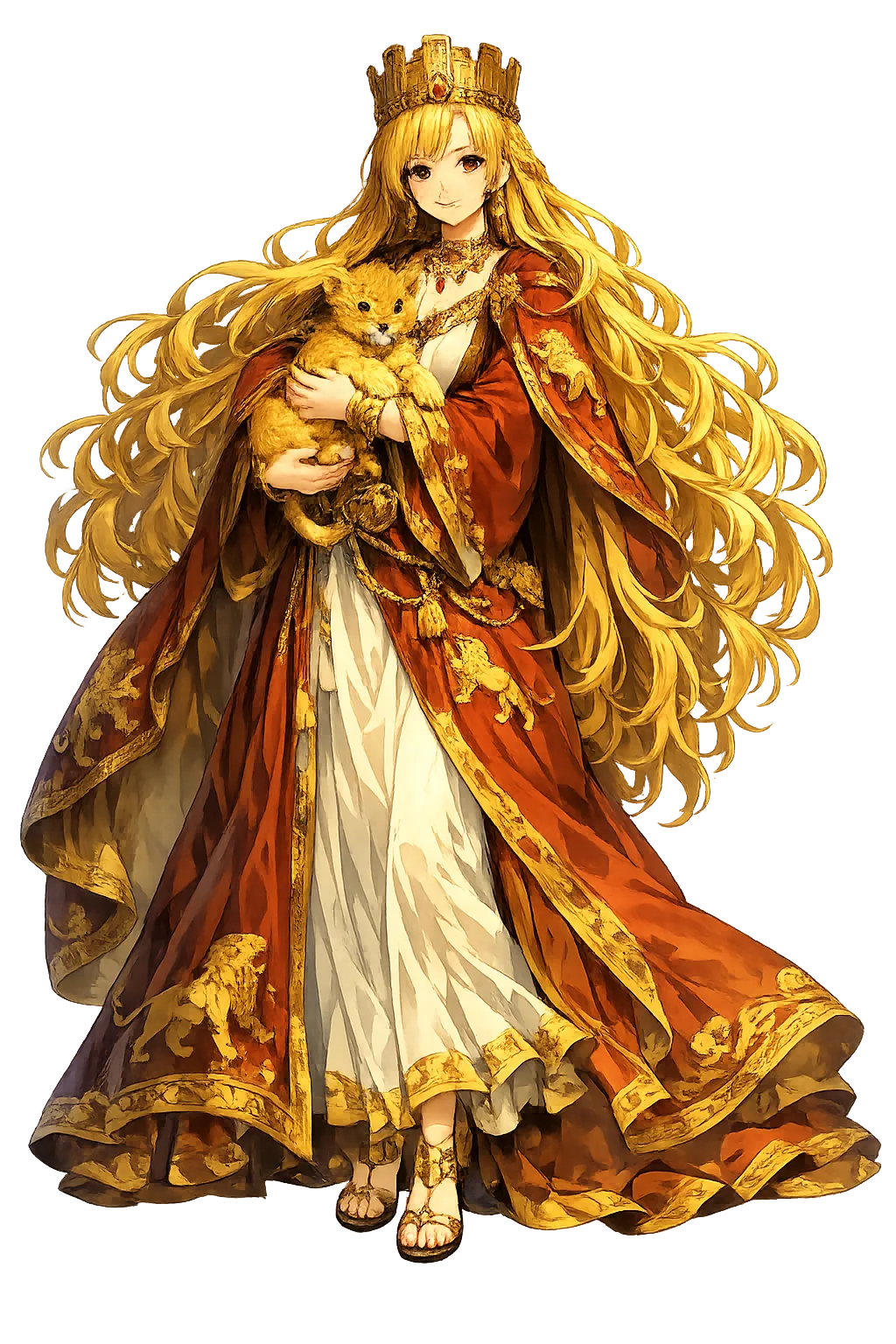
The name Rhéā and the world it opens
A name is a door. Rhéā opens onto an entire world: the domain of motherhood, fertility, titans, a Greek tradition, and centuries of storytelling, worship, and scholarship. This post walks through that world room by room — the name and its roots, the original script, the sound of it, the myths, the symbols, the sites, the afterlife across cultures — and ends at the newest room of all: a Unicode domain that makes the whole structure addressable. rhea gets you to the same building, but only the restored form tells you why it was built.
At a Glance
- Restored name: Rhéā
- ASCII form: rhea
- Meaning: "Flow, ease (from ῥέω)"
- Domain of influence: Motherhood, Fertility, Titans
- Pantheon: Greek
- Restoration: Preserves stress & vowel length
- Original script: Ῥέα (Greek)
- Live domain: rhéā.com
Overview
Rhéa (rhea) — Motherhood, Fertility, Titans · Flow, ease (from ῥέω) — belongs to the Greek tradition, where it is catalogued under the domain "Motherhood, Fertility, Titans". The name means "Flow, ease (from ῥέω)".
Rhéa is the Titaness who gave birth to the Olympian gods and saved the youngest, Zeus, from being swallowed by his father Kronos. She is the mountain mother, the fertile earth, and the cunning protector of divine succession.
PuniCodex restores the name as Rhéa and serves its temple at rhéā.com. The Greek original (Ῥέᾱ) preserves both prosodic features — the acute on the epsilon records the stress, and the macron on the final alpha records the long vowel —. The plain ASCII form rhea survives as a modern convenience imposed by the early domain-name system; the restoration, not the fallback, is the form the project defends as philologically complete.
The Name
The name is attested in Greek as Ῥέα. Etymologically it means "Flow, ease (from ῥέω)".
The ASCII form rhea survives only because the early domain-name system could not carry diacritics; it is a technological compromise, not an ancient spelling. The Unicode restoration Rhéa recovers both the stress accent and the vowel length of the original directly in the address bar. The Greek original (Ῥέᾱ) preserves both prosodic features — the acute on the epsilon records the stress, and the macron on the final alpha records the long vowel —.
The letter-by-letter transformation runs:
- r → R — Same, capitalized
- h → h — Same
- e → é — Acute on epsilon (Ῥέα)
- a → a — Short final alpha
The project holds the domain rhéā.com (xn--rh-cja0h.com) as the owned home of this temple; the canonical restoration is Rhéa (Ῥέα — the final alpha is short, and the owned form's macron is a display fallback).
The Original Script
The name is attested in Greek as Ῥέα (genitive Ῥέας). The initial rho carries the rough breathing (ῥ-), Greek's regular treatment of word-initial r-, which Latin transliteration preserves as Rh-; the acute accent falls on the short epsilon, and the final alpha is long, giving the form /rʰé.aː/ that the PuniCodex restoration Rhéa reproduces against the ASCII fallback rhea.
Hesiod's Theogony uses the longer form Ῥεία (Rheia): it is Rheia who, 'subject to Cronus, bore splendid children' (Theogony 453–458), a spelling that alternates with Ῥέα already in early epic.
Plato's Cratylus (402a–b) derives the name from ῥεῖν, 'to flow', matching the Titaness to the Heraclitean flux; this is a philosophical folk-etymology. Modern etymological dictionaries record no accepted derivation: the link with ῥέω remains an ancient conjecture, and the name's origin is unresolved.
Pronunciation
The reconstructed pronunciation of the name is /rʰé.aː/ — Attic Greek Reconstruction.
Phoneme by phoneme:
- Rh- — Aspirated rho [rʰ], the breathy initial consonant preserved in the rough breathing.
- -é- — Short epsilon with acute [é], the pitch peak of the name.
- -a — Long alpha [aː], the feminine ending that gives the name its dignity.
For the modern speaker, the closest approximation is: 'RHAY-ah' — begin with a breathy 'r', stress the middle syllable, and draw out the final 'ah'.
Kindred and historical forms of the name:
- Greek — Ῥέα (Rhéa), Titaness, mother of the Olympian gods
- Etymology — Possibly related to ῥέω (rhéō), 'to flow'; etymology uncertain
- Anatolian — Some scholars compare her to Anatolian mother goddesses; the connection is debated
Rhéa is a simpler restoration because the Greek Ῥέα preserves the acute stress on the second syllable and length on the final alpha, but the stress and length fall on different syllables. She is the great mother of the Olympian generation.
Mythology
Rhéa's myth is the hinge between Titanic and Olympian rule. She endures Kronos's violence, then engineers the survival of the son who will overthrow him.
The Swallowed Children (Hesiod, Theogony)
Kronos, warned that one of his children would overthrow him, swallowed each infant as Rhea bore them. Rhea wept but was powerless until the birth of Zeus. Then she turned from grieving mother to strategist.
The Ruse of the Stone (Hesiod, Theogony)
Rhea asked her parents Gē and Ouranos for advice. They sent her to Crete, where she gave birth to Zeus in a hidden cave. She wrapped a great stone in swaddling clothes and presented it to Kronos, who swallowed it unaware. The stone was later set up at Delphi as the omphalos.
The Kouretes (Cretan cult)
To hide the infant Zeus's cries, Rhea's attendants the Kouretes clashed their weapons and danced. The ritual became a Cretan mystery: the birth of the god was protected by noise, movement, and collective vigilance.
The Devoured Five (Theogony)
Rhéā's marriage was a maternity under siege. Wedded to her brother Kronos, she bore him Hestía, Deméter, Hēra, Hádēs, and Poseidôn — and each infant, ‘as soon as each was born from the holy womb’, Kronos gulped down whole, for he had learned from Gaia and starry Ouranós that it was fated for him to be overthrown by his own son, though he was mighty, and he kept ever watchful, waiting for it (Theogony 453–467). Rhéā's grief is one of the quietest devastations in Greek poetry — Hesiod records no cry, no protest, only the fact that she bore children into a father who was also a mouth. The myth means that her story begins in the oldest nightmare of motherhood: the body that nourishes and the body that consumes are the same. Her later cunning is forged in this silence.
The Stone in Swaddling Clothes (Theogony)
When Rhéā was pregnant with Zeus, she finally turned from grieving mother to strategist. She went to her own parents, Gaia and Ouranós, and they sent her to Crete, to Lyktos, where she bore the great Zeus in a hidden cave — ‘in the land of Crete, in a rich and secret place’ (Theogony 468–474). Gaia took the child into her arms and hid him in a cave deep within the divine earth, in the dense woods of Mount Aigaion; Rhéā meanwhile wrapped a great stone in swaddling bands and gave it to Kronos, who took it in his hands and gulped it down, the fool, not knowing that the stone, instead of a son, lay in his stone-like belly (Theogony 475–491). Later tradition displayed the stone at Delphi, where Pausanias saw it, anointed with oil (10.16.3). The myth means that the world's navel began as a decoy: the center of the cosmos was once a mother's lie, and it saved everything.
The Kouretes' Clashing Shield (Cretan Cult)
A god hidden in a cave is a god whose cry must be masked — and Rhéā's Cretan attendants turned concealment into cult. Callimachus, in his Hymn to Zeus (42–53), imagines the infant's dangerous noise and the remedy: ‘for if you were to see the pipe and the puffed-out dance of the Kouretes... you would say: “The war-gear of the Kouretes is the invention of war-mad Ares; no, Rhea bore you, goddess of many names, she bore you, lion-mouthed”’ — the Curetes beat their shields and stamped their dancing feet so that the child's wailing would not reach his father. Diodorus (5.70) preserves the Cretan tradition that Rhea entrusted the babe to these armed guardians. The cave itself the sources cannot agree on — Ida or Dikte — and the disagreement fed rival Cretan sanctities for centuries. The myth means that the birth of Zeus is also the birth of ritual: the clashing shield, the ecstatic dance, the mystery that hides the god by noise — Cretan religion claimed to reenact the rescue of heaven's king every time it danced.
Symbols & Iconography
Rhéa's attested attributes gather around her one defining act — the substituted stone — and around the mountain cult of the Mother of the Gods with whom she merged.
- Swaddled stone — the stone she wrapped in swaddling clothes and gave to Kronos in place of the infant Zeus; after Kronos was forced to vomit it, Zeus set it up at Pytho 'to be a sign thereafter, a marvel to mortal men' (Theogony 485–500). Pausanias (10.24.6) saw at Delphi the stone the Delphians identified with it, anointed daily with olive oil and crowned with unworked wool at festivals.
- Cretan cave — the hiding-place of the newborn Zeus: Hesiod has Gē carry the child to Lyktos in Crete and conceal him in a deep cave beneath the earth (Theogony 476–483), the charter myth of the Cretan birth-caves.
- Lion and tympanon — borrowed from the iconography of the Mother of the Gods, whose hymn surrounds her with drums, castanets, and the howling of wolves and lions among the wooded mountains (Homeric Hymn 14); in Hellenistic and Roman images of the Magna Mater the lion and the frame-drum become her fixed attributes.
Rhéa's securest mythic image shows her ruse: on an Attic red-figure pelike attributed to the Nausicaa Painter (c. 460 BCE, Metropolitan Museum, New York), she hands the swaddled stone to the seated Kronos, who reaches for the false infant. Otherwise her iconography dissolves into that of the Mother of the Gods and Kybele, with whom she was identified: enthroned, wearing the polos or mural crown, flanked by lions, holding the tympanon frame-drum and a libation bowl. Roman art transmits the same type for Magna Mater — seated in a chariot drawn by lions — on coins and state reliefs. Earlier Greek images of a distinct 'Rhea' are hard to isolate, precisely because the Titanic mother was worshipped as the Great Mother.
Epithets & Cult Titles
- Μητήρ Θεῶν (Mētḗr Theôn) — 'Mother of the Gods': her defining title as mother of the six elder Olympians, addressed in Homeric Hymn 14 and institutionalized in the Metroön ('temple of the Mother') of Greek cities.
- Μεγάλη Μήτηρ (Megálē Mētḗr) — 'Great Mother': the Hellenistic and Roman magnification of the same title, under which Rhea merged with Phrygian Kybele; Pindar already composed a dithyramb for the Great Mother with drums and castanets (fr. 70b Snell–Maehler).
- Ῥέα ἡ ῥοή — Plato's Cratylus (402a–b) derives her name from ῥεῖν, 'to flow': for the Heraclitean etymologists she is the very flux of becoming, consort of Kronos.
- Ops — her Roman counterpart, goddess of abundance, consort of Saturnus, honored at the Opalia.
The Homeric Hymns
No major Homeric Hymn is addressed to Rhéa by name, but she stands immediately behind Homeric Hymn 14, To the Mother of the Gods — a brief prelude asking the Muse to sing of 'the Mother of all gods and all mortals', who delights in the clash of castanets and drums, the cry of flutes, and the howling of wolves and lions among the wooded mountains: the unmistakable sound-world of the Meter Theon whom Greeks identified with Rhea. Rhea also appears in person within the long Hymn to Demeter (h. Dem. 441–483): Zeus sends his mother to summon Demeter back to Olympus, and Rhea descends to the Rharian plain to persuade her daughter to accept the compromise over Persephonē.
Oracle Sites & Sanctuaries
Rhéa had no oracle of her own; divination belonged to her son Zeus. Her cultic geography is maternal and mountainous instead. The Idaian Cave on Crete and the Diktaian Cave at Psychro were honored as hiding-places of the infant Zeus and received rich votives from the Geometric period onward. In Phrygia, her near-double the Mother of the Gods ruled from Pessinos, whence the aniconic black stone was escorted to Rome in 204 BCE (Livy 29.10–14). Mainland cities housed her in the Metroön: the Athenian Agora's Metroön (Pausanias 1.3.5), which doubled as the state archive, and the Metroön at Olympia (Pausanias 5.20.9) are the best documented.
Archaeology & Evidence
Rhéa's cult landscape is Cretan above all, and it is inseparable from the birth-caves of Zeus. The Diktaian cave at Psychro above the Lasithi plain received continuous dedication from Minoan times into the Archaic period — bronze votives, weapons, and jewellery — excavated by D. G. Hogarth in 1899–1900 and restudied from the Oxford collections by Boardman. The Idaian cave on Mount Ida produced a comparable sequence, most famously the Orientalizing bronze shields of the eighth and seventh centuries BCE published by Kunze, the material backdrop of the armed Cretan cult of the young god. At Delphi, Pausanias saw the modest stone that local tradition identified as the substitute Kronos had swallowed, anointed daily with olive oil and crowned with unworked wool at festivals (10.24.6). On the mainland her sanctuaries are archaeologically inseparable from those of the Mother of the Gods — the Metroön in the Athenian Agora and the Metroön at Olympia served the Meter Theon with whom Rhea had merged — and the record is honestly read as conflation rather than as a distinct Rhea-cult.
Realm & Domain
Rhéa is the Titaness who gave birth to the Olympian gods and saved the youngest, Zeus, from being swallowed by his father Kronos. She is the mountain mother, the fertile earth, and the cunning protector of divine succession.
Mother of Olympians
By Kronos she bore Hestia, Demeter, Hera, Hades, Poseidon, and Zeus.
Protector of Zeus
She hid the infant Zeus in a Cretan cave and gave Kronos a stone in swaddling clothes.
Mountain Goddess
Worshipped on Crete and in Phrygia as a mother of wild things and mountains.
Fertility and Flow
Her name's possible link to 'flow' connects her to springs, milk, and abundance.
Across Cultures
Rhéa was identified with the Anatolian Great Mother Cybele and, to some extent, with the Cretan mother of Zeus. The Romans called her Ops, the goddess of abundance and the consort of Saturn. Her cult blurred into that of Gē, Demeter, and Cybele, all embodiments of the fertile earth. The lion-drawn chariot and tympanon of Cybele were sometimes transferred to Rhea in Hellenistic and Roman art.
Kindred figures in the PuniCodex cross-tradition index include Dēmētēr, Ọbalúayé, Bꜣstt, Cōātlīcue, Dāgan, and Gaîa, each linked through earth / mother / fertility.
Cultural Legacy
Rhéa's longest-lived institutional legacy is Roman. Identified with Ops, goddess of abundance and consort of Saturnus, she was honored at the Opalia of December; as the Magna Mater her cult reached Rome itself in 204 BCE, when the black stone of Pessinos was escorted into the city at the Sibylline Books' command (Livy 29.10–14).
Her myth became a test case for comparative mythology: a usurping father-god who devours his children and is deceived by a substituted object has its nearest ancient parallel in the Hurrian-Hittite 'Kingship in Heaven' cycle of Kumarbi, and the comparison has shaped modern study of Hesiod's Near Eastern background.
In astronomy she is Saturn's second-largest moon: discovered by Giovanni Domenico Cassini on 23 December 1672, it received the name Rhea from John Herschel in 1847, who assigned Saturn's satellites the names of the Titans, siblings of Cronus.
The Scholarly Record
The account of Rhéa given in this edition rests on the witnesses and reference works listed below. Lexica and etymological dictionaries secure the form and meaning of the name; the literary and religious texts supply the narrative evidence.
- Liddell-Scott-Jones Greek-English Lexicon, 9th ed. with 1996 supplement, 1843. Full text
- Beekes, Etymological Dictionary of Greek.
- Hesiod, Theogony, Loeb Classical Library No. 57, 700 BCE. Full text
- Homer, Hymn to Demeter.
- Apollodorus, Bibliotheca.
- Pausanias, Description of Greece.
A Meditation
Rhéa is the mother who learns to deceive in order to protect. She does not confront Kronos directly; she outwits him with a stone. This is not weakness but strategic love — the recognition that survival sometimes requires cunning rather than force.
Her story also holds grief. She bore children only to lose them to her husband's belly. The stone she substitutes is a monument to what was swallowed: time, memory, innocence. When it is vomited up and displayed at Delphi, it becomes the center of the world. Rhea teaches that the things hidden in darkness can become, in time, the axis of a new order.
The Unicode Restoration
Rhéā preserves stress & vowel length. The ASCII fallback rhea still resolves everywhere, but it is the restored form that carries the name's full information. Across the 4 characters of the name, the restoration adjusts 2: 1 mark of stress (é); 1 mark of length (ā). That is the whole thesis of this temple: the marks are the message.
The Domain Name
The restored name is live as a working domain: rhéā.com, which the DNS carries in punycode form as xn--rh-cja0h.com — an ASCII-compatible encoding that lets a non-ASCII name travel the global network without breaking older infrastructure. The visitor sees Rhéā; the machines see the encoding. That duality is the engineering compromise on which the entire restoration rests, and it is why a name written the way its own tradition wrote it in Greek can now be typed into any browser on earth.
Why This Restoration Matters
A door only matters if people walk through it. rhéā.com is open, and everything behind it — the myths, the scholarship, the canvas, the patrons — hangs on the restored spelling. The PuniCodex project bets that the web will make room for names as they were actually written, and Rhéā is one of its standing proofs. Visit, share, cite, type it yourself: each use is a small rehearsal for a web where no name has to hide its marks to be found.
Explore Further
This post is one doorway into the temple. The home page carries the full character breakdown and the ambient canvas; the lore page tells the myths in long form; the Scholarly Edition preserves the sources, pronunciation data, and revision history; and the patron wall supports the restoration directly. For the wider map, browse the Lexicon, explore the Pantheon, or return to the PuniCodex blog.
Related Names
Sources
The full scholarly apparatus — every citation, revision, and review — lives in the Scholarly Edition. Key references for this post:
- Liddell-Scott-Jones Greek-English Lexicon, 9th ed. with 1996 supplement, 1843.
- Hesiod, Theogony, Loeb Classical Library No. 57, 700 BCE.
- Beekes, Etymological Dictionary of Greek.
- Plato, Cratylus 402a–b.
- Beekes, Etymological Dictionary of Greek, s.v. Ῥέα.
- Homeric Hymn 14, To the Mother of the Gods.
- Lexicon authorities for this entry: LSJ, Pape-Benseler, Beekes.