PuniCodex

Extended Lore

𒀭𒉺𒍪𒍪 Pazuzu

Etymology · Orthography · Cult · Iconography · Reception · Sources

Tier 2 Pazuzu
Pazuzu — Wind Demon, Protection
01

Quick Facts

Essential information about Pazuzu, Wind Demon, Protection

Original Script𒀭𒉺𒍪𒍪
Unicode RestorationPazuzu
Reconstructed Pronunciation/paˈzuːzu/
PantheonMesopotamian
DomainWind Demon, Protection
MeaningUnknown
ClassificationTier 2
Primary DomainPazuzu
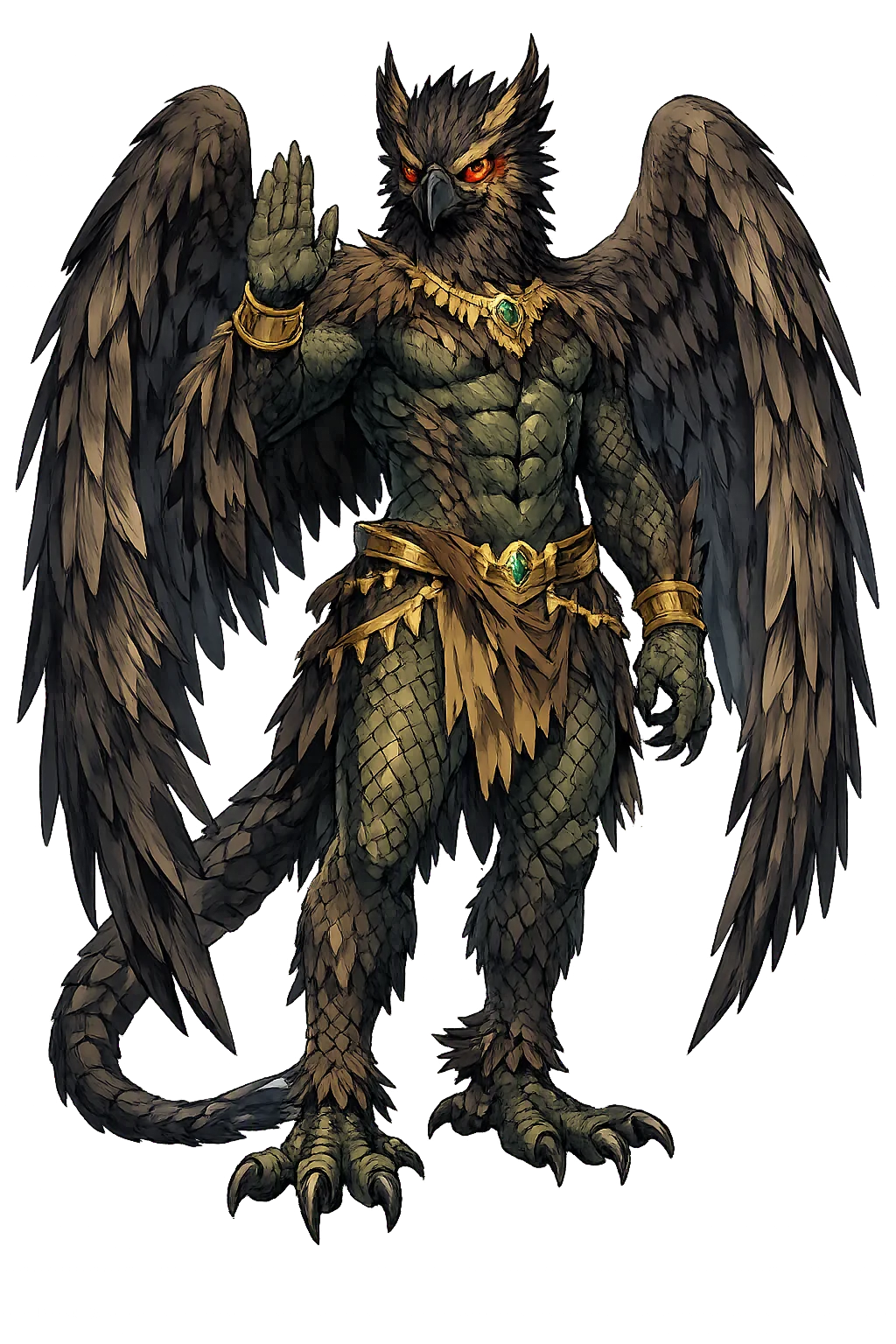
Sacred SymbolsSerpents and scorpions, Leonine face, Eagle talons, Right hand raised
02

Etymology & Word Family

From original script to Unicode restoration

Original Script 𒀭𒉺𒍪𒍪 Pazuzu — "Unknown"
Unicode Restoration Pazuzu Canonical scholarly spelling — ASCII-identical
Modern ASCII pazuzu Plain-ASCII fallback

The name Pazuzu reaches the modern world through scholarly transliteration of the mesopotamian tradition. Because the conventional spelling uses only Latin letters, its Unicode and ASCII forms coincide — the tradition it carries is in the name itself, not in diacritics.

03

Unicode Character Breakdown

Character-by-character philological analysis

CharacterUnicodeNameBlockPhonetic Role
PU+0050Latin Capital Letter PBasic LatinSame, capitalized
aU+0061Latin Small Letter ABasic LatinSame
zU+007ALatin Small Letter ZBasic LatinSame
uU+0075Latin Small Letter UBasic LatinSame
zU+007ALatin Small Letter ZBasic LatinSame
uU+0075Latin Small Letter UBasic LatinSame

The Tier 2 classification here reflects fidelity to the attested tradition, not recovered diacritics: every character of Pazuzu already survives in ASCII. What the restoration preserves is the canonical spelling itself — the form scholarship standardised.

04

Cult & Worship

How the sacred was kept — rites, sanctuaries, remains

The Cult

Pazuzu had no temple, priest, or festival, and he needed none: his cult was the amulet on the wall and the incantation spoken over it. The evidence is domestic and medical — bronze heads, terracotta plaques, and engraved gems from Assyria and Babylonia, chiefly of the eighth and seventh centuries BCE, placed in houses to guard the people most at risk: women in childbirth and newborns. The pairing is fixed: Pazuzu faces Lamashtu, the child-stealing demon, across the amulet's field, with the bed, the dog, and the donkey of his incantations ranged between them. The cuneiform corpus gives the ritual its voice in striking first-person formulae, in which Pazuzu names himself — son of Ḫanbi, king of the evil wind-demons — and accepts his commission against Lamashtu and her kind. The head-shaped bronzes likely hung by doorways as sentinels. This is apotropaic religion at its purest: no congregation, no calendar, no myth of his deeds — an object that works by existing, a demon hired to fight demons.

In the Earth

Pazuzu's material record consists chiefly of bronze heads, terracotta plaques, and engraved amulets from Assyria, Babylonia, and surrounding regions, dated especially to the 8th–7th centuries BCE. The Louvre bronze head (AO 19931) is the most complete example. Amulets depicting Pazuzu opposite Lamashtu were intended for domestic use, often near women and children. Cuneiform incantation tablets give the verbal counterpart to these images, preserving the formulae in which Pazuzu names himself and accepts his apotropaic commission.

05

Iconography

How Pazuzu was imaged across the ages

The Image

Pazuzu's face was engineered to frighten fever itself. The canonical image is the head: bulging eyes, a wrinkled canine muzzle, open jaws with a lolling tongue, a beard, horns, and the wings of the wind-demon pressed flat above the brow; full-body statuettes add talons, a scorpion's sting, and serpentine members — a body assembled from every predator Mesopotamia could imagine. The Louvre bronze head (AO 19931) is the most complete survivor, its findspot unrecorded — fitting, somehow, for a demon of the air. The type belongs overwhelmingly to the Neo-Assyrian eighth–seventh centuries BCE, with the Lamashtu amulets forming the great series and smaller plaques churned out for household use. The deeper lineage is murkier: the grimacing demons of Old Babylonian glyptic are cousins, not portraits, and no single ancestor claims him. The image did not so much evolve as harden. Once the formula was set, repetition was the point — a hundred identical demons, each one the same wind, each one watching a different cradle.

06

Reception & Transformation

The name after its own age — transmission, translation, survival

Afterlives

Pazuzu reached modernity through the ground. Layard's excavations at Nimrud and Nineveh in the 1840s–50s brought demon heads and Lamashtu plaques into the British Museum, while the cuneiform catalogues of evil demons — the Utukku Lemnutu series — entered scholarship through the great text editions of the late nineteenth century. Joining object to incantation was twentieth-century work: scholars matched the bronze heads to the first-person formulae in which Pazuzu names himself, catalogued the Lamashtu amulet series, and Wiggermann's study of the protective spirits and his Reallexikon der Assyriologie article became the modern standard. Between late antiquity and that recovery the trail is cold: unlike Tammuz, Pazuzu survived in no biblical verse or medieval rite — only the broader Near Eastern amulet habit, visible in Jewish, Syriac, and Arabic tradition, preserved the logic of setting one demon to catch another while his own name slept. It is an unusual transmission history for a guardian: he guarded nothing for two thousand years, because the houses that needed him had fallen.

Identifications Across Traditions

Pazuzu sits at the intersection of demonology, medicine, and household religion.

His apotropaic role places him alongside other Mesopotamian protective figures such as the apkallu sages and the lion-demon who guards doorways. Later Near Eastern and Mediterranean traditions continued the idea that a demon's own power could be turned against other demons — a logic visible in Jewish and Christian amulets, Gnostic charitēs, and Arabic jinn lore. The modern horror film use of Pazuzu is a 20th-century reinvention; the ancient evidence is overwhelmingly protective, not purely malevolent.

Modern Legacy

Pazuzu is probably the most visually recognizable Mesopotamian demon in the modern world, but for reasons ancient worshippers would not recognize.

The Louvre bronze head has become an icon of ancient Near Eastern art, reproduced in textbooks, museum merchandise, and popular media. Among Assyriologists, Pazuzu is a case-study in the logic of apotropaic religion: how a culture confronts danger by naming, embodying, and redirecting it. His amulets are early examples of protective technology — a material object designed to keep invisible harm at bay.

07

The Meditation

What Pazuzu means — beyond the dictionary

Pazuzu teaches that protection and peril can wear the same face. The demon who brings the pestilential wind is the same figure hung over a cradle to guard an infant. This is not contradiction; it is strategy. When the threat is invisible — a fever on the air, a sudden infant death, a miscarriage in the night — the defender must be equally uncanny.

To restore Pazuzu in Unicode is to keep visible the plain, wind-bitten sound of that strategy. There is no glittering diacritic here, no recovered long vowel in the display form. The name is as stark as the desert wind it names. That plainness is itself the point: some powers do not need ornament to be remembered.

08

Frequently Asked Questions

Common questions about Pazuzu, Wind Demon, Protection, and Unicode restoration

01How do you pronounce Pazuzu?

In reconstructed pronunciation, Pazuzu is /paˈzuːzu/ — approximately 'pah-ZOO-zoo' — stress the long middle syllable and let the final syllable fall like a dry gust.

02What does Pazuzu mean?

Pazuzu means Unknown in the mesopotamian tradition.

03What are the symbols of Pazuzu?

Pazuzu is associated with Serpents and scorpions (Attributes of the demon and the poisons he commands; on amulets they also bind Lamashtu.), Leonine face (The snarling mask of the wind-demon, meant to out-terrorize any spirit that approaches the threshold.), Eagle talons (The grasping, predatory power of the storm-wind and its capacity to snatch life away.), Right hand raised (The apotropaic gesture of warding, common on Mesopotamian plaques and demon images.).

04Why restore Pazuzu in Unicode?

Pazuzu is written entirely in ASCII letters, so its restoration is about canonical fidelity rather than recovered diacritics: the temple fixes the name in its scholarly standard spelling, attested in the source tradition, instead of leaving it to drift.

05What is the most important myth about Pazuzu?

“Son of Ḫanbi, King of the Evil Wind-Demons” — the Incantation story that anchors the mythology of Pazuzu, told in full on the lore page.

09

Scholarly Sources

The philological foundations of this restoration

Every claim on this page is grounded in established scholarship. The orthographic restorations follow disciplinary convention. The etymological chain follows the best available reference works. This is not invention — it is resurrection through scholarship.

◈

Lexicography & Philology

  • Black-Green
  • Wiggermann
◎

Primary Texts

◉

Archaeology & Art History

  • Material evidence — iconography, inscriptions, and temple archaeology — for Pazuzu and related cults.
✦

Religious Studies

  • Wiggermann, 'Pazuzu' in Reallexikon der Assyriologie
  • Black & Green, Gods, Demons and Symbols of Ancient Mesopotamia
  • Louvre AO 19931 — bronze head of Pazuzu
  • Akkadian Lamashtu incantations
  • Utukkū Lemnūtu series (Evil Demons)
Return

The Surface Awaits

You have traced the name from its earliest attestation to its Unicode restoration. Now return to the myth. The story is where the name lives.

Back to Lore
Pazuzu mascot